
30 Best Therapist Website Examples 2026
Someone looking for a therapist arrives with three questions, in this order: are you taking new clients, what does it cost, and do you take my insurance? A directory listing cannot answer the first. Only the practice’s own website can.
So rather than describe thirty therapy websites, we opened them and looked for those three answers — on the homepage, and then one click further, because most practices keep the money answer on a separate page. The result is lopsided. 22 of the thirty put a booking control in the first screen, 15 publish a price anywhere we looked, and 7 say whether they are accepting anyone at all.
A note on the word therapist: this page is about psychotherapists, counsellors and psychologists. Physical therapy, massage therapy and nutritional therapy are different professions with different websites, and we have kept them out.
What we looked for
Twelve checks. The first three are the questions above; the rest are what a visitor either sees or does not see before scrolling, plus what we found one hop further in.
What happens when you click Book
Every rung below is a subset of the one above it — only practices that clear one can appear on the next. It starts with an invitation and ends with almost nothing.
Read the funnel as one path: of the twenty-two practices that invite you to book in the first screen, eleven also lead somewhere we could open and publish a price, and none of the thirty shows a time you could actually take — even the two running a real scheduling system put it behind another click. Counted on its own, without the booking condition, 15 of the thirty publish a fee somewhere. Compare all of this with the chiropractors we measured, where booking is the entire proposition.
Every practice we opened, side by side
Read in a browser at 1280×860, then the fees link — or the booking link where there was no fees link — followed one hop into whatever sits behind it.
| Practice | Accepting? | Fee | Insurance | Book in fold | Platform |
|---|---|---|---|---|---|
| Jessica Meiman | not stated | not published | no | yes | Webflow |
| Michelle Harwell Therapy | not stated | one click away | no | yes | Squarespace |
| Wholeness Collective Therapy Group | not stated | one click away | yes | yes | Squarespace |
| Jeff Miller | not stated | on the homepage | yes | yes | Squarespace |
| Cognitive Behavioral Therapy LA | not stated | not published | yes | yes | Squarespace |
| Sara Douglas | not stated | not published | no | yes | Wix |
| Milja Brecher | not stated | not published | no | yes | bespoke |
| Angie Richey | not stated | not published | no | yes | bespoke |
| Tampa Counseling Place | not stated | not published | no | yes | WordPress |
| Collective Psychology | not stated | not published | yes | yes | WordPress |
| MLC Dallas | not stated | one click away | no | yes | Squarespace |
| Greta Strickland | not stated | one click away | no | yes | Wix |
| Ever Be Therapy | full | one click away | yes | yes | WordPress |
| Nancy Ortiz | not stated | one click away | no | no | Squarespace |
| Child and Family Therapy Collective | not stated | not published | no | no | Squarespace |
| Jaree Basgall | accepting | one click away | no | yes | Squarespace |
| SR Psychological Services | not stated | not published | yes | yes | WordPress |
| Jennifer Mancuso Urban | accepting | on the homepage | yes | no | bespoke |
| Zoe Riggs | not stated | one click away | no | yes | Squarespace |
| Brent LoCaste-Wilken | not stated | on the homepage | yes | yes | Webflow |
| Authentic Self Consulting | not stated | not published | no | yes | Squarespace |
| Alexandria Art Therapy | accepting | not published | no | no | Squarespace |
| Attuned Psychology | accepting | not published | no | no | WordPress |
| Somatic Therapy Tampa | not stated | one click away | yes | yes | WordPress |
| Embrace Corazón | not stated | not published | no | no | WordPress |
| The Empowering Space | not stated | not published | yes | no | WordPress |
| Therapy With Joy | accepting | one click away | no | no | Squarespace |
| Cindy Shu Therapy | accepting | one click away | no | yes | Wix |
| Deep Eddy Psychotherapy | not stated | one click away | yes | yes | WordPress |
| Couples Learn | not stated | not published | yes | yes | WordPress |
Read the fee column first. Three of the thirty put a price on the homepage and twelve more publish one a click away, which leaves fifteen where we could not find a number at all.
The question nobody answers
Of the thirty practices here, seven say whether they can take anyone. That is the first thing a person looking for a therapist needs to know, it is the one fact a directory profile cannot keep current on your behalf, and it takes a sentence.
The ones that do it show how little it costs. Alexandria Art Therapy runs a banner above everything else reading “no waitlist for new clients, evening and weekend openings”. Ever Be Therapy says the caseload is full and links to therapists it recommends instead — which loses that visitor but keeps the trust. Jaree Basgall states she is accepting for the year and explains the route in is a waitlist. Cindy Shu opens with immediate openings for online therapy. None of these needed a redesign.
Best Therapist Website Examples
Table of contents — all thirty therapist websites
- Jessica Meiman
- Michelle Harwell Therapy
- Wholeness Collective Therapy Group
- Jeff Miller
- Cognitive Behavioral Therapy LA
- Sara Douglas
- Milja Brecher
- Angie Richey
- Tampa Counseling Place
- Collective Psychology
- MLC Dallas
- Greta Strickland
- Ever Be Therapy
- Nancy Ortiz
- Child and Family Therapy Collective
- Jaree Basgall
- SR Psychological Services
- Jennifer Mancuso Urban
- Zoe Riggs
- Brent LoCaste-Wilken
- Authentic Self Consulting
- Alexandria Art Therapy
- Attuned Psychology
- Somatic Therapy Tampa
- Embrace Corazón
- The Empowering Space
- Therapy With Joy
- Cindy Shu Therapy
- Deep Eddy Psychotherapy
- Couples Learn
1. Jessica Meiman
Built with: Webflow
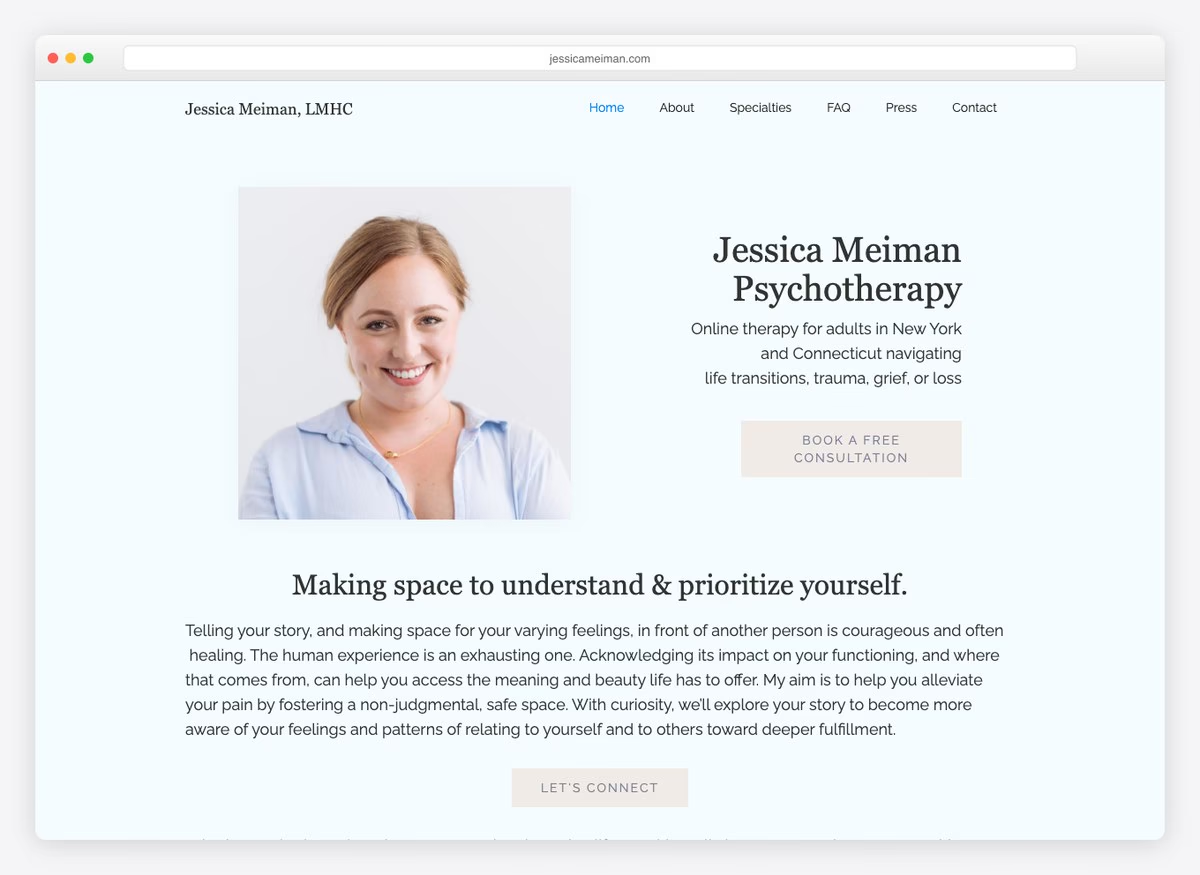
A single portrait, a name, and the sentence “Making space to understand & prioritize yourself.” Online therapy for adults in New York and Connecticut, stated in the first line so a visitor outside those states knows immediately. A free consultation is the only call to action.
2. Michelle Harwell Therapy
Built with: Squarespace
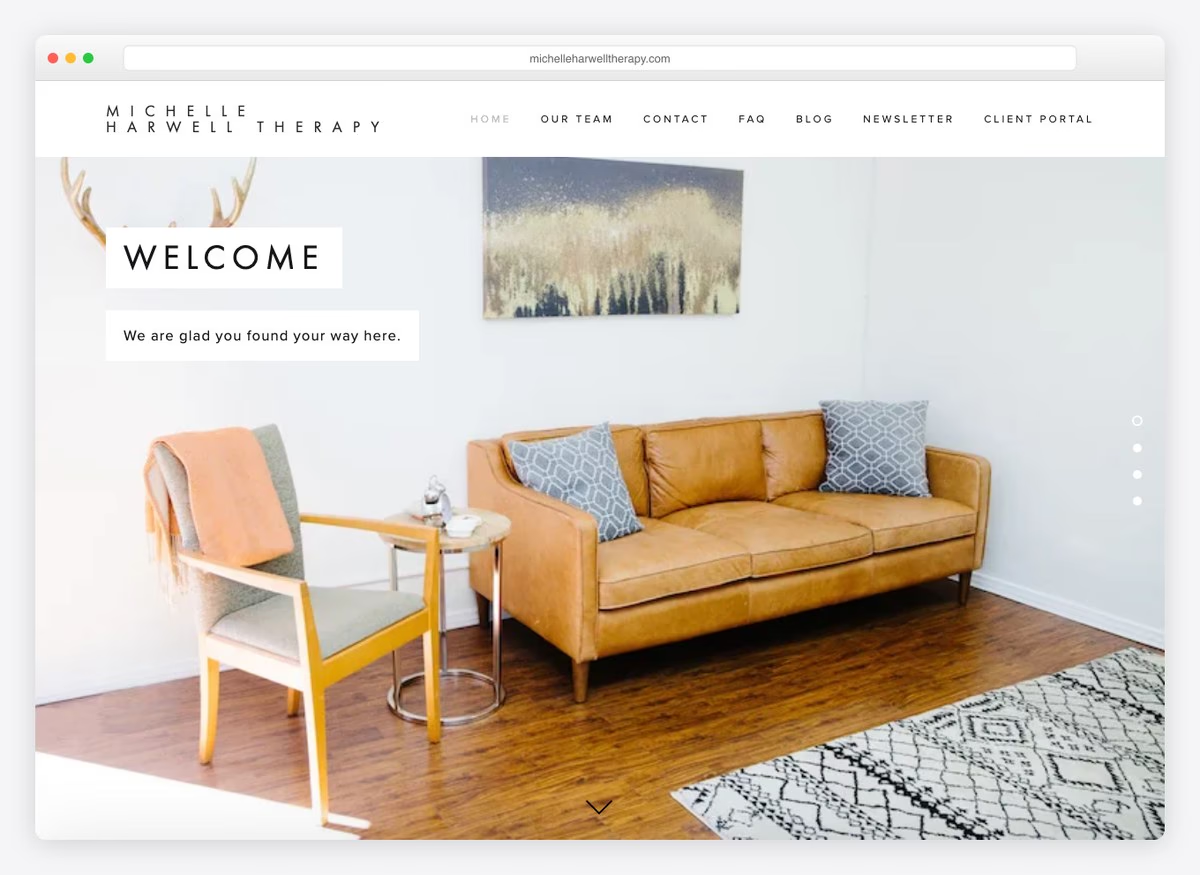
An empty armchair photographed in the actual office, which is a more honest image than the stock hands-clasped shot most of this sector uses. The fee is not on the homepage but sits one click away, where the range is given plainly rather than hidden behind an enquiry.
3. Wholeness Collective Therapy Group
Built with: Squarespace
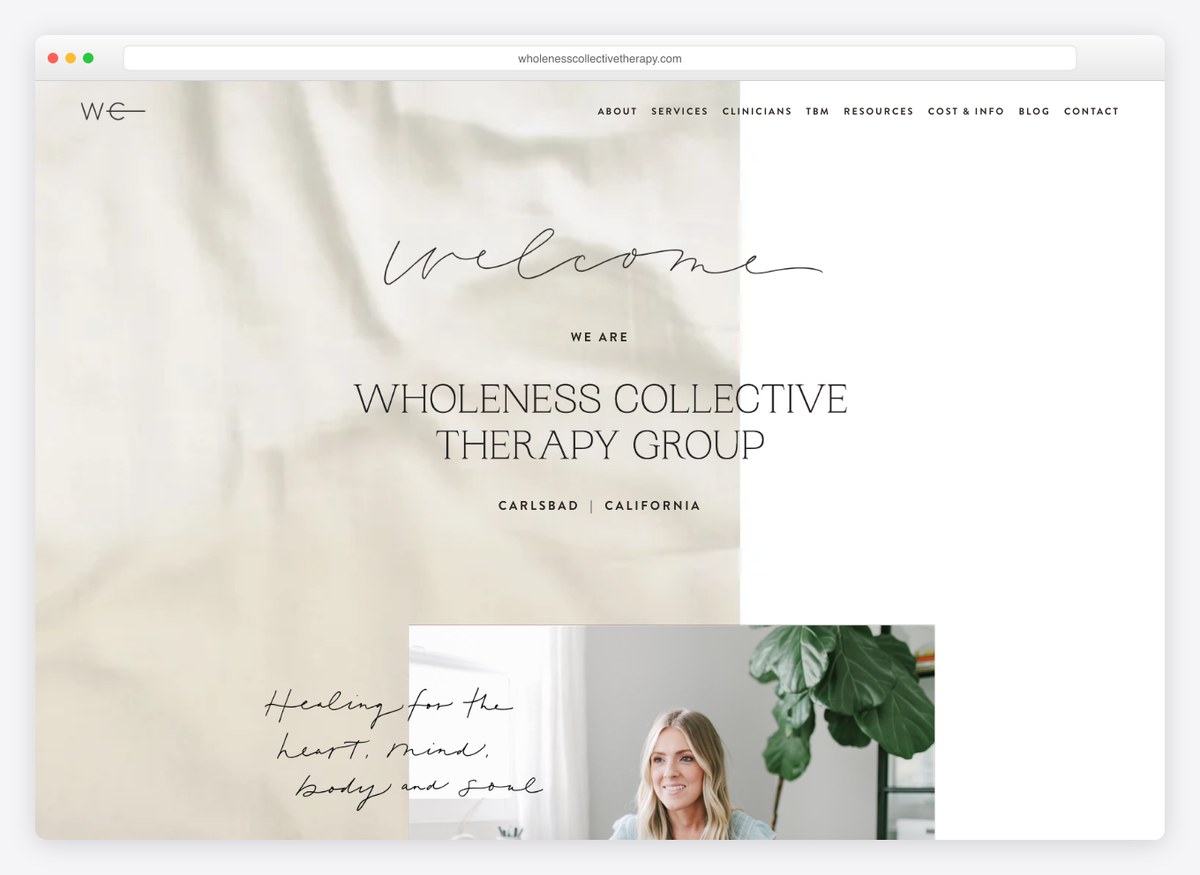
Script lettering over a cream ground and a deep forest green, with the practice name set as a welcome rather than a service. Rates are published on their own page — one of the minority here that answers the money question without making you ask it.
4. Jeff Miller
Built with: Squarespace
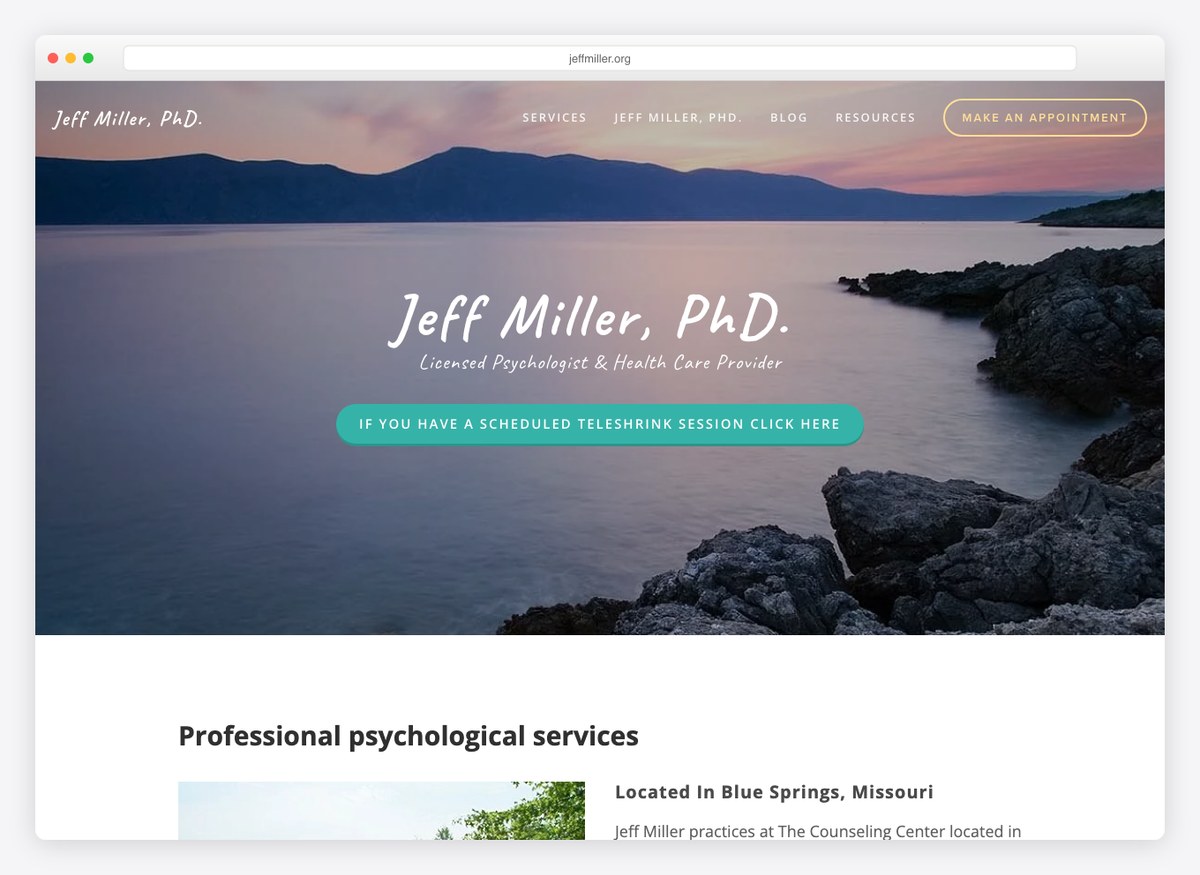
A landscape photograph of the Pacific coast with the clinician’s name in script over it, which reads more like a retreat than a psychology practice. A teal accent carries the booking control, and a telehealth notice sits above the fold.
5. Cognitive Behavioral Therapy LA
Built with: Squarespace

Doctoral-level expertise, science-driven therapy, proven results: the copy leans harder on evidence than anything else here. It also has a page called Fees/Insurance that contains no fee — it explains insurance reimbursement and calls therapy a smart investment instead.
6. Sara Douglas
Built with: Wix
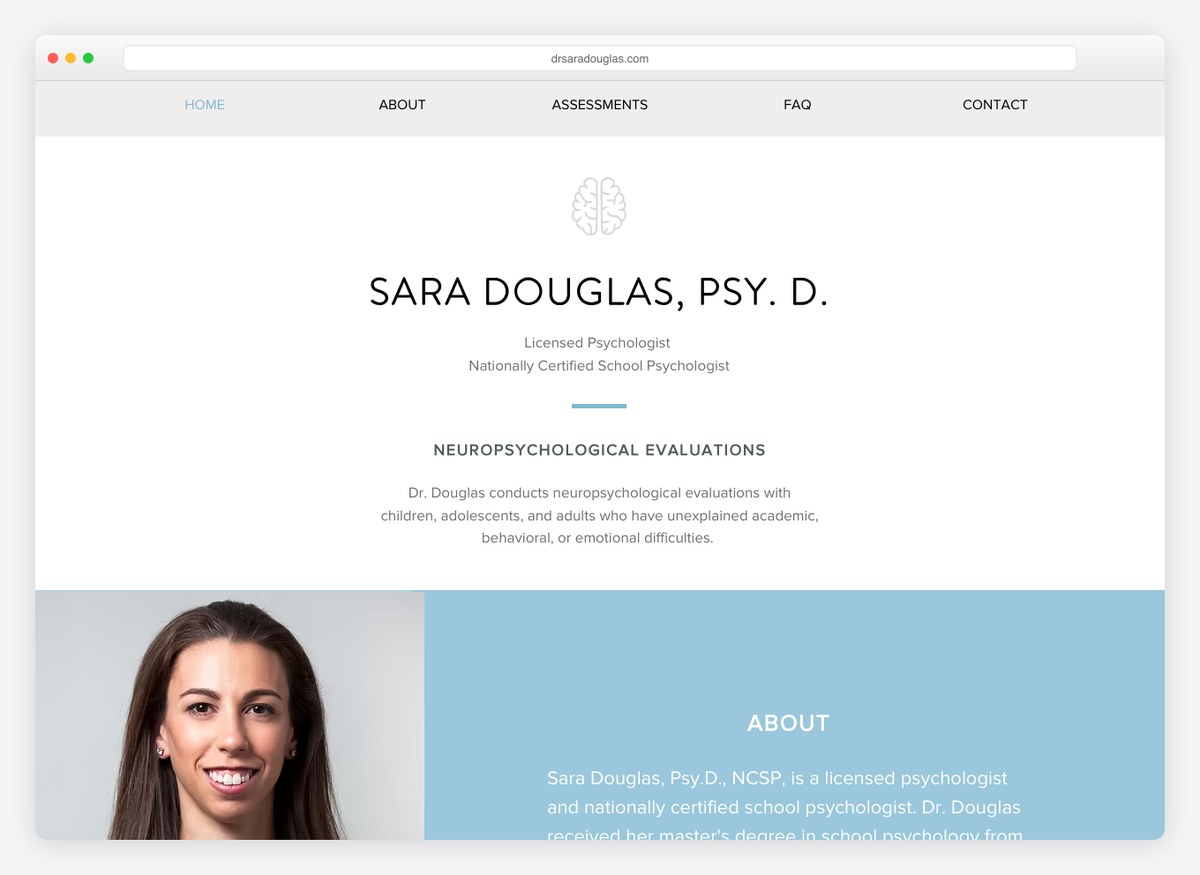
A neuropsychological evaluation practice rather than a talk-therapy one, and the site is organised around assessments. The pale blue band is the only colour on an otherwise white page, which suits a service parents are researching rather than browsing.
7. Milja Brecher
Built with: a bespoke build
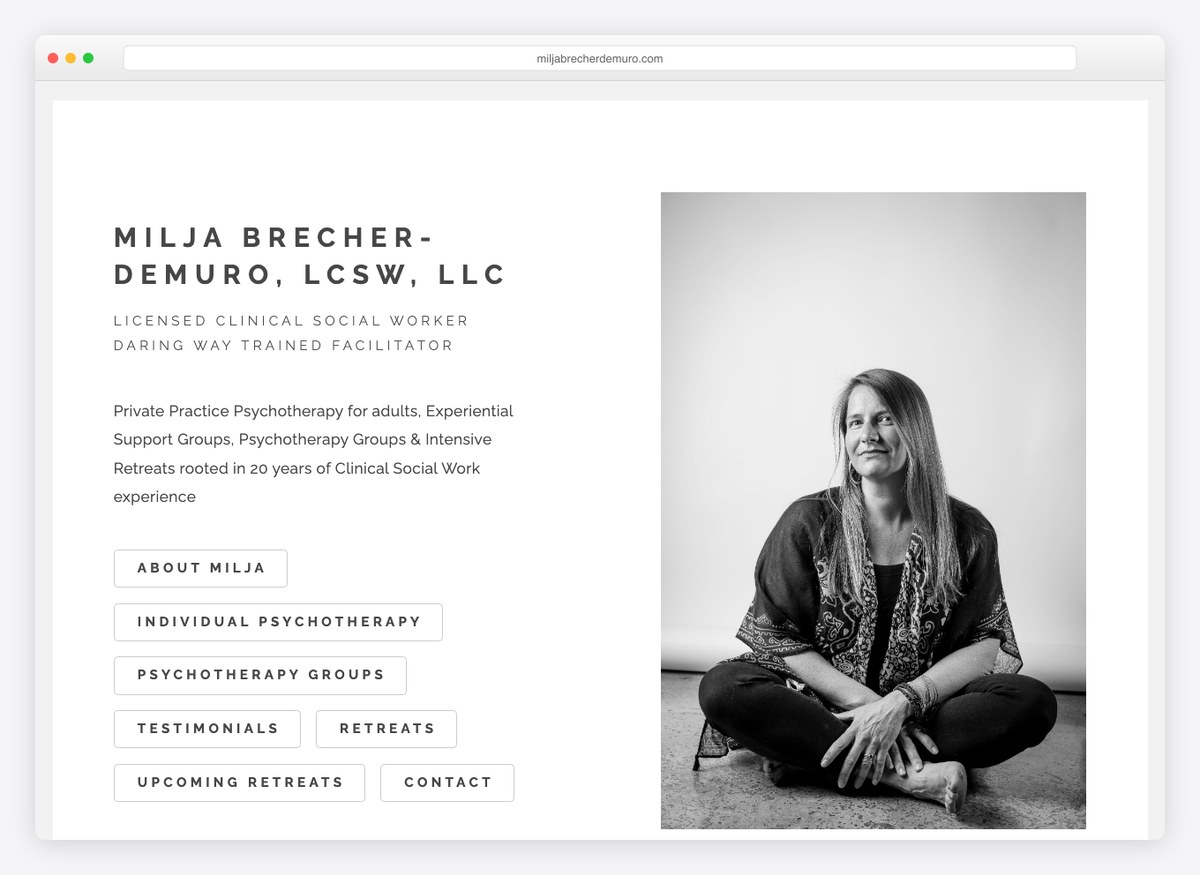
Black, white and nothing else. The name, the credentials and a stacked list of what she does — individual psychotherapy, psychotherapy groups, retreats — with no photography competing for attention. The most severe layout in this list.
8. Angie Richey
Built with: a bespoke build
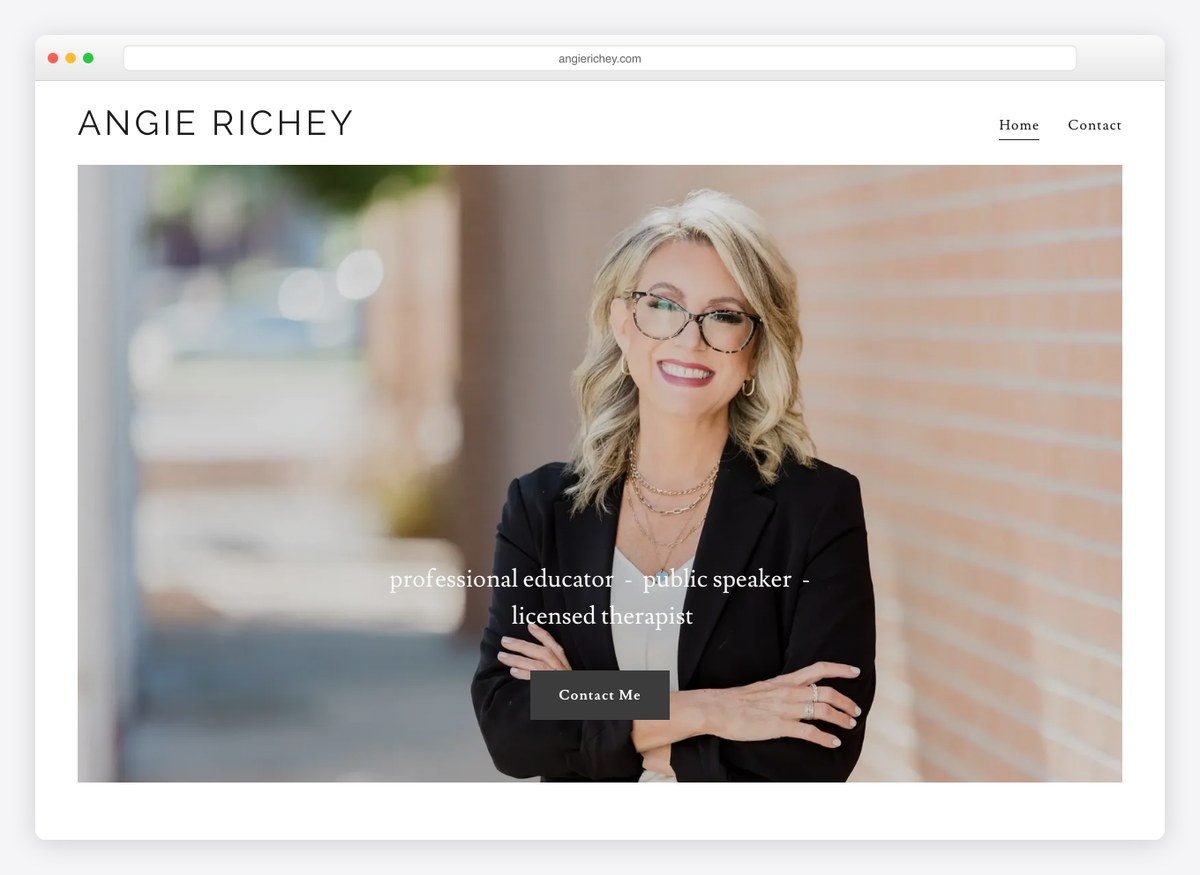
A warm neutral palette and a portrait that fills half the screen, positioning the therapist as the product, which for a solo practice is accurate. Contact is the only route in, and there is no fee anywhere on the site.
9. Tampa Counseling Place
Built with: WordPress · Scheduling: SimplePractice
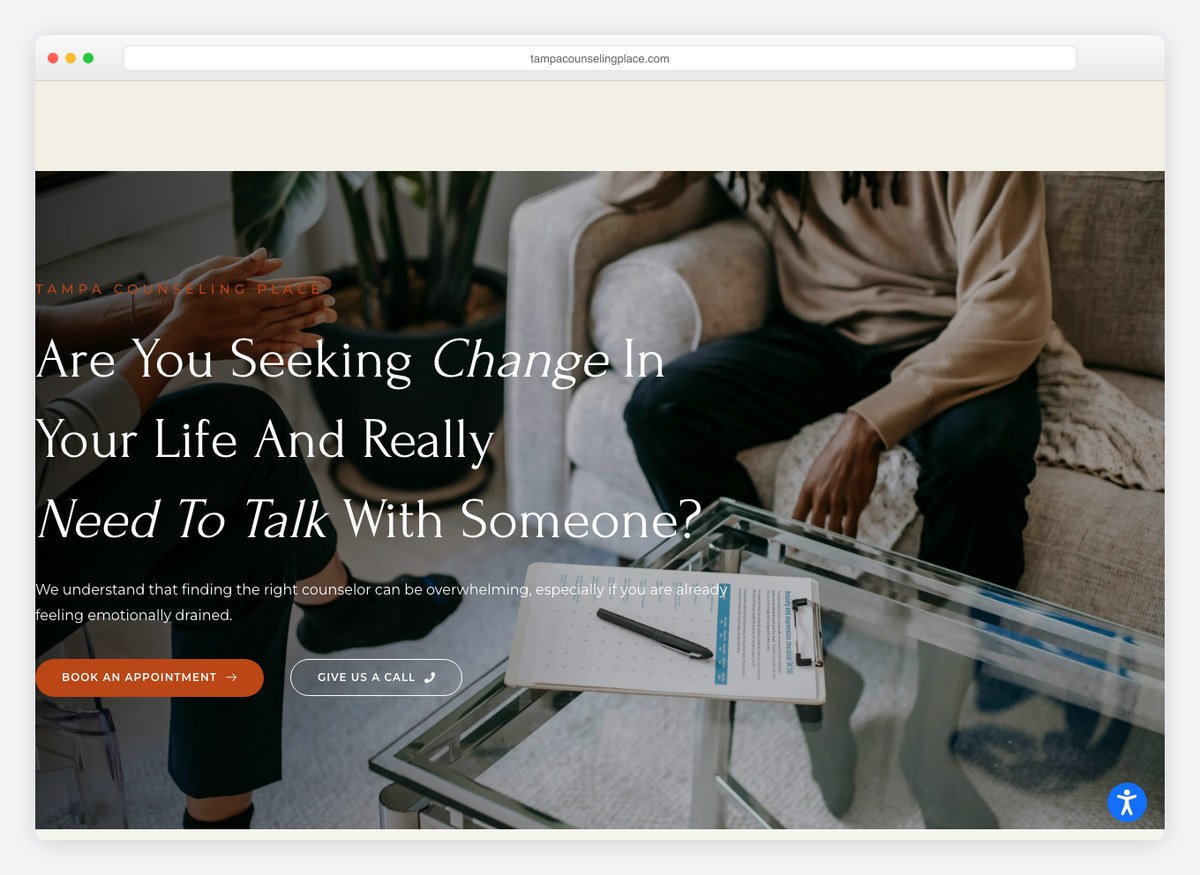
A group practice that opens on a question rather than a statement: “Are You Seeking Change In Your Life And Really Need To Talk With Someone?” Booking runs through a real scheduling system, which only a handful of practices here use.
10. Collective Psychology
Built with: WordPress · Scheduling: Halaxy
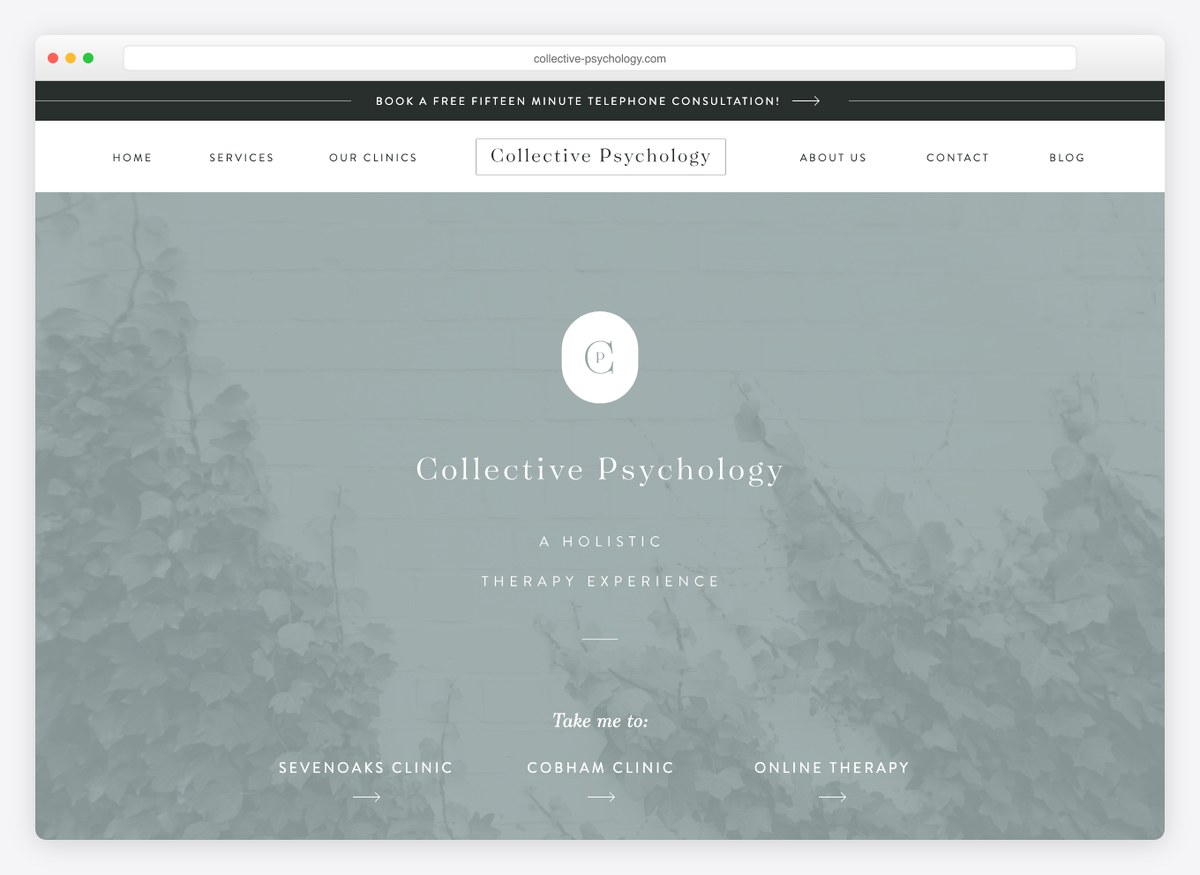
A muted sage ground, a monogram, and three clinics listed as plain text links. The restraint is the positioning — this is a practice that expects to be found by referral rather than by search, and the site behaves accordingly.
11. MLC Dallas
Built with: Squarespace
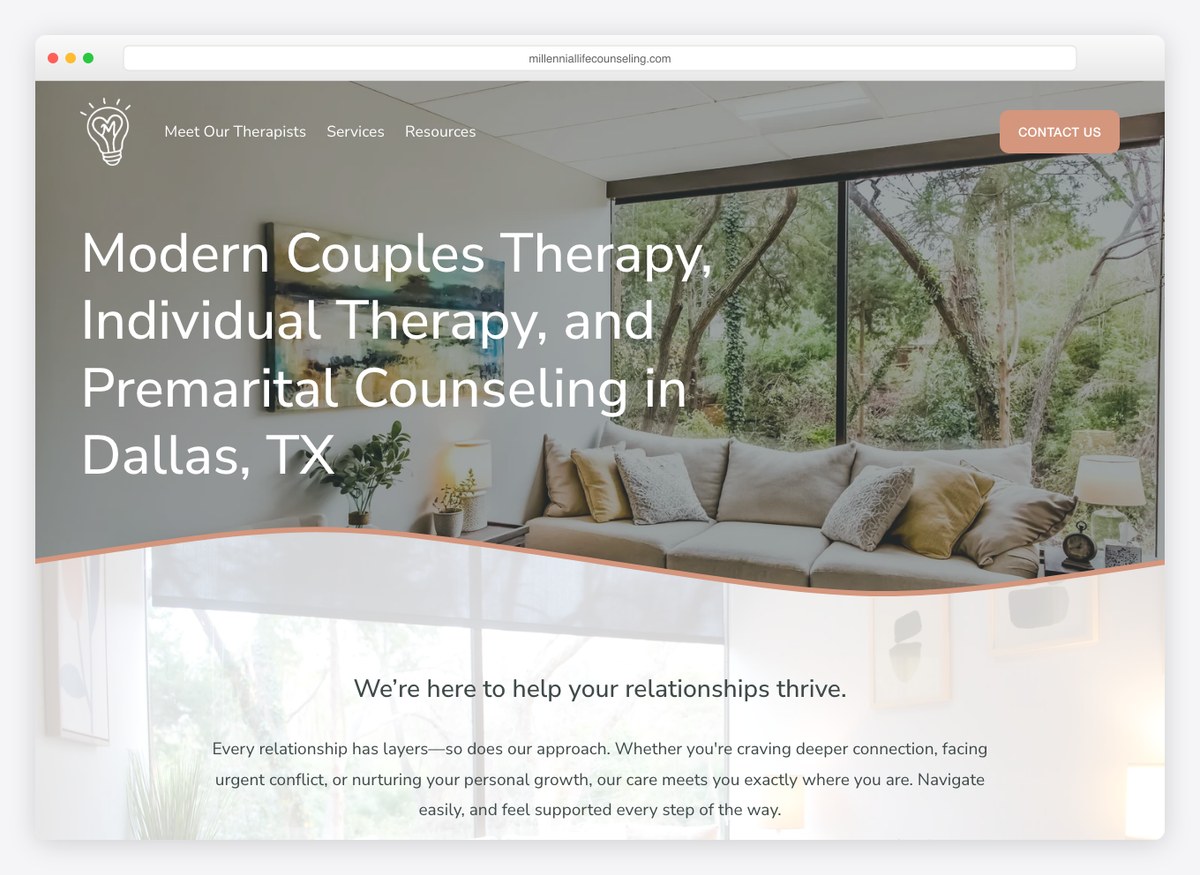
The clearest geographic and service statement in the set: modern couples therapy, individual therapy and premarital counseling in Dallas, TX, in one sentence at the top. Session rates are published on a separate page, itemised by appointment length.
12. Greta Strickland
Built with: Wix
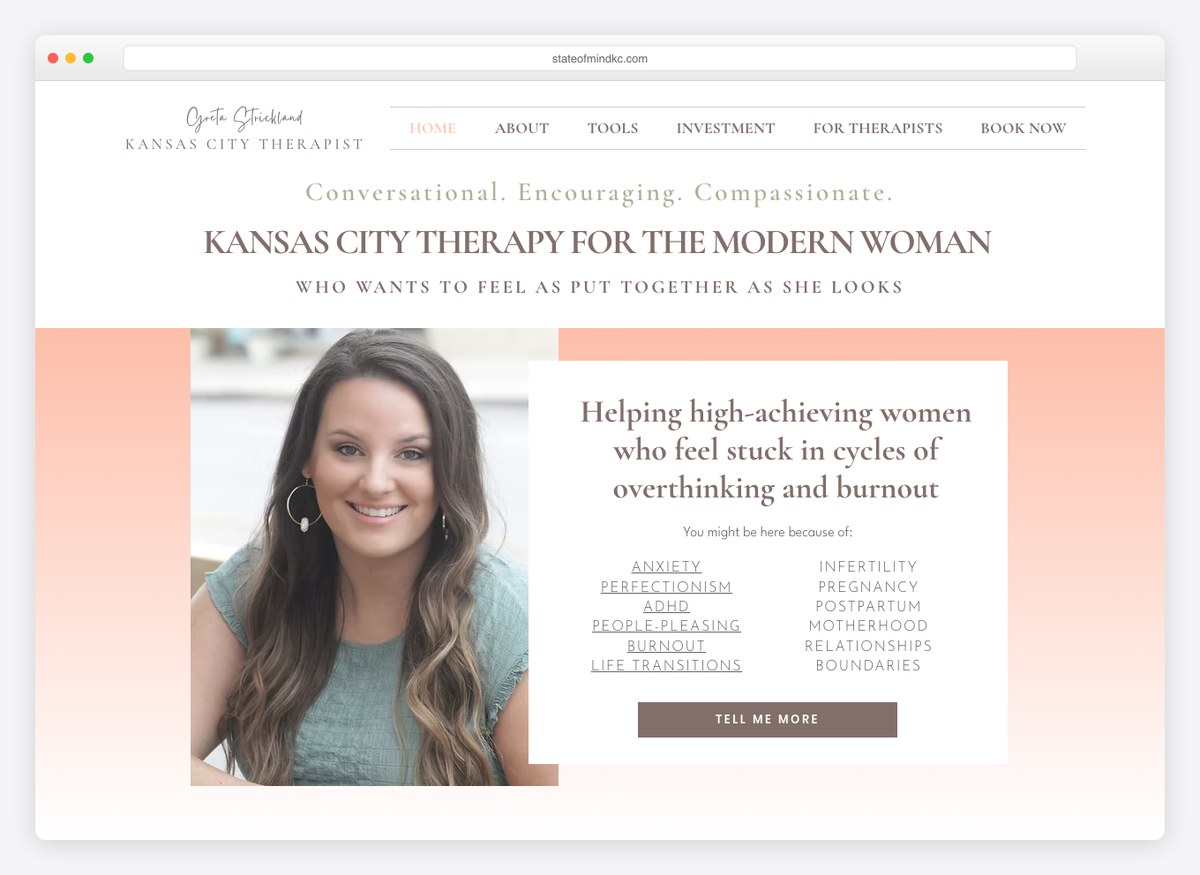
Kansas City therapy for the modern woman who wants to feel as put together as she looks. The audience is narrowed to a single sentence, and the specialisms underneath it — anxiety, perfectionism, burnout — read as a checklist a visitor can match themselves against.
13. Ever Be Therapy
Built with: WordPress
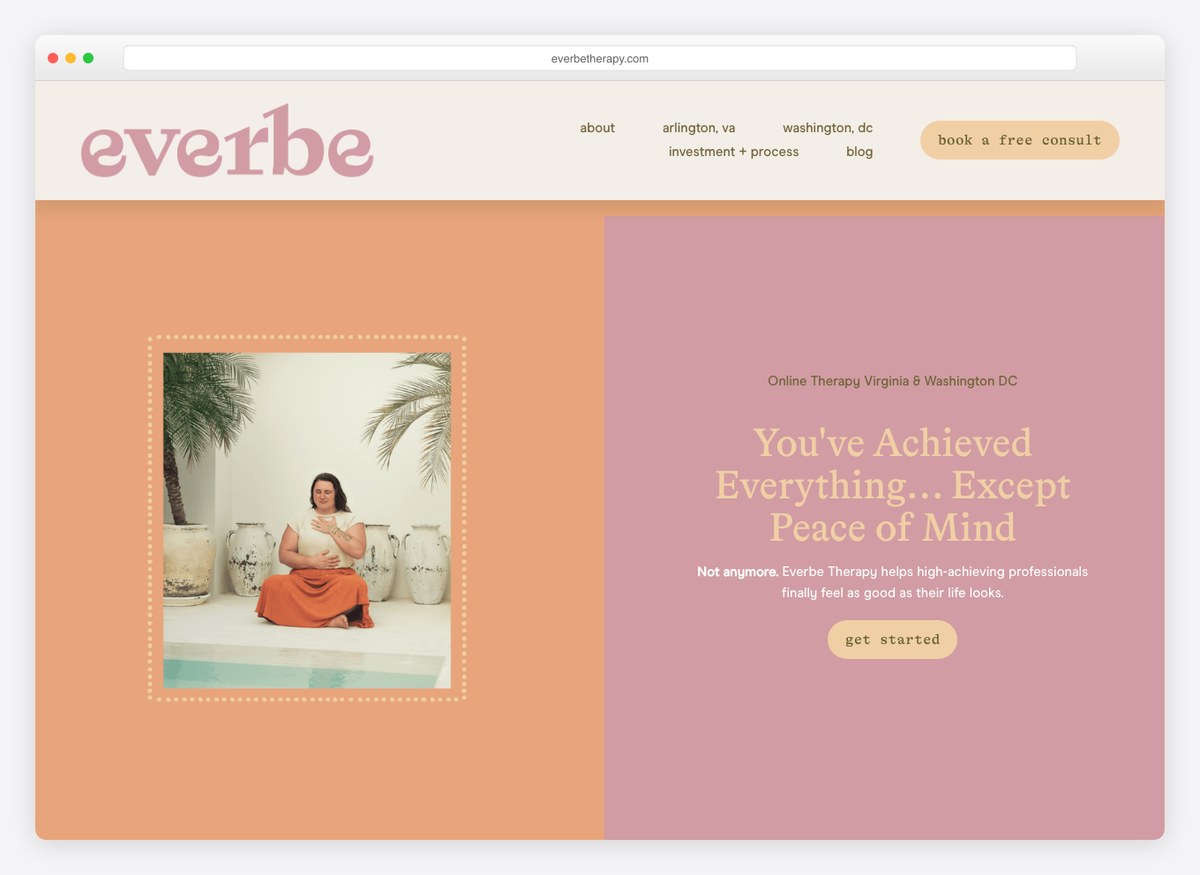
Dusty pink and peach over two-thirds of the screen, which is a long way from the beige most of this sector settles on. A banner across the top says the caseload is full and links to therapists she recommends instead, which is rarer and more useful than any design choice on the page.
14. Nancy Ortiz
Built with: Squarespace
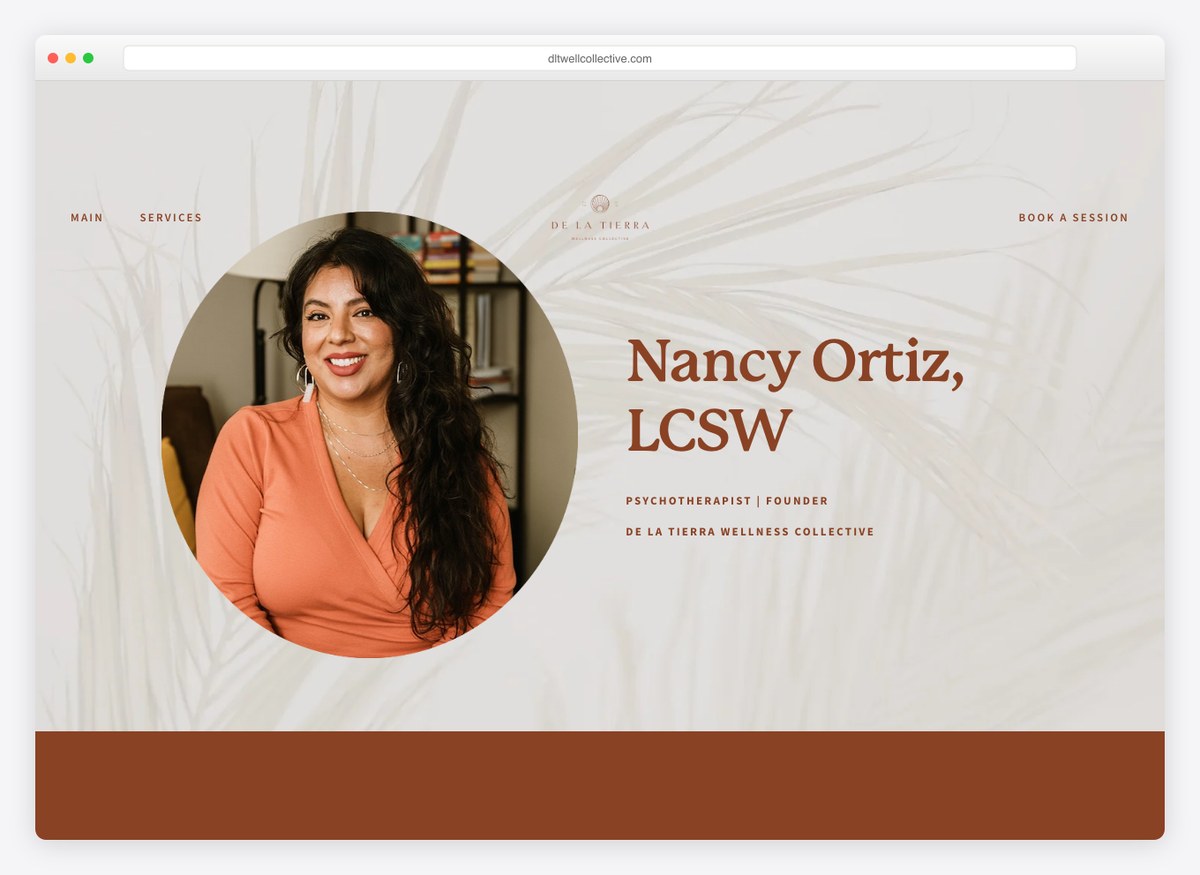
A circular portrait on a pampas-grass background with a terracotta band beneath it. The intake session fee is published on the fees page, itemised separately from ongoing sessions — a distinction most practices do not bother to make.
15. Child and Family Therapy Collective
Built with: Squarespace
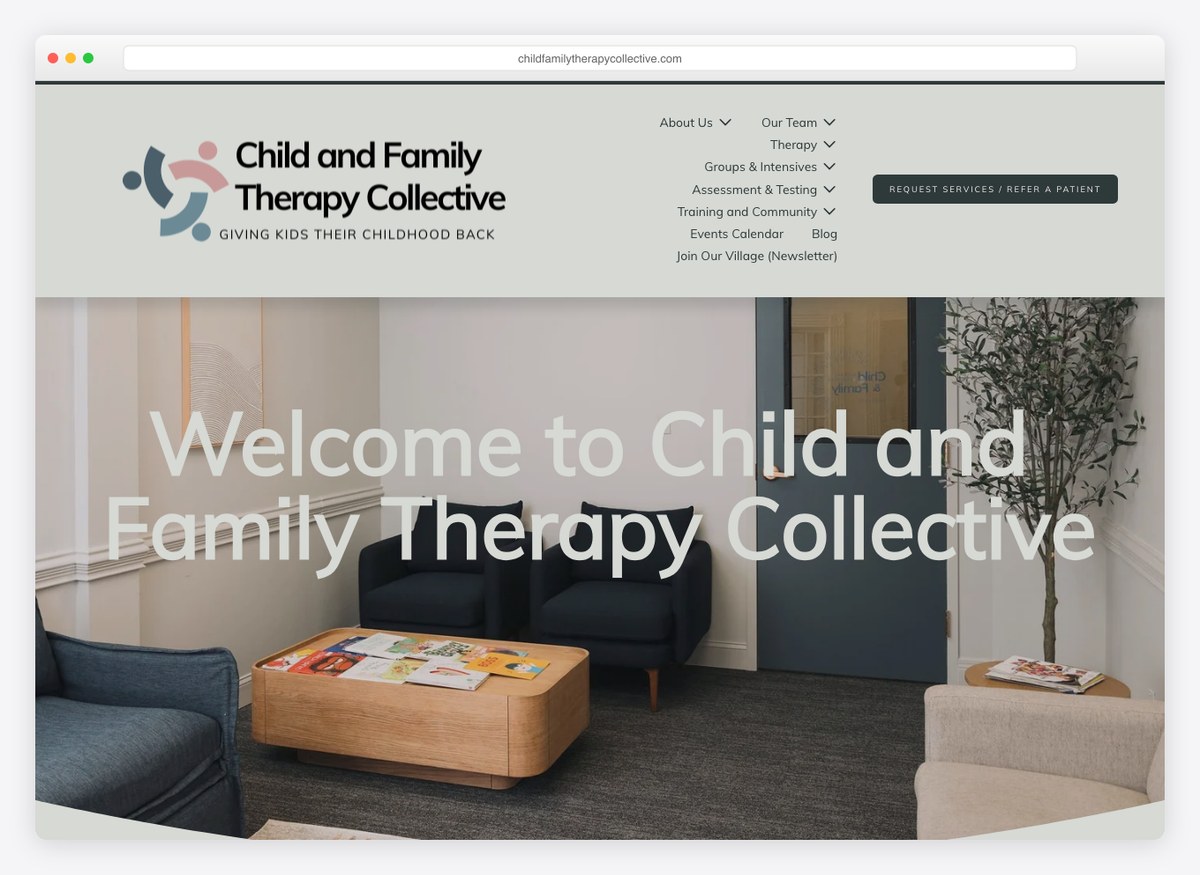
A photograph of the actual playroom, with toys and low chairs visible, which tells a parent more about what will happen to their child than any paragraph could. The strapline is unusually direct: giving kids back their childhood.
16. Jaree Basgall
Built with: Squarespace
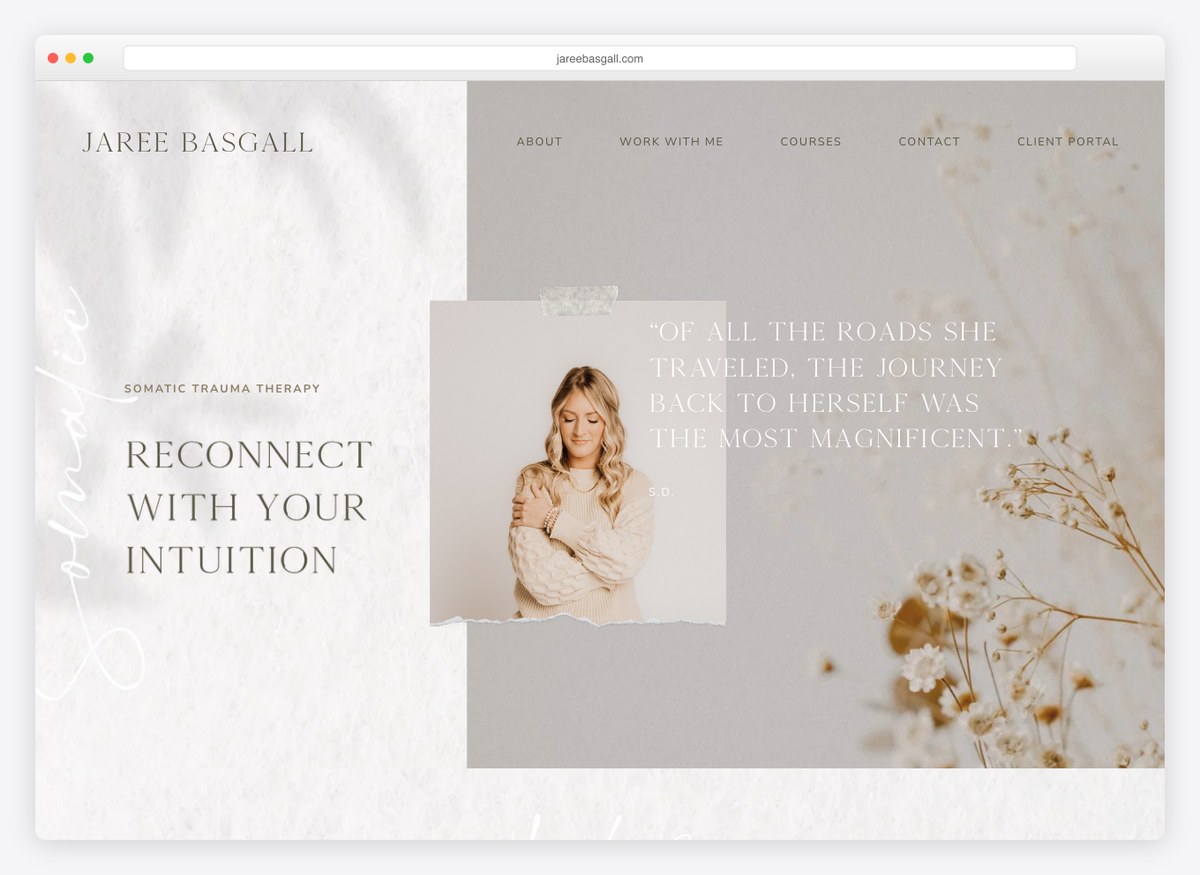
Muted taupe, dried florals and serif type — the most fashionable-looking site here, and the aesthetic a lot of therapy practices are currently copying. A banner states she is accepting clients for the year and explains that the route in is a waitlist.
17. SR Psychological Services
Built with: WordPress
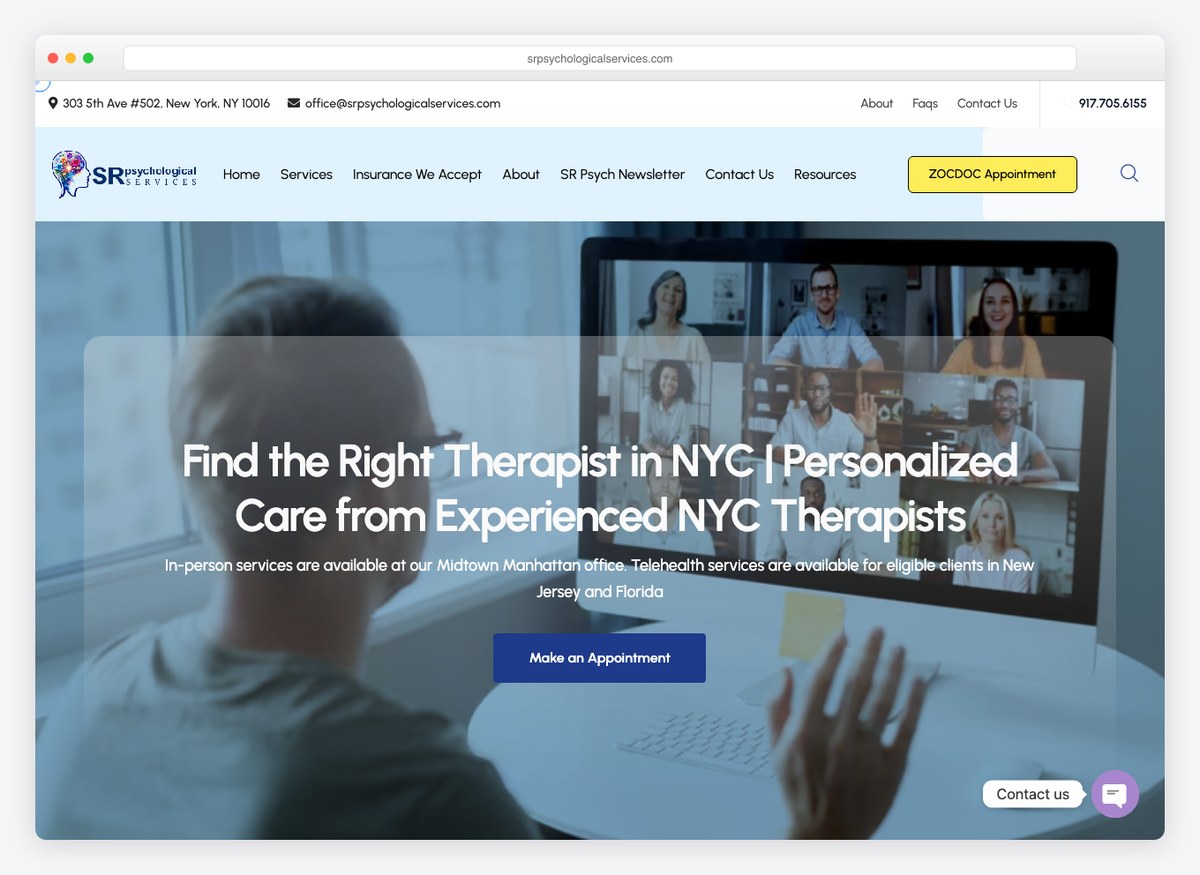
A group practice whose homepage is a matching problem rather than a brochure: find the right therapist in New York, with a video-call photograph and an appointment button. A yellow accent does all the work against navy and white.
18. Jennifer Mancuso Urban
Built with: a bespoke build · Scheduling: SimplePractice
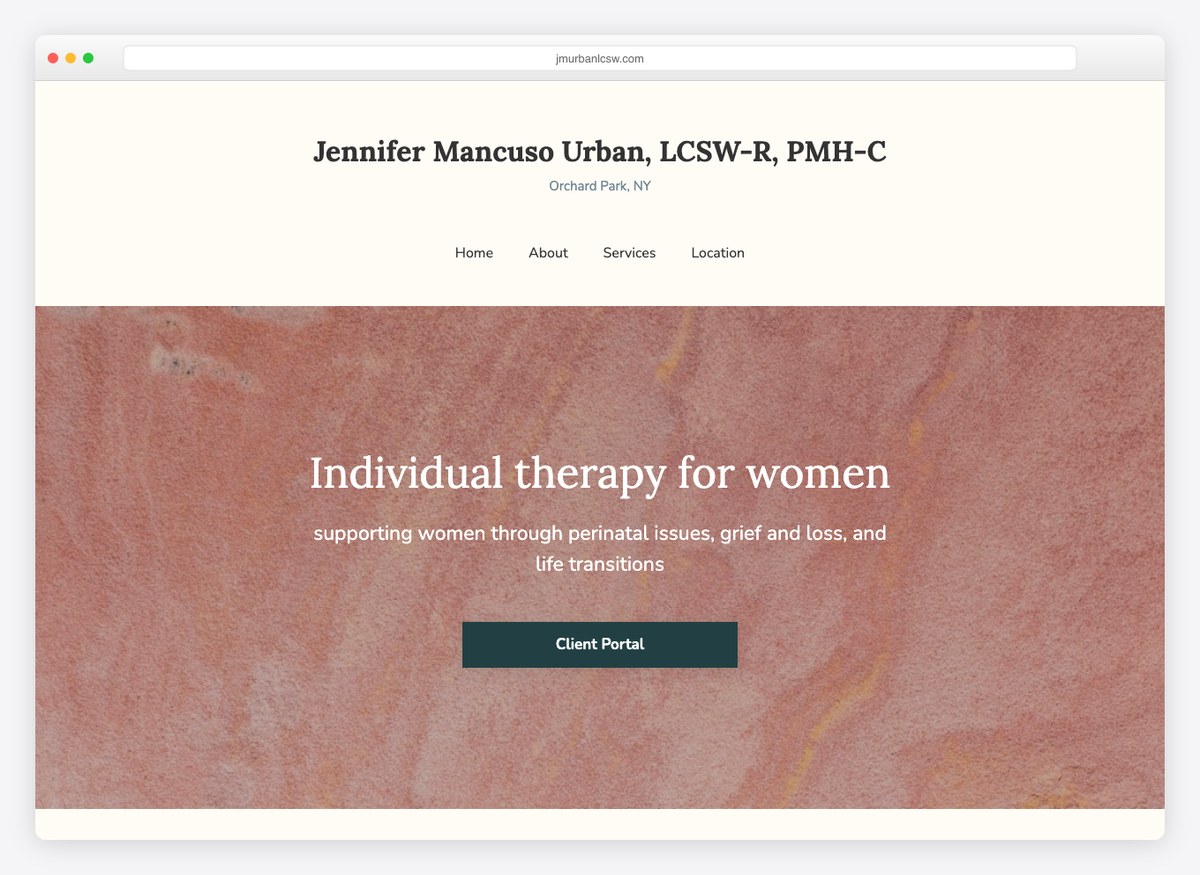
A textured rose panel filling the lower two-thirds, with the practice narrowed to one audience: individual therapy for women, supporting perinatal issues, grief and loss, and life transitions. The session fee is on the homepage, which three of these thirty manage.
19. Zoe Riggs
Built with: Squarespace
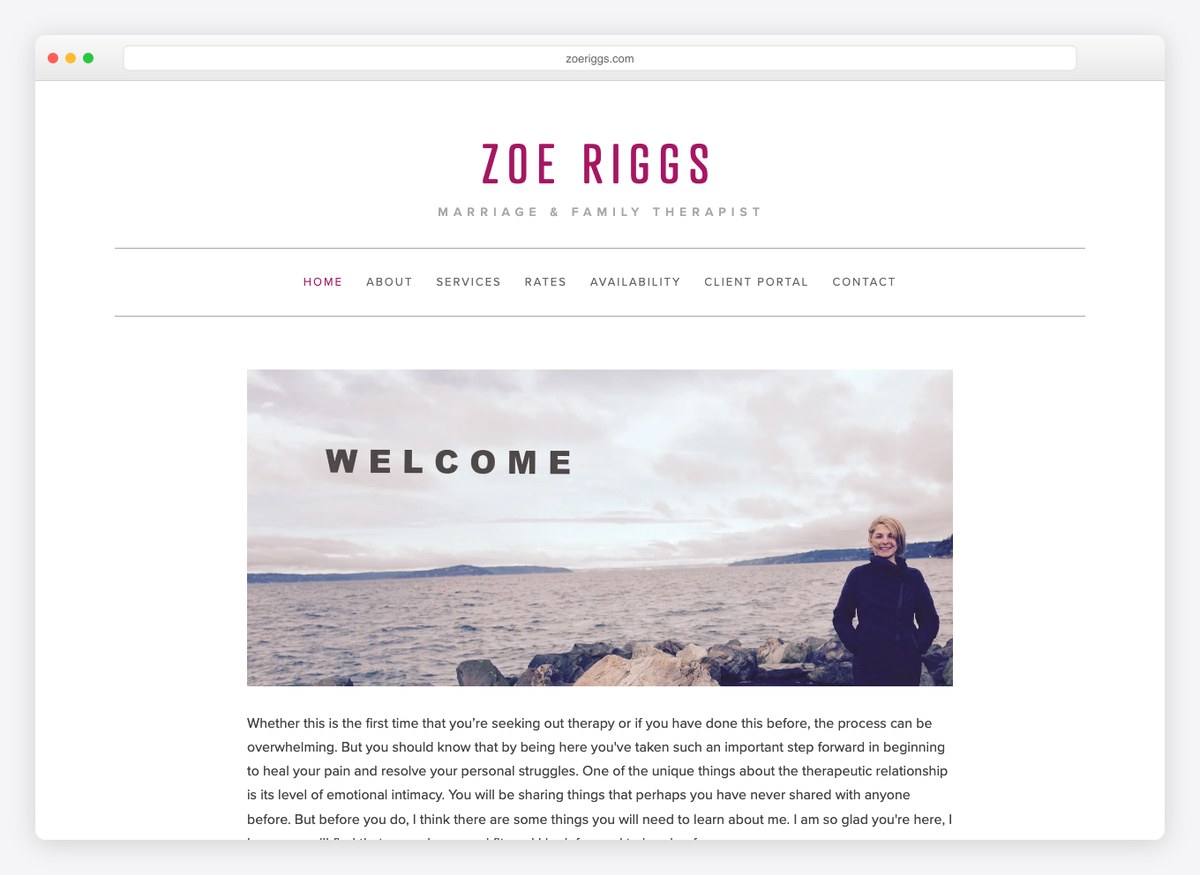
The navigation is the finding. Alongside About and Services sit two items most practices never publish: Rates and Availability. Making both a permanent destination rather than a paragraph is the simplest fix on this page.
20. Brent LoCaste-Wilken
Built with: Webflow · Scheduling: Zencare
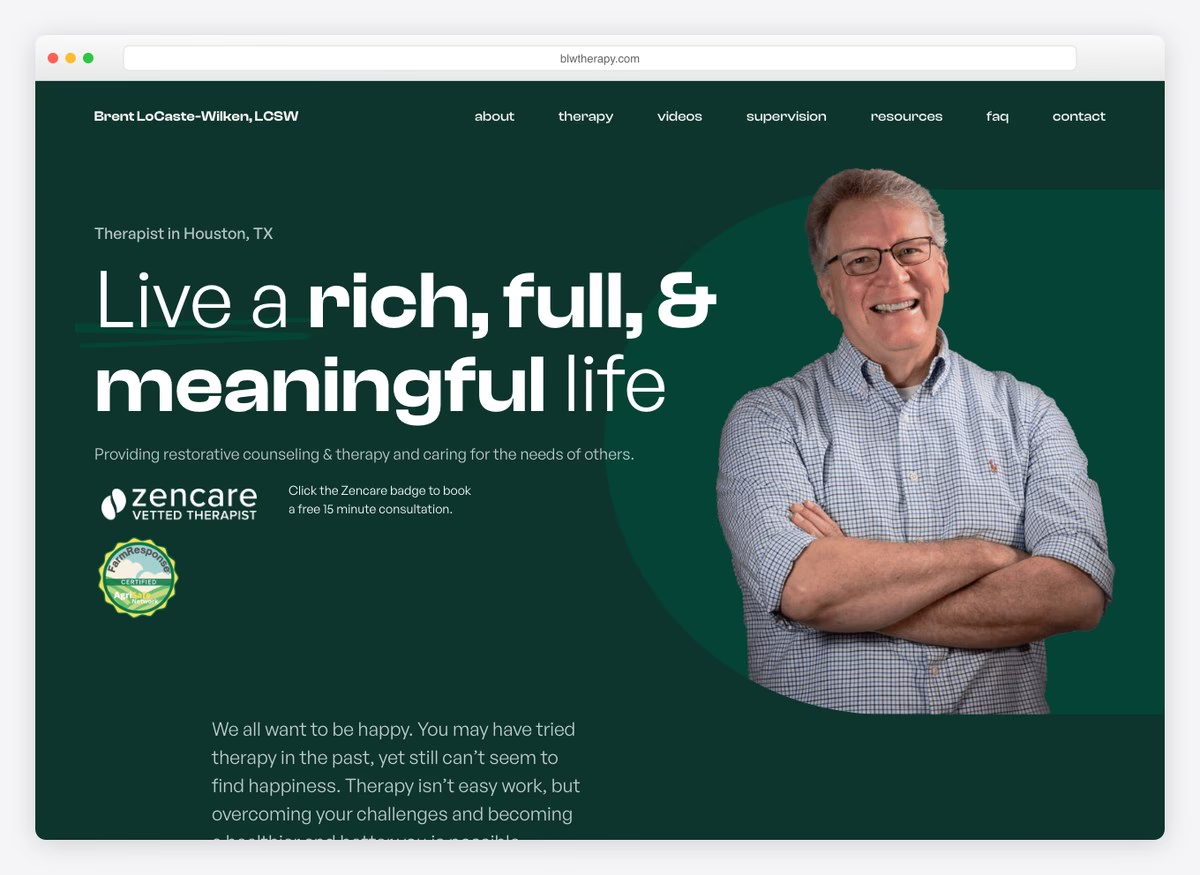
Deep green with a portrait cut out against it and a headline that promises a life rather than a treatment. A Zencare badge and a free fifteen-minute call sit in the first screen, both of which shorten the distance to a first conversation.
21. Authentic Self Consulting
Built with: Squarespace
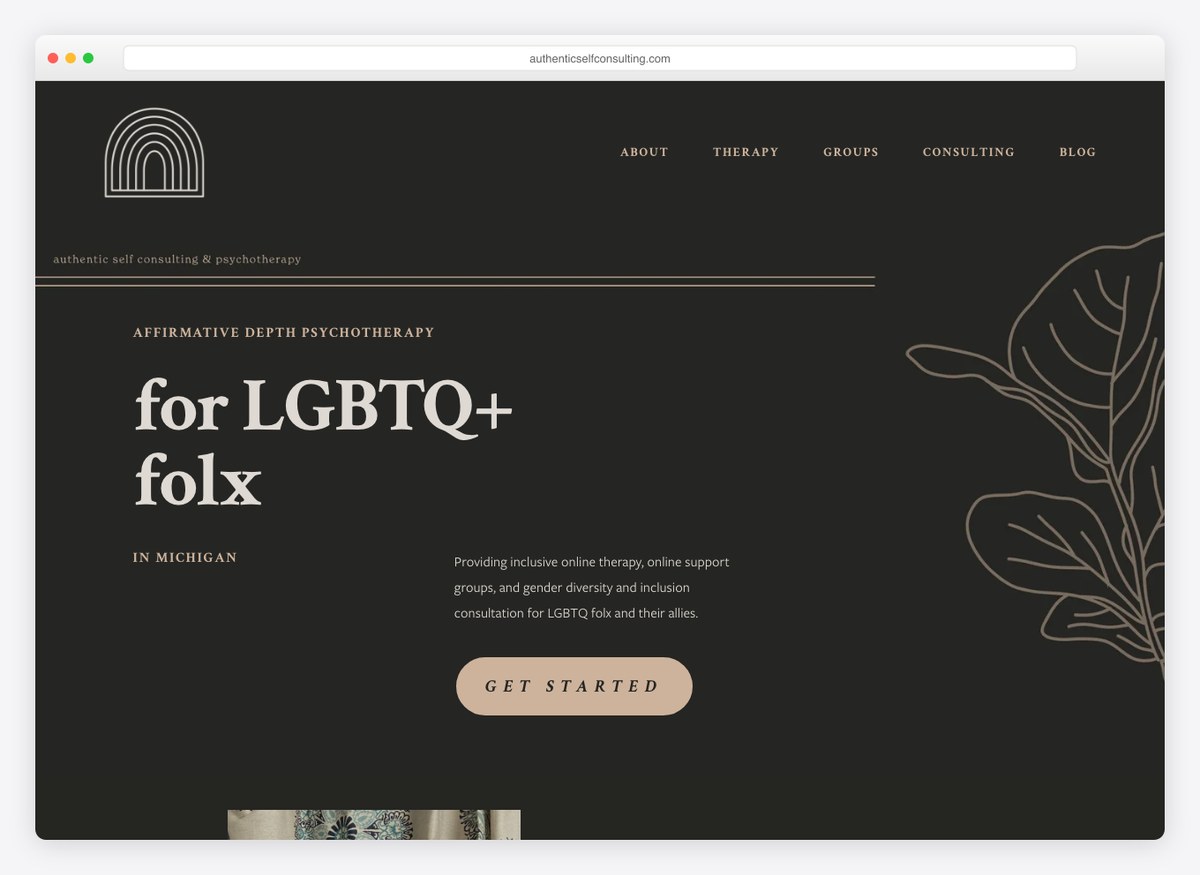
Charcoal, a warm sand accent and the line “affirmative depth psychotherapy for LGBTQ+ folx”. The audience is stated before the service, which is the opposite order to almost every other site here and much clearer for the person it is written for.
22. Alexandria Art Therapy
Built with: Squarespace
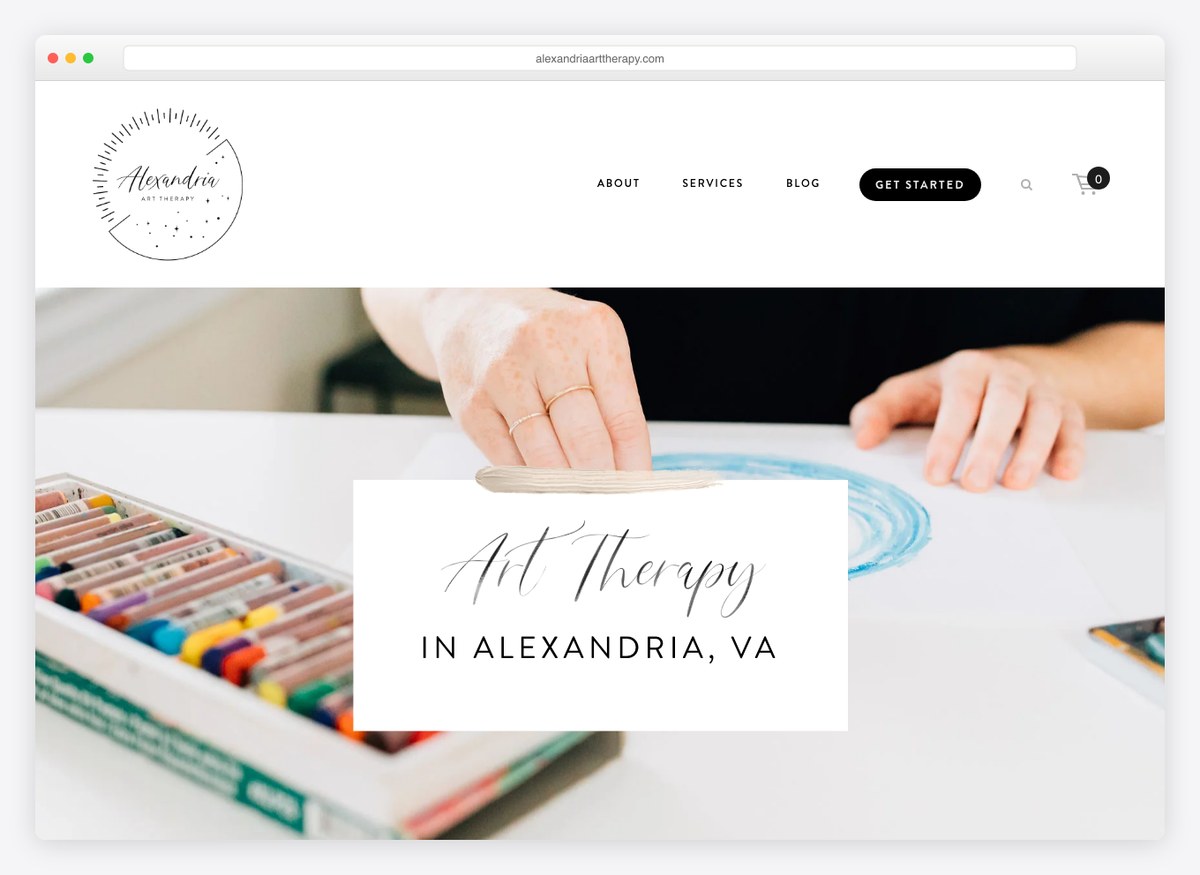
A banner above everything else reads: no waitlist for new clients, evening and weekend openings. That is the single most useful sentence a therapy website can carry, and this is the only practice here that leads with it. The art materials photographed below explain the modality without jargon.
23. Attuned Psychology
Built with: WordPress
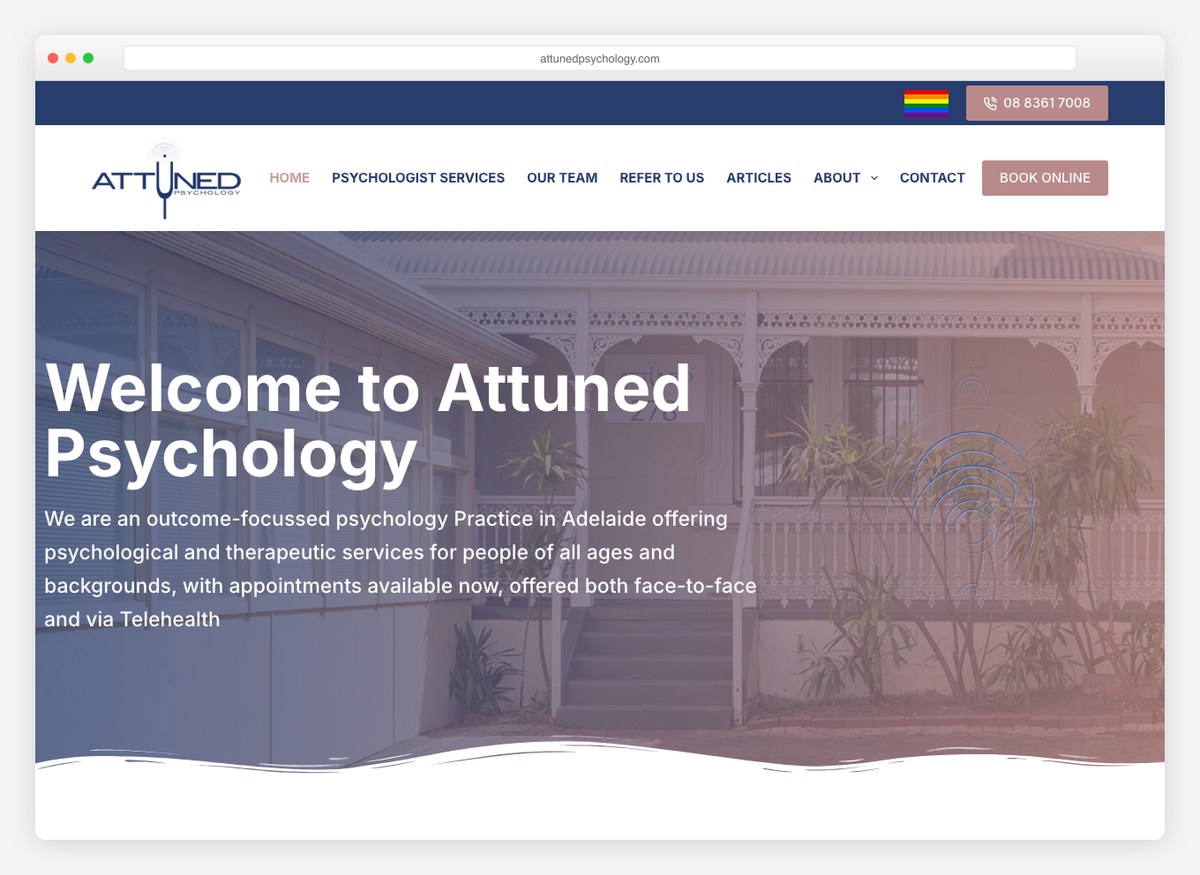
An Adelaide practice that states appointments are available now and offers both in-person and telehealth in the first screen. The navy and dusty rose palette is more corporate than most, which suits a group practice serving all ages.
24. Somatic Therapy Tampa
Built with: WordPress · Scheduling: Psychology Today
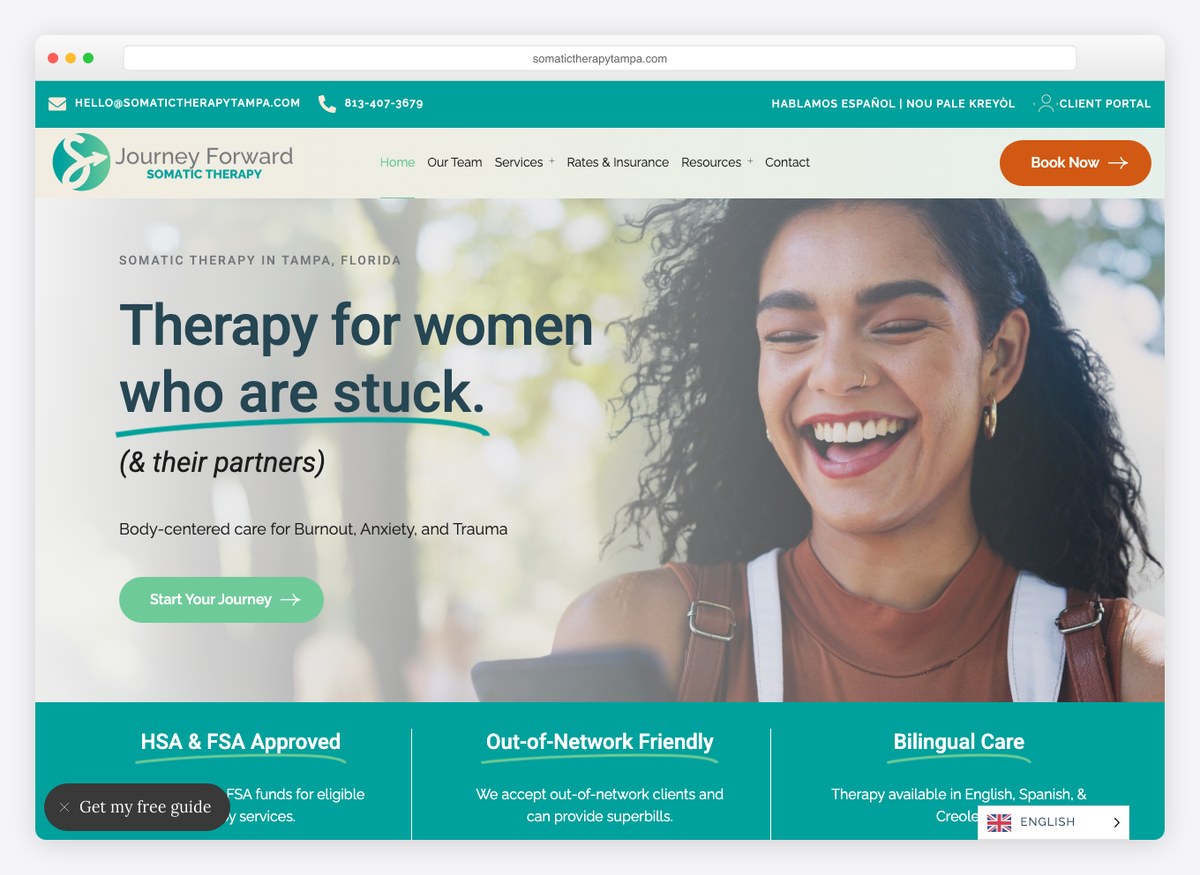
Teal, coral and a green accent — the busiest palette in the set, and it works because the practice is bilingual and the page is doing two jobs at once. Out-of-network friendly is stated openly rather than buried in an FAQ.
25. Embrace Corazón
Built with: WordPress
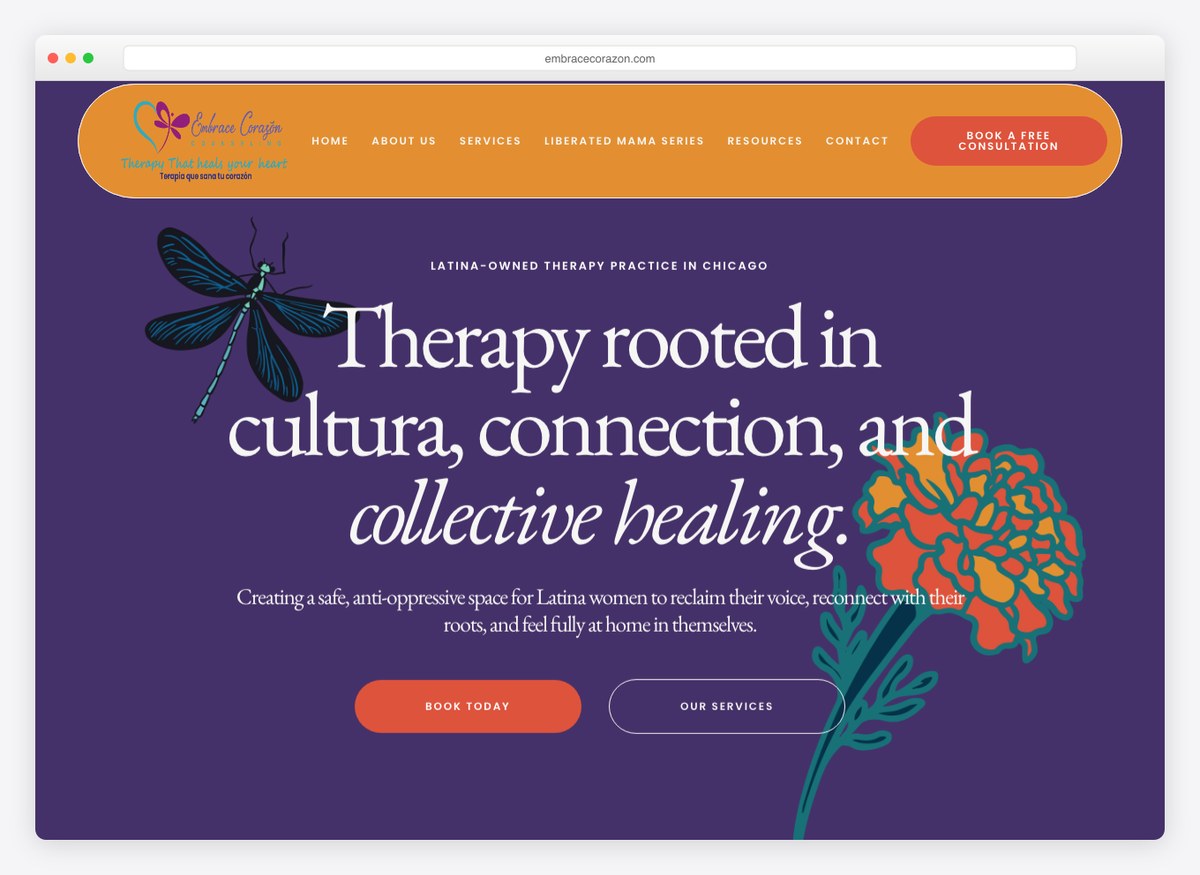
Deep purple with marigolds and a dragonfly, framing therapy rooted in culture, connection and collective healing. A Latina-owned practice in Chicago that looks like nothing else here, and whose visual identity carries the positioning by itself.
26. The Empowering Space
Built with: WordPress
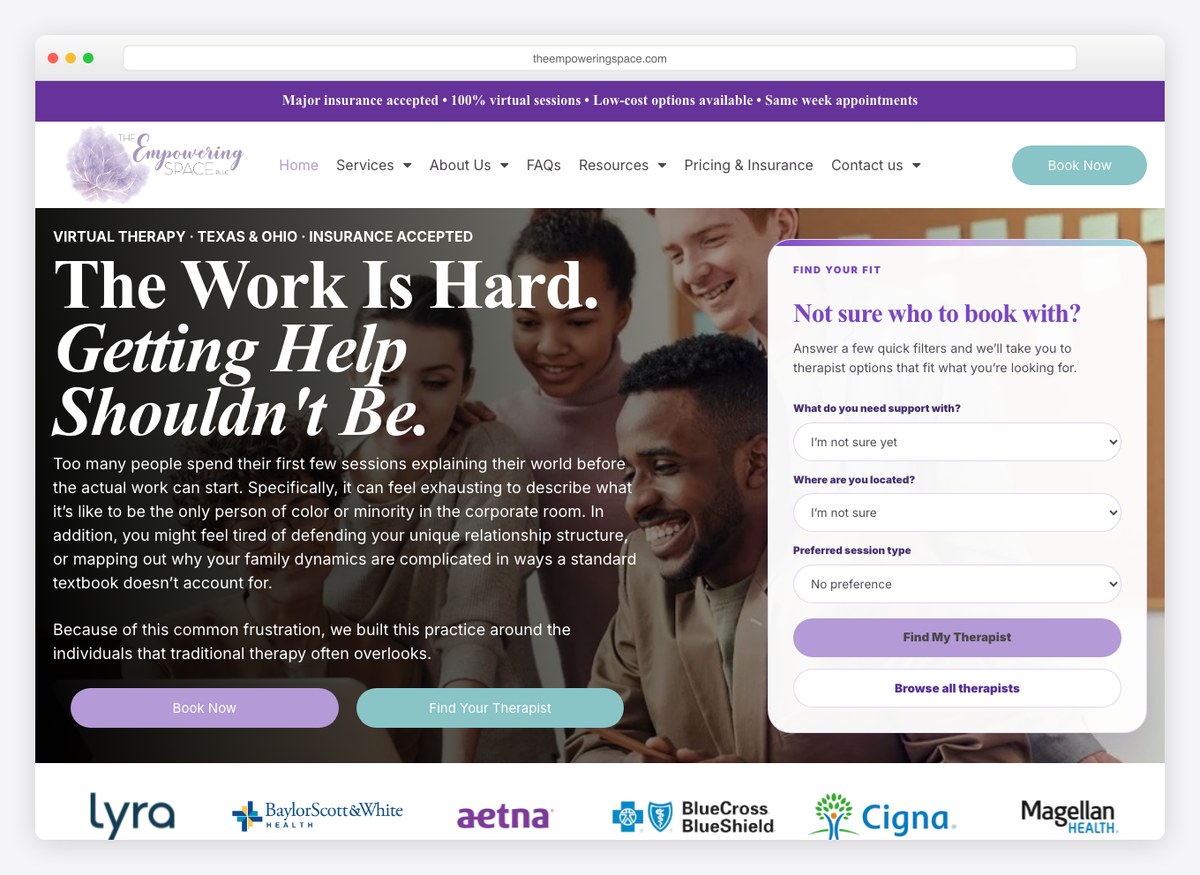
Instead of a contact form, a short quiz: who do you want to book with, what are you struggling with, are you in Texas or Ohio. Insurance logos run along the bottom. It is the most deliberate attempt in this list to answer the three questions before you ask them.
27. Therapy With Joy
Built with: Squarespace
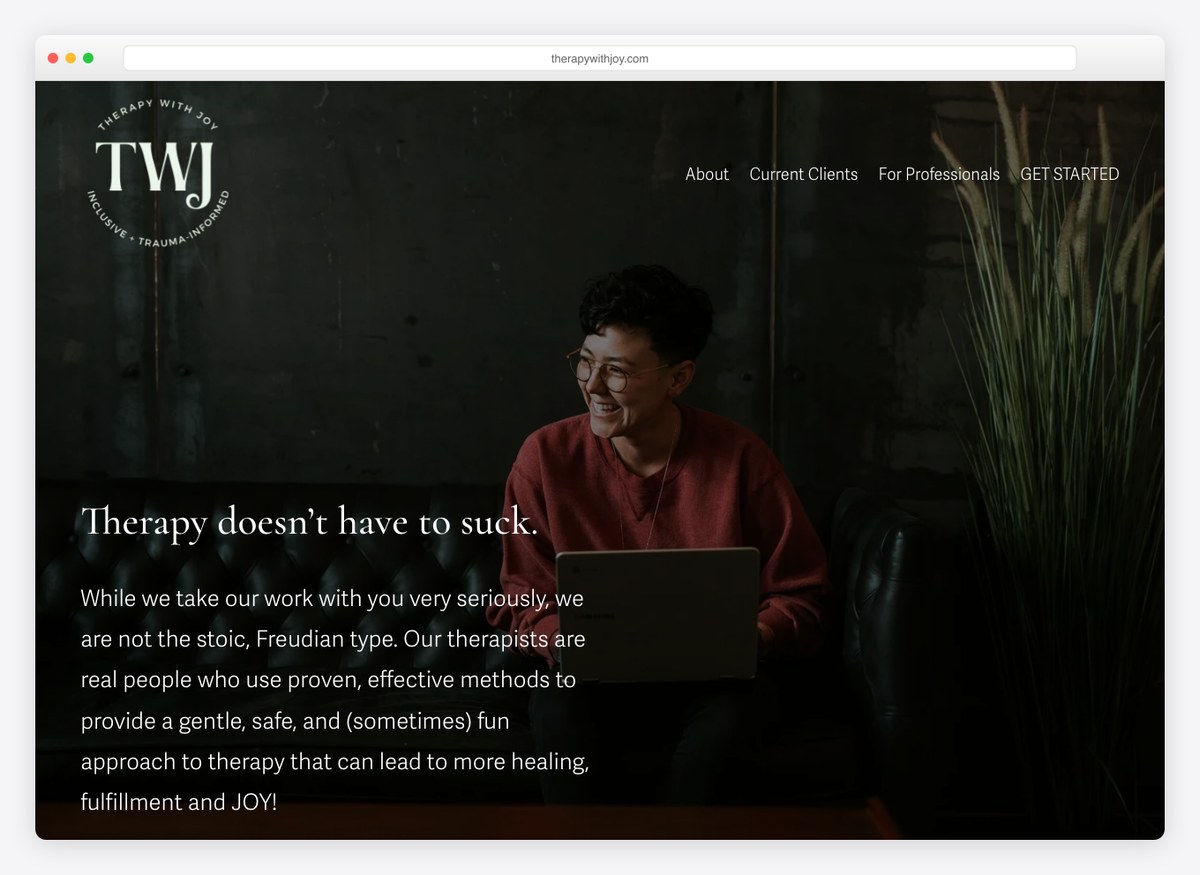
Near-black with a single deep red accent and the line “Therapy doesn’t have to suck.” A banner states that she is taking new clients. The tone is the differentiator in a sector where almost every other site reaches for calm.
28. Cindy Shu Therapy
Built with: Wix
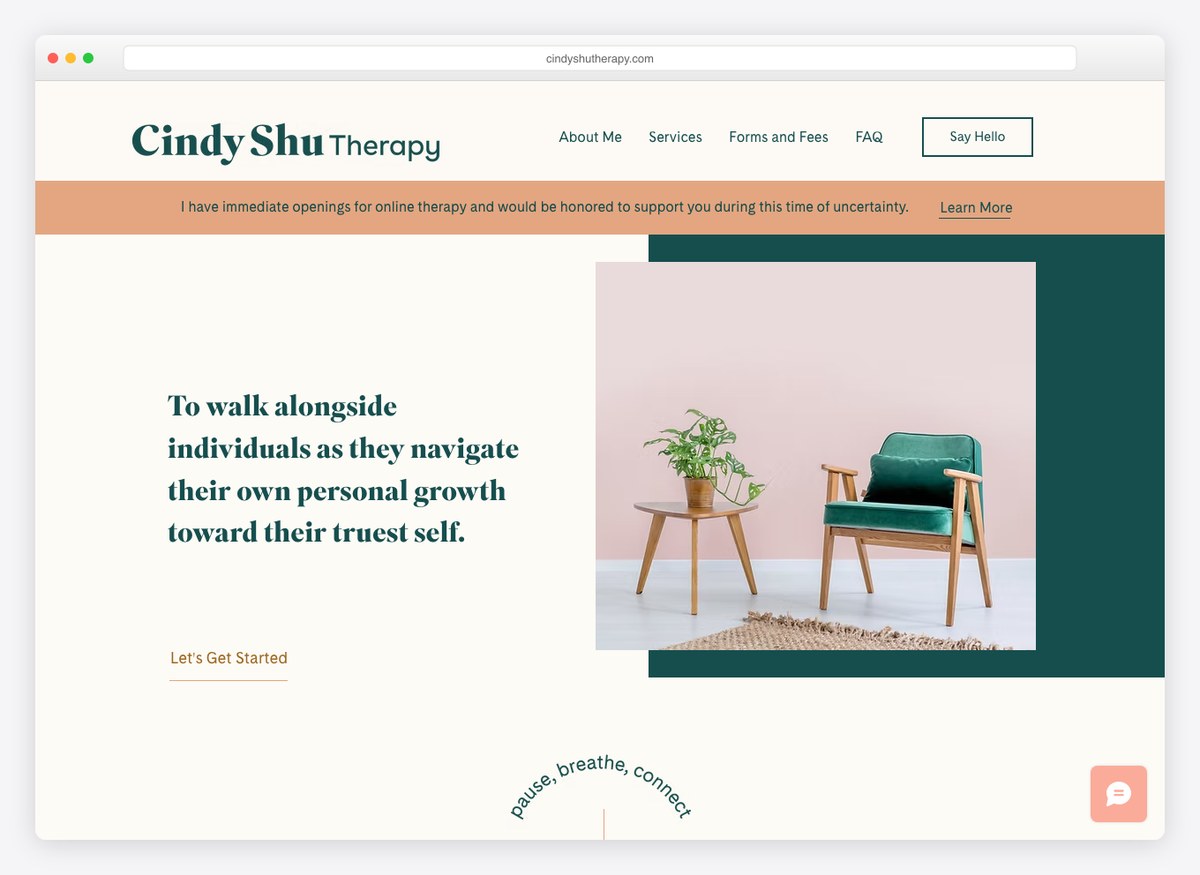
Cream, deep teal and a blush panel, with an opening line that says there are immediate openings for online therapy. Fees are itemised on a page called Forms and Fees, which pairs the two things a new client has to deal with first.
29. Deep Eddy Psychotherapy
Built with: WordPress
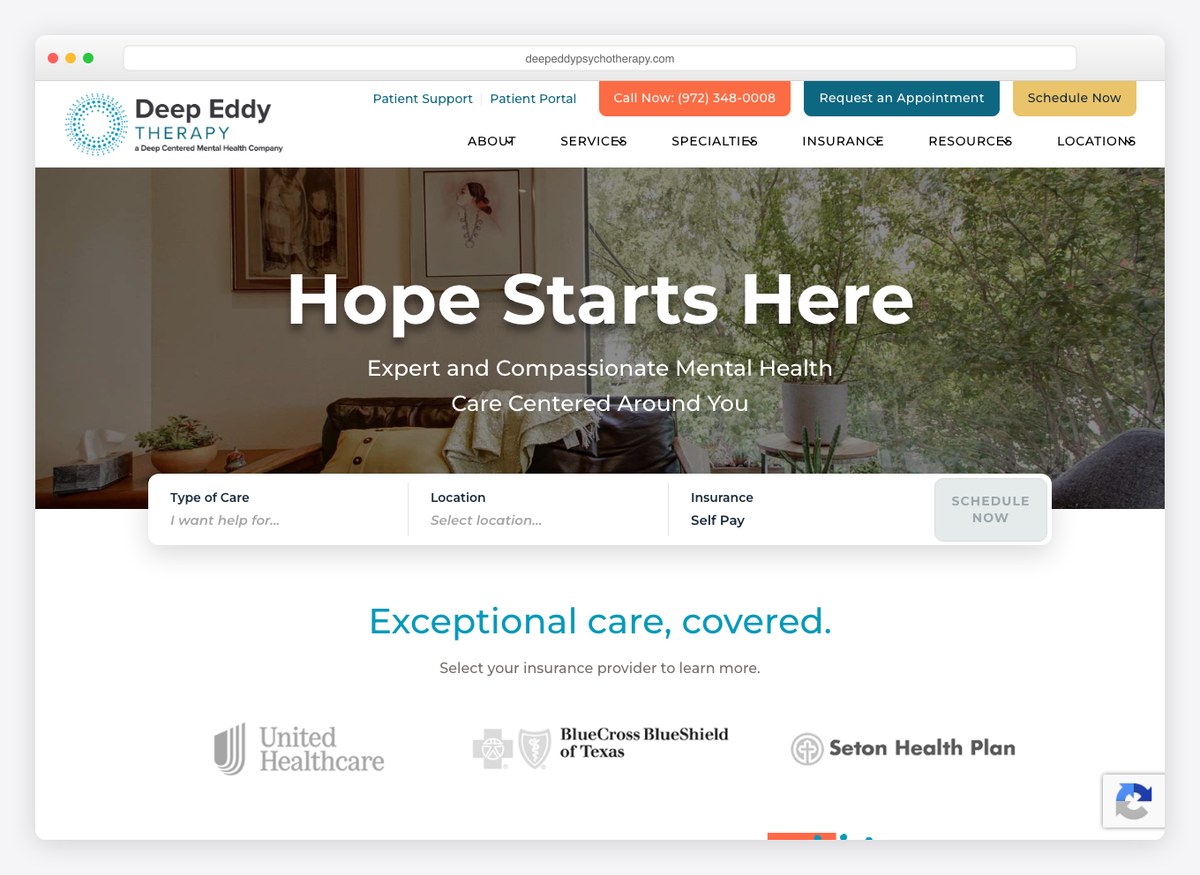
A group practice built around a search: type of care, location, insurance, then Schedule Now. The insurer logos underneath are doing the same work as the search itself, answering whether this practice is affordable before anyone reads a bio.
30. Couples Learn
Built with: WordPress

Online couples therapy across two states and nationwide, with a free fifteen-minute consultation and a relationship quiz as the entry point. The teal is the only saturated colour on the page, and it carries every call to action.
What the thirty palettes have in common
Every swatch below is sampled from that site’s own screenshot above, not from a brand guideline.
The ground — what the page sits on
The accent — where colour actually appears
The sector has a house style and it is unusually consistent: warm and desaturated. 23 of the thirty palettes use a warm accent — terracotta, clay, blush, sand — against 14 using anything cool. zero of them use blue as the ground the page sits on, which is worth noting because blue is the default for almost every other kind of health website. The practices that break the pattern do it deliberately: deep purple and marigolds for a Latina-owned practice, near-black with a red accent for one whose headline is “Therapy doesn’t have to suck.”
What a therapist website needs
If you are building or rebriefing a therapy website, the measurements sort the work into what everyone already does and what almost nobody does. The second list is short, cheap, and it is where the difference is.
- Say whether you are accepting clients. 7 of the thirty do. It is one sentence, it is the first thing anyone wants to know, and it is the one thing a directory profile cannot keep current for you. One practice here leads with “no waitlist for new clients, evening and weekend openings”; another says the caseload is full and links to colleagues instead. Both are more useful than silence.
- Publish a fee. 3 of 30 put one on the homepage and 15 anywhere at all. A range is enough. Withholding it does not prevent the conversation, it just moves it to an email you then have to answer.
- Answer the insurance question in the same place. 12 of 30 mention insurance; 3 mention a sliding scale. Out-of-network with a superbill is a perfectly good answer — it is being unable to find out that loses people.
- Name what you treat. 25 of the thirty name three or more specialisms. This is the sector’s strongest habit and worth keeping: a visitor matches themselves against a list far faster than they read a philosophy.
- State your credentials and where you are licensed. 23 of 30 give credentials. Licensure is per state or jurisdiction, so a visitor in the wrong one is wasting both your time and theirs.
- Offer the short call. 8 of 30 offer a free consultation. For a decision this personal it converts better than any form.
- A phone number is optional here. Only 6 of 30 put a tappable number in the first screen — unlike a plumber or a roofer, this is a considered decision made privately, and the phone is not the channel people want first.
What therapists build their websites on
This is the first niche we have measured where WordPress is not the most common answer. twelve of the thirty run Squarespace, against ten on WordPress, 3 on Wix and 2 on Webflow. Every other sector we have measured — trades, dealers, recruitment agencies — runs WordPress first.
That makes sense for the shape of the business. A solo practice needs a handful of pages, a contact form and a scheduler embed, and does not need a live feed of anything. The constraint that decides the platform is not the website but the practice-management system behind it — the notes, billing and scheduling tool that has to be compliant with health-records rules. The schedulers we found on these sites were SimplePractice, Halaxy, Acuity, Zencare and Psychology Today, and the website is generally chosen to fit whichever of those the practice already uses.
If you are on WordPress, a psychology and counselling WordPress theme gives you the structure without a build, and our medical and health templates cover adjacent practices. If your work is physical rather than psychological therapy, we measured physical therapy websites separately.
Therapist website questions, answered
What should a therapist website include?
Measured across these thirty practices, the things that matter most are the ones fewest sites do: whether you are accepting clients (7 of 30), what a session costs (15 of 30), and how insurance works (12 of 30). After that, the sector’s existing habits are good: name your specialisms (25 of 30 name three or more), state your credentials (23 of 30), and offer a short free call (8 of 30).
Should therapists put their fees on their website?
Only 3 of these thirty put a fee on the homepage, and 15 publish one anywhere — including on pages titled Fees. One practice here has a page called Fees/Insurance that contains no fee at all; it explains insurance reimbursement and describes therapy as an investment.
A range is enough, and the practices that publish one tend to itemise it: an intake session priced separately from ongoing sessions, or a band from a lower rate to a higher one. Withholding the number does not avoid the conversation — it moves it into an enquiry you have to answer individually.
What platform do therapists use for their websites?
Squarespace, more than anything else: twelve of these thirty sites, against ten on WordPress, 3 on Wix and 2 on Webflow. This is the only sector we have measured where WordPress is not first.
The more important choice is the practice-management system behind the site, because that is what handles scheduling, notes and billing under health-records rules. The ones we found embedded here were SimplePractice, Halaxy, Acuity, Zencare and Psychology Today.
Do therapists need online booking on their website?
Most of these practices stop short of it. 22 of the thirty put a booking control in the first screen, but it almost always leads to a contact form rather than a calendar: only 2 embed a real scheduling system, and not one shows a bookable time on the page you land on.
That is defensible in a way it would not be for a chiropractor or a dentist. A first therapy appointment usually needs a fit conversation first, which is why 8 of 30 offer a free short call instead. The gap worth closing is not the calendar — it is saying whether you have capacity at all.
Is a therapist the same as a counsellor or a psychologist?
For the purposes of a website, near enough: all three are talk therapy, and the titles vary by country and by licence. What differs is regulation — psychologists hold a doctorate and a separate licence, counsellors and psychotherapists are accredited through bodies that differ by jurisdiction — which is why stating your credentials and where you are licensed matters more here than in most trades.
Physical therapy, massage therapy and nutritional therapy are entirely different professions despite sharing the word, and their websites are built around different questions.
How we chose these
Opened every site
Each one loaded in a real browser at 1280×860 and judged from the live page, not from an old screenshot in our media library.
30 checked · 30 re-captured
Followed the money question one hop
Most practices answer the fee question on a separate page, so a homepage-only reading would understate the sector. We followed the fees link — or the booking link where there was none — and asked the same three questions again.
24 second pages opened
Checked the machine against the screenshot
Numbers that looked wrong were wrong. Multi-word phrases were being missed entirely because page text puts a line break between words in separate elements, so practices that plainly say “Accepting New Clients” were scored as silent. Every availability verdict here was then checked by eye.
30 captures reviewed
Sampled the colours from the captures
Palettes are quantised from each site’s own screenshot and then curated, so every swatch describes the page you can see rather than a published brand palette.
30 palettes · sampled, not quoted
The craft on these thirty sites is genuinely good — the photography is commissioned, the palettes are considered, the copy is warm without being vague. And then 7 of 30 say whether they can see anyone and 3 of 30 say what it costs. Those two sentences take an afternoon to add and they are the two a person in distress is actually looking for.

Related Posts





Comments (0)