
32 Best Interior Design Portfolio Examples 2026
The best interior design portfolios show what the designer did on each project, not only how the rooms look. These 32 examples come from interior designers and studios working on luxury homes, remodels, hotels and restaurants, offices, kitchens, sustainable homes, small apartments and short-term rentals, plus a graduate’s portfolio and a workplace designer’s job portfolio, from the US, Canada, the UK, Hong Kong and Australia.
We checked 176 web addresses, opened project pages on 58 sites and identified each platform from its code rather than guessing. Every example from the previous version of this list was rechecked, and the 28 that are still live, current and showing projects stayed; four domains we followed now lead to gambling, for-sale or expired pages.
Best Interior Design Portfolio Examples
1. Jessica Nelson Design
Built with: Squarespace
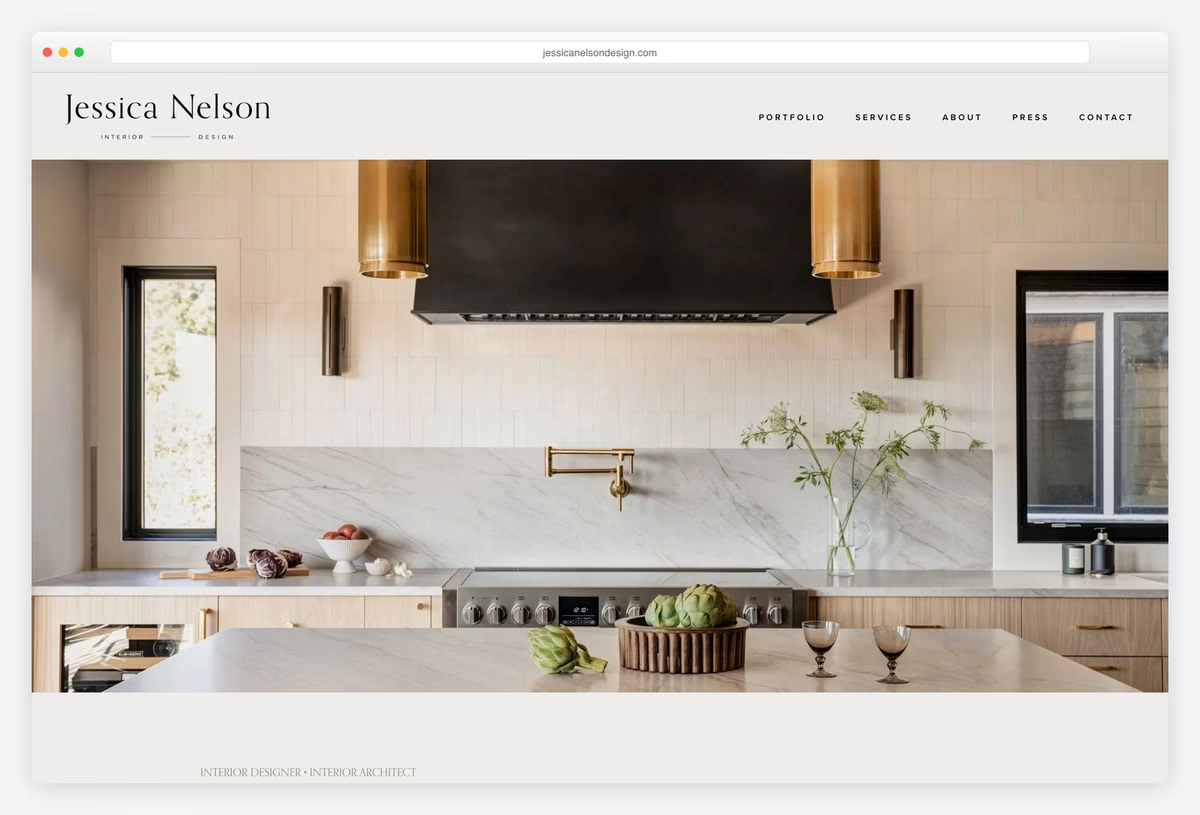
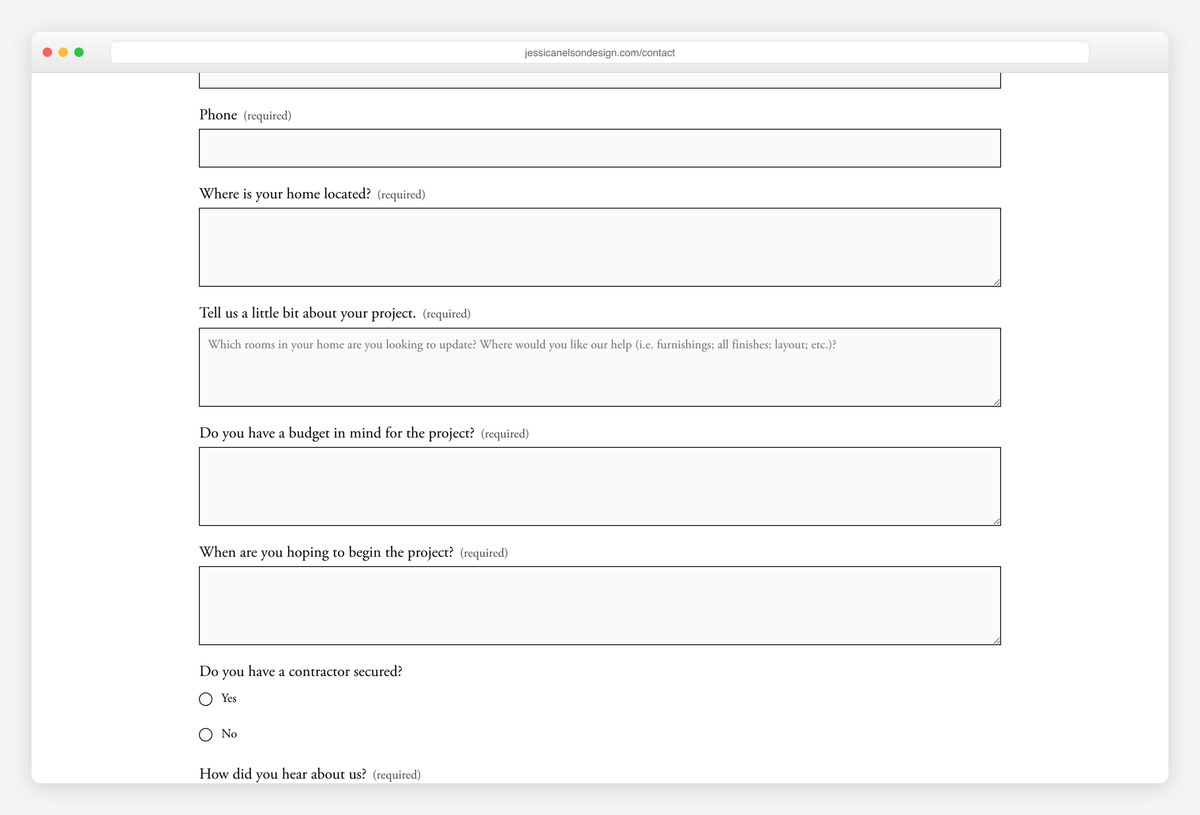
Jessica Nelson Design is a Seattle studio working on remodels, new builds and full furnishing, and its project pages are a model of plain labelling. Each one names the job, such as a full remodel in Seattle, explains what changed, then credits the styling and the photographer, Carina Skrobecki Photography.
A Resources section turns finished homes into case studies, including posts on the return on interior design and a before-and-after remodel. The inquiry form asks for the home’s location, a budget and a start date, so the first call starts informed.
What stands out: Turn your best projects into written case studies.
2. Nicole Hollis
Built with: WordPress
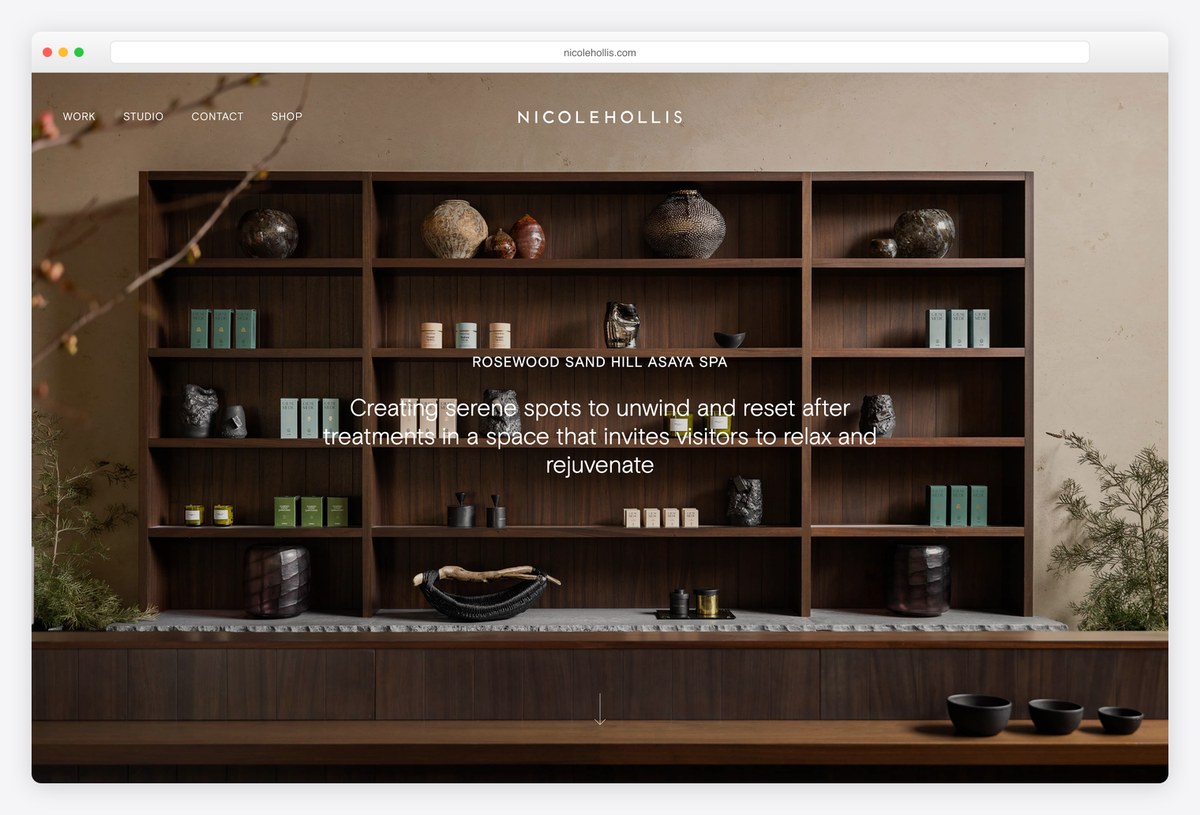
NICOLEHOLLIS is a San Francisco studio known for hotels, spas and resort homes, and its project pages read like spec sheets. The Rosewood Sand Hill Asaya Spa page lists the location, 19,500 square feet, the contractor, the art consultant, the photographer and every member of the project team.
That is the detail a hotel developer checks before a first meeting. The homepage is a quiet full-screen video under four menu items, and new project enquiries get their own inbox, separate from press, vendors and job applicants.
What stands out: List the whole team and every consultant on a project page.
3. Cheshire Property Studio
Built with: Custom code (Next.js)
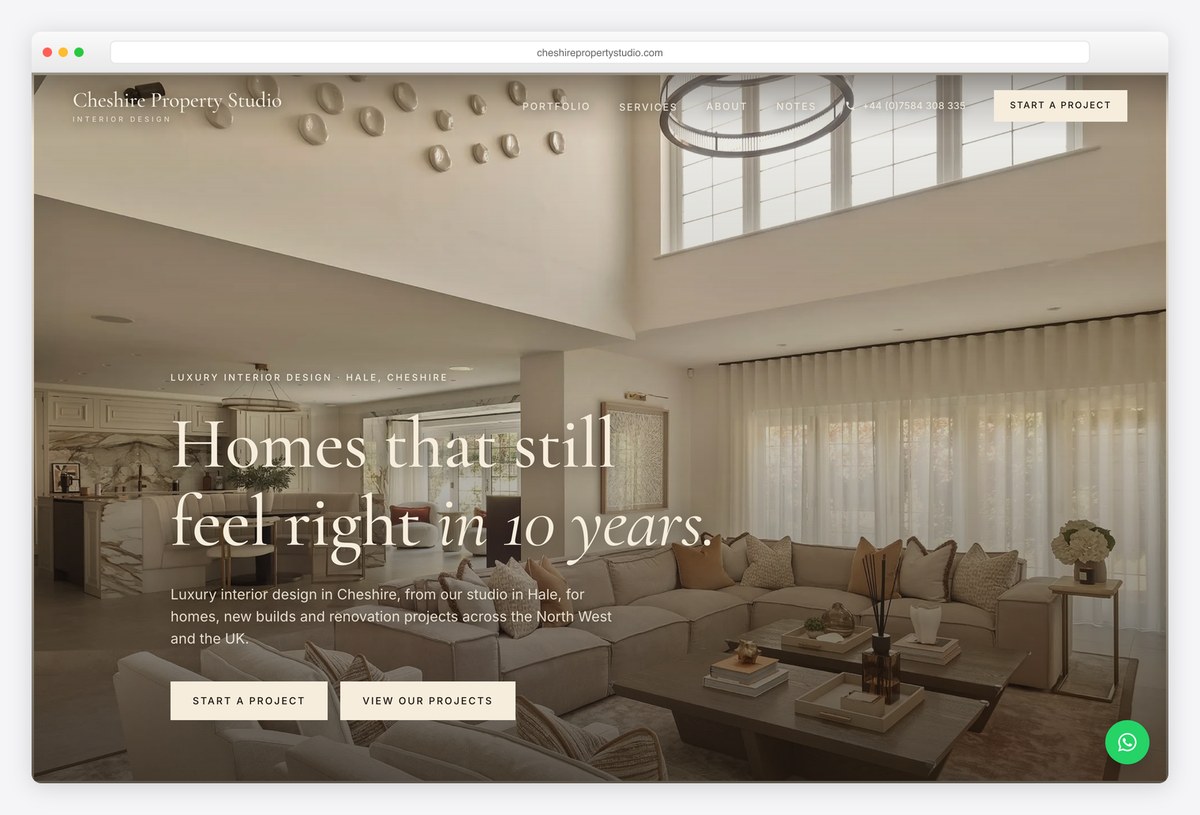
Cheshire Property Studio in Hale, Cheshire, answers the question most interior design portfolios avoid: what it costs. A Pricing & Process page explains that online design is quoted per room and full service is quoted after a free discovery call and a £180 initial design meeting.
Project pages open with the location, discipline, year and status, and a Work Journal retells projects such as a medi spa in the owner’s own voice. The first screen promises homes that still feel right in 10 years, with a Start a project button beside it.
What stands out: Explain how you charge, even if you cannot publish a price.
4. Tuan Nguyen
Built with: Archifolio
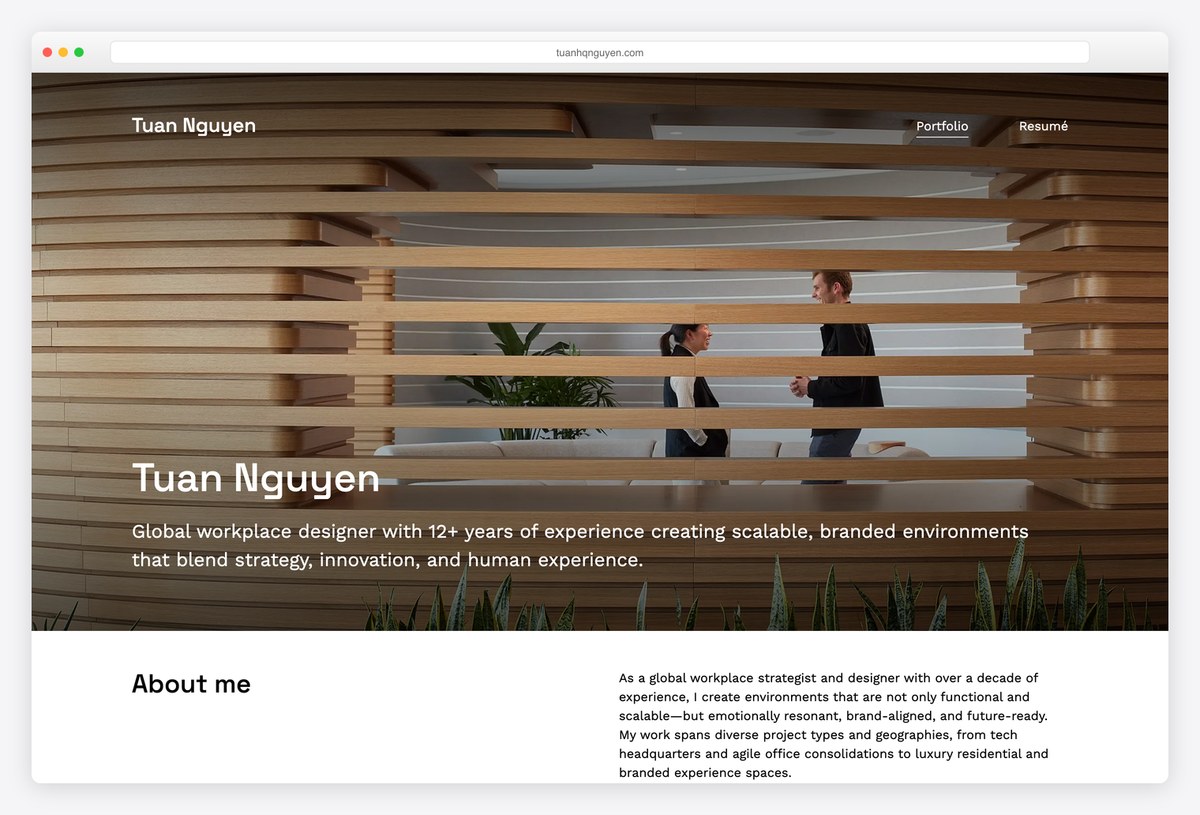
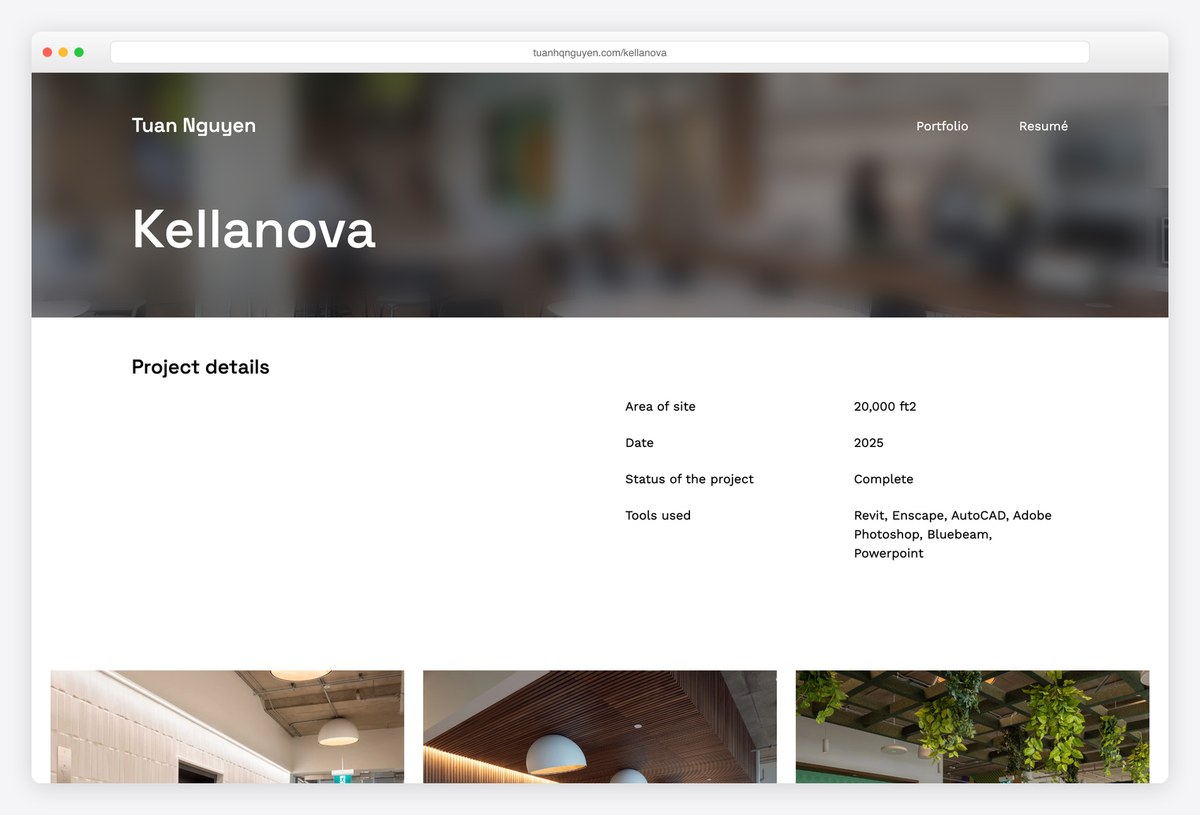
Tuan Nguyen is a Chicago-area workplace designer, and his site shows what an individual designer’s portfolio for employers should contain. His project pages list the area, the status and the software used, such as Revit, Enscape and Bluebeam, which are the facts a hiring firm screens for.
Tiles are labelled by sector, from tech workplaces to high-rise residential, and the Google project, at 150,000 square feet, explains the programme he led and a Googley Award for Best Micro Kitchen. His résumé is a proper web page, and the site runs on Archifolio.
What stands out: Put the square footage and software on every project.
5. Niche Interiors
Built with: WordPress
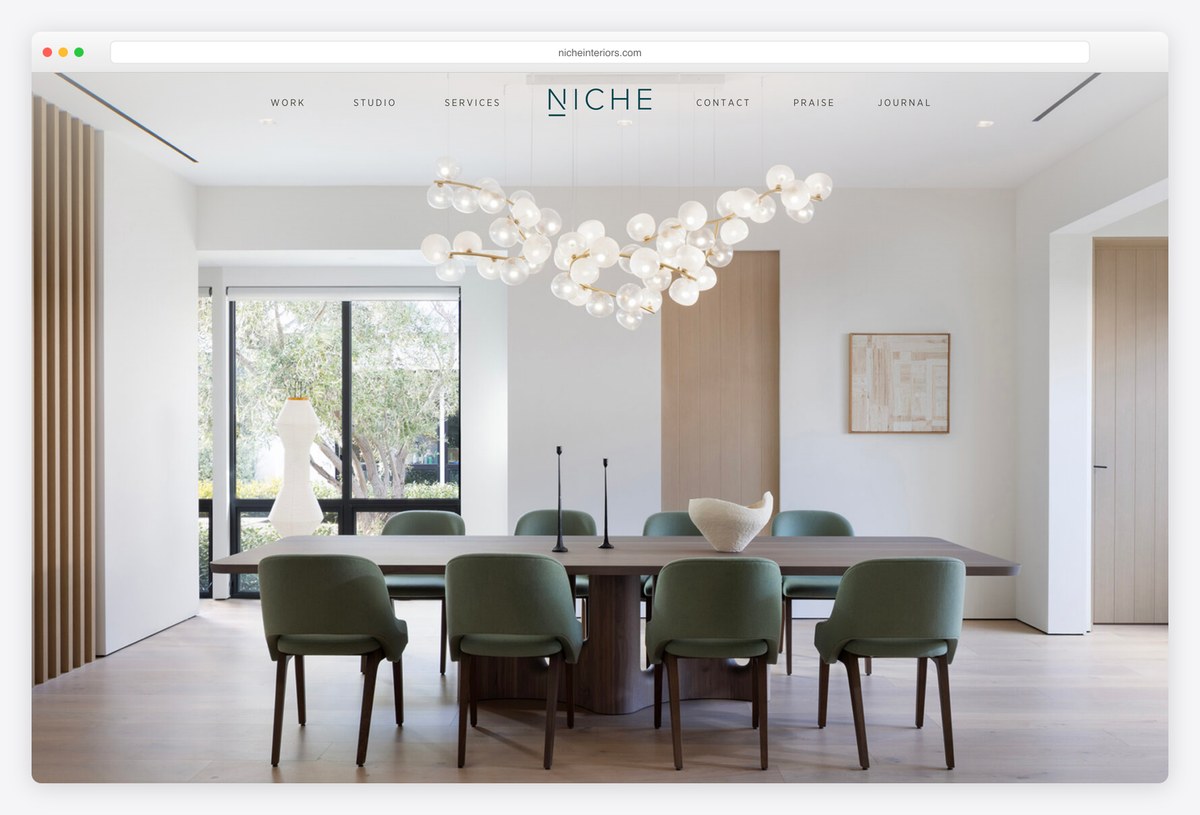
Niche Interiors in San Francisco makes sustainability part of the portfolio rather than a line in the bio. A Green page in the main menu explains that principal Jennifer Jones is a LEED Accredited Professional and a founding member of the Good Future Design Alliance.
Project pages list the size, scope, architect, contractor and photographer, and each project carries a style tag such as Luxe Organic. The services page is frank about money too, saying that primary-residence furnishing packages typically range from $500,000 to 3 million.
What stands out: Give your specialism its own page, not a sentence.
6. Studio Adjective
Built with: Wix
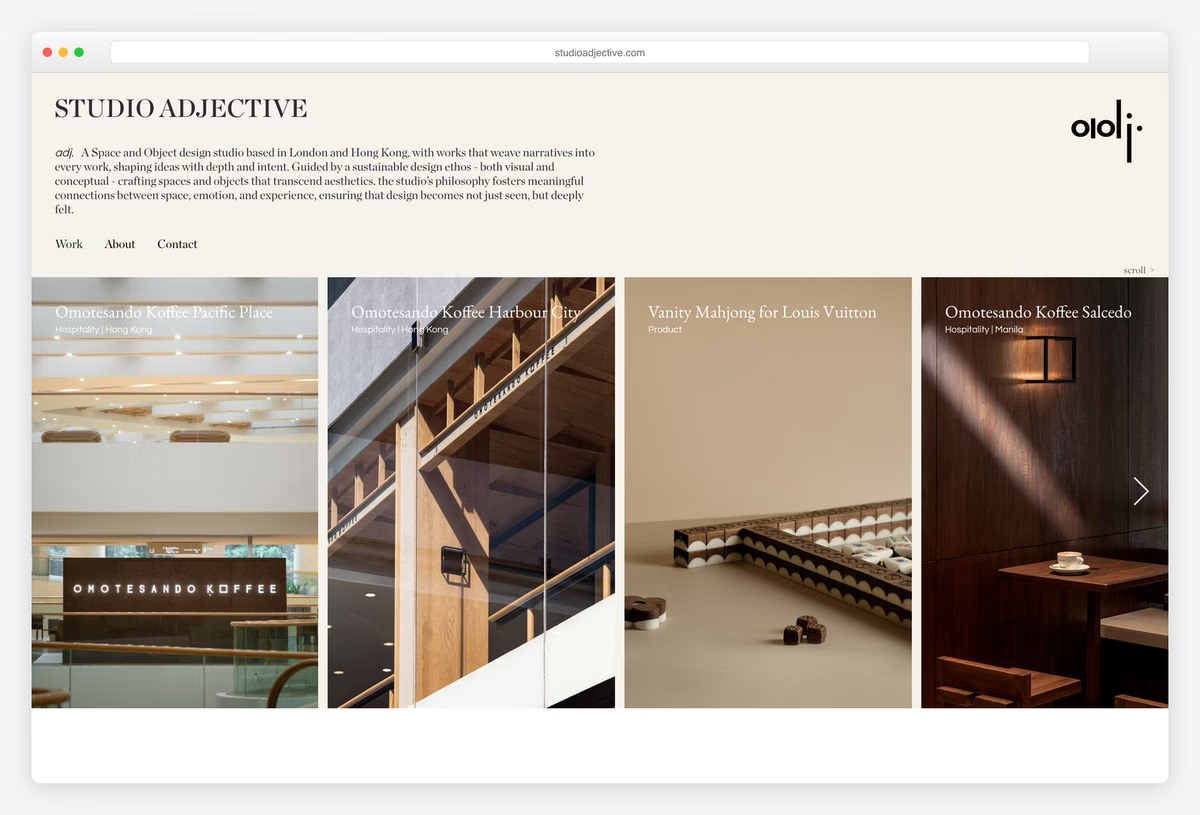
Studio Adjective, based in Hong Kong and London, labels every project with its type and city, so a café operator scrolling the list sees Omotesando Koffee branches in Hong Kong and Manila, a food hall and a hospitality project in Amsterdam before anything else. It is the clearest hospitality index in this list.
Retail shops, Hong Kong apartments and a healthcare project follow, alongside furniture for Ishinomaki Laboratory and a Vanity Mahjong piece for Louis Vuitton. The first screen pairs a short studio statement with a row of captioned project tiles.
What stands out: Caption every project with its type and city.
7. DBL Take Design
Built with: Wix
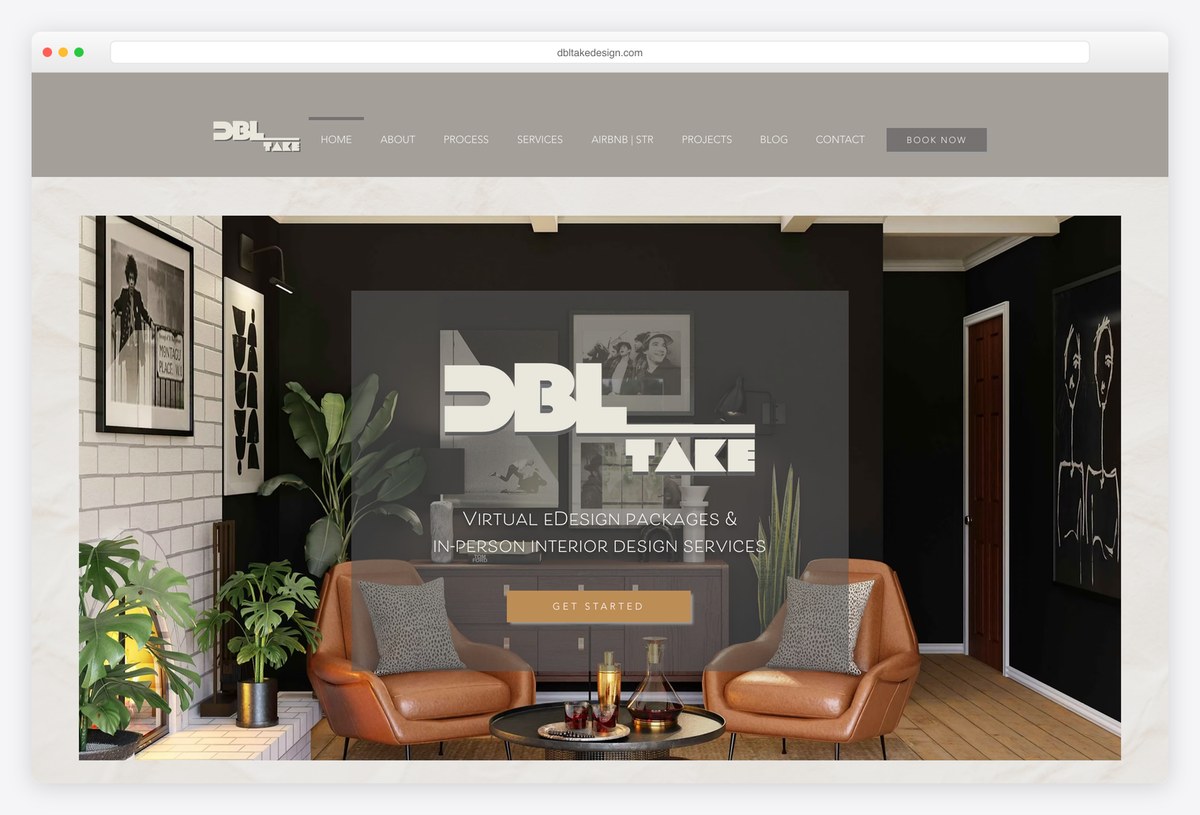
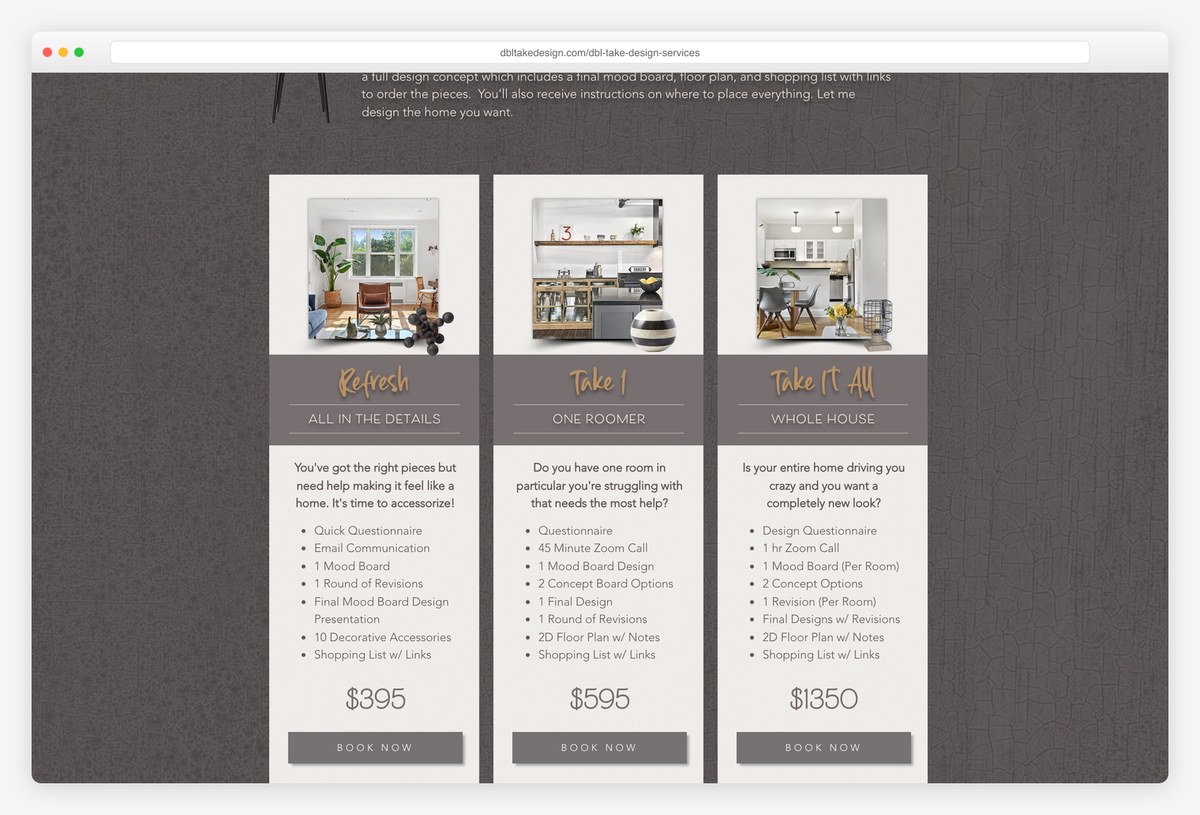
DBL Take Design is Lisa Dunefsky’s Brooklyn practice for small apartments, remote eDesign and Airbnb rentals, and its portfolio shows the deliverables, not just the finished rooms. The eDesign project walks through the mood board, concept, floor plan and shopping list that a remote client actually receives.
Projects are split into in-person interiors, short-term rentals and eDesign, and every package price is published, from a $275 consultation to $1350 for a whole house. One Brooklyn project fits a king bed, a crib and a changing table into one bedroom.
What stands out: Show what a remote client receives, step by step.
8. Arent&Pyke
Built with: Custom code
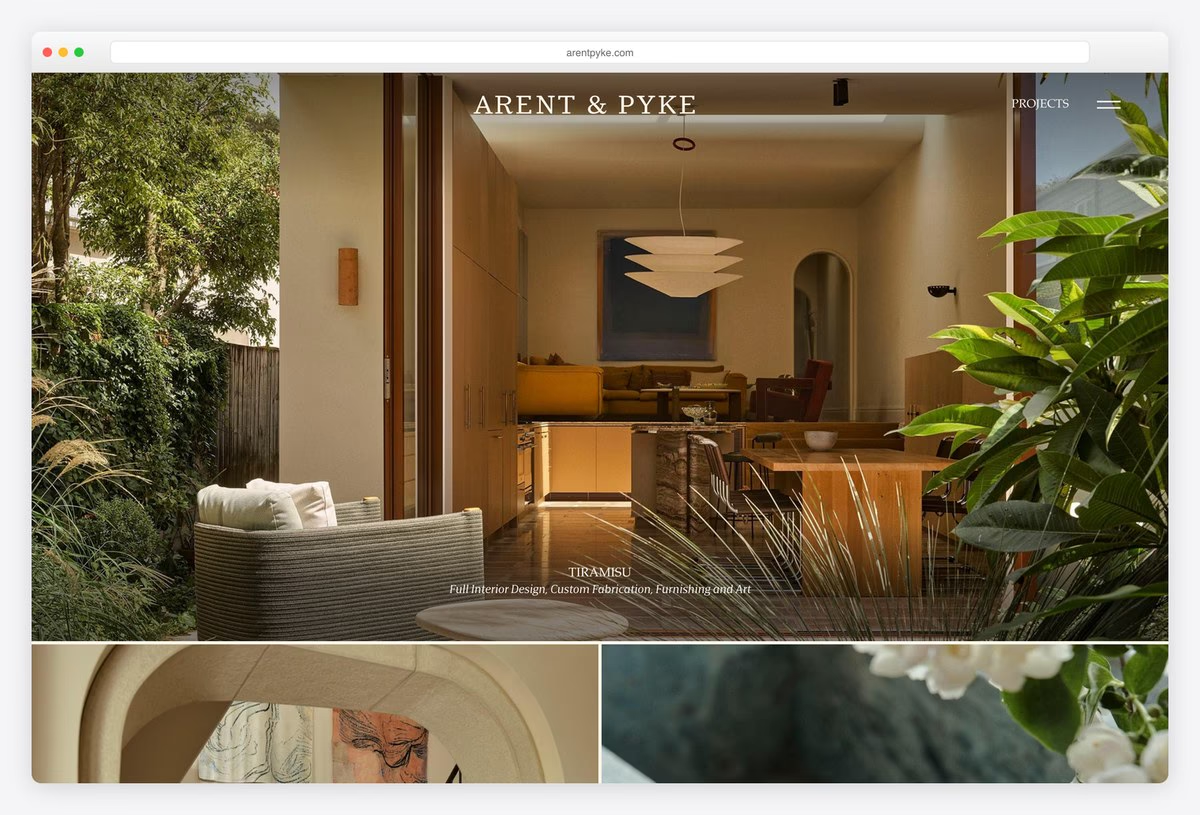
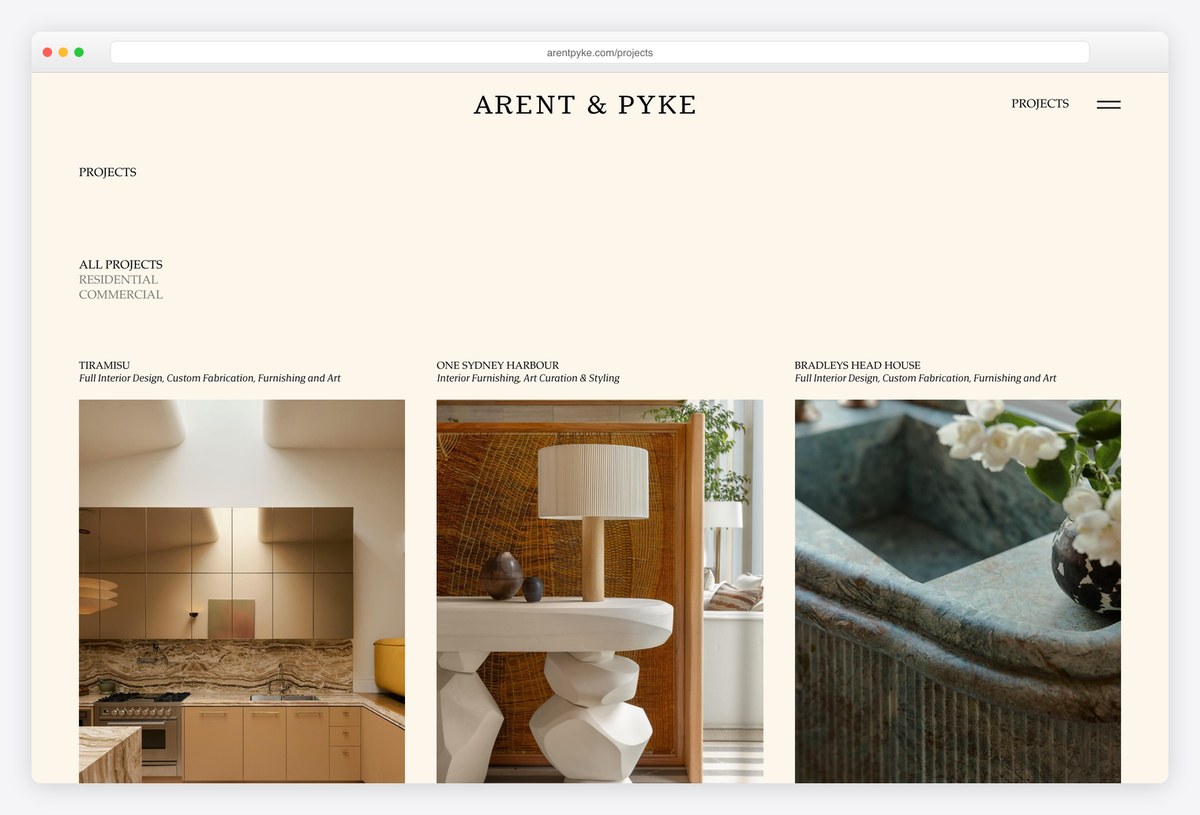
Arent&Pyke, with studios in Sydney and Melbourne, prints the scope of work under every project name. Most read Full Interior Design, Custom Fabrication, Furnishing and Art, but the residents’ spaces at One Sydney Harbour say Interior Furnishing, Art Curation & Styling, so a client sees exactly what the studio did.
Project pages credit the architect, builder, landscape designer and photographer, and the One Sydney Harbour page explains the curation of exclusively Australian artworks. Magazine features are listed by title and issue, and new clients get their own enquiry form.
What stands out: Say what you did on each project, not just how it looks.
9. 22 Interiors
Built with: Wix
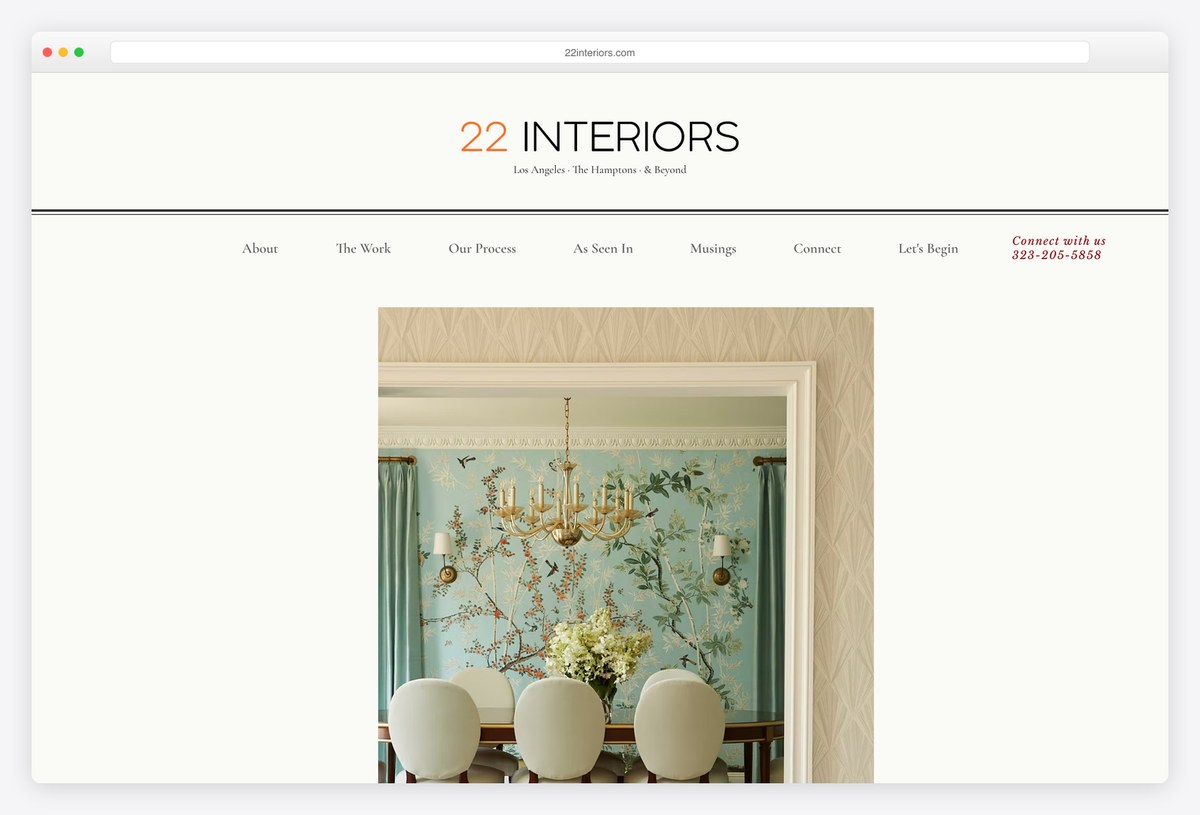
22 Interiors works from Los Angeles and Amagansett across homes, offices and hospitality, and its project pages end with a what, where and when block and a photographer credit. Residential and commercial work sit in separate portfolios, so a gym owner and a homeowner each find comparable projects.
Clients complete a design questionnaire before the first call, and a two-hour consultation called the 120-Minute Edit suits people who only need direction. A Rebuild LA page offers a second opinion on architectural plans, written as plain questions and answers.
What stands out: Close every project with what, where and when.
10. Taylor Howes
Built with: Custom code (Gatsby)
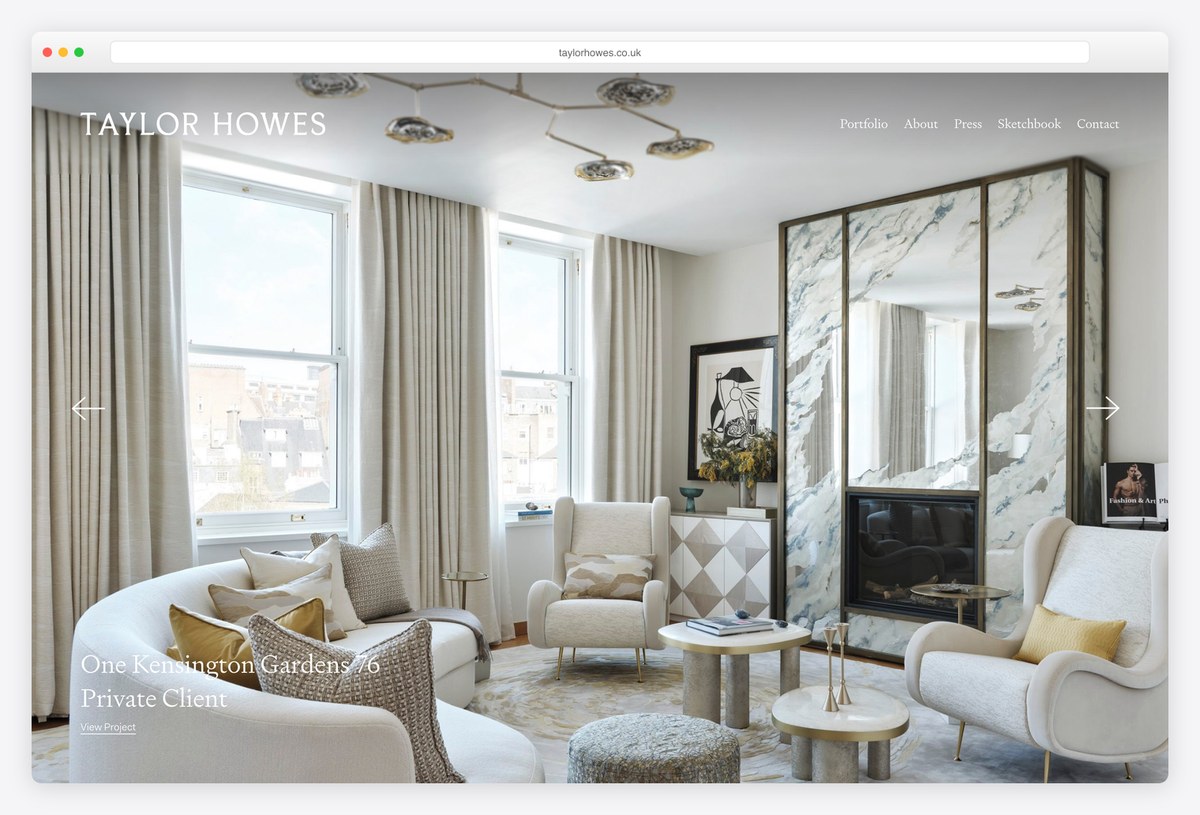
Taylor Howes is a Knightsbridge studio working for private clients, developers and hotels, and every tile in its portfolio is tagged Private Client or Developer. Filters for residential, hospitality and developer work let each kind of client skip straight to comparable jobs.
Project pages give the scale first, such as an 18,000 square feet country retreat in Oxfordshire, and name unusual materials like straw marquetry and fossilised stones. A Sketchbook journal adds project stories, and the studio itself doubles as a gallery for makers.
What stands out: Tag each project by who the client was.
11. Winnie Lin
Built with: Wix
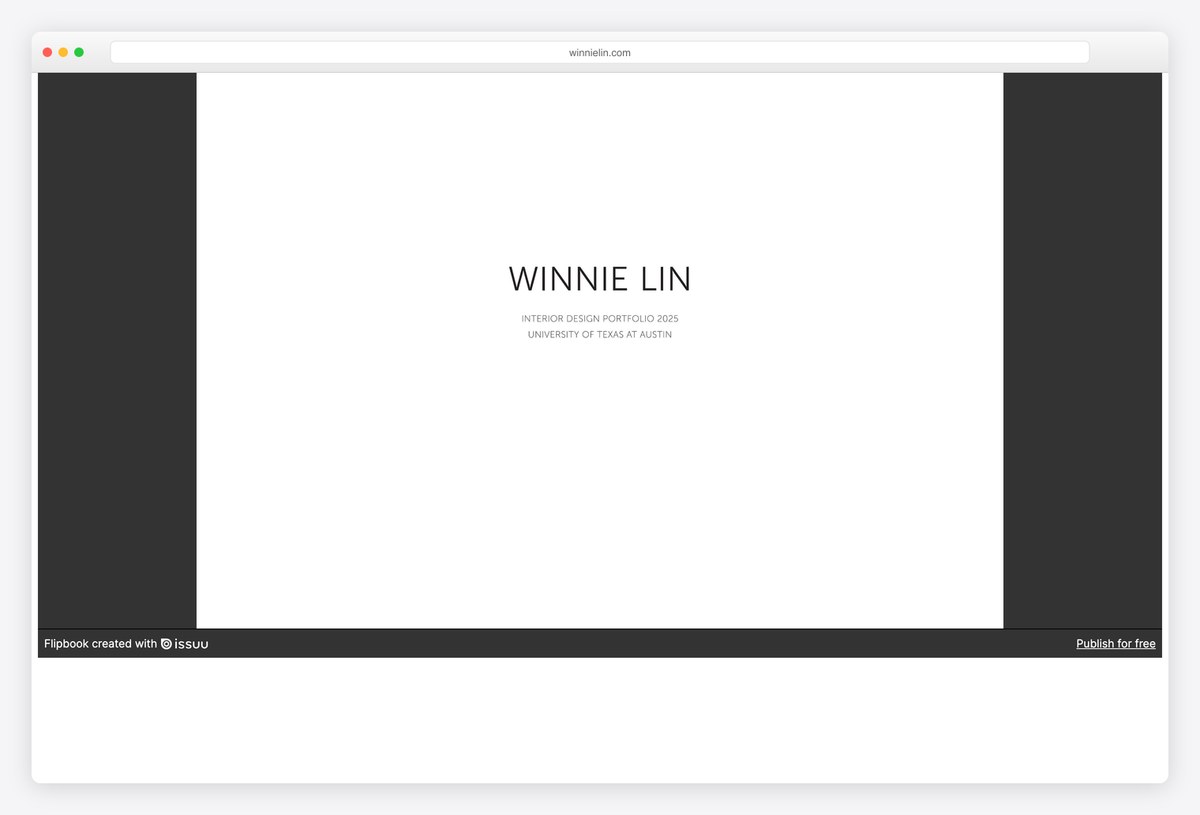
Winnie Lin’s site is the most common student format, done cleanly: a simple website wrapped around a PDF portfolio. The Work page embeds her interior design portfolio from the University of Texas at Austin as an Issuu flipbook, with the About page and her résumé one click away.
The About page explains her move from four years of graphic design into a master’s in interior design, and she won the ASID Student Portfolio Competition. The drawback is that no project has its own page, so none can be linked to or found on its own.
What stands out: Give each student project its own page, even if the PDF stays.
12. Ghislaine Viñas
Built with: Squarespace
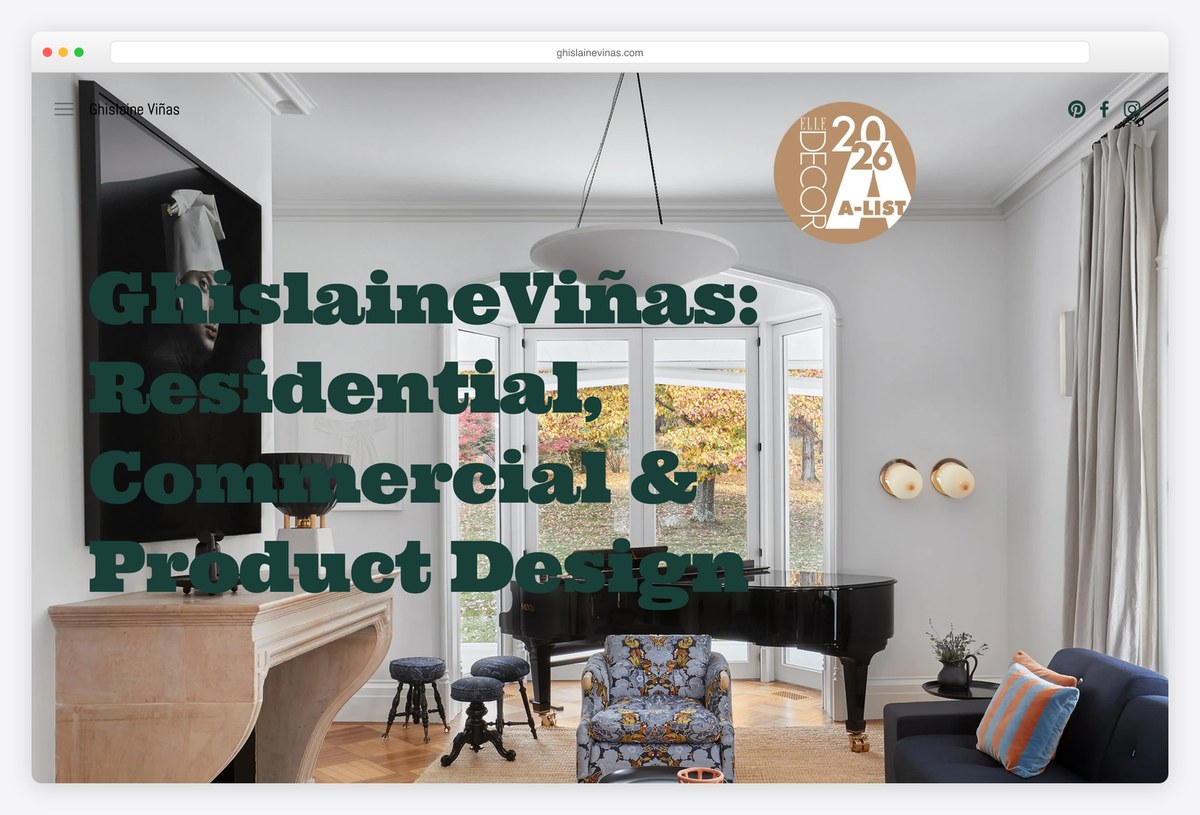
Ghislaine Viñas runs a colour-led studio in New York, and each project page is reduced to a single credit bar: location, architect, photographer and the publication that featured it. The L.A. Residence, for example, credits architect Chet Callahan and photographer Garrett Rowland.
Residential, commercial and product design are three separate portfolios, with the commercial list running from a Lumens flagship to a cocktail lounge in Philadelphia. The contact page gives new clients and licensing enquiries different email addresses.
What stands out: Credit your collaborators in one line on every project.
13. Studio Ashby
Built with: Custom code (Gatsby)
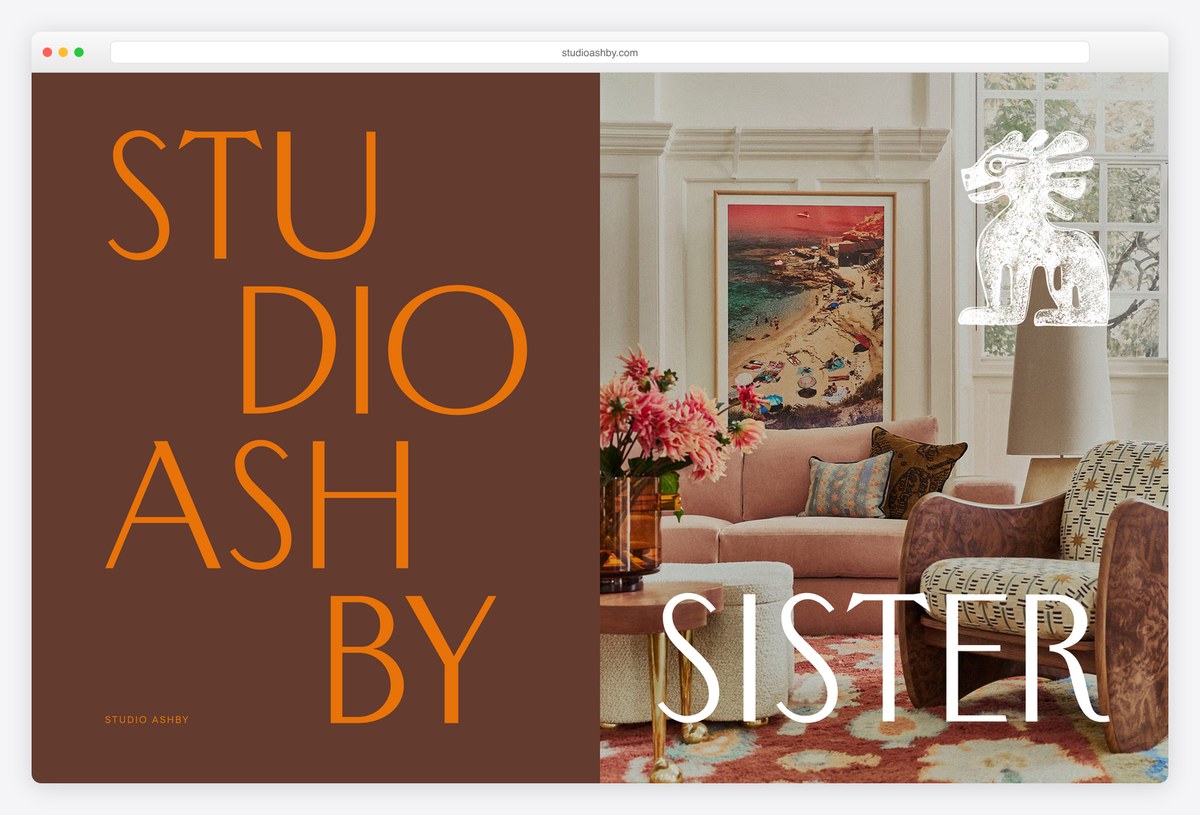
Studio Ashby, with studios in London and Cape Town, links each project to the pieces used in it. The St James’s Park Apartment page credits the photographer and the stylist, then lists furniture such as The Kreef Stool and The Waves Rug from the studio’s own store.
Homes sit beside hotel work, including a villa at La Residencia Belmond in Mallorca, and each brief is short and specific, like a pied-à-terre on the 14th floor for a young family based overseas. The first screen sets the studio and its furniture brand, Sister, side by side.
What stands out: Link the pieces you designed to the rooms they are in.
14. Parallel Design Group
Built with: Custom code
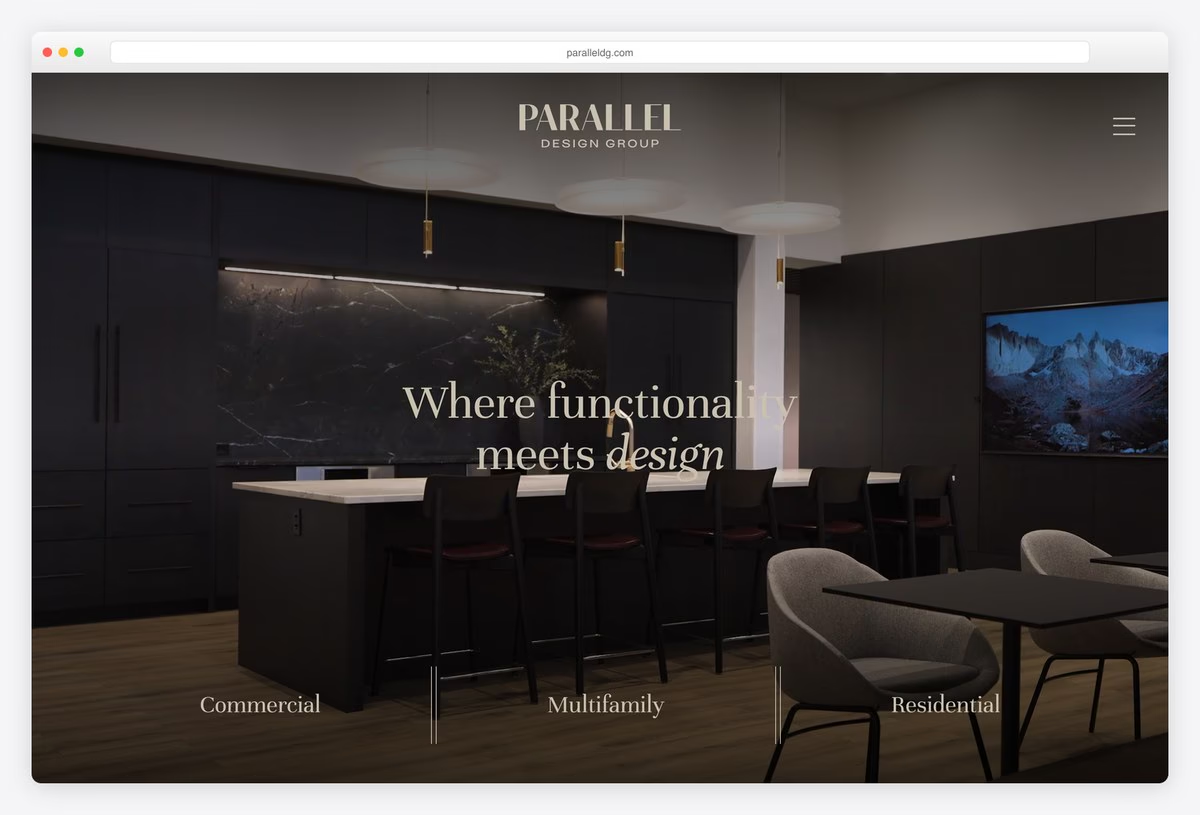
Parallel Design Group in Indianapolis designs workplaces, apartment communities and homes, and its first screen sends each visitor to one of those three markets. Commercial projects are listed by client name, from Lucas Oil to Old National Bank, with a filter by industry.
Confidential work appears under labels such as Confidential Corporate Client rather than being left out. Each market has its own process page and an FAQ that answers questions like how far the studio will travel and whether any project is too small.
What stands out: List confidential work under a label instead of hiding it.
15. Jessica Helgerson Interior Design
Built with: Squarespace
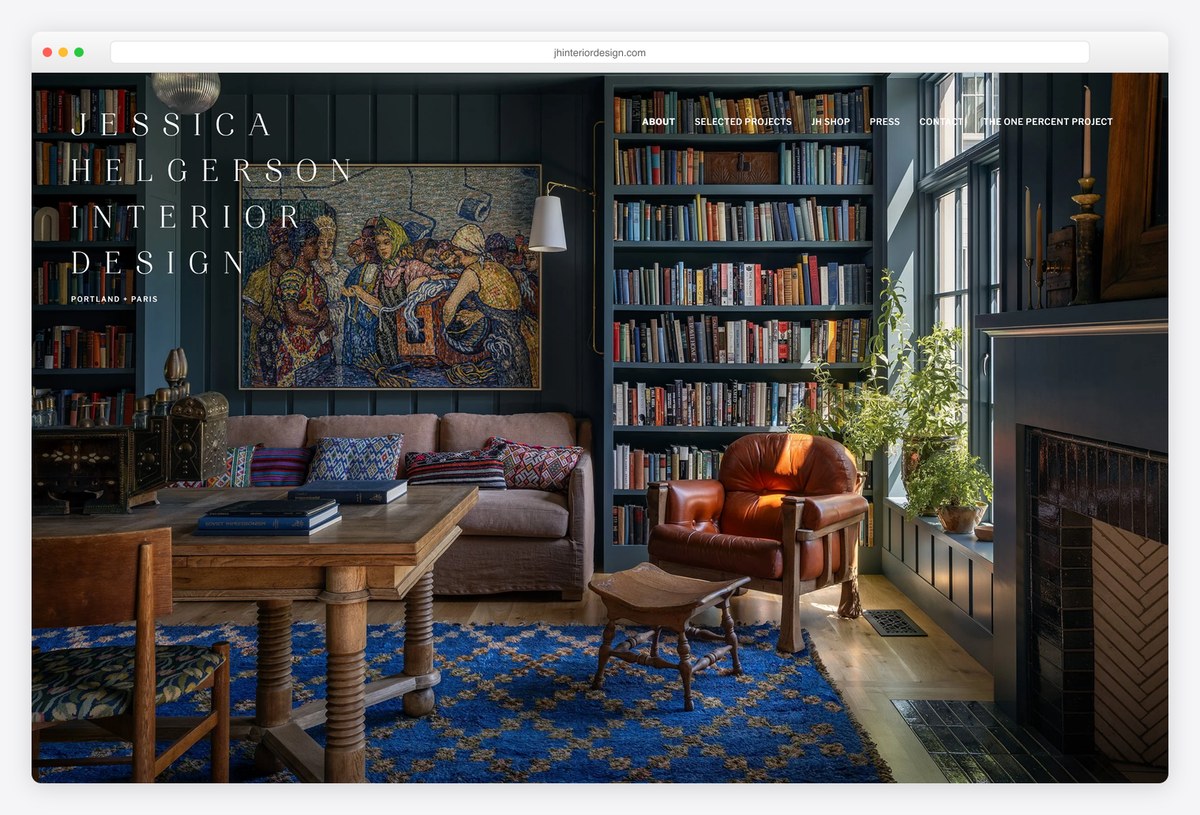
Jessica Helgerson Interior Design, with offices in Portland and Paris, is candid about capacity. Its contact page says it is a small office, always working at capacity and rarely able to start new projects immediately, and it points smaller jobs to one-to-one consultations on The Expert.
Selected projects are split into residential and commercial, from Portland Victorians and a Central Park West apartment to Stumptown and Parachute spaces. The About page explains when the studio produces construction drawings and when it works alongside a full architecture team.
What stands out: Tell clients honestly when you can start.
16. Tiffany Leigh Design
Built with: Wix
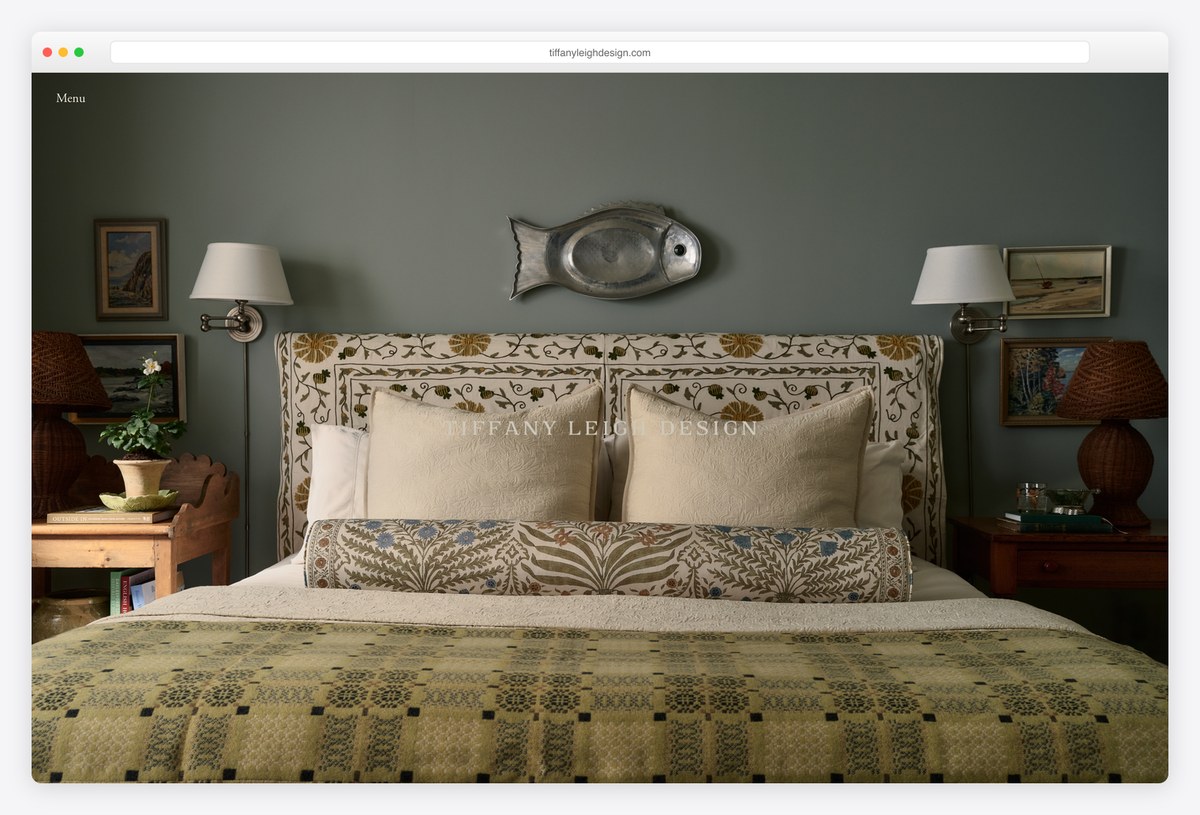
Tiffany Leigh Design in Barrie, Ontario, opens every project with three facts before any photo: the scope, the size and the place. Project Alton House reads Full Home Renovation, 4100 sq ft, Alton, Ontario, which tells a prospective client at once whether their job is comparable.
Upcoming projects are listed as Coming Soon rather than hidden, and the contact page separates full-service design, one-to-one virtual consultations and mentorship for other designers. The first screen is a warm, English-inspired living room beside a slim sidebar menu.
What stands out: Lead each project with scope, square footage and location.
17. Kelly Wearstler
Built with: Shopify
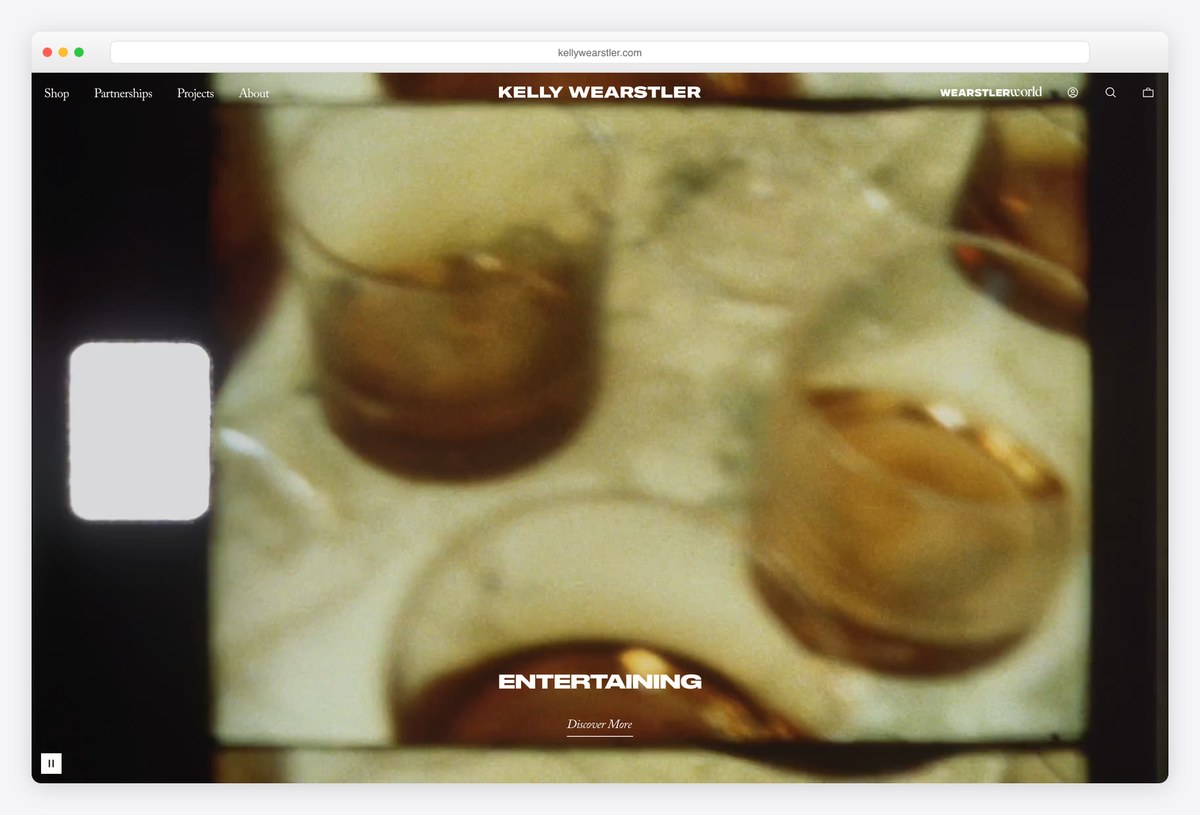
Kelly Wearstler’s site is a store first, but its Interior Projects page is a useful model for a studio working in several markets. Projects are sorted into Residential, Hotels, Restaurant & Bar and Retail, and each section opens with a short statement about the approach.
Project pages start with a location, type, year and square footage block, and the Lupine residence names the vintage pieces used, down to the Mats Theselius armchairs. Visitors meet a cookie panel and product imagery first, so the portfolio is one click in.
What stands out: Give each market its own section with a one-line intro.
18. Studio Palomino
Built with: Webflow
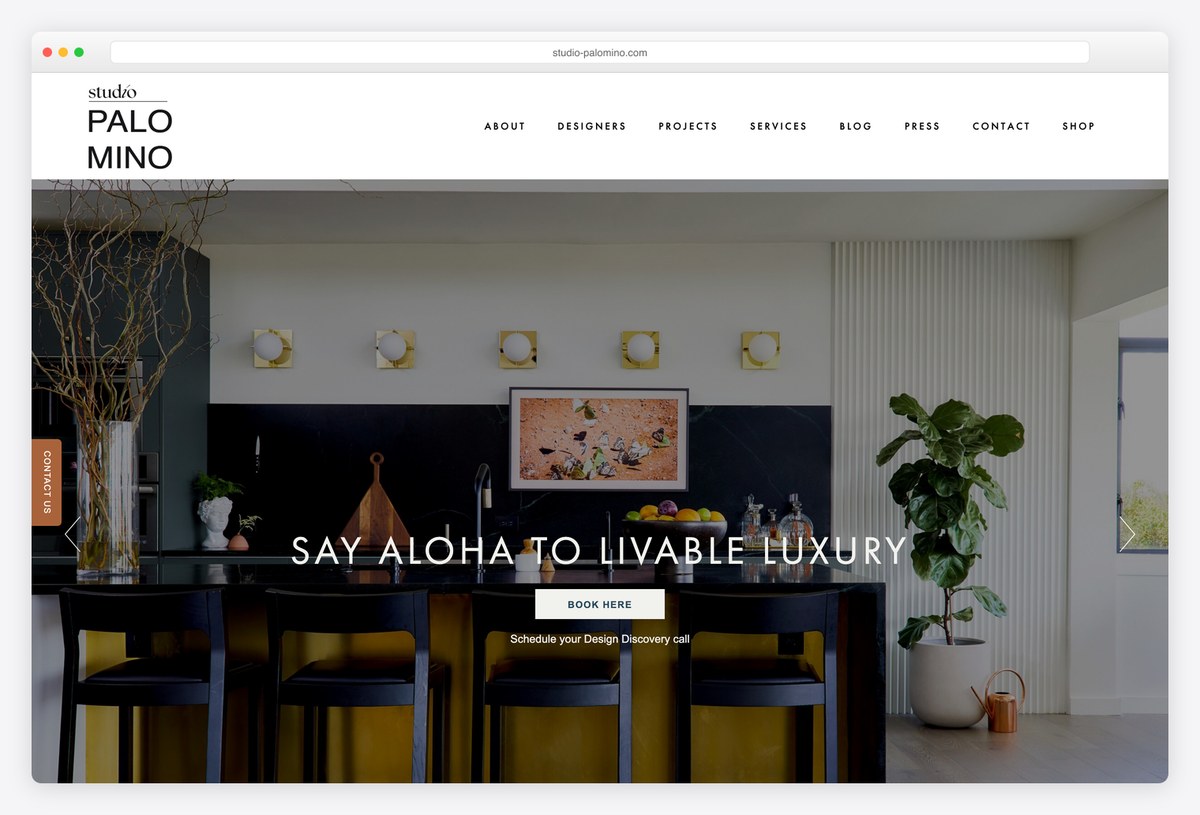
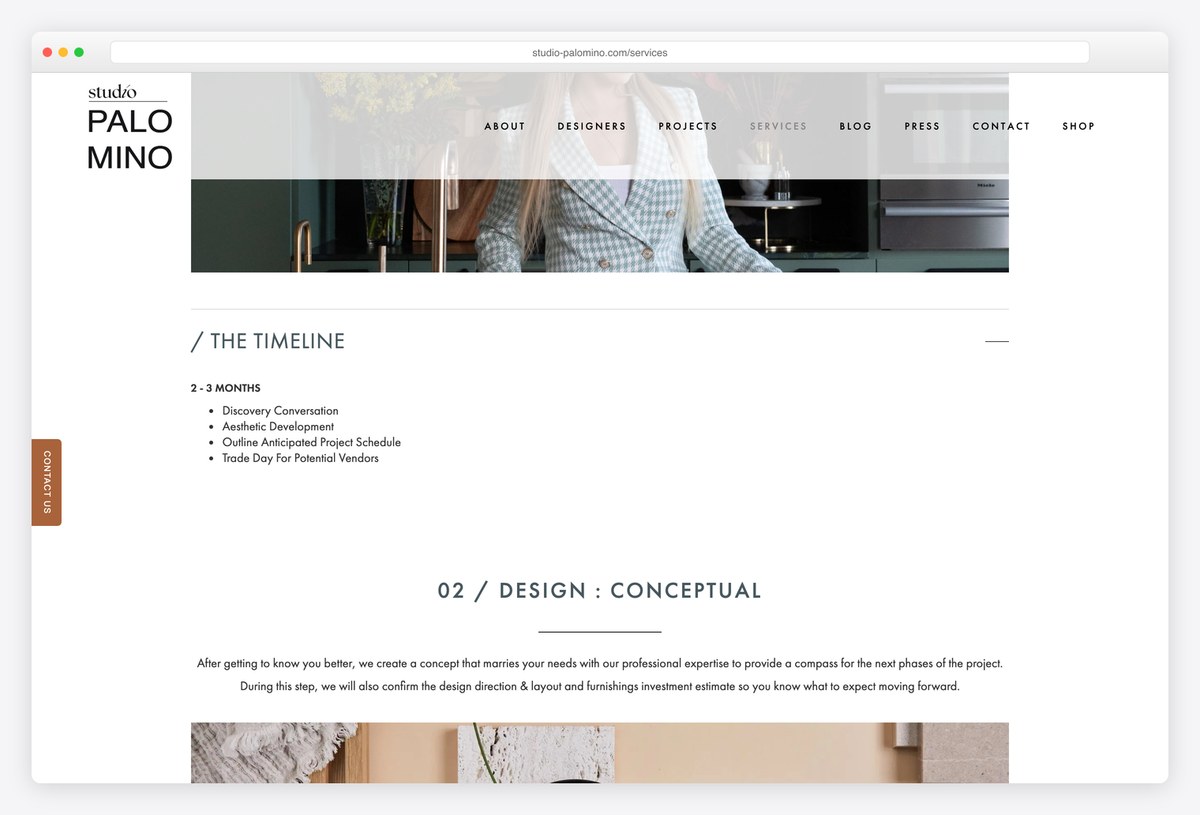
Studio Palomino in Kailua-Kona, Hawaii, designs resort homes and club spaces, and its services page does something rare: it gives a time estimate for each design phase. Conceptual design is marked at three months or more and detailed design at four weeks or more, with the deliverables for each.
Island projects such as Moody Modern at Kukio describe the setting before the photos. The first screen invites visitors to book a Design Discovery call, and the contact form promises a reply within 48 hours to schedule a 15-minute call.
What stands out: Tell clients how long each phase takes.
19. Designology Studio
Built with: Squarespace
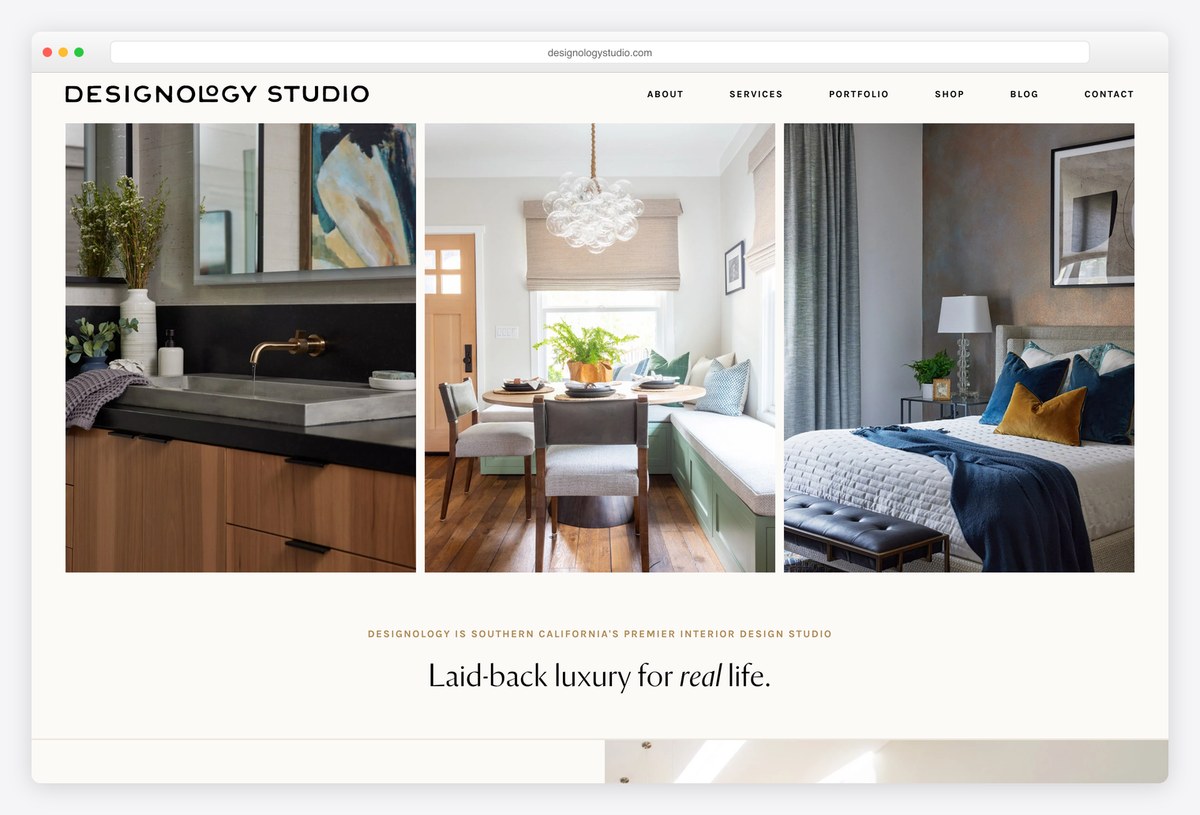
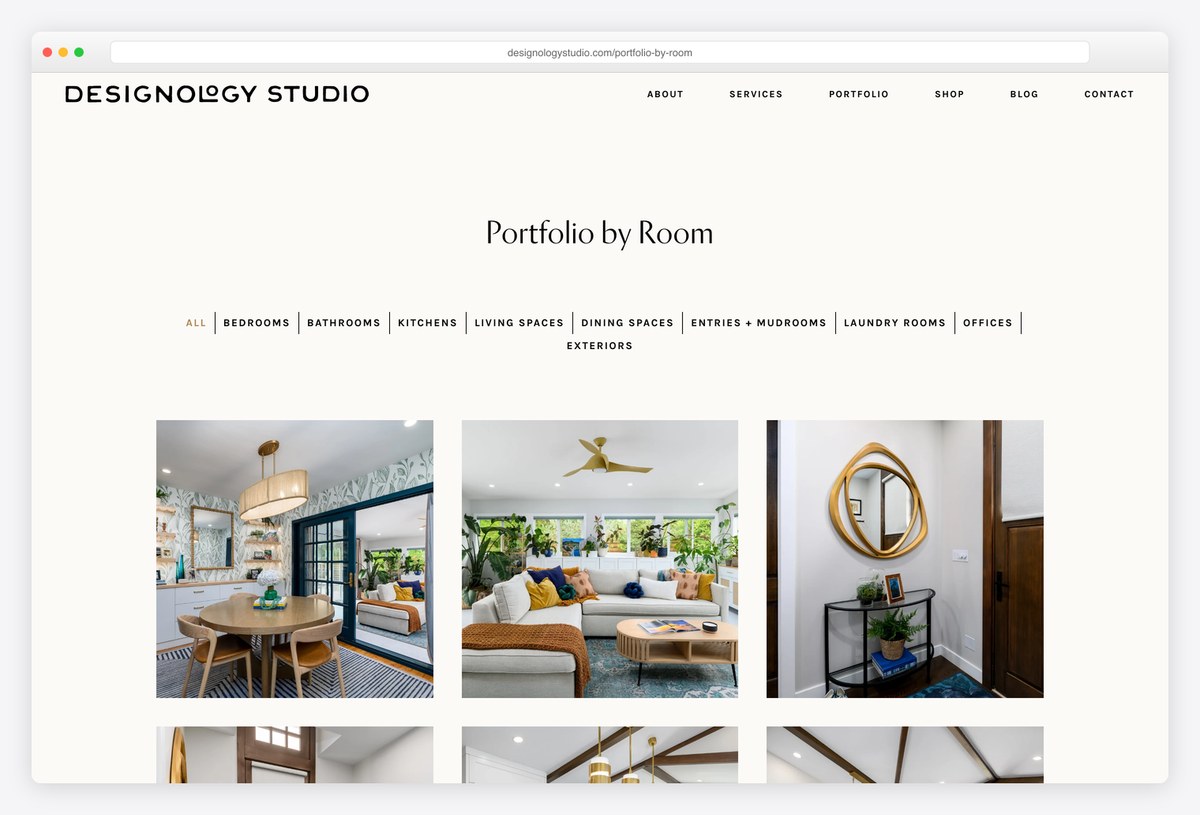
Designology Studio, with studios in Ventura and Santa Barbara, lets visitors browse the portfolio by room as well as by project, with filters for kitchens, bathrooms, mudrooms and laundry rooms. That suits clients planning a single-room remodel who want to see comparable rooms quickly.
Project pages give the location, the scope, such as full remodel, furnishing and styling, and a photographer credit. Remote E-Designology and consulting retainers starting at 20 hours sit beside full service, and the contact form asks which service and budget a client has in mind.
What stands out: Let clients browse your work by room.
20. Paloma Contreras Design
Built with: Squarespace
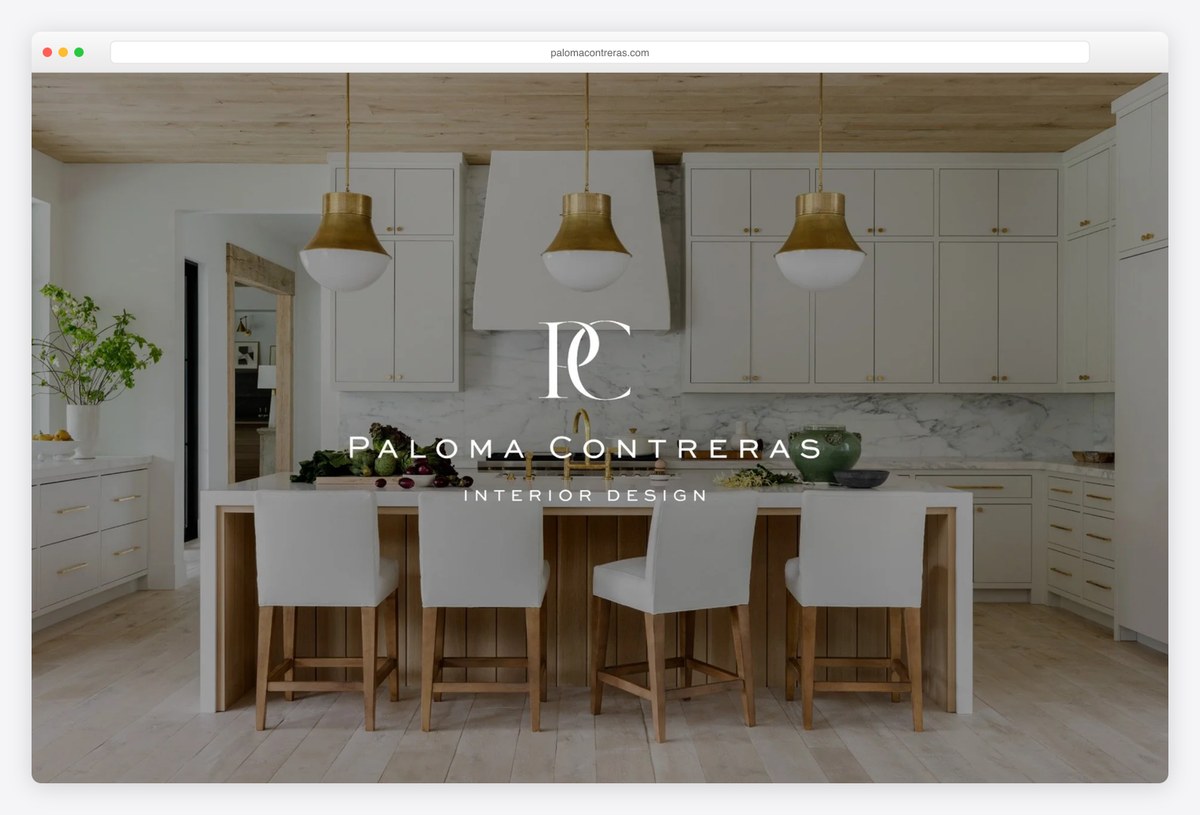
Paloma Contreras is a Houston designer whose portfolio mixes client homes with showhouse rooms, including several Kips Bay Showhouse spaces. For a designer building a name, a showhouse room is a portfolio piece that press and future clients can walk through in person.
Projects are titled by place, from West University in Houston to Alys Beach and Palm Beach, and the pages are image galleries without text. Signature collections, a shop and a podcast share the menu, and the inquiry page gives the studio’s address and phone number.
What stands out: Treat showhouse rooms as portfolio projects.
21. JAC Interiors
Built with: Custom code
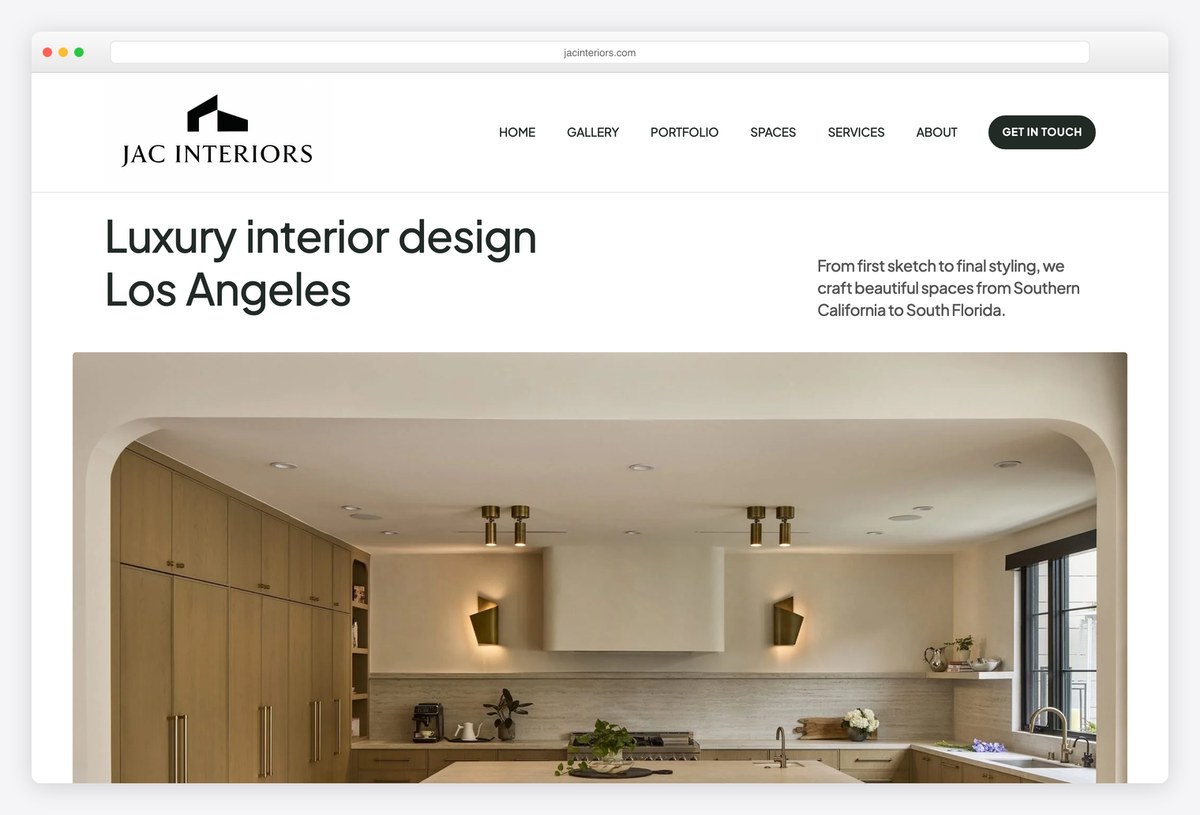
JAC Interiors in Los Angeles offers three ways into the same work: a gallery of single images, a portfolio of projects and a Spaces section sorted by room, from kitchens to bar areas. A Cities We Serve page describes what clients in each part of the city usually want.
Project pages are tagged with the area, style and scope, such as a Spanish Revival remodel north of Montana in Santa Monica. The contact page promises a reply within 1 business day and offers a 15-minute intro call as the first step.
What stands out: Promise a reply time, then keep it.
22. Heidi Caillier Design
Built with: WordPress
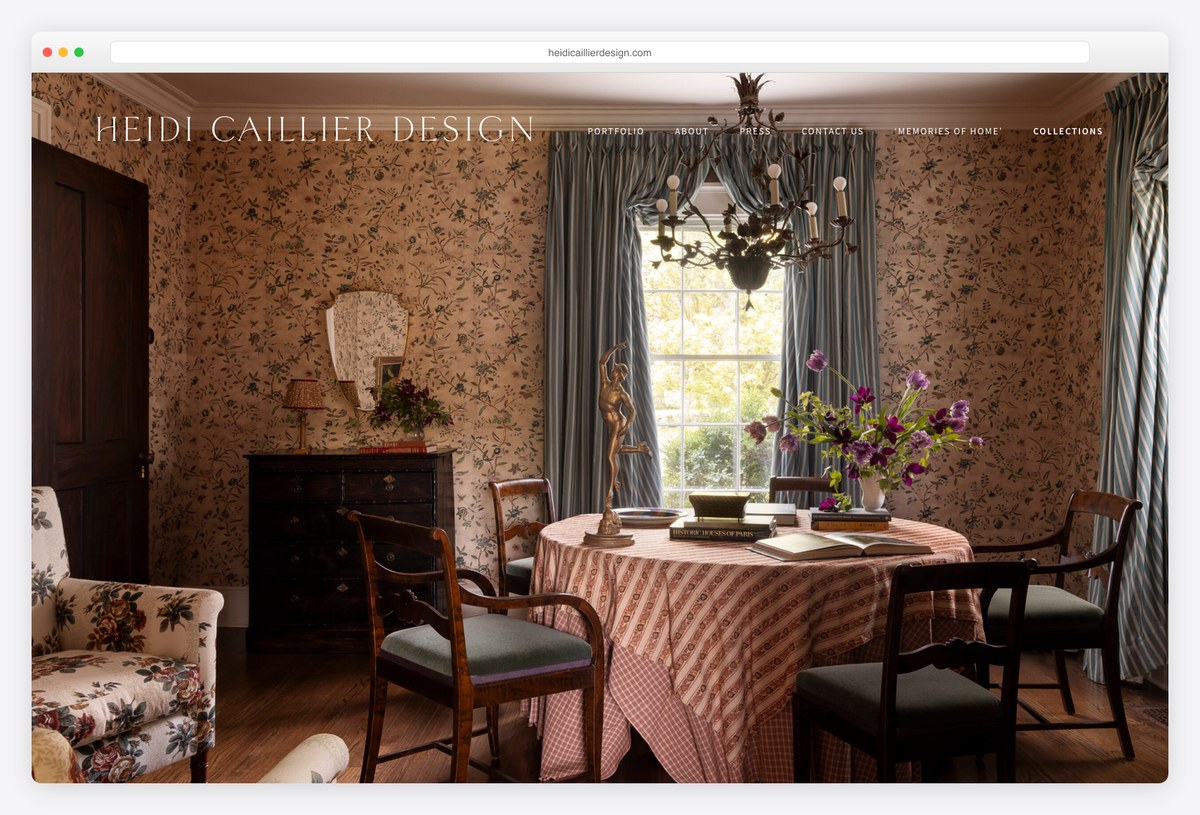
Heidi Caillier’s portfolio is the purest image-led approach in this list. Projects are titled only by place, from Carmel-by-the-Sea to Montana Cabins, and each page is a slideshow with a photo counter and no text, which works because the pattern-rich rooms are recognisable on their own.
The contact form does the sorting instead, asking whether the job is residential, hospitality or commercial and whether it is new construction, renovation or furnishings only. Her book, Memories of Home, has its own page in the menu.
What stands out: If the pages carry no text, make the form ask the questions.
23. Elizabeth Roberts Architects
Built with: Custom code (Next.js)
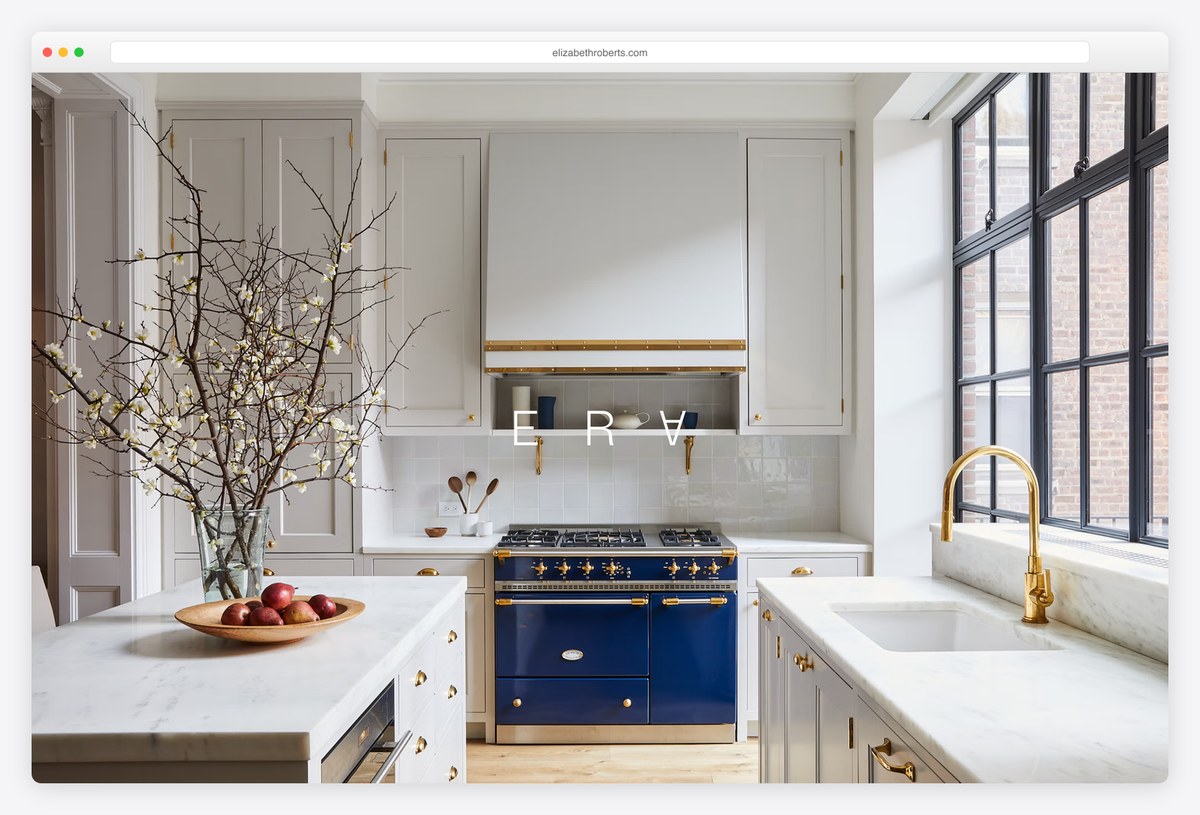
Elizabeth Roberts Architects is a Brooklyn architecture practice whose interiors are part of the scope, and the site offers three ways to browse: a curated selection, a gallery filtered by type such as Townhouse or Cultural, and a plain list of every project.
Project texts explain what was kept and what was added, such as a colonial-era farmhouse taken apart to its oak frame and rebuilt with energy-efficient systems and sourced vintage furniture. The contact page separates new business, press, careers and vendor emails.
What stands out: Offer a complete project list alongside the highlights.
24. Beata Heuman
Built with: Shopify
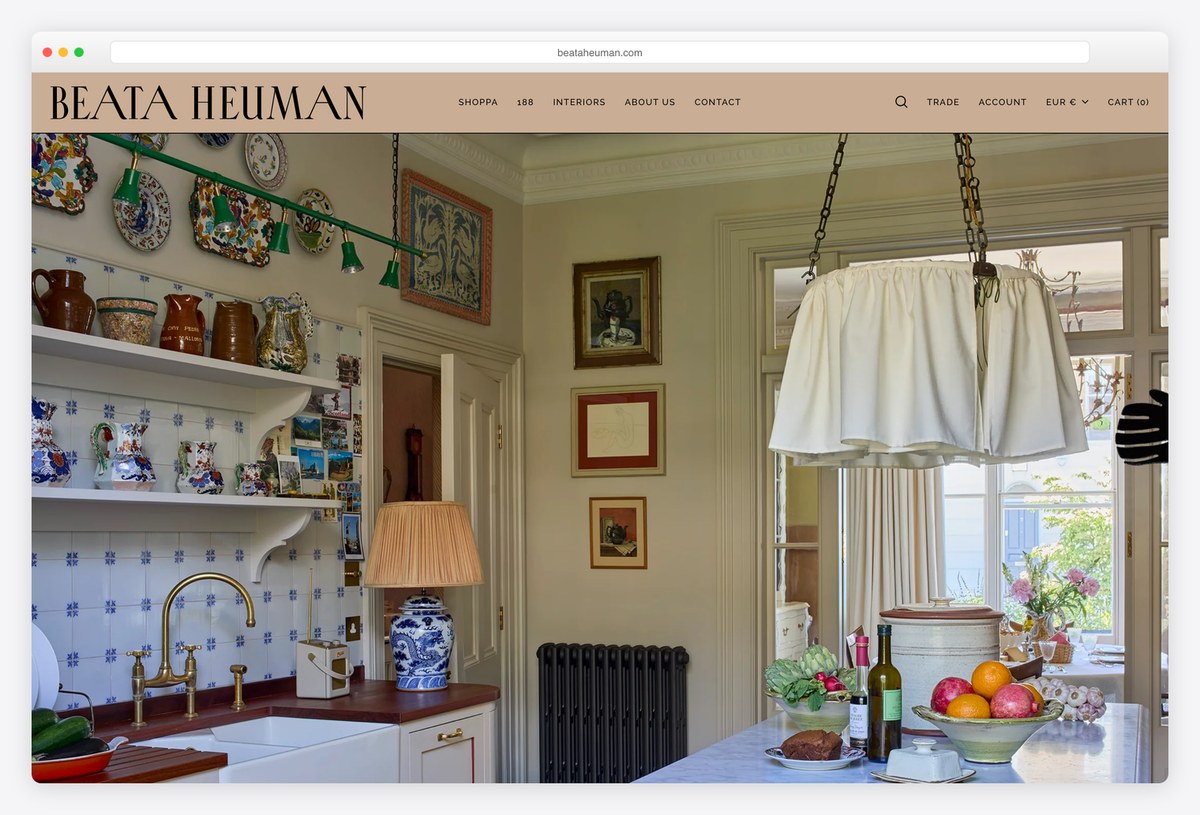
Beata Heuman’s London studio leads with its own product line, but the How We Work page tells prospective clients exactly what to send: a floor plan, photographs of the property and a budget where available. That short brief saves a round of emails.
Project stories are written in the first person, such as a listed London townhouse photographed by Beata herself. The studio notes that it regularly works in the US and Europe, typically on whole homes, and its Shoppa collection began with a fabric made for a sofa in its first project.
What stands out: Tell clients what to include in their first email.
25. Melyssa Robert
Built with: RubberDuck CMS
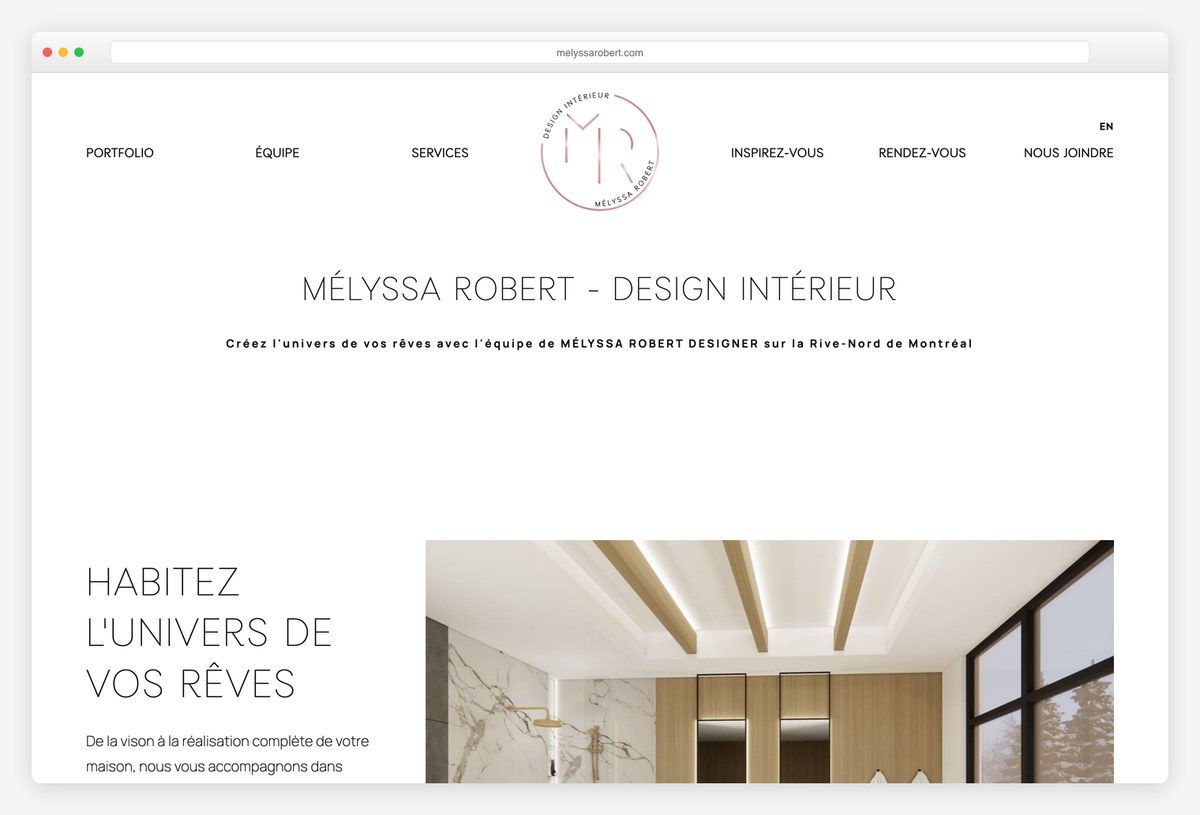
Melyssa Robert Designer serves the Laurentides and the North Shore of Montreal in French and English, and the portfolio filters include Kitchen and Bathroom beside Residential, Commercial and Real Estate. A renovation client can go straight to the room they are planning.
The services page promises support regardless of budget from a team with over 14 years of experience, and the studio also sells an online decorating course. An appointment page sits in the main menu, and separate town pages cover each area served.
What stands out: Give kitchens and bathrooms their own filters.
26. Joli G Interiors & Designs
Built with: Squarespace
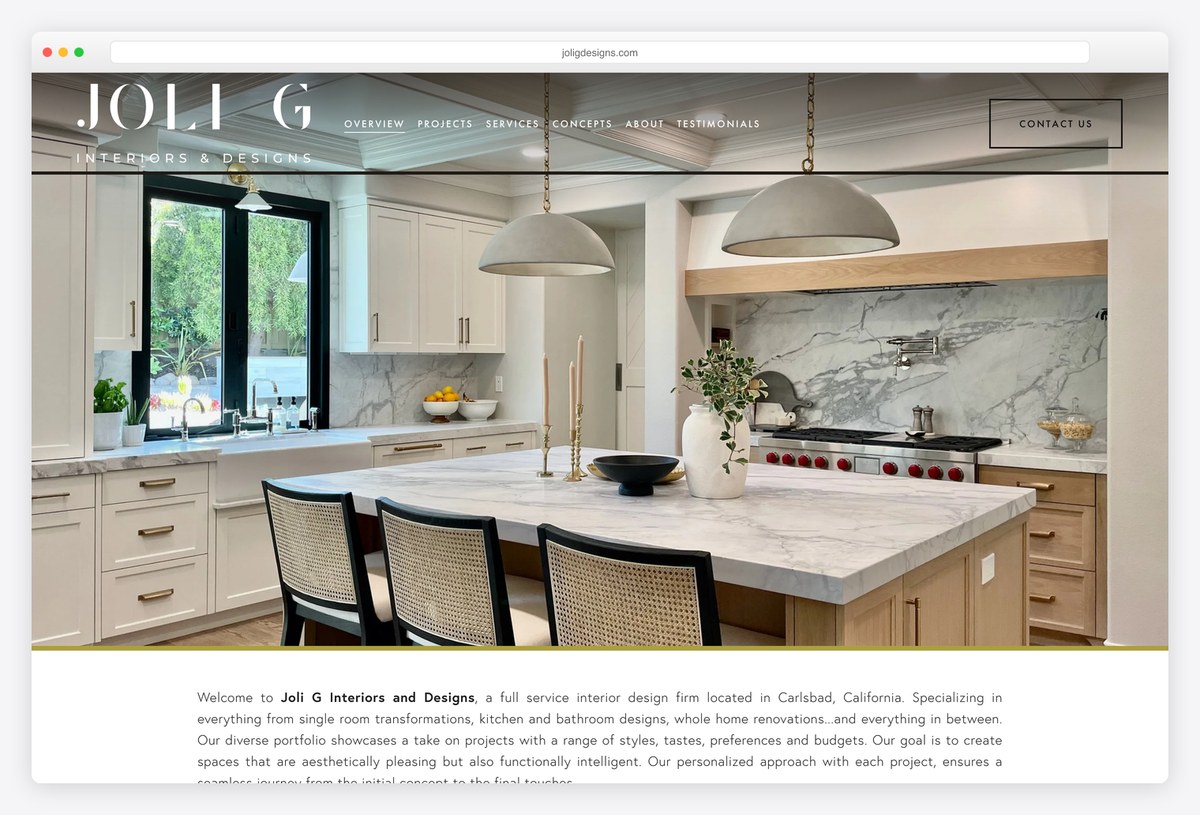
Joli G Interiors & Designs in Carlsbad, California, organises its projects the way remodel clients think, with a kitchen gallery, a bathroom gallery and a kids’ spaces gallery ahead of whole-house projects. Captions name the materials, such as zellige tile, quartzite walls and a Japanese soaking tub.
The services page lists how fees can be charged, hourly, flat fee or by room, and the footer names every town in the service area, from Encinitas to Oceanside. Contact is a form plus the designer’s direct email and phone number.
What stands out: Name the materials in each caption.
27. Amber Interiors
Built with: WordPress
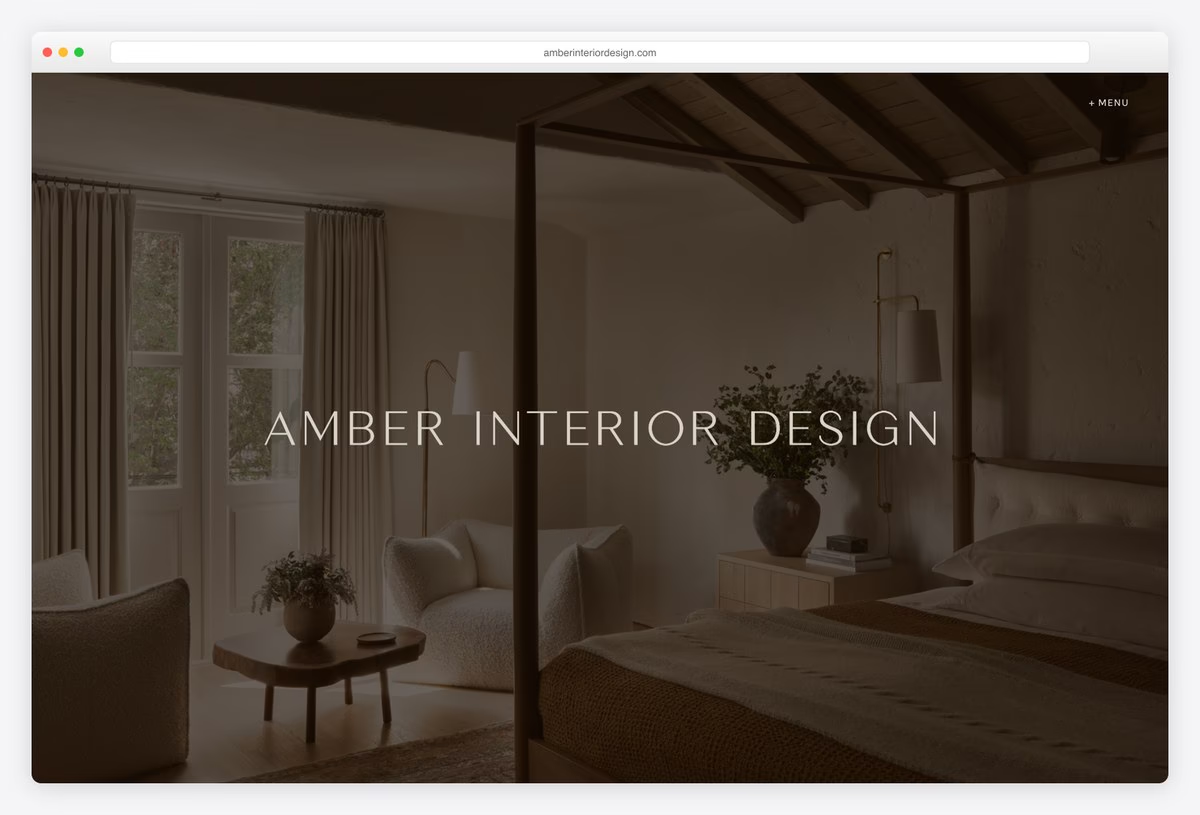
Amber Interiors in Los Angeles credits the contractor and the photographer at the top of each project, and gives projects playful names such as Dream Scene and Are We There Yet. Every image in a gallery carries a Pin It button, which makes each room easy to save and share.
The menu also lists three books by Amber Lewis and a collaborations page. A cookie-preferences panel covers the first screen until it is dismissed, a small cost to a first impression that is otherwise a single full-bleed room.
What stands out: Credit the builder alongside the photographer.
28. Nate Berkus
Built with: Shopify
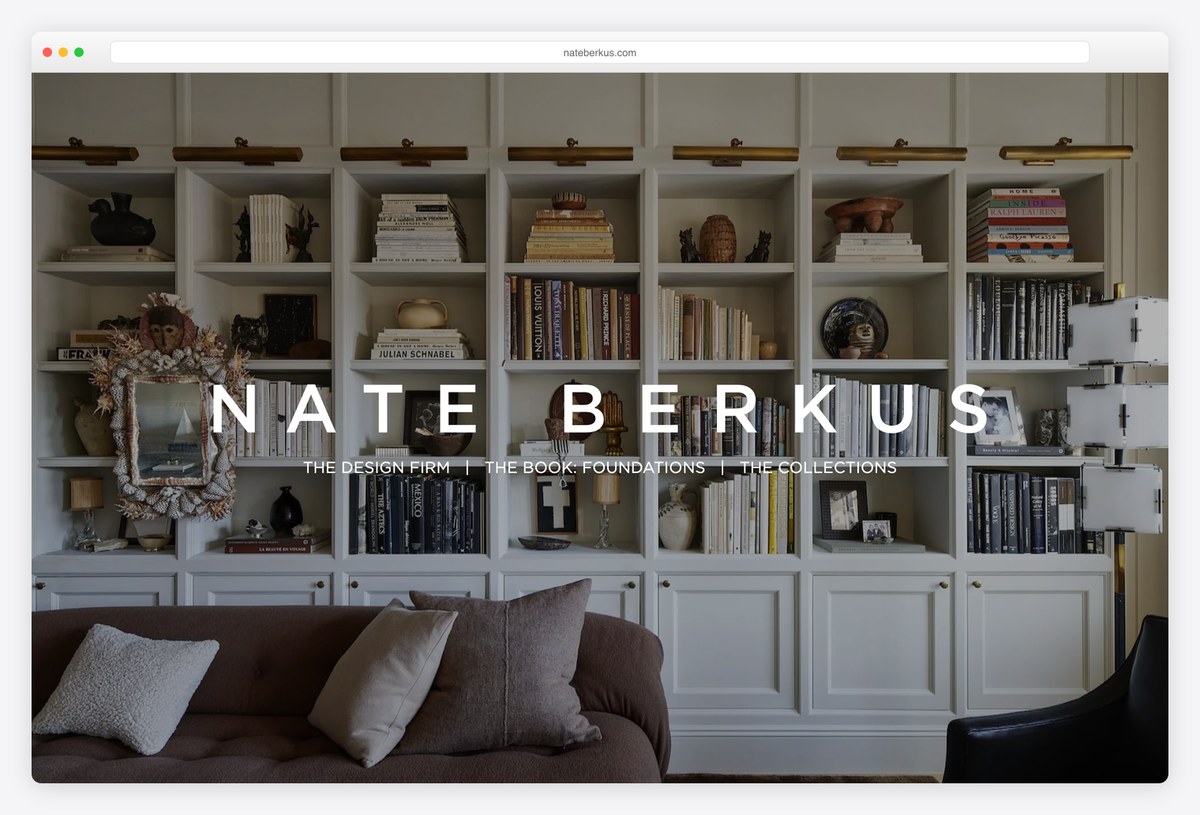
Nate Berkus’s homepage splits the design firm from the book and the product collections in a single line, so clients looking for a designer are not sent through a shop. The firm section has its own menu and about 20 projects titled by place.
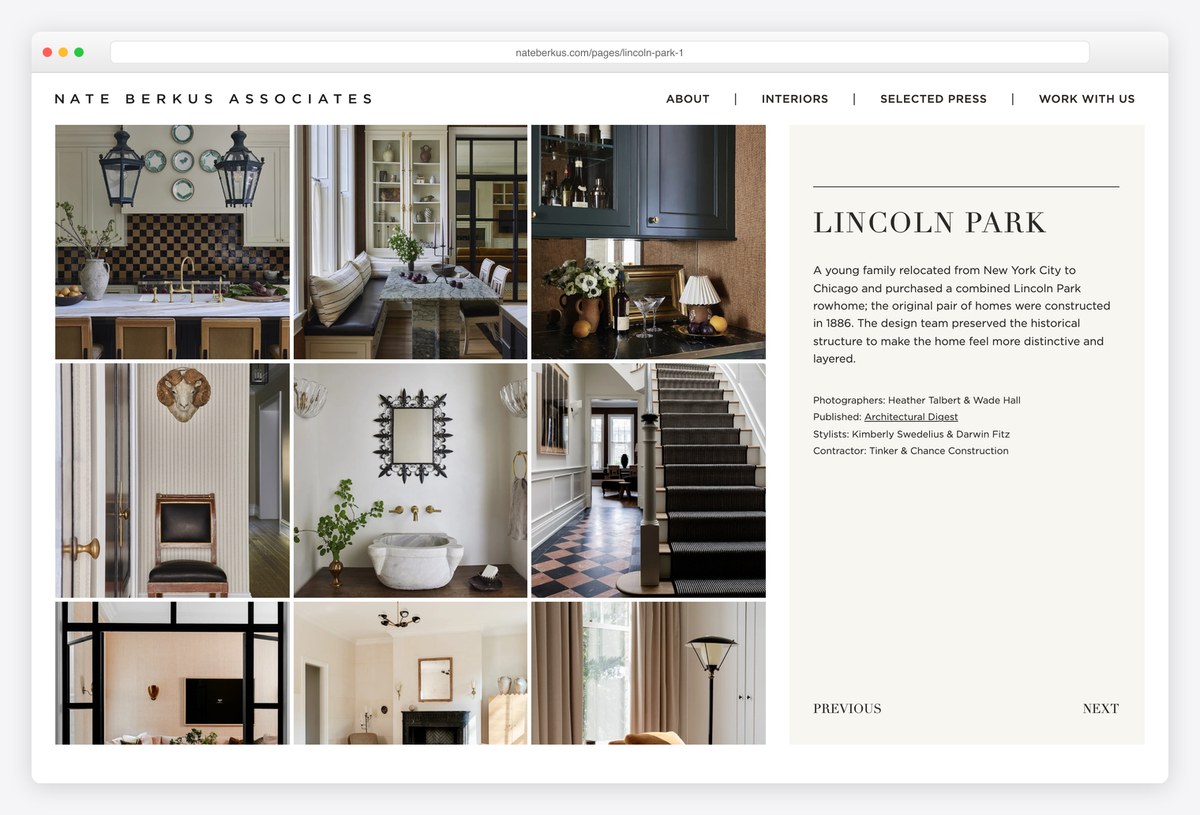
Project pages are brief but complete, naming the photographers, stylists, contractor and publication, as on the Lincoln Park rowhome for a family who moved from New York City to Chicago. A Work With Us page leads to a design inquiry form.
What stands out: Separate the design practice from the products.
29. Ensoul
Built with: WordPress
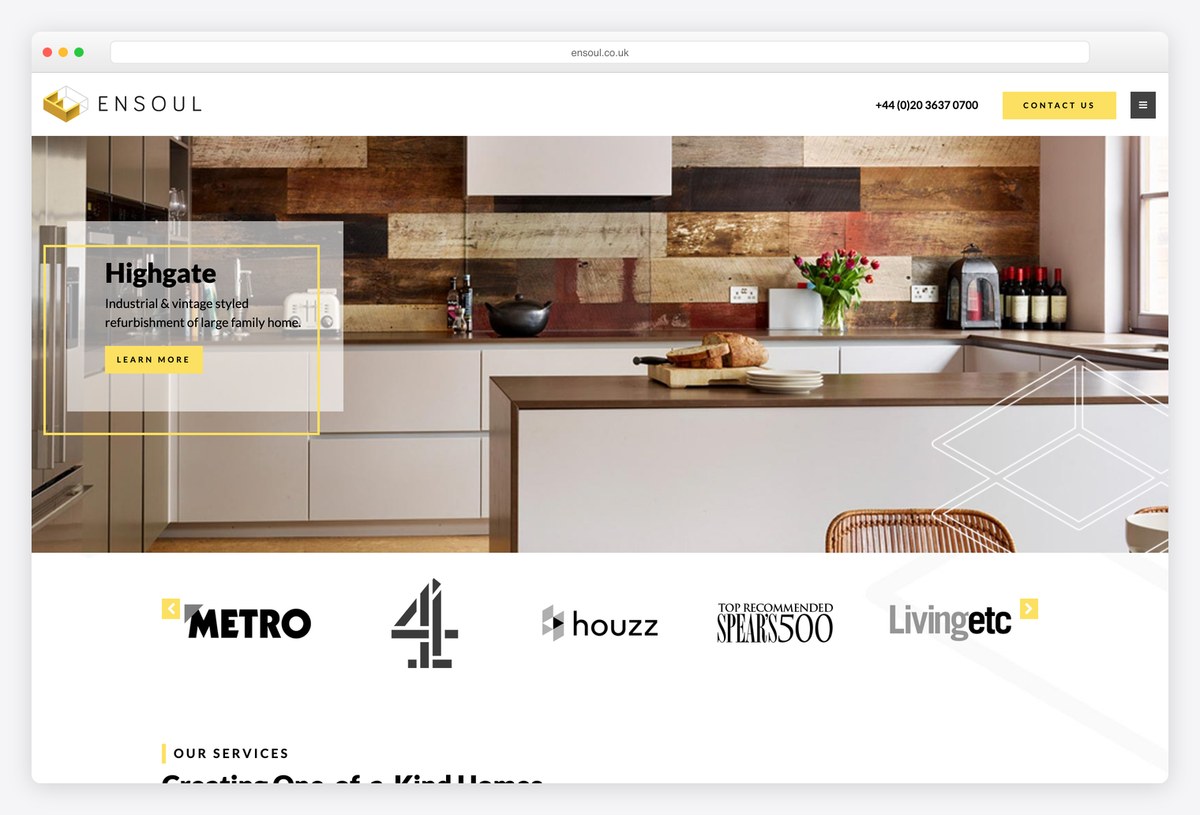
Ensoul is a London architecture and interior design practice, and its portfolio is backed by downloadable guides on under-garden basements, basement extensions and children’s spaces. For a studio selling complex building work, the guides do much of the explaining before the first meeting.
Project pages list the brief as plain bullet points, such as removing a structural wall to open up the kitchen of a Peckham penthouse. Press logos sit directly under the first screen, and the phone number stays in the header.
What stands out: Offer a guide that answers your clients’ first questions.
30. AH Design Group
Built with: WordPress
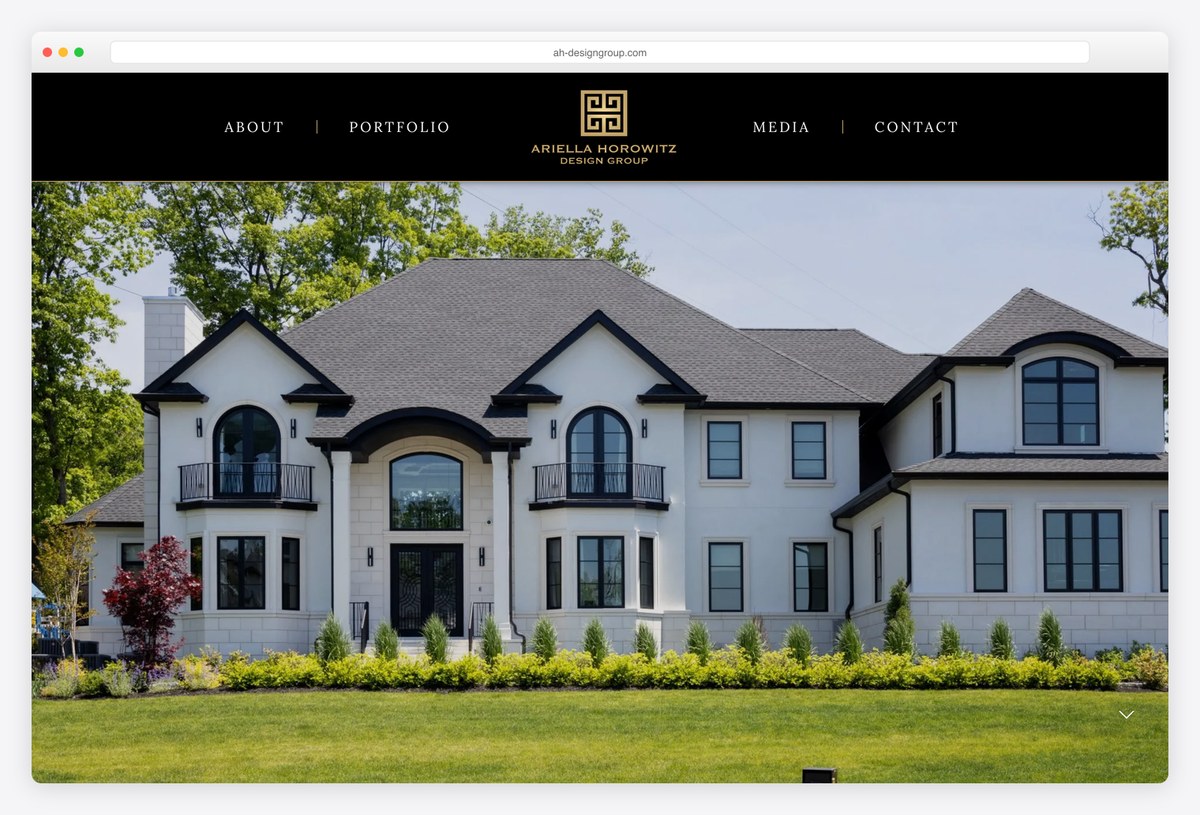
AH Design Group in Northern New Jersey handles interior and exterior design for new construction and custom homes, and its About page describes a hands-on approach that starts at the architectural planning and framing stage and includes regular site visits.
Projects are titled by town, from Woodbury to Colts Neck, which suits a local clientele that wants to see work nearby. The project pages are image galleries without text, so the construction work described on the About page is not shown project by project.
What stands out: Show the construction stage, not only the finished room.
31. Madigan Schuler
Built with: Webflow
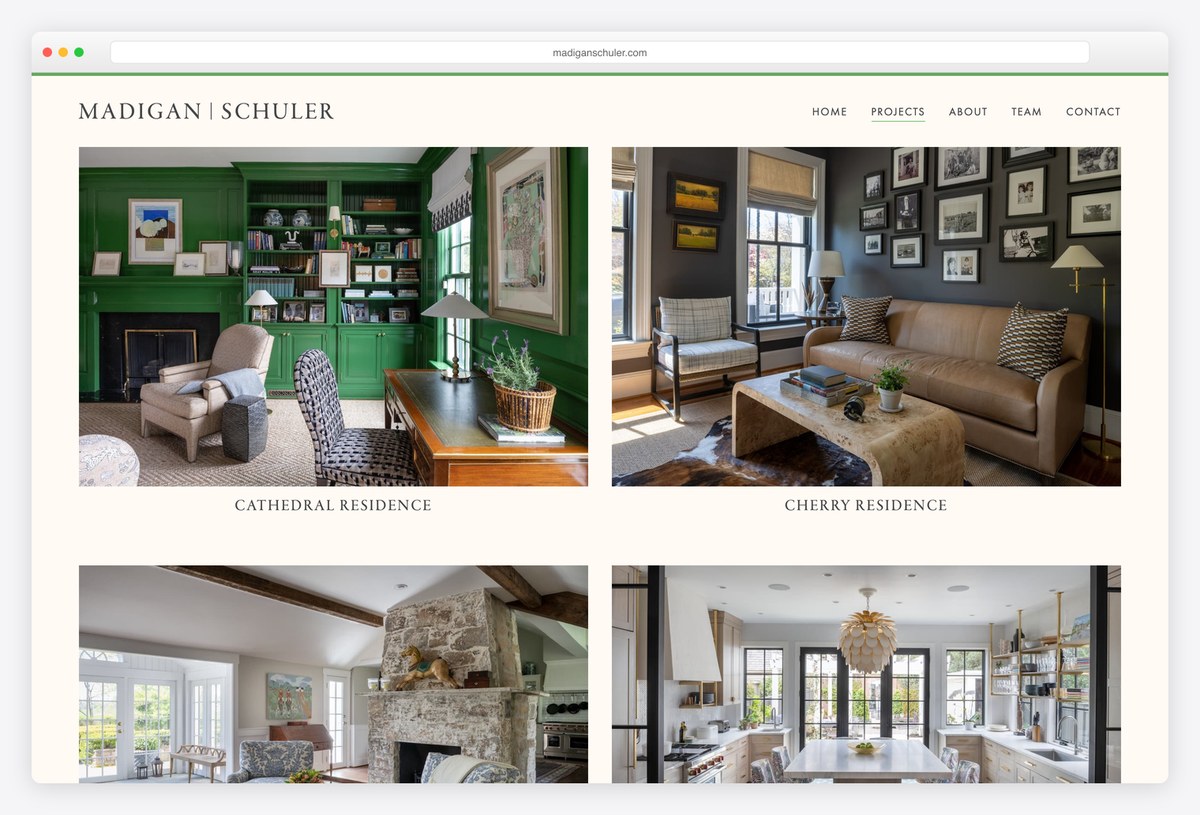
Madigan Schuler, an Alexandria, Virginia, firm founded by Megan Madigan and Kelly Schuler, opens on a splash page: one full-bleed living room, the name and an Enter link. Behind it, ten residences are shown as clean, well-lit image galleries.
The galleries carry no captions, scope or location beyond the residence name, so a visitor has to infer each brief. The About page fills in the basics, a full-service firm with projects across the country, but the work itself says less than it could.
What stands out: Drop the splash page and put the work first.
32. Bobby Berk
Built with: WordPress
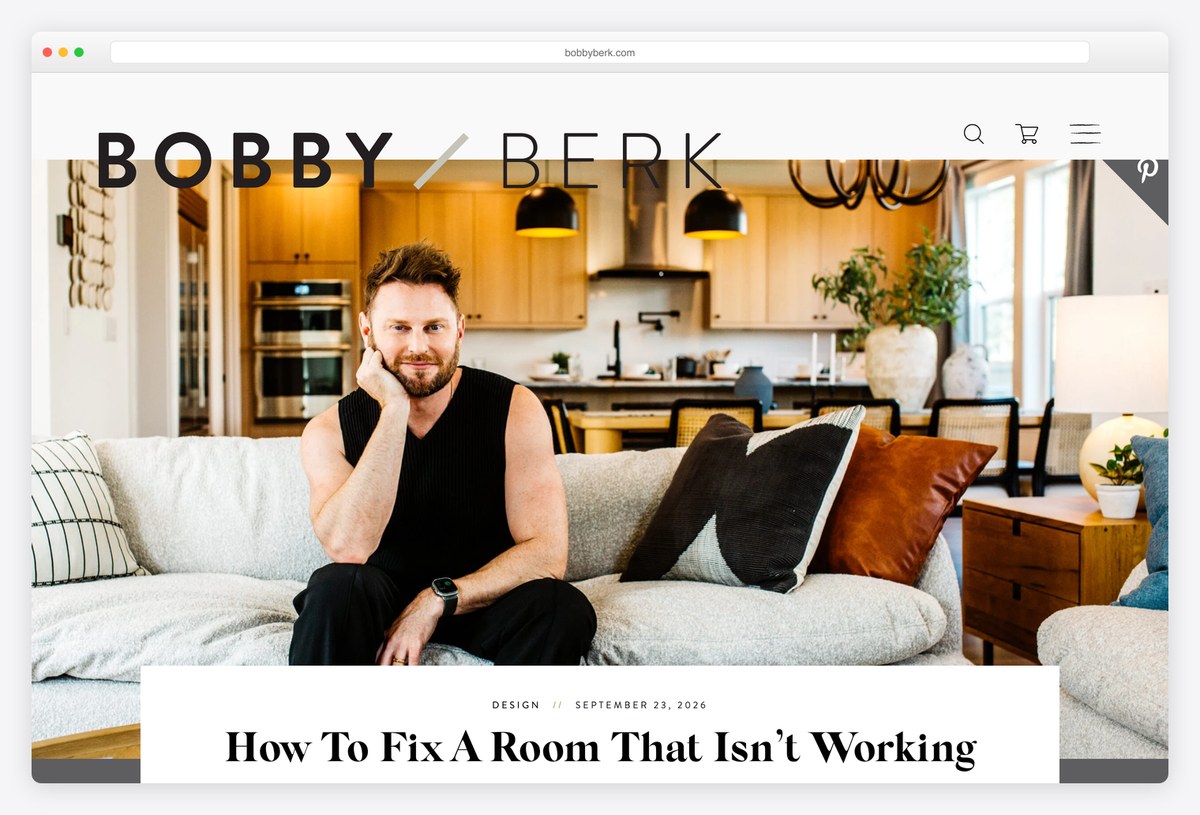
Bobby Berk’s site shows how a designer’s portfolio can be crowded out by media. The homepage is a lifestyle blog with shopping picks and a consent prompt, and the portfolio, two clicks in, is mostly model homes for a builder plus a hospitality skybox for a golf tournament.
The model-home pages are still useful examples, each crediting the photographer and stylist and giving the home’s size, such as 2,216 square feet. An About page offers a consultation with Bobby for clients who get that far.
What stands out: Keep the portfolio one click from the homepage.
What the best interior design portfolios have in common
Every project says what the designer actually did. Arent&Pyke prints the scope under each project name, Tiffany Leigh opens with scope, square footage and location, Cheshire Property Studio with location, discipline, year and status, and 22 Interiors closes with what, where and when. A gallery titled only by town works for a famous name; for everyone else, a client needs to know whether the job was a full renovation or a furnishing refresh.
Credits build trust. Twelve of the portfolios here credit the photographer on the project pages we opened, and the strongest also name the architect, contractor, stylist and the publication that featured the work, as Ghislaine Viñas, Nicole Hollis and Nate Berkus do. Credits show a designer who works well with a team, and they are free to add.
Organise the work the way clients search for it. Remodel clients think in rooms, so Designology, JAC Interiors, Melyssa Robert and Joli G let them browse kitchens and bathrooms directly. Commercial clients think in markets, which is why Parallel Design Group, Taylor Howes and Kelly Wearstler split their work by market or client type, and why Studio Adjective captions every project with its type and city.
Explain how pricing works, even without a price list. DBL Take Design publishes every eDesign package, Cheshire Property Studio explains its fee steps, Niche Interiors gives a typical furnishing budget and JAC Interiors describes how it gathers bids. Most luxury studios publish nothing about money, which leaves clients guessing whether to call.
Let the enquiry form do some of the qualifying. Jessica Nelson asks for budget and start date, Heidi Caillier asks for project type and scope, and Beata Heuman asks for a floor plan and photos in the first email. A promised reply time, as JAC Interiors and Studio Palomino give, and an honest note about capacity, as Jessica Helgerson gives, set expectations before the first call.
Show the process, not only the finished room. Jessica Nelson turns projects into case studies and before-and-after posts, Cheshire Property Studio keeps a work journal, DBL Take Design shows the mood board, floor plan and shopping list a remote client receives, and Studio Palomino gives a time estimate for each design phase. Process is what separates a designer from a good photograph.
Individual portfolios need different facts. A designer looking for a job is judged by a hiring firm, not a homeowner. Tuan Nguyen lists area, status and software on every project and keeps his résumé as a web page, while Winnie Lin wraps a PDF portfolio in a simple site. The PDF is quick to share, but only separate project pages can be linked and found.
Maintenance is part of the portfolio. While checking we found interior design domains that now redirect to gambling sites, a contact email and phone number left over from an accountancy firm’s template, a homepage link to a page still showing template placeholder text, and consent panels covering the first screen. Check your own links and first screen every few months.
Frequently Asked Questions
What should an interior design portfolio include?
Your strongest completed projects, each with a short brief, the scope of work, the location and the size, plus credits for the photographer and collaborators. Add an about page, your services and a clear enquiry route. The portfolios above that stand out also explain their process and how pricing works, so clients can judge fit before calling.
How do I make an interior design portfolio as a student or with no clients?
Use studio and thesis projects, label them honestly as academic or concept work, and show plans, material boards and renderings alongside the final images. Give each project its own page with the brief and your decisions. Winnie Lin shows the common student approach, and personal or pro bono projects can fill gaps until paid work arrives.
How many projects should an interior design portfolio have?
There is no fixed number. The studios above show anywhere from ten to about forty projects, while a student portfolio usually holds a handful of studio projects. Quality matters more than count: one well-documented project with scope, credits and a short story does more than a long grid of unlabelled galleries.
What is the best platform for an interior design portfolio?
Among the portfolios above, WordPress and custom-built sites are the most common, followed by Squarespace, Wix, Shopify and Webflow, with one each on Archifolio and RubberDuck CMS. Choose a platform that shows large images cleanly and that you will keep updated. If you sell products, keep the portfolio one click from the homepage.
Should an interior design portfolio be a PDF or a website?
Both have a place. A PDF suits job applications and competitions and can be sent as an attachment, while a website can be found in search, linked project by project and updated easily. Many students embed a PDF in a simple site; giving each project its own page as well makes the work easier to share.
How do I show interior design projects without professional photos?
Use well-lit phone photos taken straight on, and add renderings, floor plans, mood boards and material samples to explain the design. DBL Take Design shows e-design deliverables instead of finished-room photography, and several studios list upcoming work as Coming Soon. Book a photographer for your best project as soon as the budget allows.
Wrapping Up
A client gives an interior design portfolio a few minutes, so the strongest ones answer the practical questions early: what the designer did on each project, who else was involved, how the work is priced and how to get in touch.
For more inspiration, see our best portfolio website examples. Ready to build your own? Start from our interior design website templates, browse interior design templates and portfolio templates, pick one of the best portfolio WordPress themes or try a free portfolio website builder.
Browse the other Home services & trades website examples (18 more collections), or see website examples for every industry.

Related Posts


Comments (0)