
50+ Lead Generation Statistics Every Marketer Needs (2026)
Last updated: March 2026
61% of marketers say generating leads is their biggest challenge, the average cost per lead is $198, and content marketing generates 3x more leads at 62% less cost than outbound. Here are 100+ lead generation statistics covering challenges, costs, top channels, landing pages, B2B vs. B2C, and AI automation for 2026.
Key Lead Generation Statistics (2026)
- 61% of marketers say lead gen is their top challenge (HubSpot)
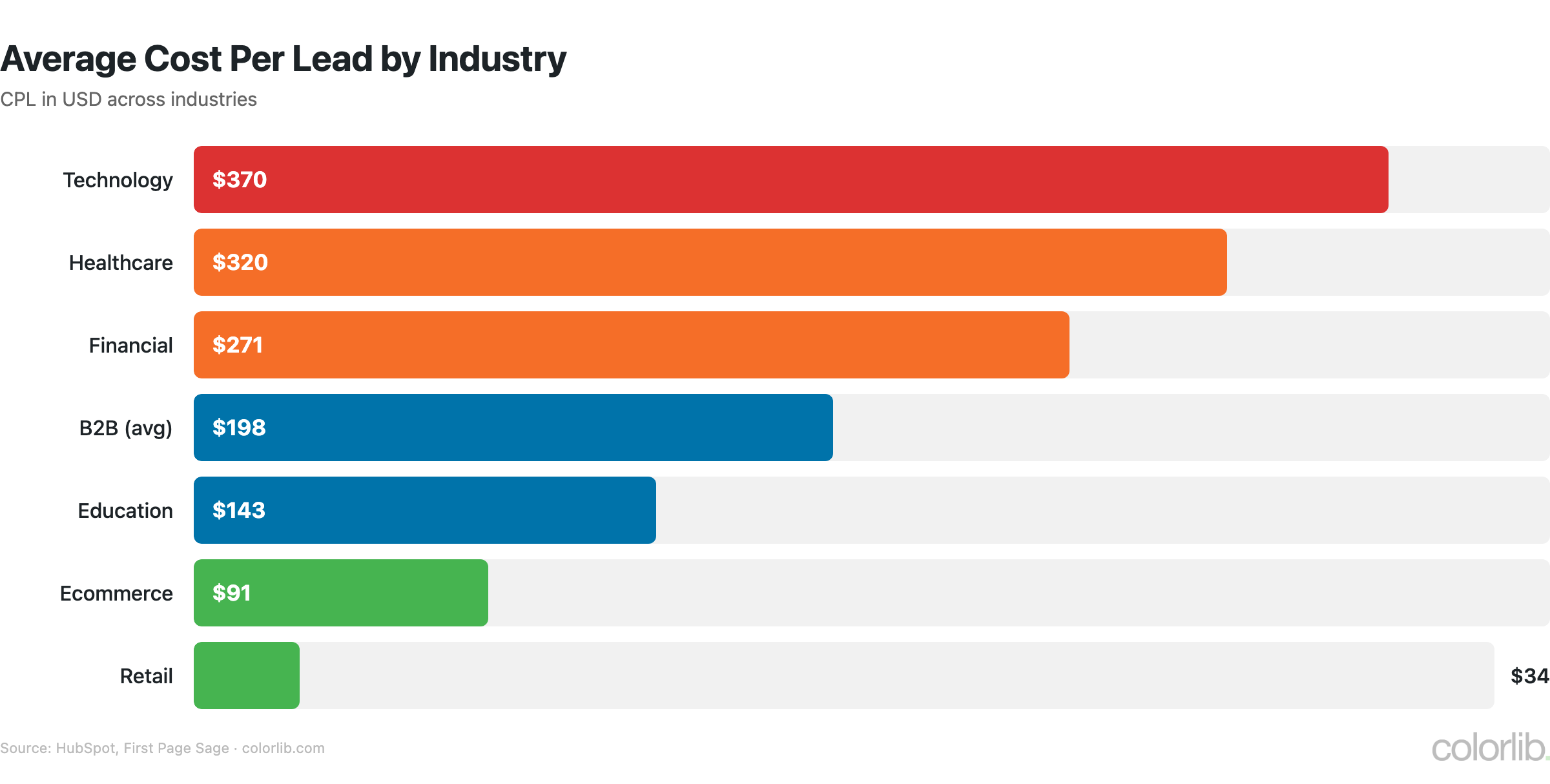
- Average cost per lead: $198 across all industries (First Page Sage)
- Content marketing generates 3x more leads at 62% less cost (Demand Metric)
- Landing pages with videos increase conversions 86% (EyeView)
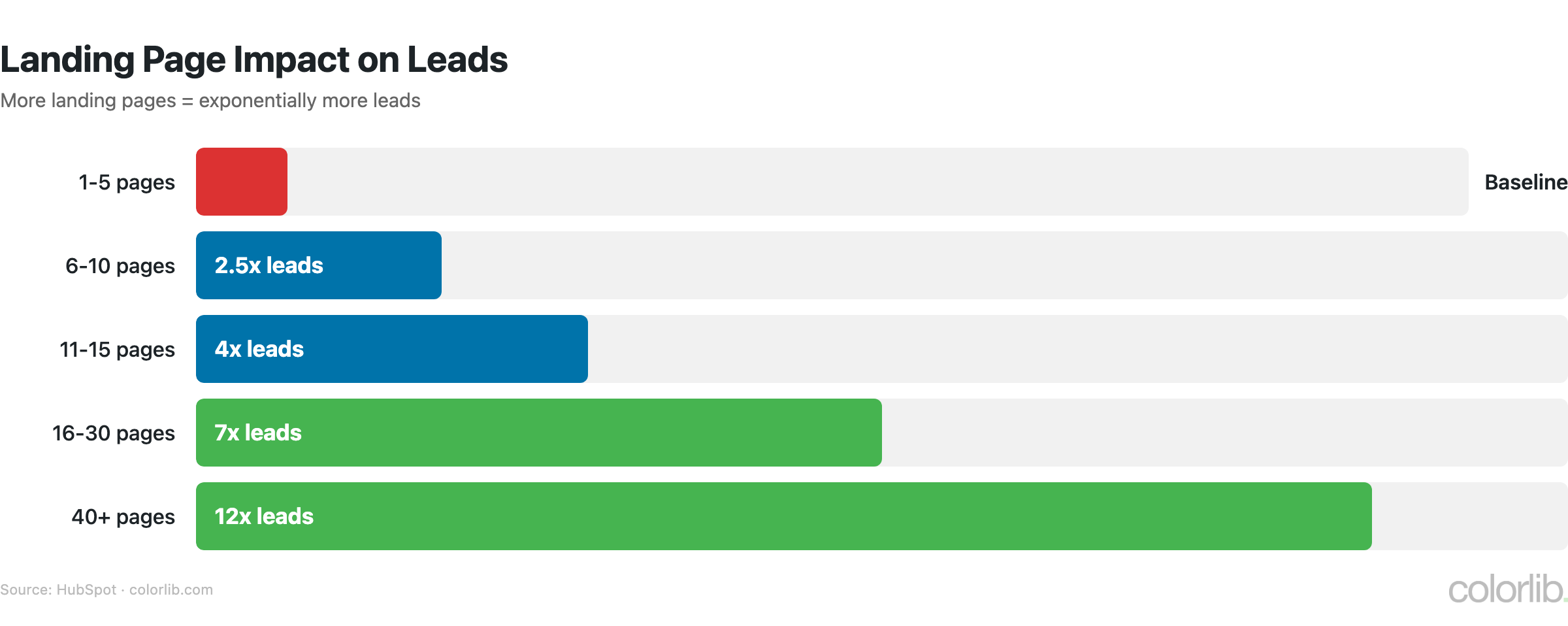
- Companies with 40+ landing pages get 12x more leads (HubSpot)
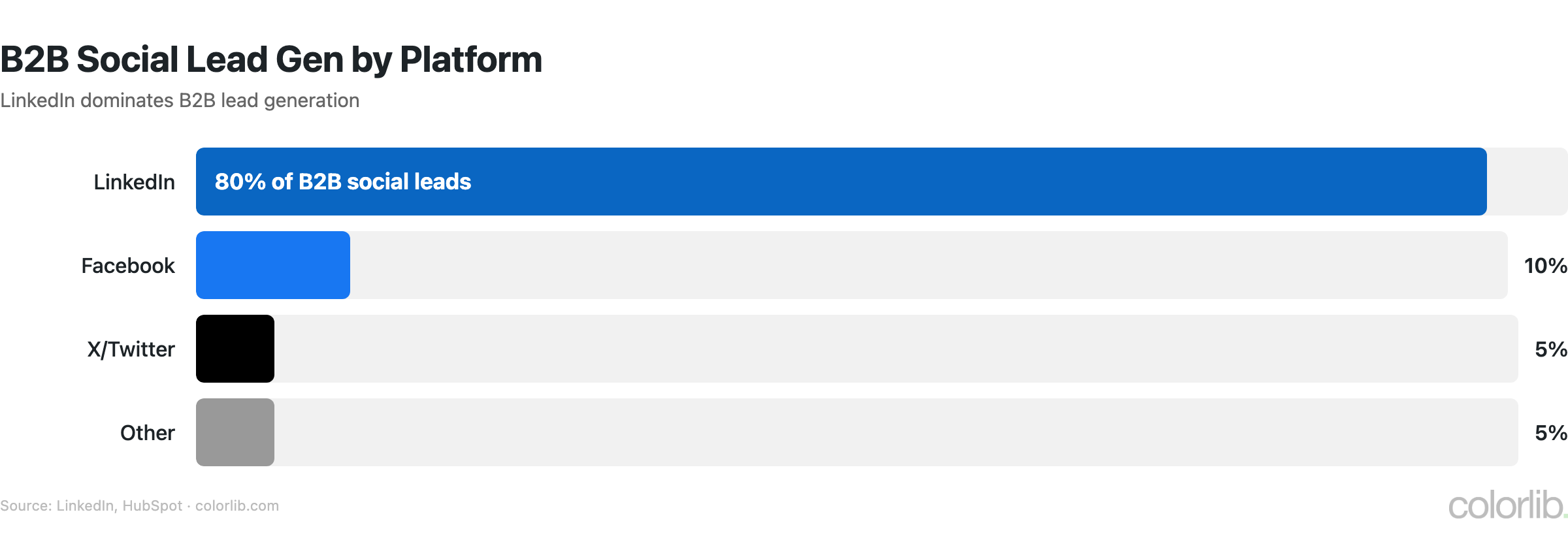
- LinkedIn generates 80% of B2B social leads (LinkedIn)
- Chatbots generate 67% more qualified leads (Drift)
- Email is the #1 channel for B2B lead generation (CMI)
Lead Generation Challenges
| Challenge | % of Marketers | Source |
|---|---|---|
| Generating traffic and leads | 61% | HubSpot |
| Proving ROI of marketing activities | 39% | HubSpot |
| Securing enough budget | 36% | HubSpot |
| Lead quality over quantity | 54% | Salesforce |
| Aligning sales and marketing | 42% | |
| Data quality and management | 38% | DemandGen |
| Creating engaging content | 47% | CMI |
| Reaching decision-makers | 44% | DemandGen |
- 54% of marketers prioritize lead quality over quantity — a shift from the volume-focused approach of previous years
- Only 27% of leads are sales-ready when first generated — the rest require nurturing (MarketingSherpa)
- Companies that align sales and marketing teams generate 208% more revenue from marketing efforts
- 79% of marketing leads never convert to sales, primarily due to lack of lead nurturing
- The average sales cycle has lengthened by 22% since 2020, increasing the importance of sustained lead nurturing
Cost Per Lead by Industry
| Industry | Average CPL | Source |
|---|---|---|
| Technology / IT | $208 | First Page Sage |
| Financial Services | $271 | First Page Sage |
| Healthcare | $285 | First Page Sage |
| Legal | $516 | First Page Sage |
| SaaS | $237 | First Page Sage |
| Real Estate | $116 | First Page Sage |
| Education | $65 | First Page Sage |
| Ecommerce | $35 | First Page Sage |
| Manufacturing | $235 | First Page Sage |
| Average (all industries) | $198 | First Page Sage |
- Legal leads are the most expensive at $516 average CPL, driven by extreme competition for personal injury and class action keywords
- Ecommerce has the lowest CPL at $35, but also the lowest lead-to-sale conversion rate at 1.8%
- Organic search leads cost 60% less than paid leads on average, but take 3-6 months to materialize
- CPL has increased 19% over 3 years across all industries, driven by rising ad costs and increased competition
- Companies spending over $500/month on lead gen report 3x more leads than those spending under $100/month
Top Lead Generation Channels
| Channel | Effectiveness Rating | Source |
|---|---|---|
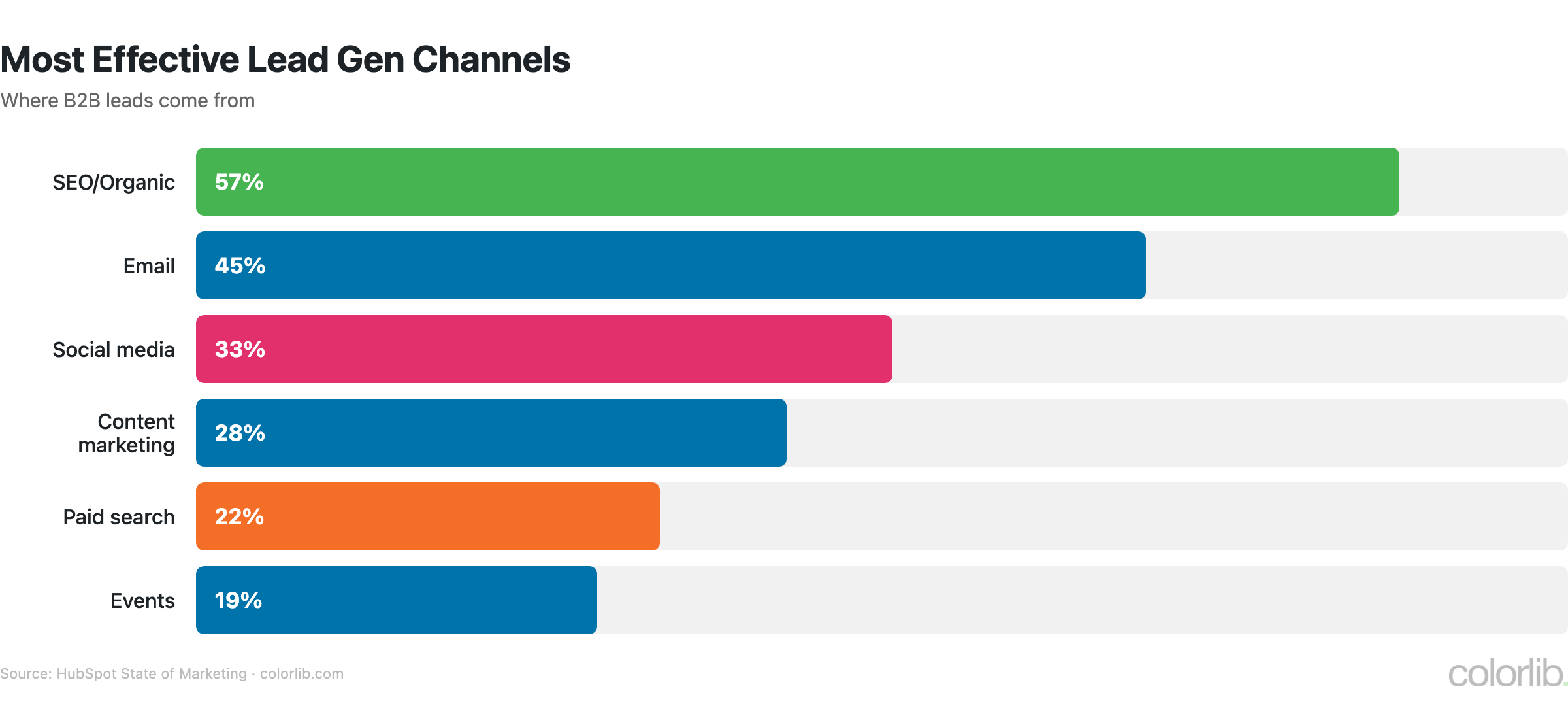
| Email marketing | #1 for B2B (73% of marketers) | CMI |
| SEO / Organic search | #1 for volume (53% of traffic) | BrightEdge |
| Content marketing | 3x more leads at 62% less cost | Demand Metric |
| 80% of B2B social leads | ||
| Webinars | 73% say best for quality B2B leads | GoToWebinar |
| Paid search (Google Ads) | 65% of high-intent clicks | WordStream |
| Social media (organic) | 66% of marketers generate leads | Social Media Examiner |
| Referral programs | 4x higher conversion than other channels | Nielsen |
- Email remains the #1 B2B lead generation channel, with 73% of marketers rating it as their most effective tool
- Webinars generate the highest quality B2B leads, with 20-40% of attendees becoming qualified prospects
- Referral leads convert at 3.6% — 4x higher than the average across all channels (0.9%)
- 84% of B2B decision-makers start the buying process with a referral, making word-of-mouth the most trusted channel
- Multi-channel lead gen strategies produce 300% higher response rates than single-channel approaches
Landing Page Statistics
| Metric | Value | Source |
|---|---|---|
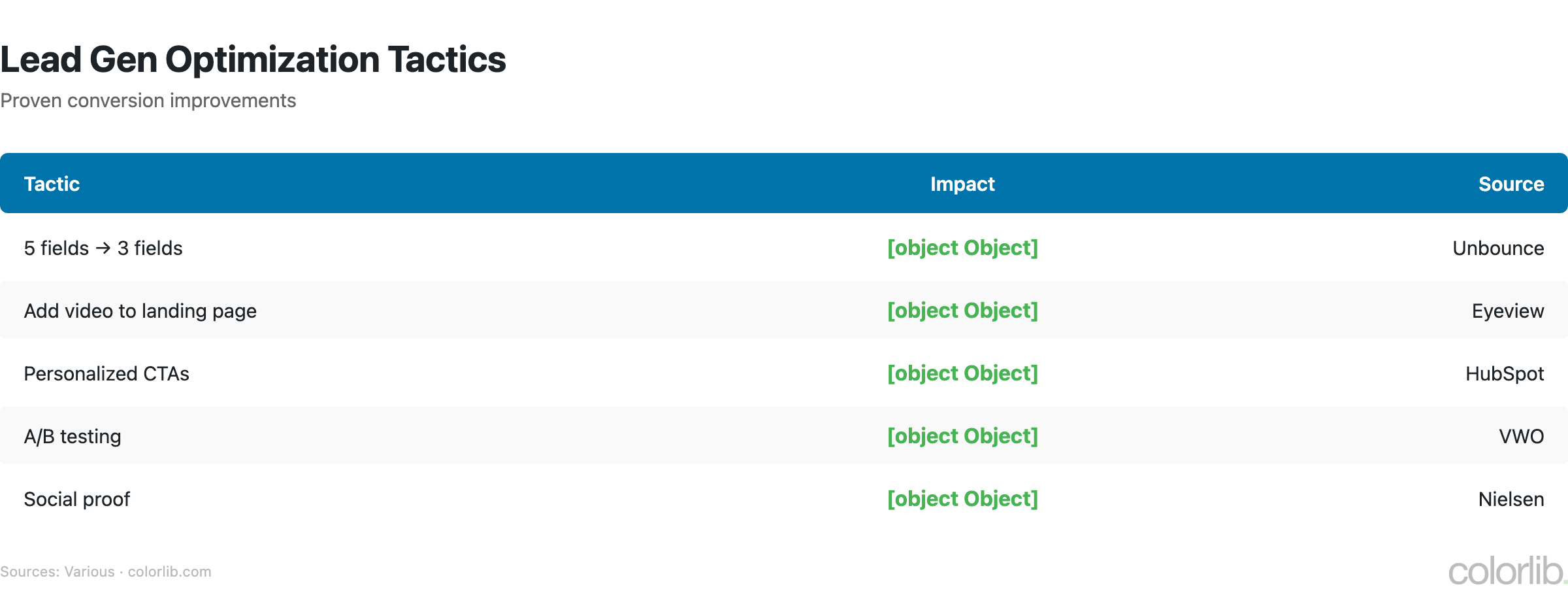
| Average landing page conversion rate | 5.89% | Unbounce |
| Companies with 40+ landing pages | 12x more leads | HubSpot |
| Video on landing pages conversion boost | 86% | EyeView |
| Forms with 3 fields (optimal) | 25% conversion | Unbounce |
| Forms with 6+ fields | 15% conversion | Unbounce |
| A/B tested landing pages | 12% higher conversion | VWO |
| Page load speed impact | Every 1s delay = 7% fewer conversions |
- The median landing page converts at 5.89%, but top 10% of pages achieve 11.45%+
- Removing navigation from landing pages increases conversions by 100% (Unbounce)
- Adding social proof (testimonials, logos) increases landing page conversions by 34%
- Long-form landing pages (below the fold) generate 220% more leads than short above-the-fold CTAs for complex offers
- Personalized landing pages based on referral source convert 2x better than generic pages
B2B vs. B2C Lead Generation
| Metric | B2B | B2C |
|---|---|---|
| Average sales cycle | 84 days | 1-14 days |
| Decision-makers involved | 6-10 people | 1-2 people |
| Top lead gen channel | Email + LinkedIn | Social media + SEO |
| Average conversion rate | 2.23% | 3.71% |
| Content preference | Whitepapers, webinars | Videos, reviews |
| Average deal size | $25,000+ | $50-500 |
| Lead nurture importance | Critical (84%) | Moderate (52%) |
- B2B purchases now involve an average of 6-10 decision-makers, up from 5-6 five years ago
- 77% of B2B buyers say their last purchase was “very complex or difficult”
- B2C impulse purchases account for 40% of all ecommerce spending
- B2B leads nurtured with targeted content produce 20% more sales opportunities
- The B2B buyer journey is now 70% complete before a prospect contacts sales (Forrester)
AI & Automation in Lead Generation
| Tool / Tactic | Impact | Source |
|---|---|---|
| Marketing automation | 451% increase in qualified leads | Annuitas Group |
| Chatbots | 67% more qualified leads | Drift |
| AI lead scoring | 30% higher close rates | Salesforce |
| Automated email nurture | 2x conversion vs. manual | Omnisend |
| Predictive analytics adoption | 44% of marketing teams | Salesforce |
| Marketing automation market | $8.4 billion | MarketsandMarkets |
| AI content for lead magnets | Used by 62% of marketers | HubSpot |
- Marketing automation delivers a 451% increase in qualified leads — the single largest impact of any lead gen technology
- Chatbots now handle 35% of initial website inquiries, freeing sales teams to focus on high-intent prospects
- AI lead scoring prioritizes the top 20% of leads that typically generate 80% of revenue
- 62% of marketers use AI to create lead magnets (ebooks, guides, templates), cutting production time by 70%
- Companies using marketing automation see a 14.5% increase in sales productivity and a 12.2% reduction in marketing overhead
Key Takeaways
- Lead gen is the #1 marketing challenge. 61% of marketers cite it as their top priority. Only 27% of leads are sales-ready — nurturing is non-negotiable.
- CPL varies wildly by industry. $35 for ecommerce, $516 for legal. Know your benchmark, then optimize relentlessly.
- Content marketing is the best value. 3x more leads at 62% less cost. Pair it with SEO and you have the most cost-effective lead engine available.
- Landing pages are conversion machines. 40+ pages = 12x more leads. Video boosts conversions 86%. Fewer form fields = higher completion rates.
- Marketing automation is a game-changer. 451% more qualified leads. Companies using it see 14.5% higher sales productivity.
- Quality beats quantity. 54% of marketers now prioritize lead quality. AI scoring, chatbots, and targeted nurture sequences are the tools closing the gap.
Sources
- HubSpot — State of Marketing Report
- First Page Sage — Cost Per Lead Report
- Demand Metric — Content Marketing ROI
- Content Marketing Institute — B2B Research
- Unbounce — Conversion Benchmark Report
- Drift — State of Conversational Marketing
- LinkedIn — B2B Marketing Solutions
- Salesforce — State of Marketing
- Forrester — B2B Buyer Journey Research
- Annuitas Group — Marketing Automation Study
Frequently Asked Questions
What is the average cost per lead?
The average cost per lead across all industries is $198. However, this varies dramatically by sector: ecommerce leads average just $35, while legal leads cost $516. Technology and SaaS leads fall in the $208-$237 range. Organic search leads typically cost 60% less than paid leads, making SEO one of the most cost-effective long-term strategies. For related data, see our digital marketing statistics.
What is the best channel for B2B lead generation?
Email marketing is rated the #1 B2B lead generation channel by 73% of marketers. LinkedIn is the dominant social platform, generating 80% of B2B social leads. Webinars are rated highest for lead quality, with 20-40% of attendees becoming qualified prospects. The most effective approach combines email, content marketing, and LinkedIn into an integrated strategy.
How many landing pages should a business have?
Research shows that companies with 40+ landing pages generate 12x more leads than those with 1-5 pages. More landing pages means more targeted offers for different audiences, keywords, and campaign types. The average landing page converts at 5.89%, but top performers exceed 11%. Adding video boosts conversions by 86%, while reducing form fields from 6+ to 3 can increase completion rates by 67%.
Does marketing automation really improve lead generation?
Yes — companies using marketing automation see a 451% increase in qualified leads, 14.5% higher sales productivity, and a 12.2% reduction in marketing overhead. Automated email nurture sequences convert at 2x the rate of manual sends. AI lead scoring helps prioritize the top 20% of leads that generate 80% of revenue. The marketing automation market has grown to $8.4 billion as adoption becomes essential. See our sales statistics for how this impacts the sales pipeline.
For more business data, explore our digital marketing statistics, sales statistics, and online shopping statistics.

Related Posts




Comments (0)