16 Best Freelance Websites to Find Work in 2026
Last updated: March 2026
The freelance economy now employs over 76 million workers in the US alone, contributing more than $1.3 trillion to the economy annually. Whether you are a developer, designer, writer, or consultant, the platform you choose directly impacts your rates, client quality, and long-term career trajectory. Some platforms take 20% of every dollar you earn while others charge nothing. This guide compares 16 freelance marketplaces side-by-side, covering commission rates, payment protection, and which type of freelancer each platform serves best.
Key Highlights
- Contra, Arc.dev, Gun.io, Hubstaff Talent, and LinkedIn ProFinder all charge 0% commission to freelancers
- Fiverr takes the highest marketplace cut at 20% of every transaction
- Toptal accepts only the top 3% of applicants and pays premium rates, with zero commission deducted from freelancer earnings
- Upwork simplified to a flat 10% service fee in 2023, down from its previous sliding scale
- The global freelance platform market is projected to reach $14.4 billion by 2028
- Guru offers the lowest fees among traditional marketplaces at just 5-9%
Freelance Platform Comparison (2026)
| Platform | Commission | Best For | Minimum Payout | Payment Protection |
|---|---|---|---|---|
| Upwork | 10% flat | Long-term contracts | $100 | Yes (escrow) |
| Fiverr | 20% | Quick gigs | $5 | Yes (order system) |
| Toptal | 0% to freelancer | Top 3% talent | Varies | Yes |
| Contra | 0% | Portfolio-first approach | $25 | Yes |
| 99designs | ~15% (built into pricing) | Graphic design | $25 | Yes (guaranteed contests) |
| Freelancer.com | 10-20% | Competitive bidding | $30 | Yes (milestone) |
| PeoplePerHour | 20% (first £500) | UK/EU market | £50 | Yes (escrow) |
| Guru | 5-9% | Lowest fees | $25 | Yes (SafePay) |
| DesignCrowd | ~15% (platform margin) | Logo & brand design | $50 | Yes (guaranteed) |
| We Work Remotely | $0 (employer pays $299/listing) | Remote tech jobs | N/A | N/A (direct hire) |
| FlexJobs | $0 (job seeker pays $9.95/mo) | Vetted remote jobs | N/A | N/A (direct hire) |
| Arc.dev | 0% to freelancer | Senior developers | Varies | Yes |
| Gun.io | 0% to freelancer | Elite developers | Varies | Yes |
| Dribbble Hiring | Portfolio-based (Pro: $8/mo) | Designers | N/A | N/A (direct hire) |
| LinkedIn ProFinder | 0% | Consultants | N/A | N/A (direct hire) |
| Hubstaff Talent | 0% | Tracked freelance work | Varies | Via Hubstaff Time |
1. Upwork
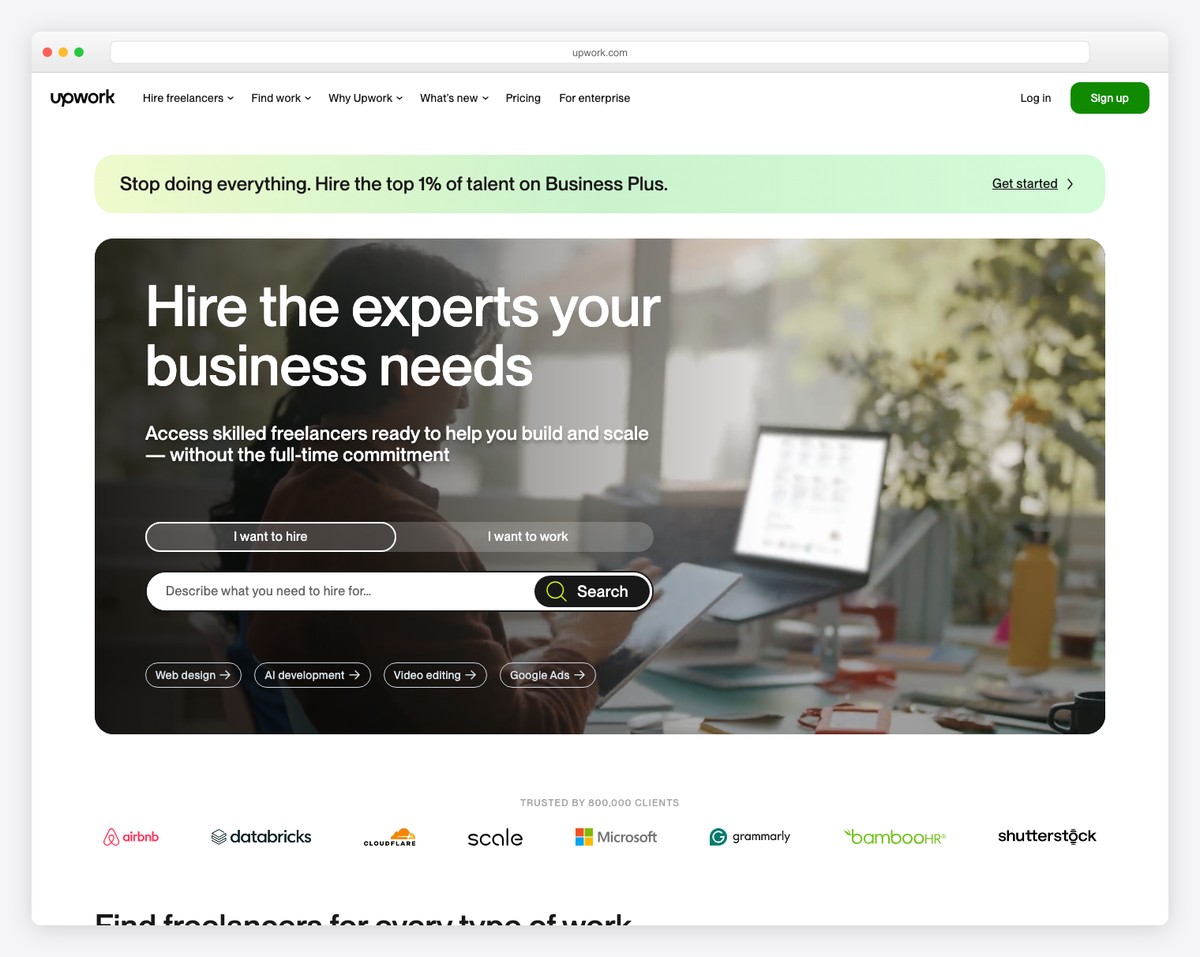
Upwork is the largest freelance marketplace in the world, with over 18 million registered freelancers and $4.3 billion in annual freelancer billings. The platform simplified its fee structure in 2023 to a flat 10% service fee on all earnings, replacing the previous sliding scale (20%/10%/5%). This makes Upwork more predictable, though the 10% cut still adds up on larger contracts.
Upwork’s strength is its breadth. It supports hourly and fixed-price contracts across every freelance category — development, design, writing, marketing, accounting, legal, and more. The platform’s escrow system protects both parties, and hourly contracts include automatic time tracking with screenshot verification. Upwork also offers “Connects” — a credit system for submitting proposals — that costs freelancers a few dollars per application, which filters out low-effort bidders.
For experienced freelancers, Upwork can be highly lucrative. The platform rewards strong profiles, high Job Success Scores, and repeat client relationships. New freelancers face a tougher entry, as building initial reviews requires competitive pricing and patience. Despite the fees, Upwork’s volume of quality clients — including Fortune 500 companies — makes it the most reliable source of consistent freelance income for most skill sets. See our freelance statistics for more data on the industry.
2. Fiverr
Fiverr flipped the traditional freelance model — instead of freelancers bidding on jobs, sellers create service listings (“Gigs”) and buyers come to them. This marketplace approach means your Gig page acts as a 24/7 sales machine, attracting clients through Fiverr’s search engine and recommendation algorithms. The platform charges 20% of every transaction, which is the highest cut among major freelance marketplaces.
Fiverr has grown well beyond its “$5 gig” origins. Top-rated sellers charge hundreds or thousands per project across categories like web development, video editing, voice-over, logo design, and AI services. Fiverr reported $380 million in revenue in 2024 and serves over 4 million active buyers. The platform also launched Fiverr Business for enterprise teams and Fiverr Neo, an AI-powered project matching tool.
The 20% fee is Fiverr’s biggest drawback, effectively requiring freelancers to price 25% higher to match their target earnings. The platform also holds payments for 14 days (7 days for top-rated sellers), which affects cash flow. Fiverr works best for freelancers who offer productized services — clearly defined deliverables at set prices — rather than custom, scope-heavy projects. If you can optimize your Gig for Fiverr’s search algorithm, the platform’s massive buyer traffic can deliver a steady stream of orders.
3. Toptal
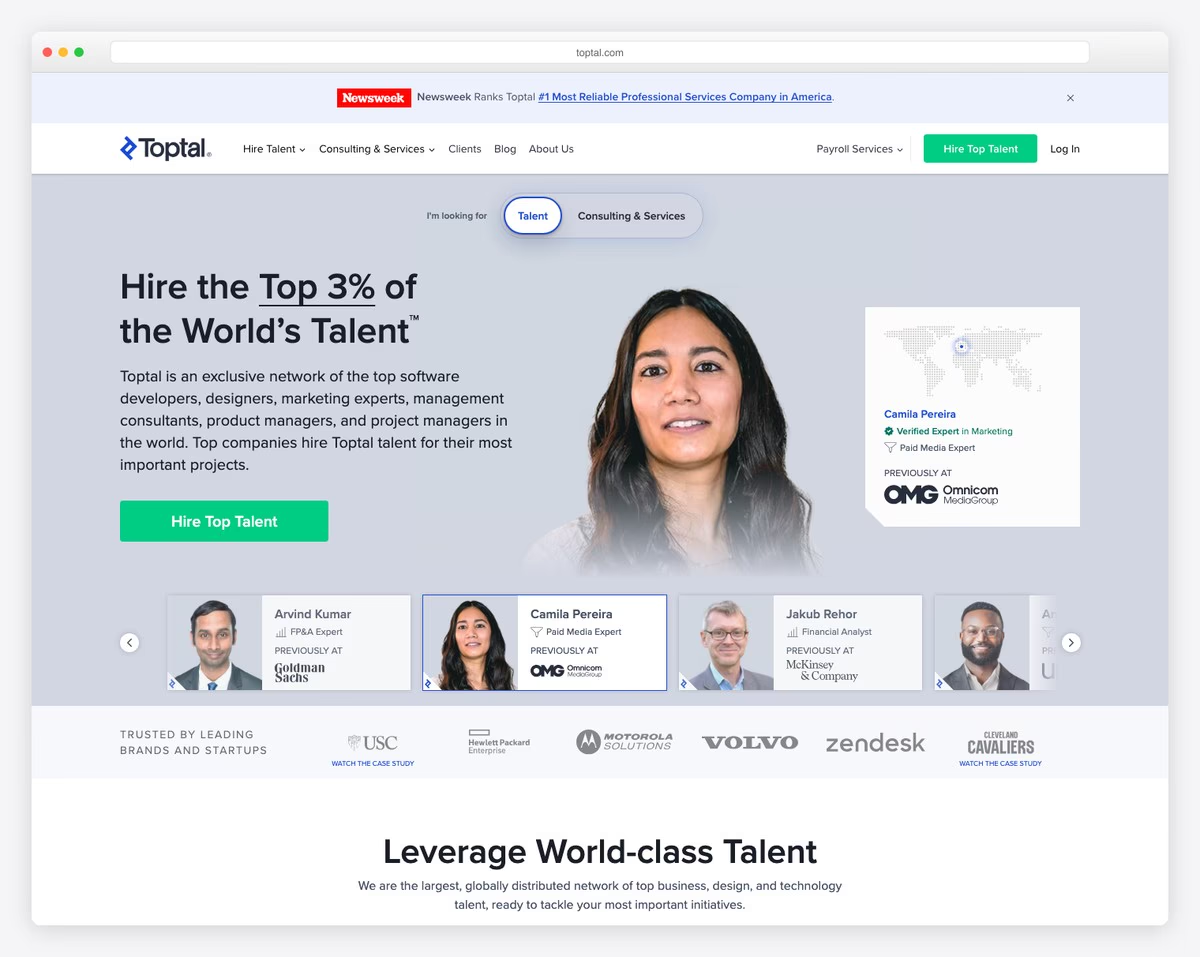
Toptal claims to accept only the top 3% of freelance applicants, and the rigorous screening process backs that up. Applicants go through language assessment, technical screening, live problem-solving tests, and a test project before being admitted. This exclusivity allows Toptal to charge clients premium rates while paying freelancers significantly above market averages — with zero commission deducted from the freelancer’s earnings.
Toptal specializes in software developers, designers, finance experts, and project managers. Clients include Airbnb, Shopify, Bridgestone, and other major enterprises looking for senior-level talent without long-term hiring commitments. The platform handles matching, contracts, and payments, and freelancers report typical hourly rates of $60-200+ depending on specialization.
The barrier to entry is the screening process itself — most applicants are rejected. Toptal is not for junior freelancers or generalists; it is for experienced specialists with proven track records. If you pass the screening, you access a curated pool of high-budget clients and earn premium rates without the race-to-the-bottom pricing that plagues general marketplaces. For senior developers and designers, it represents the highest-earning freelance platform available.
4. Contra
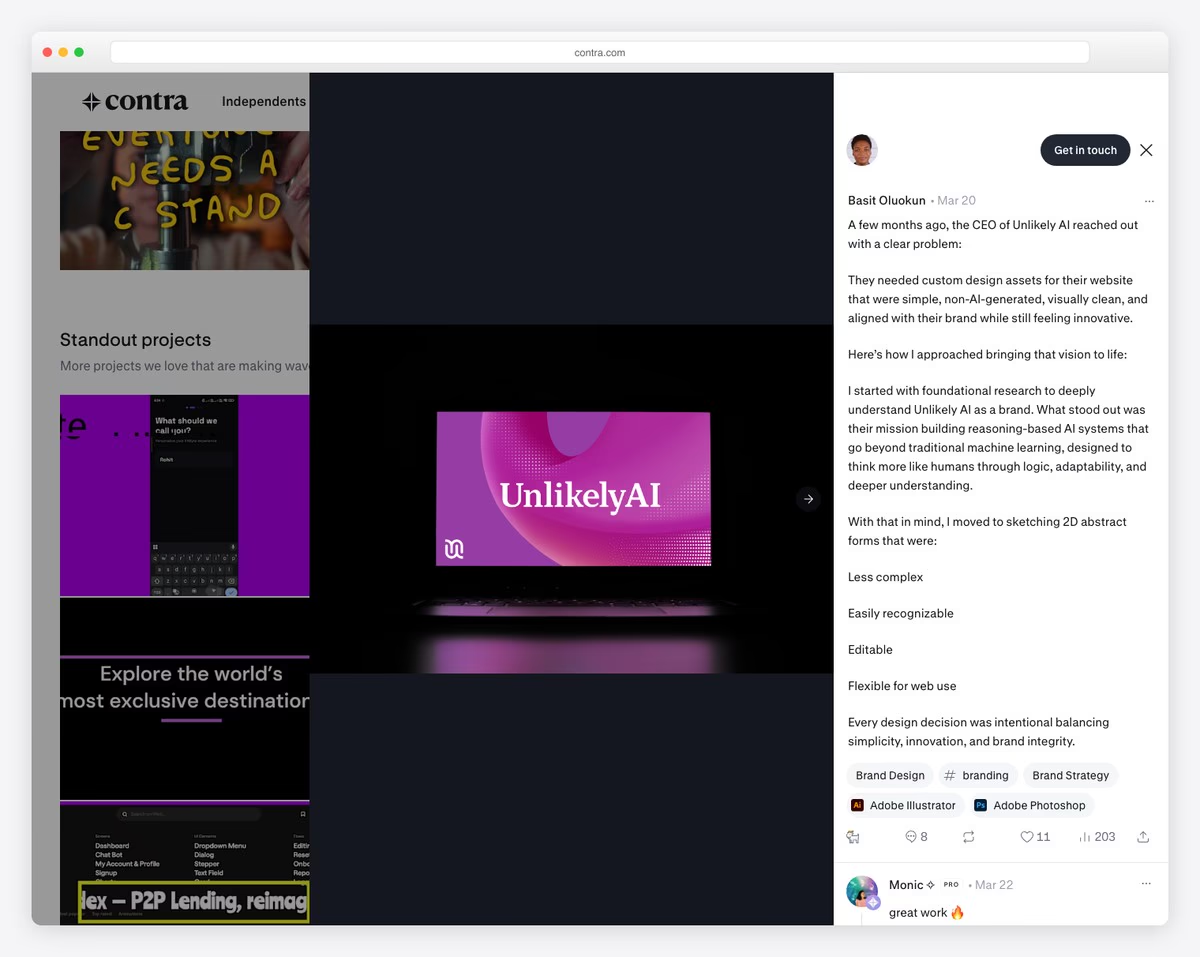
Contra is the rare freelance platform that charges 0% commission to freelancers. The platform monetizes through Contra Pro ($20/mo for freelancers wanting premium features) and by charging clients for certain services. For freelancers, this means you keep 100% of your earnings minus standard payment processing fees. Contra has raised over $60 million in funding and is growing rapidly as a Fiverr/Upwork alternative.
The platform takes a portfolio-first approach. Your Contra profile functions as a professional portfolio showcasing your projects, case studies, and client recommendations. Clients browse portfolios, discover freelancers through search, and engage directly. Contra supports one-time projects, ongoing contracts, and hourly work with built-in invoicing and payment processing.
Contra’s main limitation is its smaller marketplace compared to Upwork or Fiverr. With fewer buyers, you may get less inbound work and need to supplement with outreach. The platform is also newer, so reviews and social proof are still building. For freelancers who want a clean portfolio page, zero fees, and a modern interface, Contra is worth maintaining alongside a presence on larger platforms.
5. 99designs
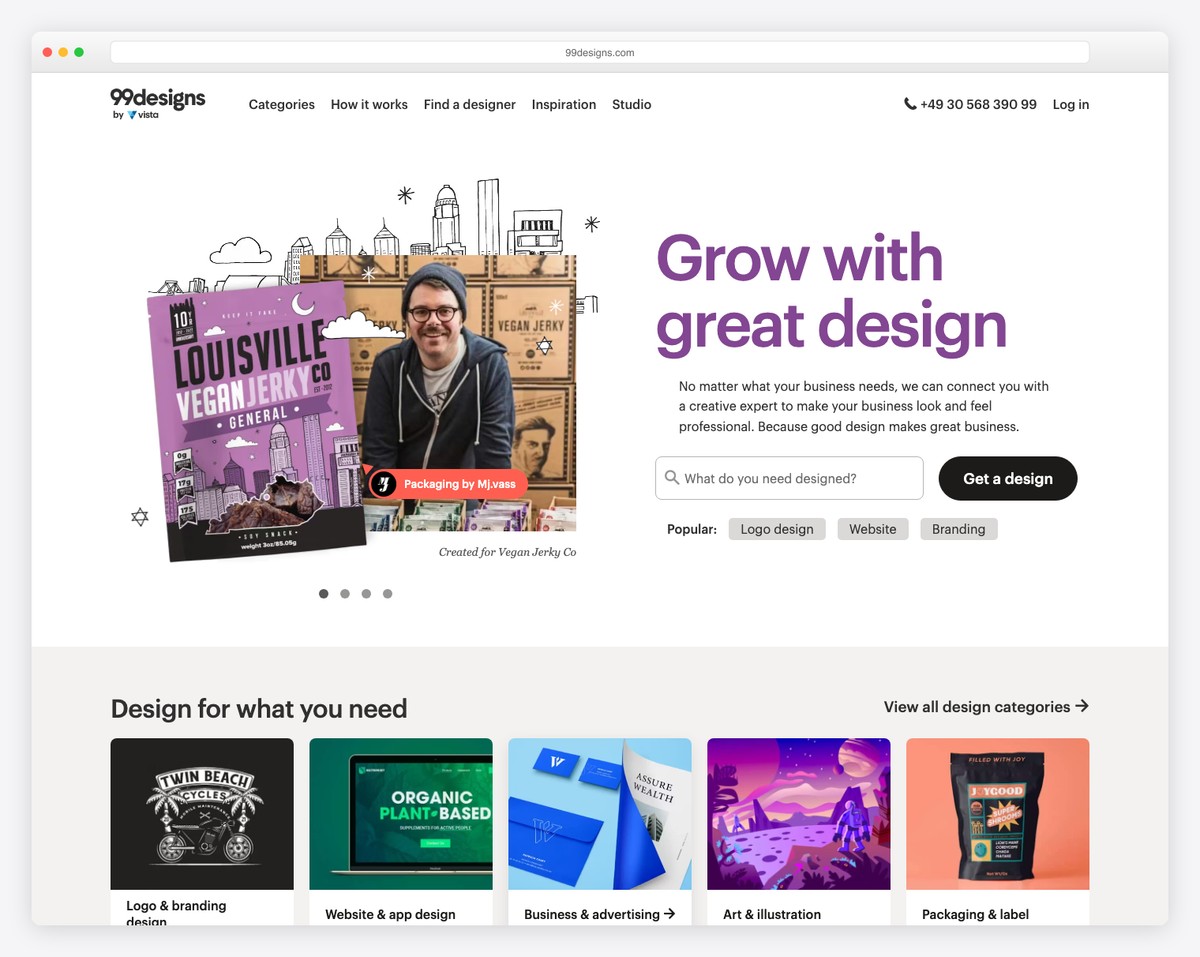
99designs (now part of Vistaprint) specializes exclusively in graphic design. The platform operates on two models: design contests where multiple designers submit work and the client picks a winner, and direct hire where clients engage a specific designer. Designers typically earn 60-85% of the project price depending on their tier level, with the platform keeping the remainder.
The contest model is polarizing. Critics argue it means speculative work with no guarantee of payment. Proponents say it lets new designers build portfolios and compete on talent alone. 99designs mitigates the risk with guaranteed contests (the prize is always paid) and a satisfaction guarantee for clients. The platform covers logos, branding, packaging, web design, book covers, and merchandise design.
For experienced graphic designers, 99designs’ direct hire feature offers a more traditional freelancing experience with access to clients specifically seeking design work. The platform’s specialization means buyer intent is high — clients come to 99designs because they need design, not generic freelance services. If graphic design is your primary skill, 99designs provides a focused marketplace that general platforms cannot match.
6. Freelancer.com
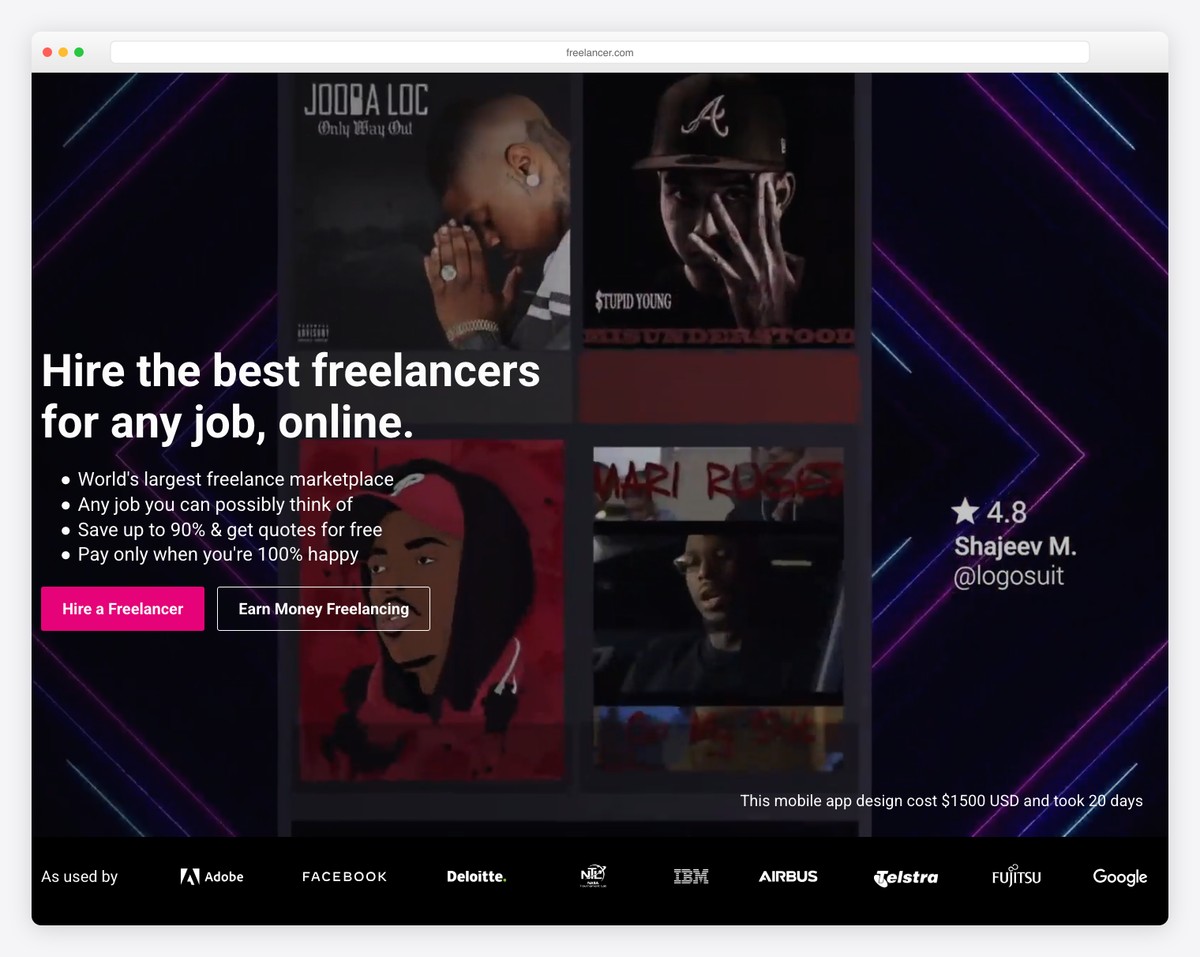
Freelancer.com is one of the oldest freelance platforms, with over 70 million registered users across 247 countries. It operates on a competitive bidding model — clients post projects and freelancers submit proposals with their price and timeline. The platform charges 10% on fixed-price projects and 10% on hourly projects, with a minimum fee of $5. Premium memberships reduce fees and unlock more bids per month.
The platform supports an enormous range of categories including software development, mobile apps, graphic design, writing, data entry, engineering, and even legal work. Freelancer.com also hosts design contests similar to 99designs. The milestone payment system protects both parties — clients fund milestones before work begins, and funds are released upon approval.
The downside is intense price competition. Because the platform has such a large global pool of freelancers, bidding wars can drive prices down, especially for commoditized services. Quality varies widely, which can make it harder for premium freelancers to differentiate themselves. Freelancer.com works best for freelancers in regions with lower costs of living or for specialists in niche technical areas where competition is thinner.
7. PeoplePerHour
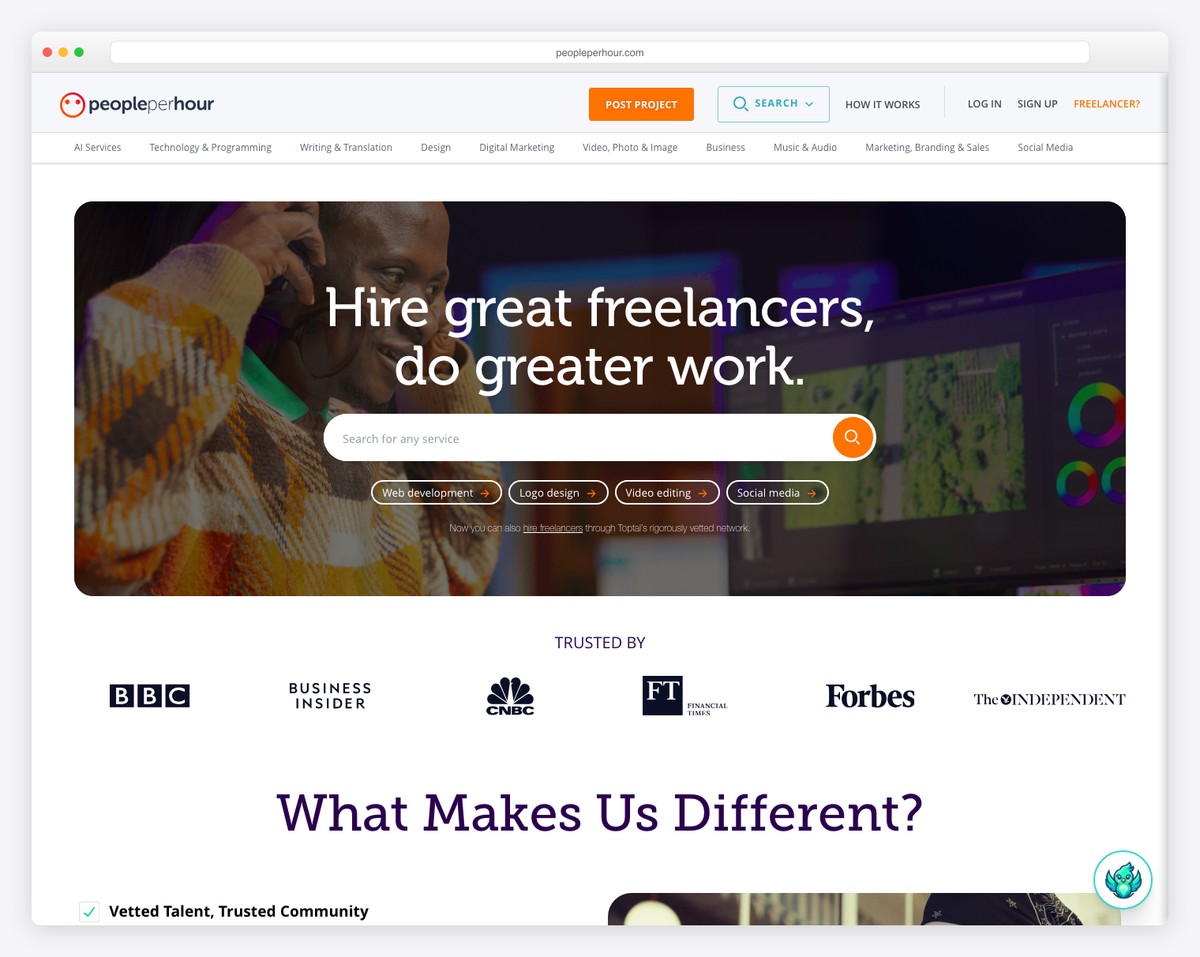
PeoplePerHour is the leading UK-based freelance marketplace, with strong traction across the UK and EU markets. The platform charges 20% on the first £500 earned from each client, dropping to 7.5% for earnings between £500-£5,000, and 3.5% above £5,000. This sliding scale means fees decrease significantly for repeat client relationships, incentivizing long-term engagements.
Freelancers create “Hourlies” — pre-packaged services at set prices (similar to Fiverr Gigs) — or bid on posted projects. PeoplePerHour’s AI matching system recommends freelancers to relevant projects, and the platform offers an invoice system, time tracking, and escrow protection. The community skews toward digital marketing, web development, design, and writing.
PeoplePerHour is most valuable for freelancers targeting UK and European clients. The platform handles GBP and EUR natively, and many clients specifically prefer working with freelancers in similar time zones. The 20% initial fee is steep, but the sliding scale rewards loyalty. For UK-based freelancers, PeoplePerHour often delivers better client quality and less price competition than the larger global platforms.
8. Guru
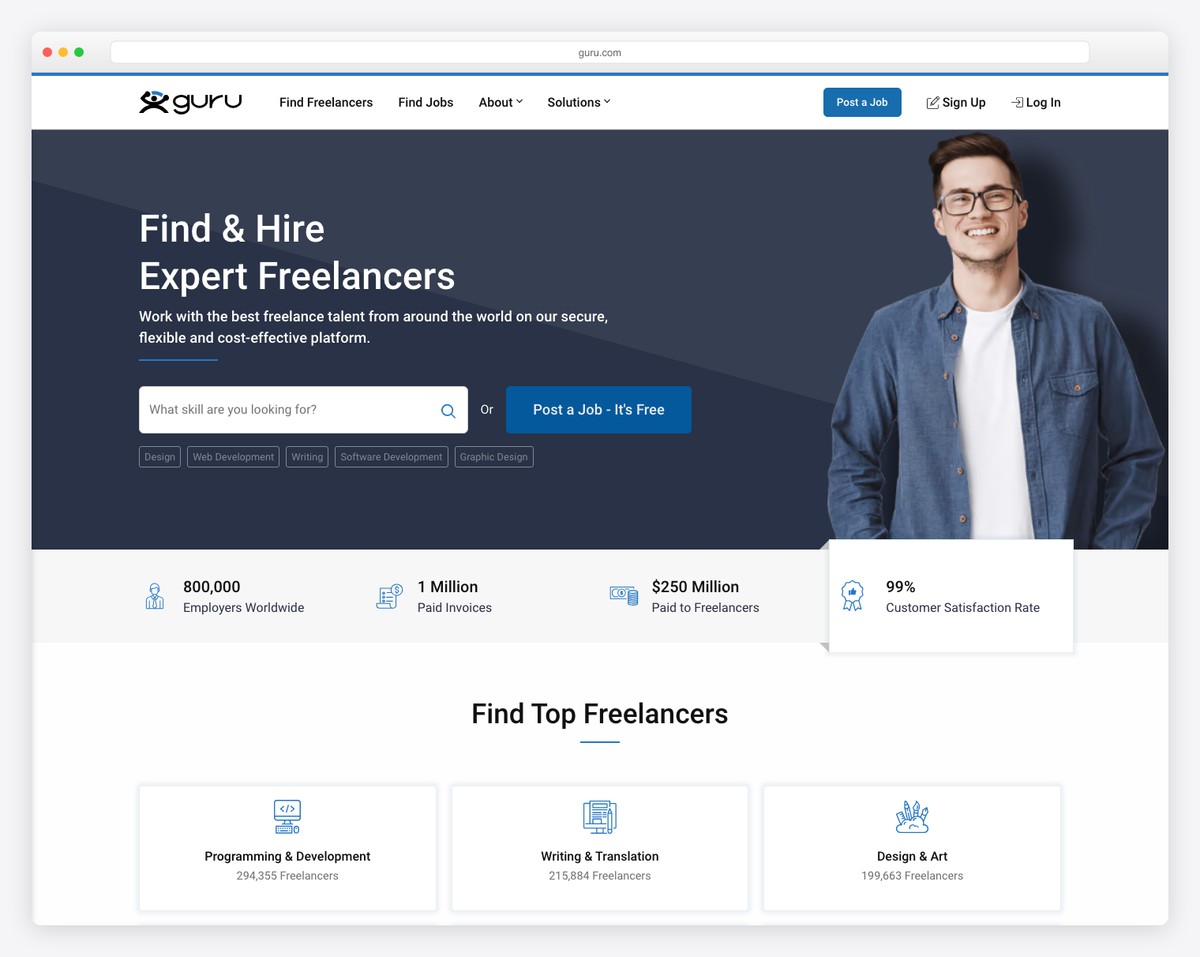
Guru distinguishes itself with the lowest fees among traditional freelance marketplaces: just 5% for members with a paid plan ($12/mo and up) or 9% on the free plan. This makes Guru the most cost-effective option for freelancers who want marketplace features — payment protection, client discovery, and project management tools — without the heavy commissions of Upwork or Fiverr.
The platform has over 3 million registered freelancers and supports a wide range of categories. Guru’s SafePay system provides escrow-based payment protection, and the WorkRoom feature offers project management tools for collaboration. Freelancers can quote on listed jobs or create profiles that attract direct inquiries from clients.
Guru’s smaller marketplace is both an advantage and limitation. There is less competition for each job compared to Upwork, but there are also fewer jobs posted overall. The platform’s interface feels dated compared to newer alternatives, though it remains functional. For freelancers who have tested larger platforms and want to reduce their fee burden while still having access to escrow protection and a job board, Guru offers the best value per dollar.
9. DesignCrowd
DesignCrowd is a crowdsourcing platform specifically for graphic design, similar to 99designs but with a larger community of over 1.1 million designers. Clients post design briefs — primarily for logos, business cards, and brand identity — and multiple designers submit concepts. The client selects a winner and pays the agreed prize amount, with DesignCrowd taking a platform margin.
The platform is particularly strong for logo design and small business branding. Designers compete by submitting mockups, and the competitive format pushes creative variety. DesignCrowd offers a money-back guarantee to clients, which increases buyer confidence and contest participation. Top designers who consistently win contests can build substantial income streams on the platform.
Like all contest-based platforms, the primary risk is uncompensated work. You invest time creating designs with no guarantee of winning. However, DesignCrowd’s large client base and focus on small businesses means there are many contests running simultaneously. For designers who enjoy competition and can work quickly, DesignCrowd provides a steady stream of opportunities — especially for logo and brand identity work.
10. We Work Remotely
We Work Remotely (WWR) is not a traditional freelance marketplace — it is a remote job board where employers pay $299 per listing and freelancers/job seekers browse for free. WWR is one of the largest remote work communities, attracting over 4.5 million visitors monthly and listing positions from companies like Basecamp, GitHub, Amazon, and hundreds of remote-first startups.
Listings span programming, design, DevOps, marketing, customer support, and management roles. Most positions are full-time remote, though contract and freelance opportunities appear regularly. Because employers pay to list, the quality of postings is generally high — there are fewer low-budget or spam listings compared to free platforms.
WWR’s value for freelancers is as a discovery tool rather than a managed marketplace. There is no payment protection, project management, or escrow — you apply, interview, and negotiate directly with the employer. For developers and designers seeking long-term remote contracts or transitioning from freelancing to remote employment, WWR is one of the most trusted and highest-quality job boards available. Check our web development statistics for more on the remote work trend.
11. FlexJobs
FlexJobs takes the unusual approach of charging job seekers $9.95/month (or $24.95/quarter) rather than taking a commission on earnings. In exchange, every listing is hand-screened by FlexJobs staff to verify legitimacy — no scams, no MLM schemes, no “pay to work” gigs. This curation makes FlexJobs one of the safest job boards for freelancers seeking remote and flexible positions.
The platform lists over 50,000 active opportunities from companies like Apple, Salesforce, Dell, and UnitedHealth. Categories include writing, design, accounting, project management, customer service, and software development. FlexJobs also provides skills testing, resume reviews, and career coaching as part of the membership.
The monthly fee is a barrier for freelancers who are exploring casually, but it effectively filters out the noise that plagues free job boards. FlexJobs is best for freelancers who want vetted, professional-grade remote opportunities without competing against thousands of bidders on open marketplaces. The platform is particularly strong for non-tech freelancers in fields like writing, marketing, and administration.
12. Arc.dev
Arc.dev (formerly CodementorX) focuses on connecting senior developers with remote contract opportunities at startups and tech companies. The platform charges 0% commission to freelancers — clients pay a separate service fee. Arc vets all developers through a screening process that includes coding assessments and interviews, accepting roughly 1 in 20 applicants.
Accepted freelancers gain access to high-quality remote contracts from funded startups and established tech companies. The platform specializes in full-stack, backend, frontend, mobile, and DevOps roles. Arc handles matching, introductions, and contract management. Rates are competitive with direct-hire positions, and many contracts are long-term (3+ months).
Arc.dev’s limitation is its selectivity and narrow focus. It is developers only — no designers, writers, or other freelancers. The screening process means you need strong technical skills and professional experience to qualify. For senior developers who pass the screening, Arc provides a zero-fee pathway to premium remote contracts without the overhead of managing profiles on general marketplaces.
13. Gun.io
Gun.io is an invite-only freelance platform for elite software developers. Like Arc.dev, it charges 0% commission to freelancers and monetizes through client fees. Gun.io screens developers through technical assessments and reference checks, maintaining a curated network of proven talent. The platform works with companies like Netflix, Eventbrite, and other technology companies seeking top-tier development resources.
Gun.io’s approach emphasizes long-term relationships. The platform matches developers with projects based on technical fit, experience, and working style rather than competitive bidding. This means less time writing proposals and more time coding. Rates are premium, and Gun.io’s team actively negotiates on behalf of freelancers to ensure fair compensation.
The platform is highly selective, and the invite-only model means you may need a referral or an impressive GitHub profile to get noticed. Gun.io is best for experienced developers with 5+ years of professional experience and a strong portfolio. If you qualify, it offers perhaps the best freelancing experience available: zero fees, premium clients, and minimal administrative overhead.
14. Dribbble Hiring
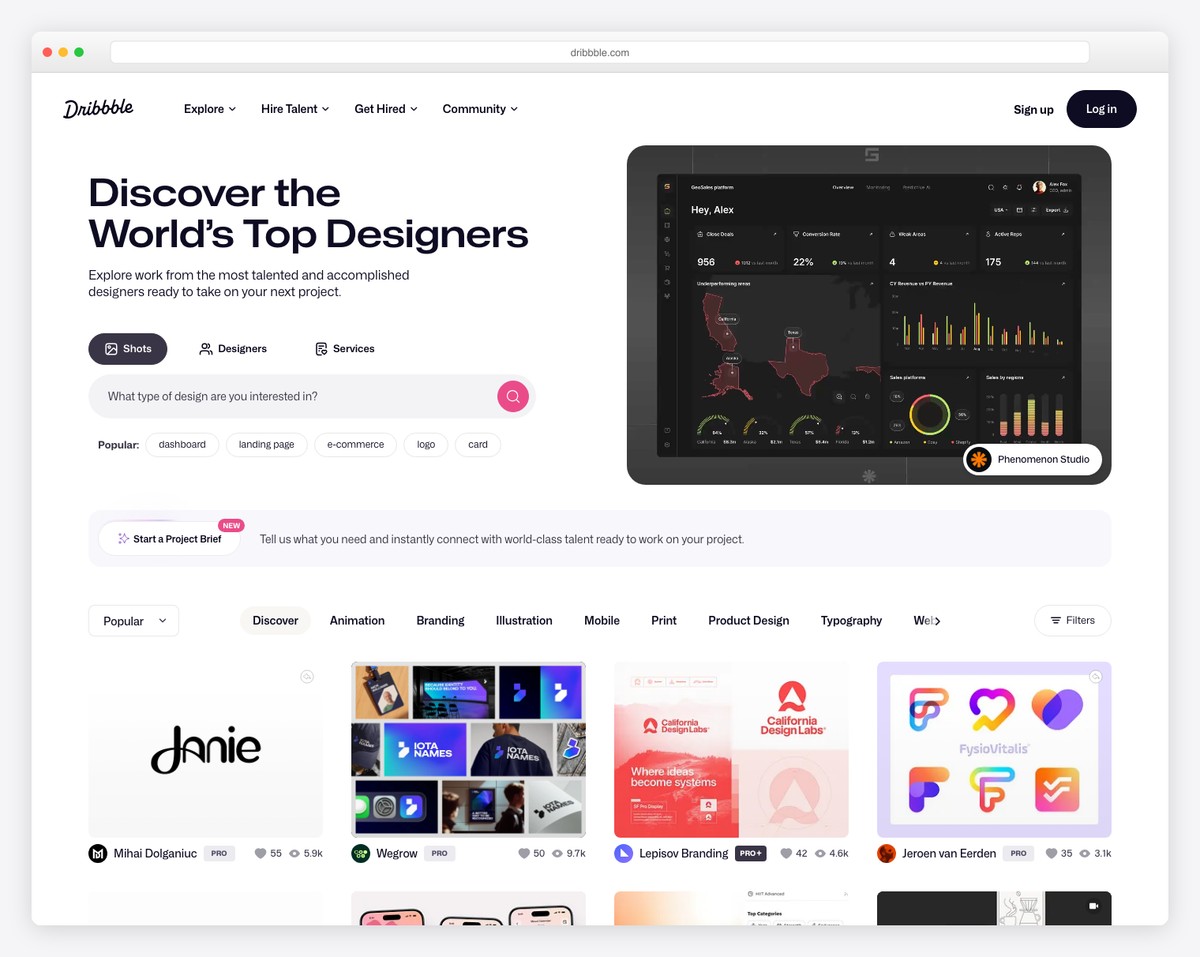
Dribbble has evolved from a design portfolio showcase into a full hiring platform. With over 12 million designers in its community, Dribbble lets companies browse portfolios and hire directly. Designers can showcase their work for free, while Dribbble Pro ($8/month) adds portfolio analytics, full-size uploads, and job search features. Companies post freelance and full-time design positions through Dribbble’s job board.
The portfolio-first model means your work speaks before you do. Clients browse designs, find styles they like, and reach out directly. There is no bidding, no proposals, and no commission on freelance earnings. Dribbble covers UI/UX design, illustration, branding, animation, and product design. The platform’s reputation as a curated design community means client quality is generally high.
Dribbble’s freelance opportunities are less structured than a traditional marketplace. There is no escrow, payment protection, or project management tools — it is essentially a discovery and portfolio platform. Freelancers handle contracts and payments independently. For designers with strong portfolios who want to attract inbound client inquiries rather than chase jobs, Dribbble’s community and visibility are unmatched in the design world.
15. LinkedIn ProFinder
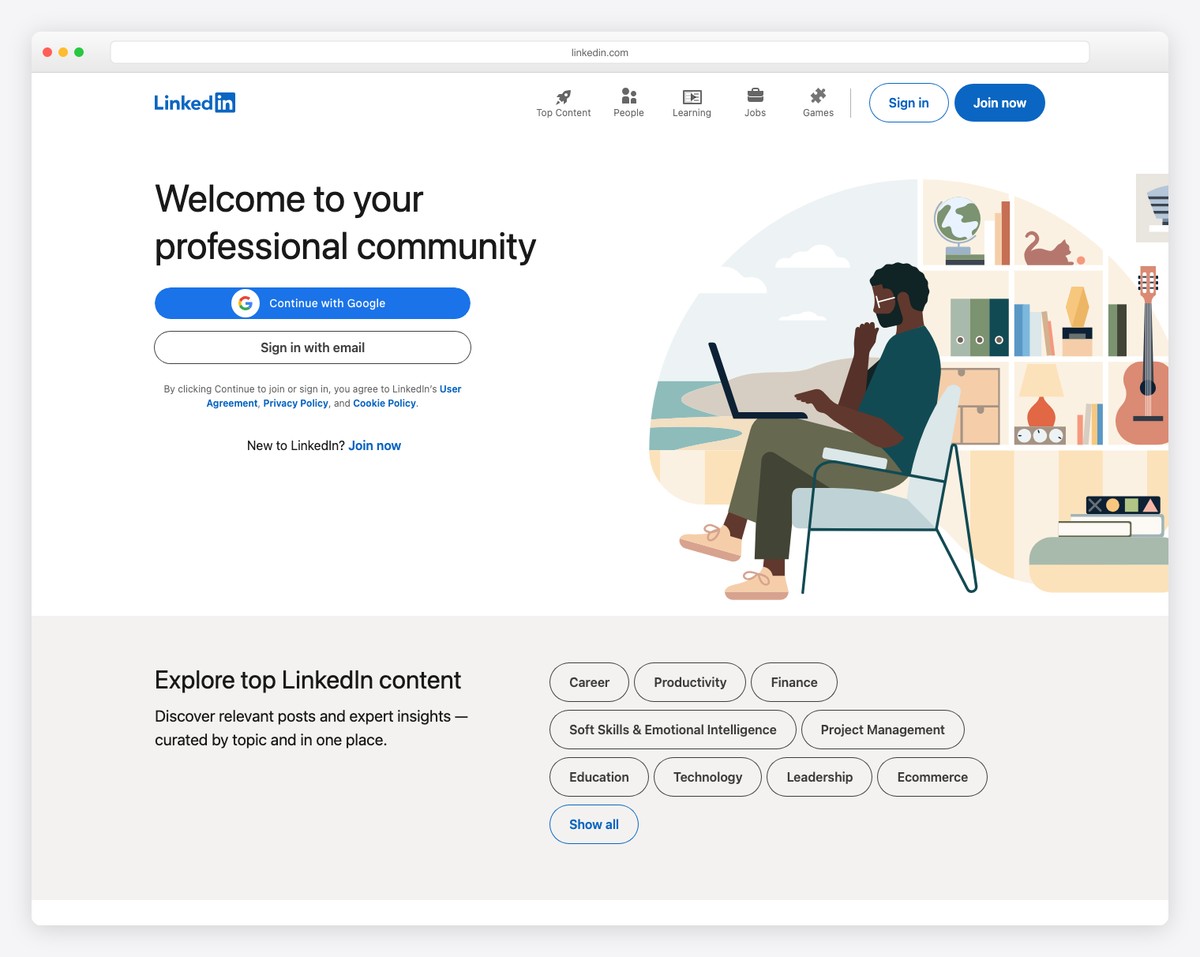
LinkedIn ProFinder (now integrated into LinkedIn Services) leverages the world’s largest professional network to connect freelancers with clients. The service is free for freelancers — no commissions, no subscription required. Clients post service requests, and LinkedIn matches them with relevant professionals based on their profiles, skills, endorsements, and recommendations.
ProFinder covers accounting, coaching, financial planning, graphic design, home improvement, legal, marketing, photography, real estate, web development, and writing. The integration with LinkedIn means your professional network, endorsements, and recommendations serve as social proof. For consultants and B2B freelancers, this context can be more valuable than any portfolio platform.
The limitation is that LinkedIn Services is a matching tool, not a managed marketplace. There is no escrow, no project management, and no payment processing. You negotiate, contract, and collect payment independently. Response rates from clients can also be inconsistent. LinkedIn ProFinder works best as a supplement to other freelancing channels, particularly for consultants and professional service providers whose clients naturally live on LinkedIn.
16. Hubstaff Talent
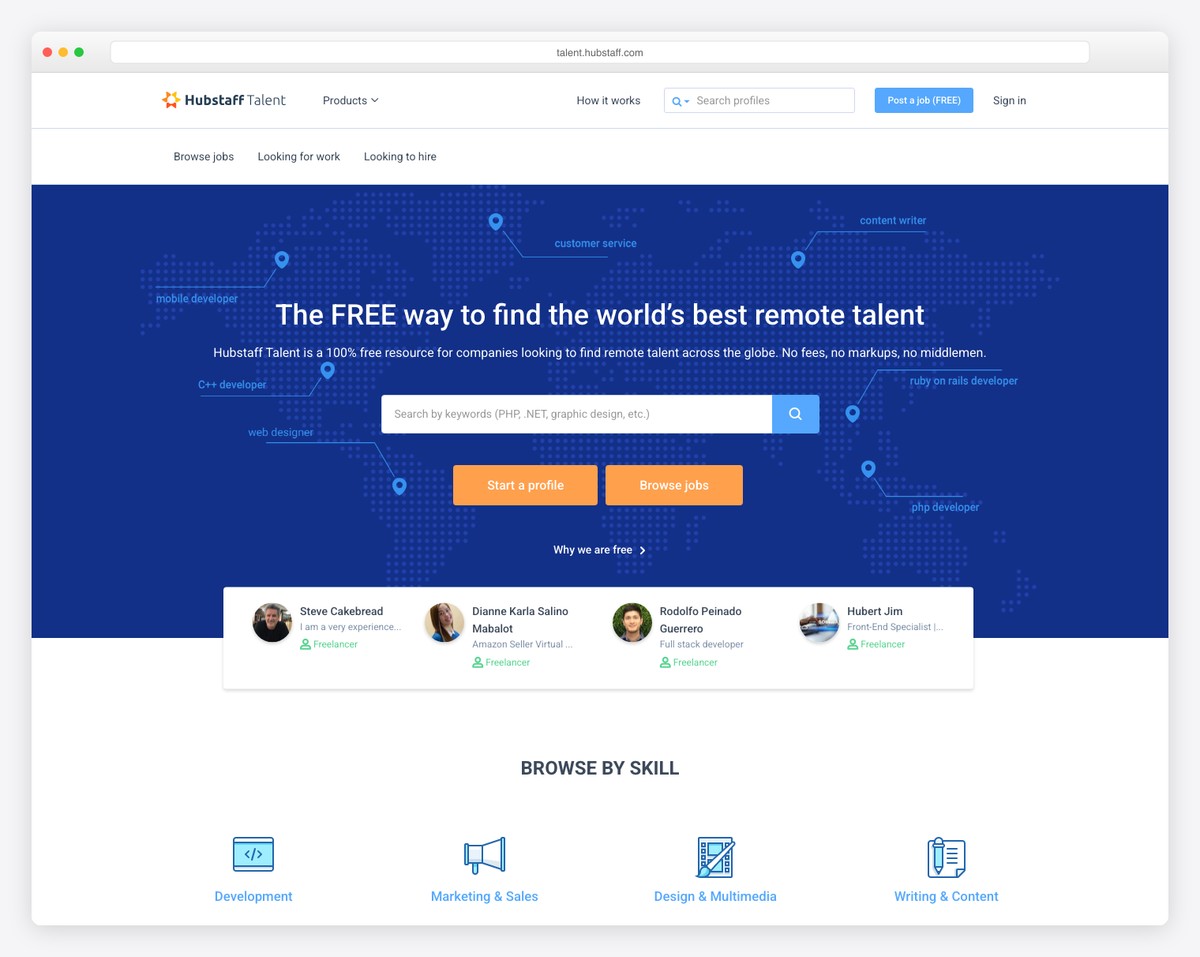
Hubstaff Talent is a completely free freelance marketplace — 0% fees for both freelancers and agencies. The platform is funded by its parent company Hubstaff, which sells time tracking and project management software. The strategy is straightforward: connect freelancers and clients for free, and earn revenue when teams adopt Hubstaff’s paid time tracking tools for managing remote work.
The marketplace lists thousands of remote positions across development, design, marketing, customer support, and administration. Freelancers create profiles and search for opportunities, while clients post jobs and browse talent. Hubstaff Talent supports agencies in addition to individual freelancers, making it suitable for teams of any size.
The trade-off for zero fees is fewer managed features. There is no escrow, limited payment protection, and clients may expect you to use Hubstaff’s time tracking software (which has a free tier). The marketplace is also smaller than Upwork or Fiverr, meaning fewer opportunities overall. For freelancers who do not mind tracked work and want to avoid all platform fees, Hubstaff Talent is a genuine zero-cost option worth exploring.
FAQ
Which freelance platform is best for beginners?
Fiverr is the easiest platform for beginners because you create service listings and wait for buyers rather than competing for jobs. The gig-based model lets you start selling immediately with no bidding or proposals required. Upwork is also beginner-friendly but requires more effort upfront — you will need to write personalized proposals and may need to price competitively until you build reviews.
Which freelance platform has the lowest fees?
Five platforms charge 0% commission to freelancers: Contra, Arc.dev, Gun.io, Hubstaff Talent, and LinkedIn ProFinder. Among traditional marketplace platforms with escrow and project management, Guru has the lowest fees at 5-9%. Toptal also charges 0% to freelancers, though acceptance requires passing their rigorous screening process.
What is the best freelance platform for web developers?
For senior developers, Toptal, Arc.dev, or Gun.io offer the highest rates with zero commission. For developers at all experience levels, Upwork has the largest volume of web development projects. We Work Remotely is excellent for finding long-term remote development contracts. See our web development statistics for more on developer demand and salaries.
What is the best freelance platform for designers?
Dribbble is the best discovery platform for designers — your portfolio attracts clients organically. 99designs and DesignCrowd are best for designers who enjoy competition and specialize in logos and branding. Upwork and Fiverr have the highest volume of design projects across all categories. For premium design talent, Toptal offers the highest rates and most professional client relationships.
Key Takeaways
- If minimizing fees is your priority, Contra, Arc.dev, Gun.io, Hubstaff Talent, and LinkedIn ProFinder all charge 0% commission to freelancers.
- Upwork remains the most reliable platform for consistent freelance income across all skill sets, despite its 10% fee, due to sheer market volume.
- Elite developer platforms like Toptal, Arc.dev, and Gun.io pay premium rates but require passing rigorous technical screening.
- Fiverr charges the highest commission (20%) but offers the easiest setup for beginners through its gig-based marketplace model.
- Most successful freelancers maintain profiles on 2-3 platforms simultaneously, using each for its strengths — one for volume, one for premium clients, and one as a portfolio showcase.

Related Posts


No mention for TaskRabbit.com, Seoclerks.com ?
Hey Alex,
It’s really a great lists.
You may also consider ItsJungle.com. It is one of the popular Freelancing site.
And the best part is that it’s totally free! (No Fees! No Commission!).
Thanks again for sharing these sites.
Hey,
Nice List.
Please check “project4hire”. I think its dead.
Also, “clarity” doesn’t look like a freelance marketplace anymore.
Thanks
Mehak,
Thank you for reporting it!
Can you add broxer to this list?
Thanks.
Currently, I don’t see any point of listing it. It has no traffic, no users and it is a clone of other popular website.
I am using upwork since last 3 years. It is a great platform for freelancers. You can easily get jobs related to your knowledge and quality. You can also post a job for others to complete a job in less time period.
Good to hear that Upwork is a great freelance platform. I recently joined. But I have been a professional in technical writing, editing and proofreading for over 13 years. I work with a government agency. But I decided to utilize my skills for freelancing. Glad I am verified within a short time and already earn “Rising Talent” status. You can tell me more on how to succeed at the freelance marketplace. Thanks.
Great list! I would add Codementor X and Adeva. Codementor X utilized the mentors’ network they have and switched their model to more like freelancers marketplace. Adeva is a Europen startup, they are more like developers centered community and they are growing really fast.
There are many freelance marketplaces but Digital marketers should Knowledge about all these then they could choose best for them and Because website should that where your transactions will safe. And your blog is helpful, I will share with my friends about your blog and tell them for visit here.
“Fiverr — where every single job costs $5” I would disagree on that 🙂 Maybe that was their initial idea, but at the moment it’s far from “everything costs $5”.
You could also add newer marketplaces, like thiscoachingworld.com They launched only about a month ago and they are mostly for online coaching, teaching, training, etc. I think it’s a pretty nice idea.
As for me, global freelance marketplaces are not suitable for beginners due to the high competition level.
Fivver has turned into something totally other than a 5 dollar marketplace right now. I guess you can only offer so much quality for such an amount.
Guru was established in 1997 and is one of the earliest freelance marketplaces, so how can you say it is a new platform?
Gohar,
Thank you for clarifying this! We have changed the description to reflect this.
Dear sir
Greetings from me, please provide me with some new and easy marketplaces where new freelancers can start earning an income.
Kind regards
Masud hassan
Dear Masud,
Upwork is the ideal launchpad for your freelance journey:
Start with competitive rates on smaller projects to gain momentum. Create a specialized profile highlighting specific skills and results. Within 10+ positive reviews, you’ll be able to increase rates and become selective with clients.
This proven pathway has launched countless freelance careers—including my own.
Best of luck!