
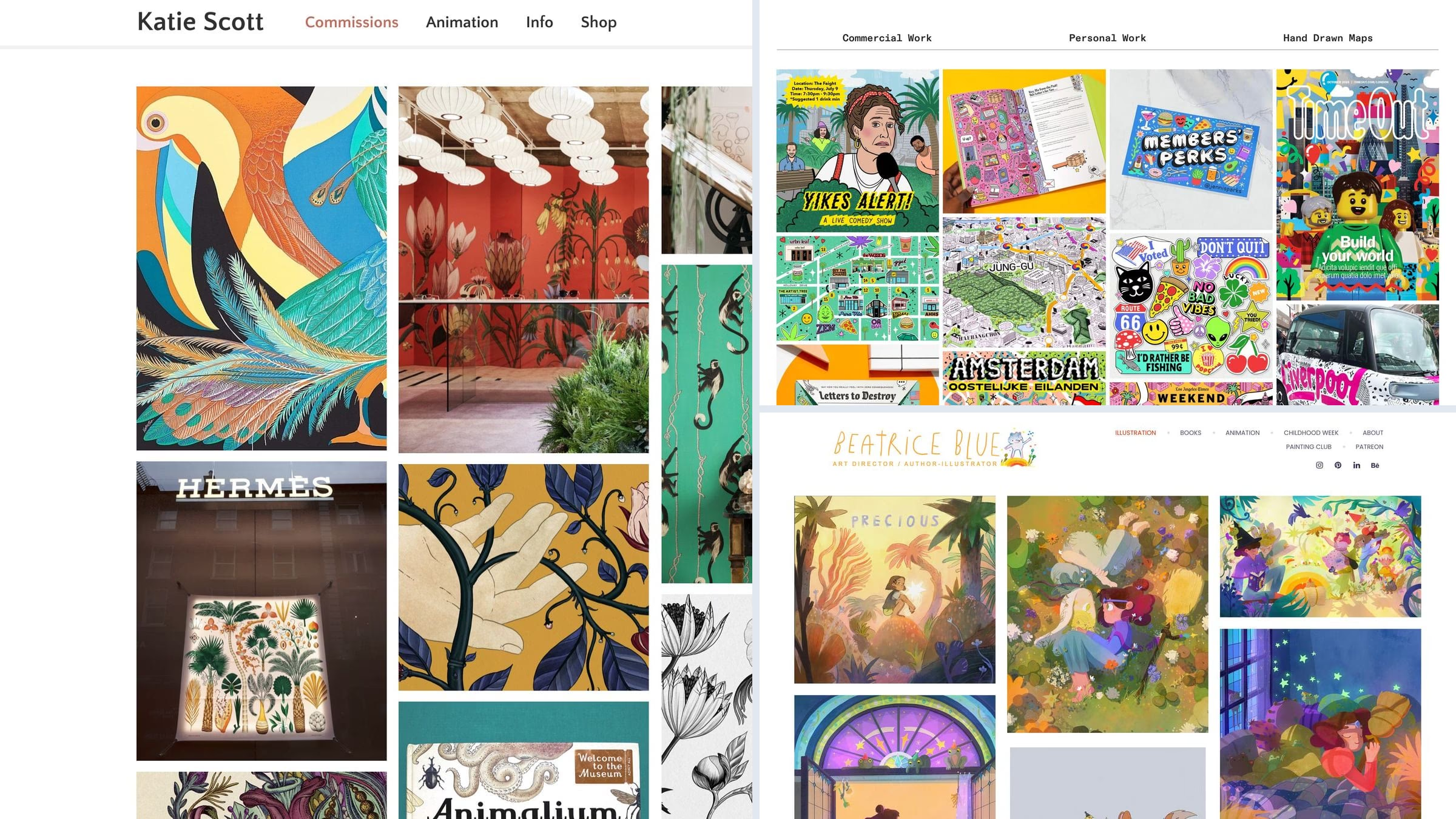
23 Best Illustrator Portfolio Examples 2026
The best illustration portfolios put the work in the first screen and caption it with who it was for. These 23 portfolios come from editorial illustrators, picture-book makers, cartoonists, scientific and medical illustrators, a lettering artist, a map-maker and character designers, and each shows how an illustrator in that field wins commissions.
We tested more than 150 web addresses for illustrators, read the About and contact pages of the live ones and identified each platform from its code rather than guessing. Several well-known illustrators’ old domains now serve spam, parking pages or unrelated businesses, so every example here was live, maintained and the illustrator’s own site when we checked it.
Best Illustration Portfolio Examples
1. Jean Jullien
Built with: WordPress
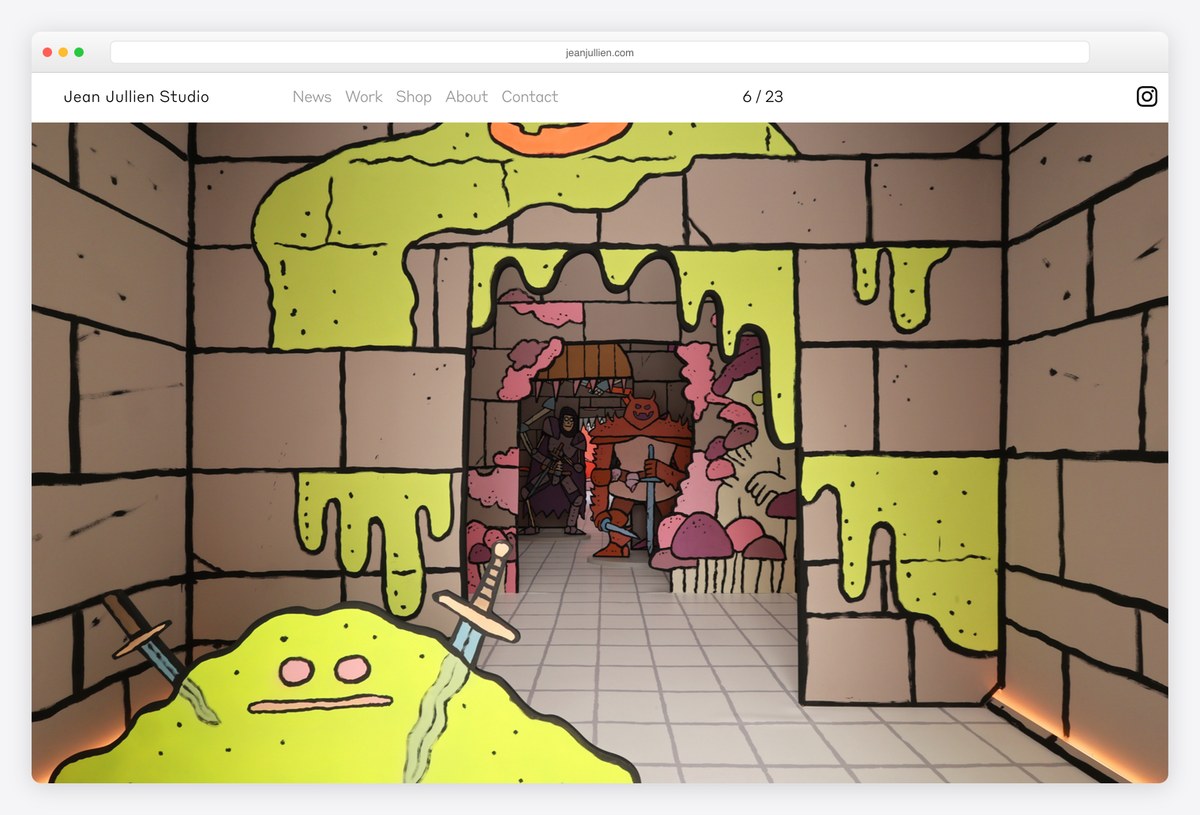
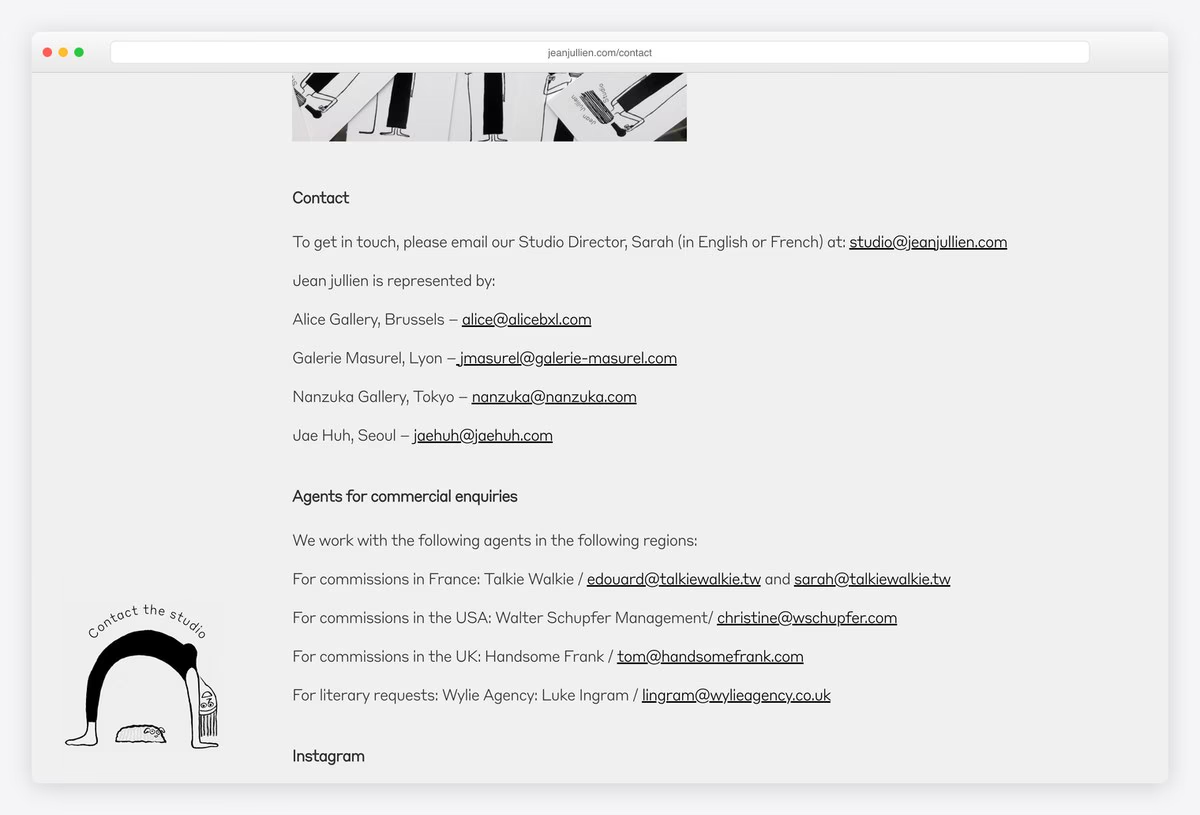
Jean Jullien works across editorial illustration, character work and public art, and his contact page is the model for anyone with more than one kind of buyer. Galleries are listed by city, commercial agents by territory, with Talkie Walkie for France and Handsome Frank for the UK, and book enquiries go to the Wylie Agency.
The homepage is a numbered full-screen slideshow that shows one piece at a time. Clients such as The New York Times, National Geographic, Centre Pompidou and Amnesty International are named, and prints sell through a separate online shop.
What stands out: Every kind of enquiry has a named person to go to.
2. Katie Scott
Built with: WordPress
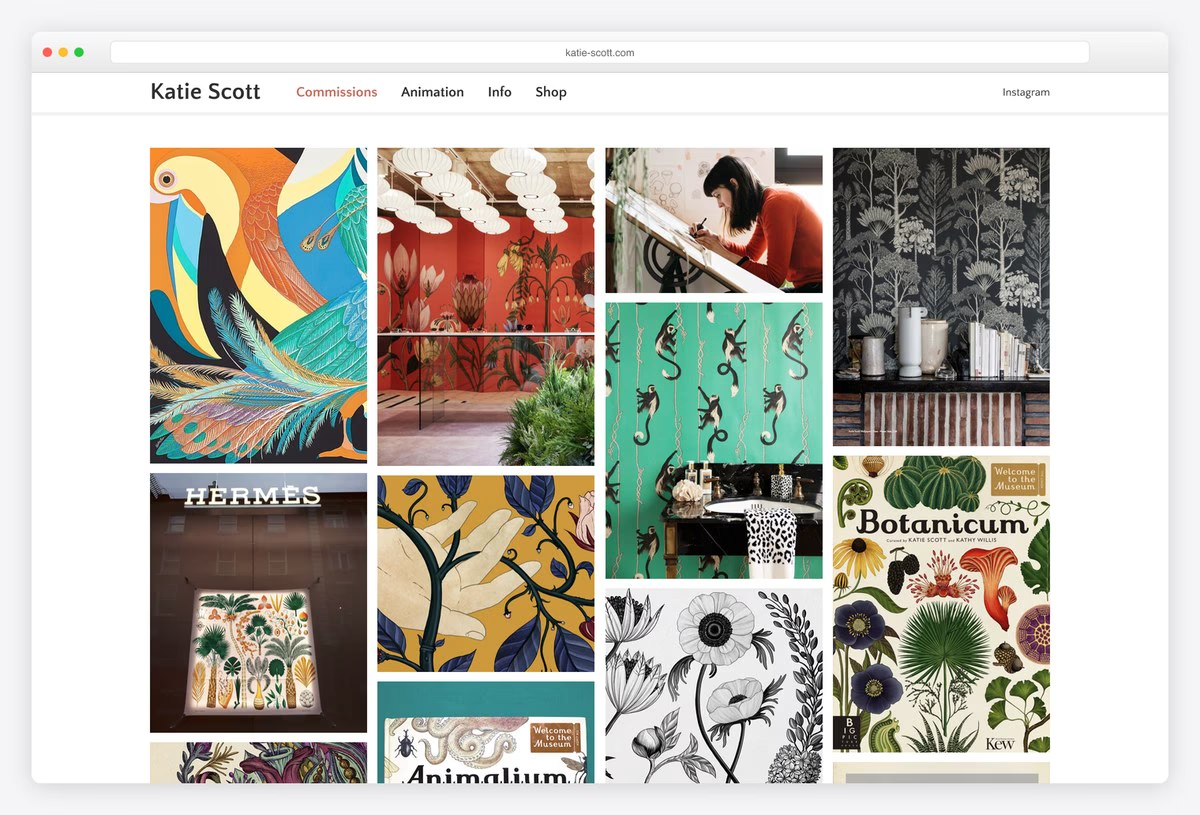
Katie Scott draws in the manner of a natural-history plate, and her portfolio shows that style earning its keep on luxury and brand briefs. Every tile pairs the project with the client, as in Toucans de Paradis for Hermès, alongside work for Nike’s Air Max 95, Kew Gardens and Soho House’s Cowshed.
Tiles for Animalium and Botanicum sit among the commissions. Enquiries can go to her agency, Big Active, whose email is linked beside her own, and her print shop has a FAQ page of its own.
What stands out: Every thumbnail says who the work was for.
3. Chris Haughton
Built with: Format
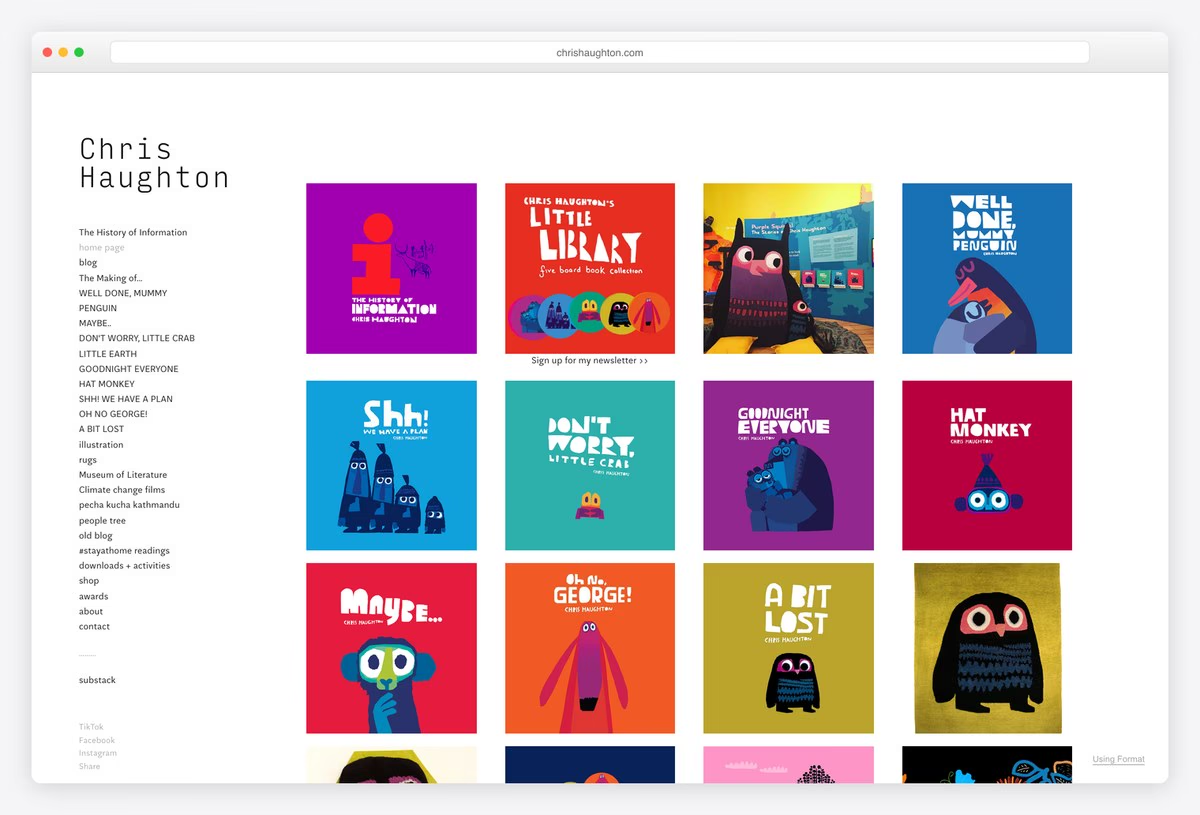
Chris Haughton makes picture books, and his navigation is his bibliography: every title, from Oh No George! and A Bit Lost to Shh! We Have a Plan, is its own item in the sidebar. The homepage is a grid of the brightly coloured covers, so the books are the first thing you see.
Beyond the books there are sections for rugs, films and awards, plus downloads and activities for teachers and parents. Book enquiries go to the Debbie Bibo literary agency, and a newsletter and a shop are one click away.
What stands out: The book list is the menu.
4. Tom Gauld
Built with: Squarespace
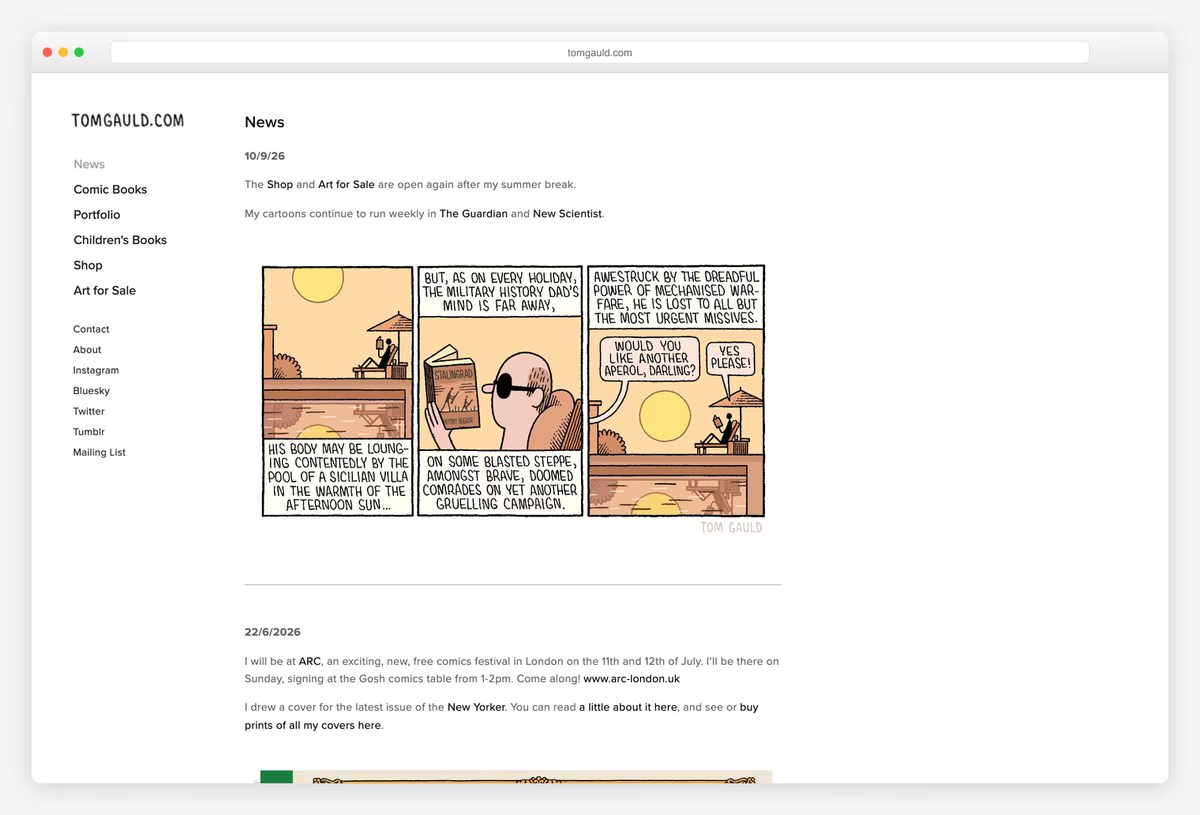
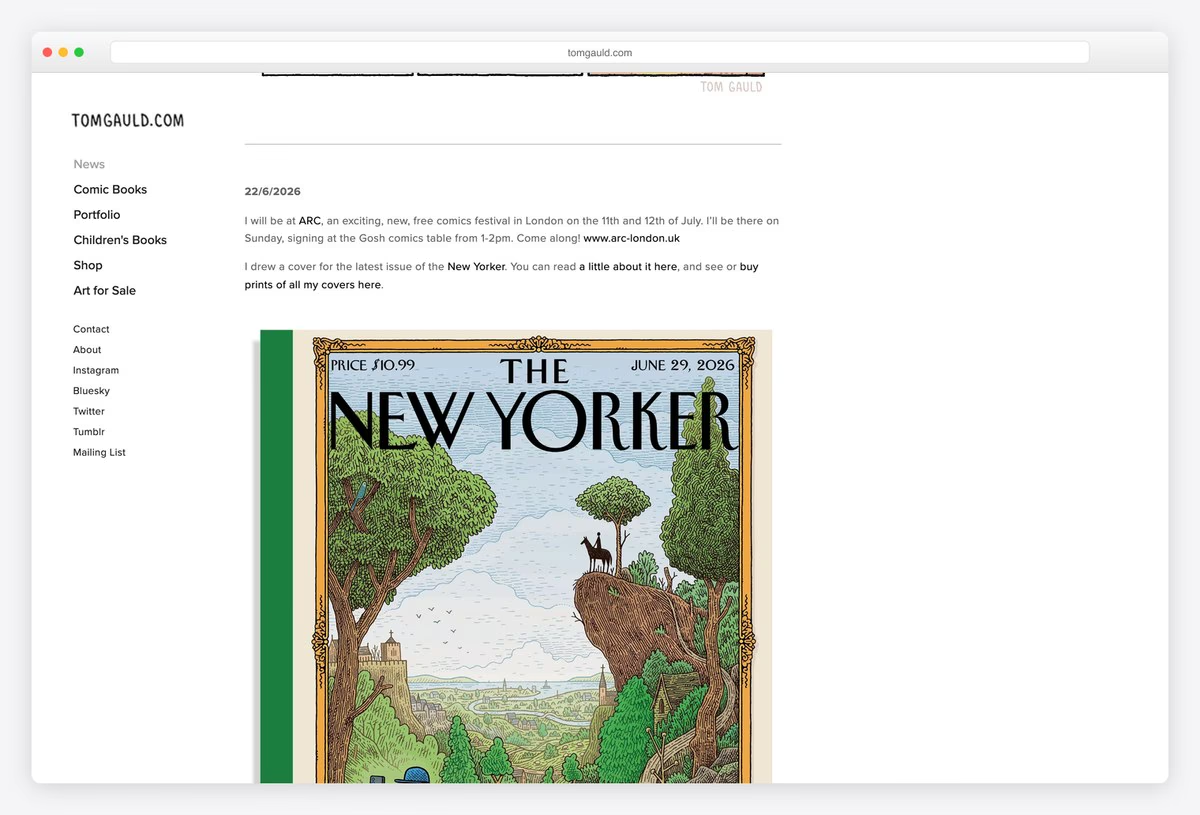
Tom Gauld is a cartoonist and comics artist whose homepage is a news log headed by his latest cartoon, so a visitor can tell at once that the site is looked after. Comic books, children’s books and the illustration portfolio each have their own menu item.
The portfolio holds his work for The Guardian, The New Yorker and New Scientist. Prints are sold in a shop, original drawings have a separate Art for Sale page, and a mailing list sits in the main navigation next to a plain contact email.
What stands out: A news-first homepage that proves the site is alive.
5. Marylou Faure
Built with: Shopify
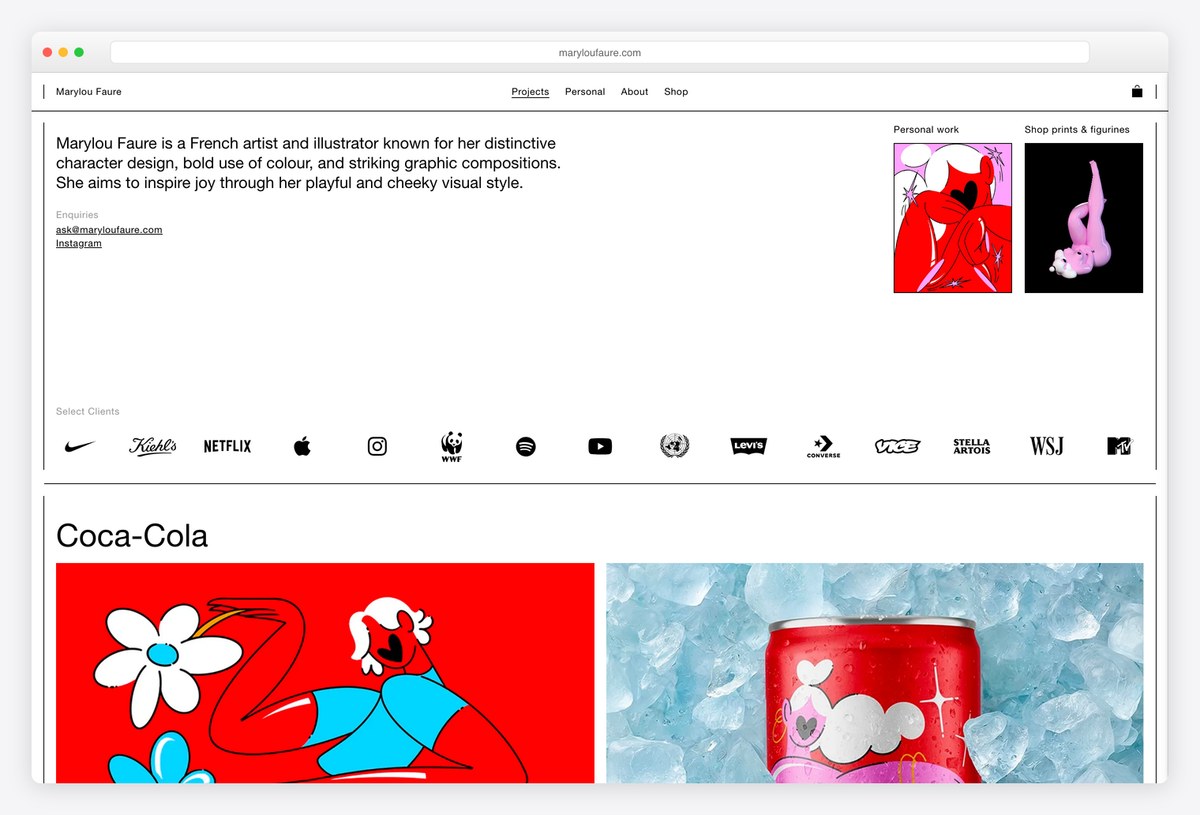
Marylou Faure is a French illustrator whose characters front brand campaigns, and her first screen reads like a pitch: a Select Clients strip of logos including Nike, Netflix, Apple, WWF and the United Nations, an enquiry email, and a tile for her shop.
Projects are titled by client, from Coca-Cola and Kiehl’s to Back Market and YouTube, so a brand manager finds comparable work quickly. The shop sells figurines of her characters as well as prints, and the whole site runs on Shopify.
What stands out: Client logos, contact and shop all inside the first screen.
6. Mary Kate McDevitt
Built with: Squarespace
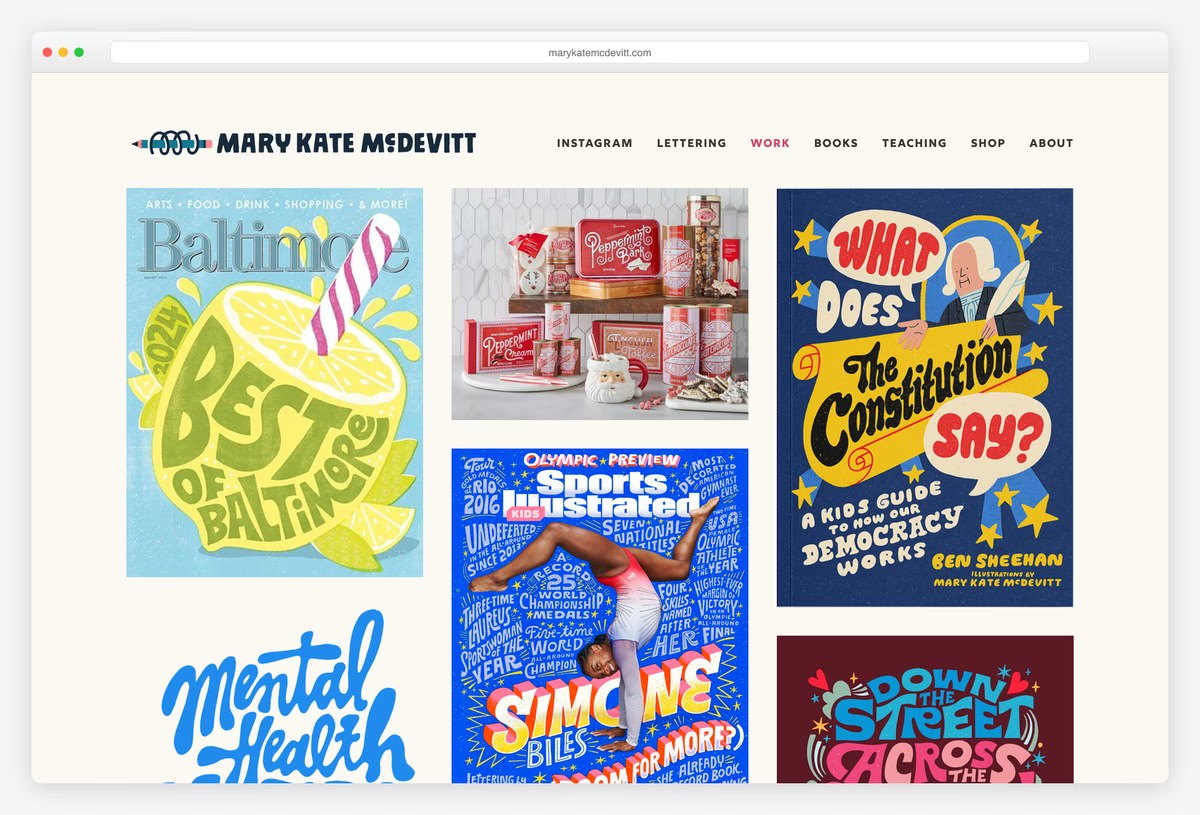
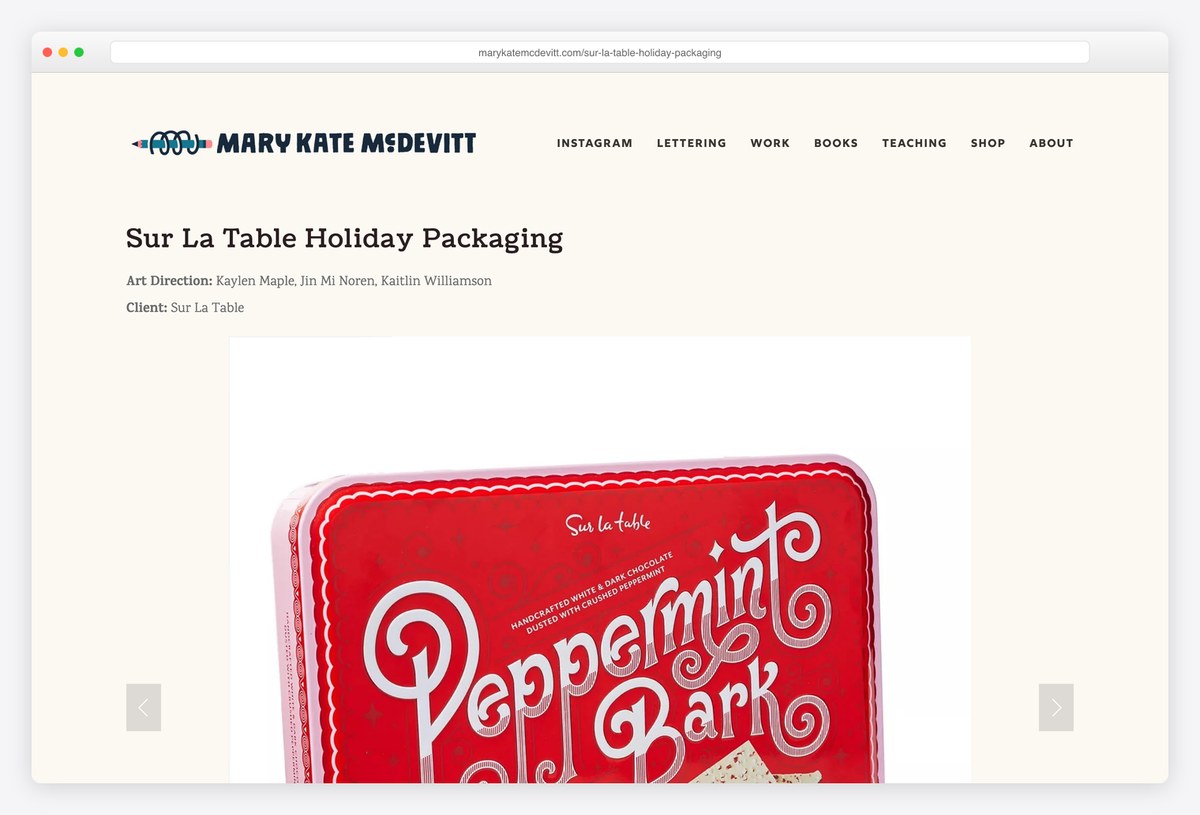
Mary Kate McDevitt is a lettering artist and illustrator in Vermont, and her grid mixes packaging, magazine covers and book jackets, each captioned with the client and the job, such as Sur La Table Holiday Packaging or We The Users x Washington Post. Lettering has its own menu item, apart from the wider work.
Named clients run from Chronicle Books and Target to Nintendo and the American Red Cross. Books, Teaching and Shop pages follow, and her newsletter is offered by email or, unusually, by post.
What stands out: Captions that name the client and the job.
7. Jenni Sparks
Built with: Cargo
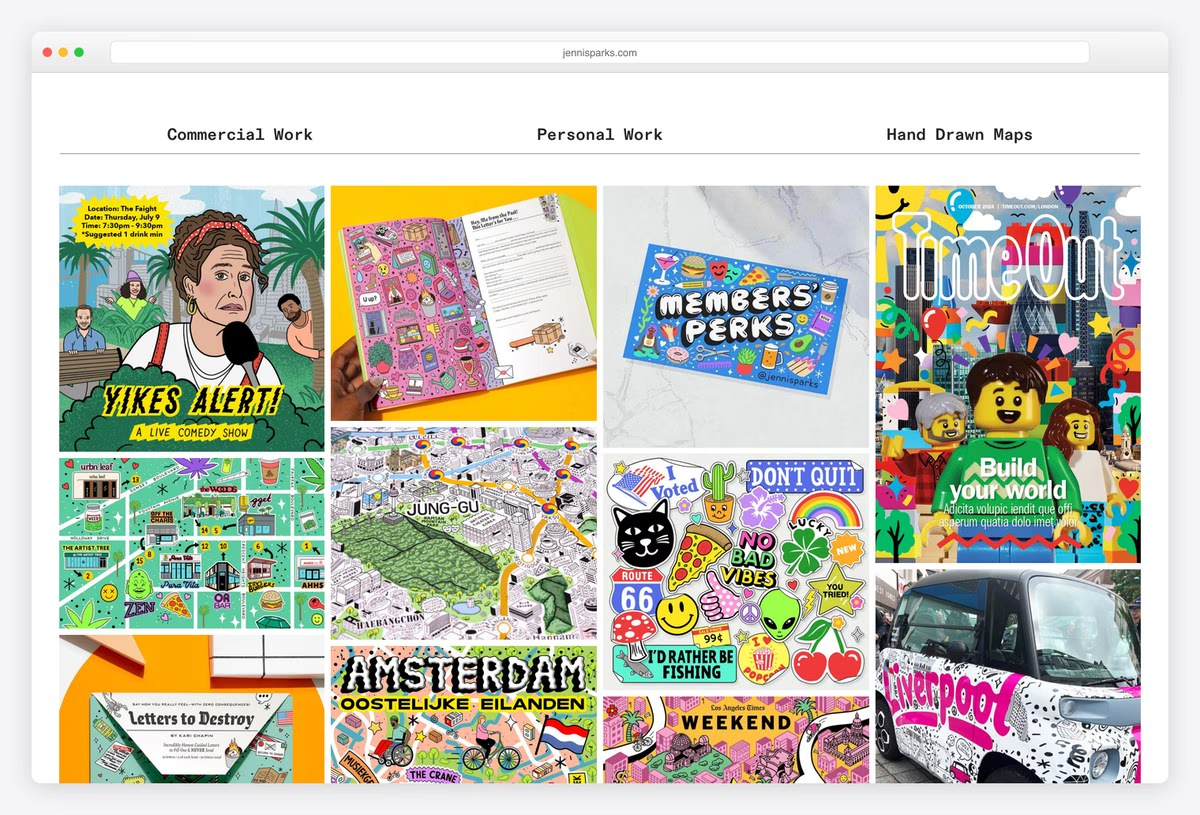
Jenni Sparks is a Bristol illustrator known for dense hand-drawn city maps, and the first item in her menu is Buy the maps. Her map of London led to maps of New York, Paris, Berlin and Sydney, and the homepage grid is split three ways: commercial work, personal work and hand-drawn maps.
The commercial side is full of names, from LEGO x Time Out and Lonely Planet to Nike, Absolut and Selfridges. Her About page gives a direct email for commissions.
What stands out: The specialism is the first menu item.
8. Chris Gralapp
Built with: Squarespace
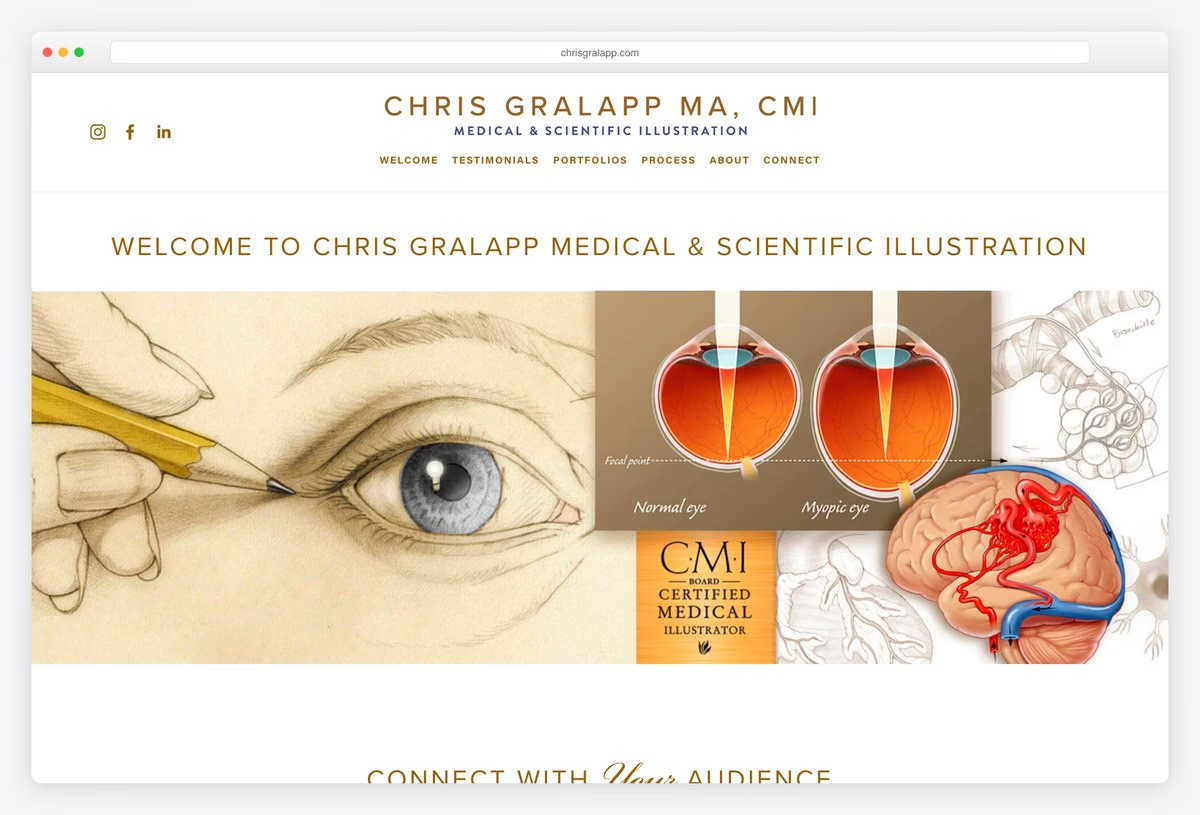
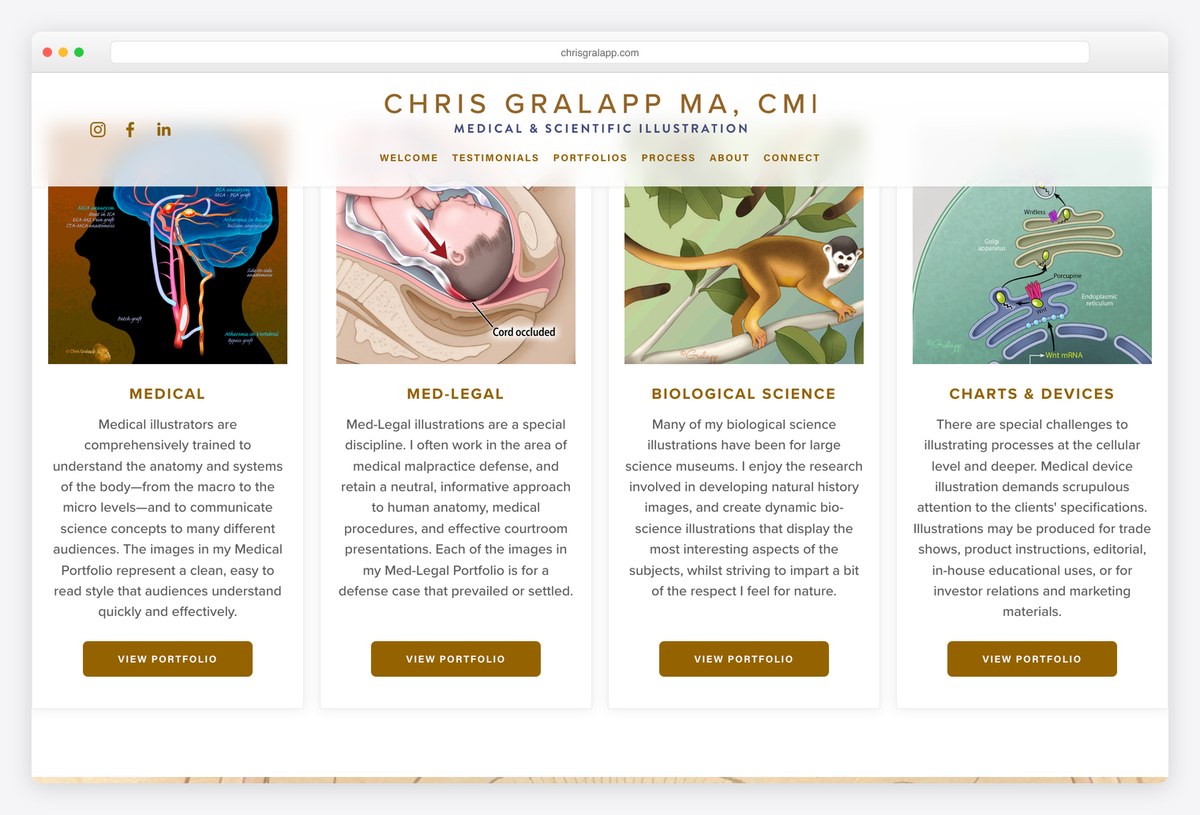
Chris Gralapp is a Certified Medical Illustrator in Northern California, and the CMI badge sits in the first screen, where a publisher or law firm will look for it. The work is split by buyer into four portfolios, Medical, Med-Legal, Biological Science, and Charts and Devices, with the med-legal set covering courtroom exhibits.
Testimonials have their own menu item, including a surgeon who cites around 3,000 illustrations made together. Clients include the Smithsonian Institution and the Monterey Bay Aquarium, and a Process page sits beside the portfolios.
What stands out: Credentials first, and portfolios split by who is buying.
9. Christoph Niemann
Built with: WordPress
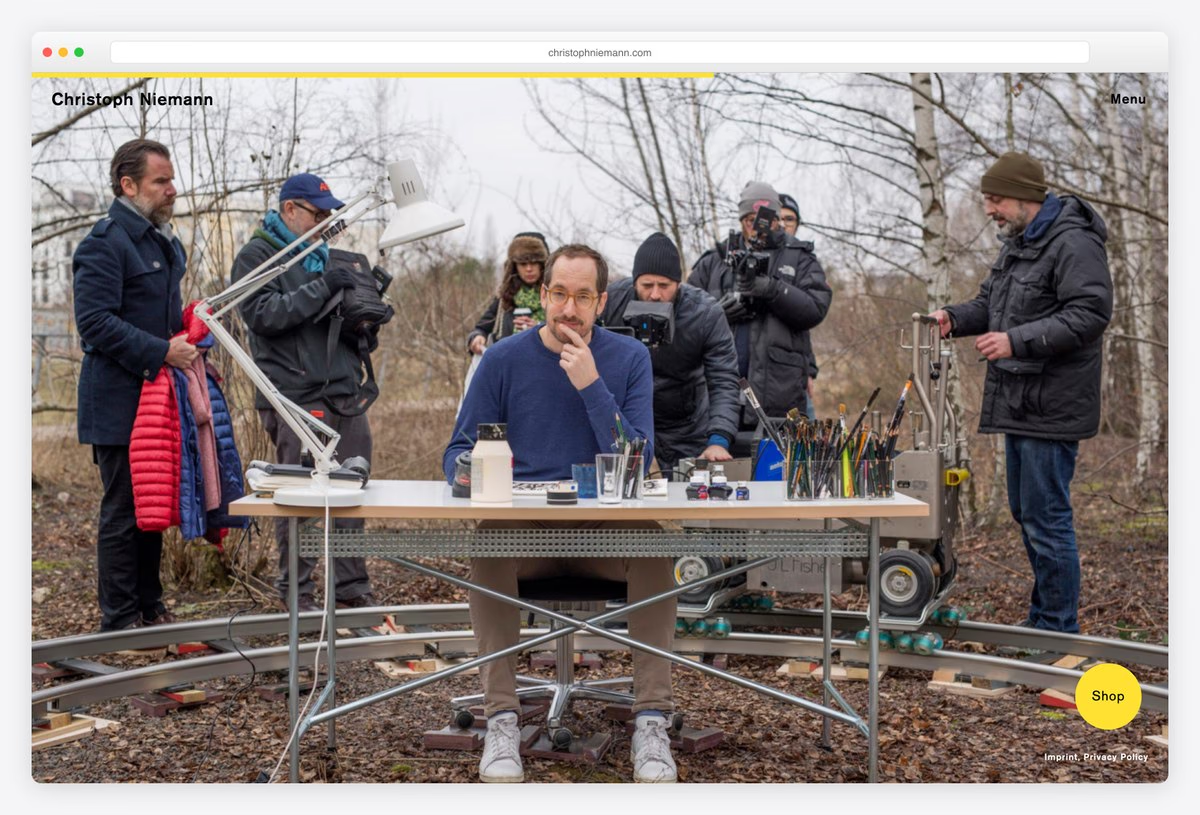
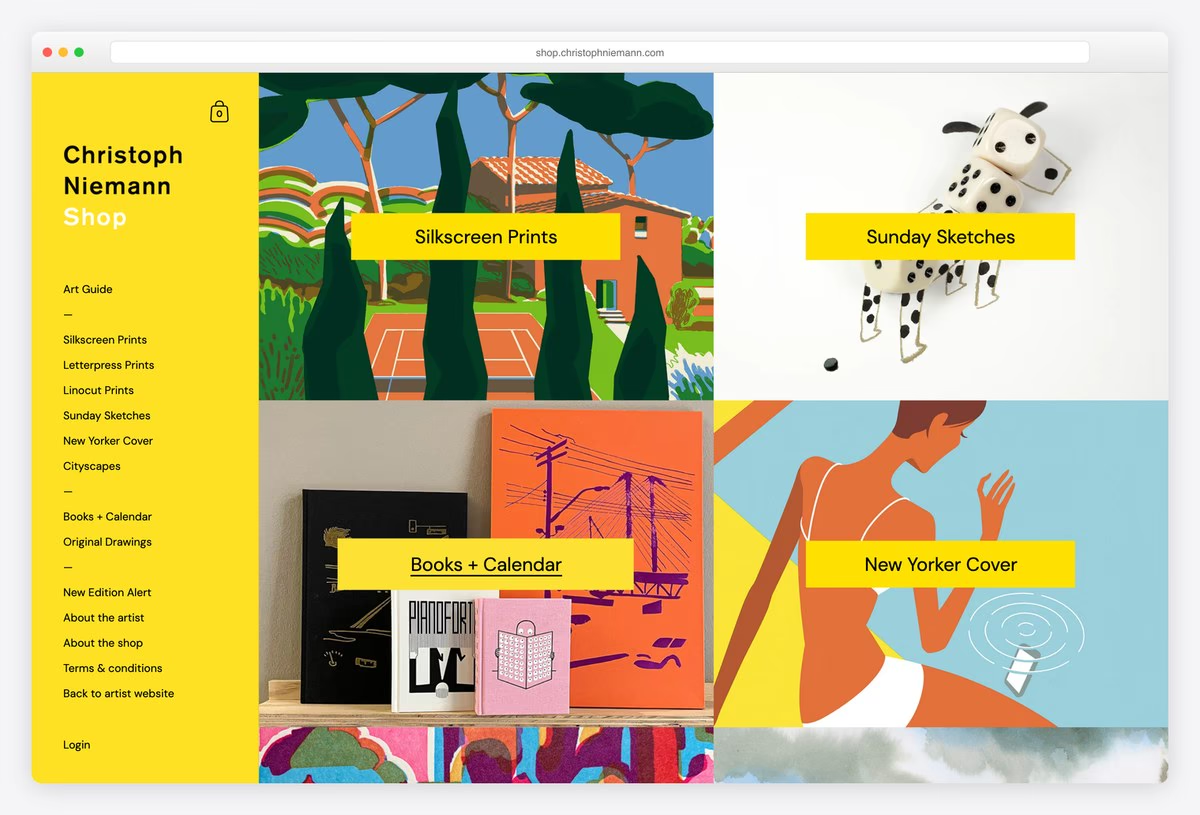
Christoph Niemann is an editorial illustrator and New Yorker cover artist, and his homepage is a single full-bleed image that changes between visits: one of ours showed a photographed ink bottle held by painted hands, another a photo from a shoot.
Everything else sits behind one menu of works, news, exhibitions, books and shop. Clients named across the site include The New York Times, Hermès, Google, LAMY and MoMA. Prints sell on a separate store, reached from a yellow Shop button that follows you around every page.
What stands out: One piece, full screen, and nothing competing with it.
10. Lizzie Harper
Built with: WordPress
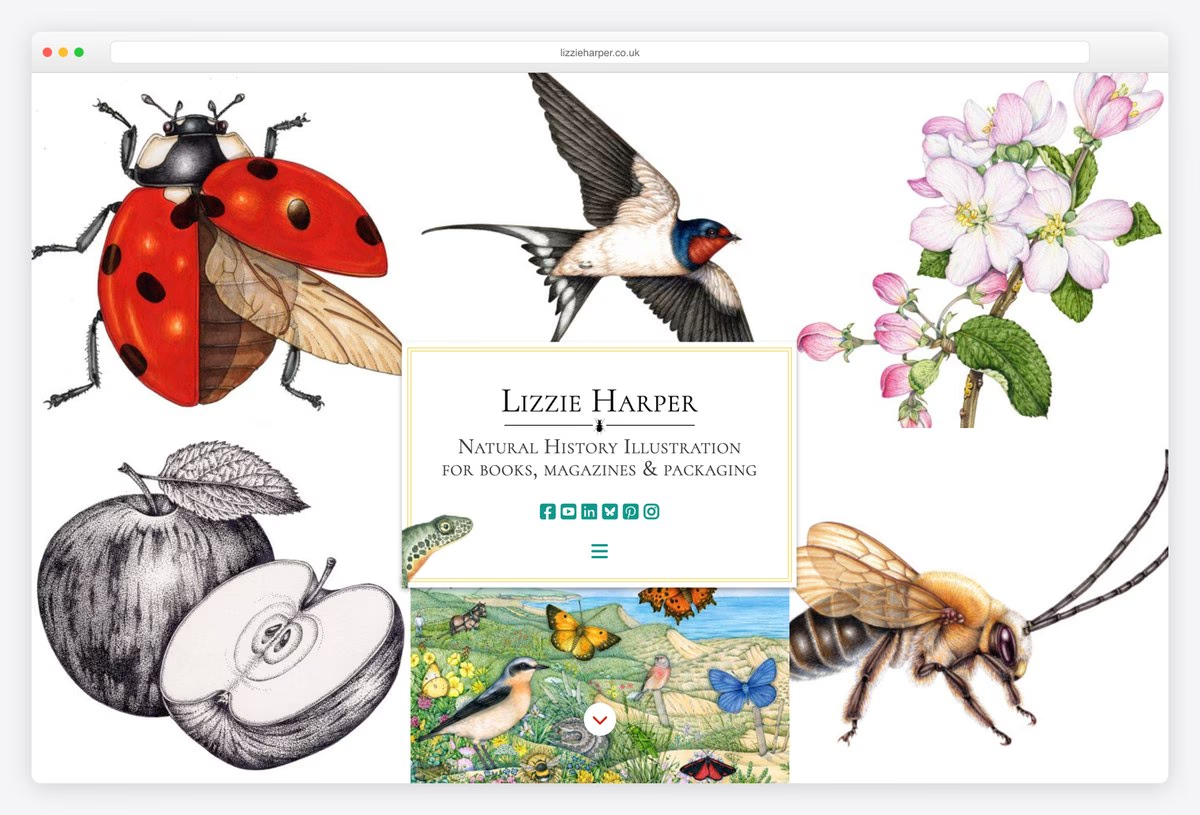
Lizzie Harper is a natural-history illustrator working from a garden studio in Hay-on-Wye, and her header states the market in one line: natural history illustration for books, magazines and packaging. The homepage invites visitors to browse a gallery of over 1,800 completed illustrations.
A Job Showcase sorts commissions by what they became, from books and identification charts to information boards and magazines, with a count beside each. Commissioning and FAQ pages explain how a job works, and prints, originals and greetings cards are sold separately.
What stands out: Work sorted by what it was used for, which is how a commissioning editor searches.
11. Sara Andreasson
Built with: Cargo
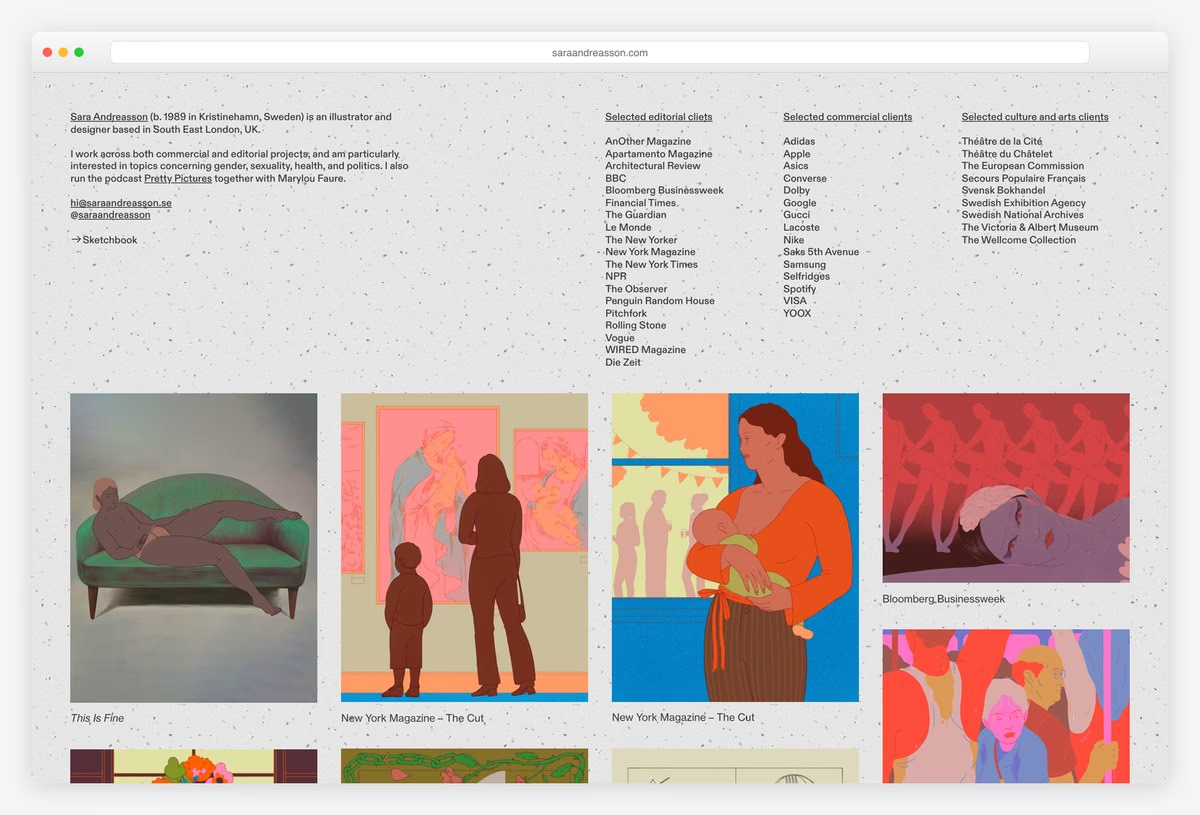
Sara Andreasson is a Swedish-born illustrator in South East London working for magazines and brands, and her site has no menu at all. The first screen holds a short bio, her email address and three client columns, editorial, commercial, and culture and arts, with the work on the same page.
The lists do the selling: The New York Times, WIRED and Vogue, then Nike, Gucci and Spotify, then the V&A and Wellcome Collection. She also co-hosts the podcast Pretty Pictures with Marylou Faure, who features in this list too.
What stands out: Clients, contact and work on one page, with no navigation to learn.
12. Loish (Lois van Baarle)
Built with: WordPress
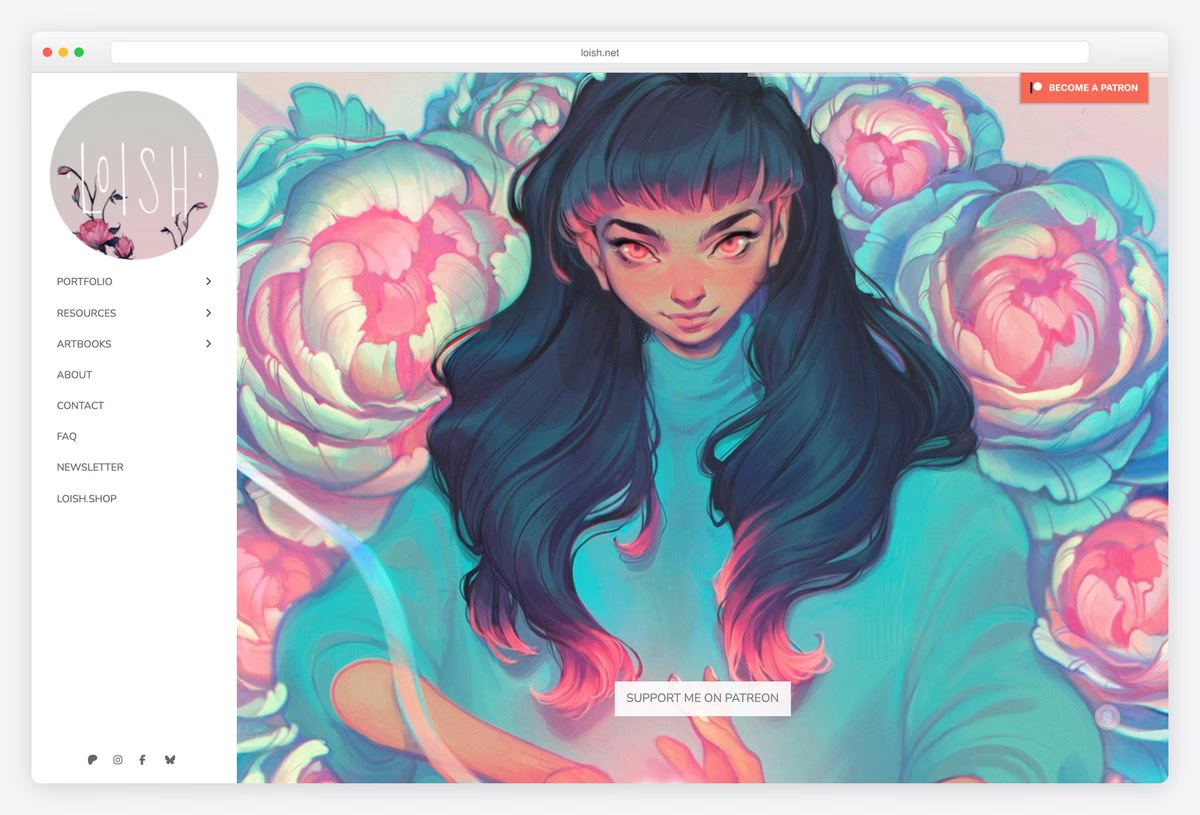
Loish, the Utrecht digital painter Lois van Baarle, runs her site for an audience as much as for clients. The first screen is one large character painting with a Patreon button, and the menu offers free brushes and tutorials beside her artbooks and a shop.
The portfolio separates original art, rough work, client work and animation, with the client side including the Horizon Zero Dawn comic and work for Procreate. The contact form uses a subject dropdown and says plainly that she cannot answer every email.
What stands out: A portfolio that doubles as a way to build a following.
13. Jillian Tamaki
Built with: Squarespace
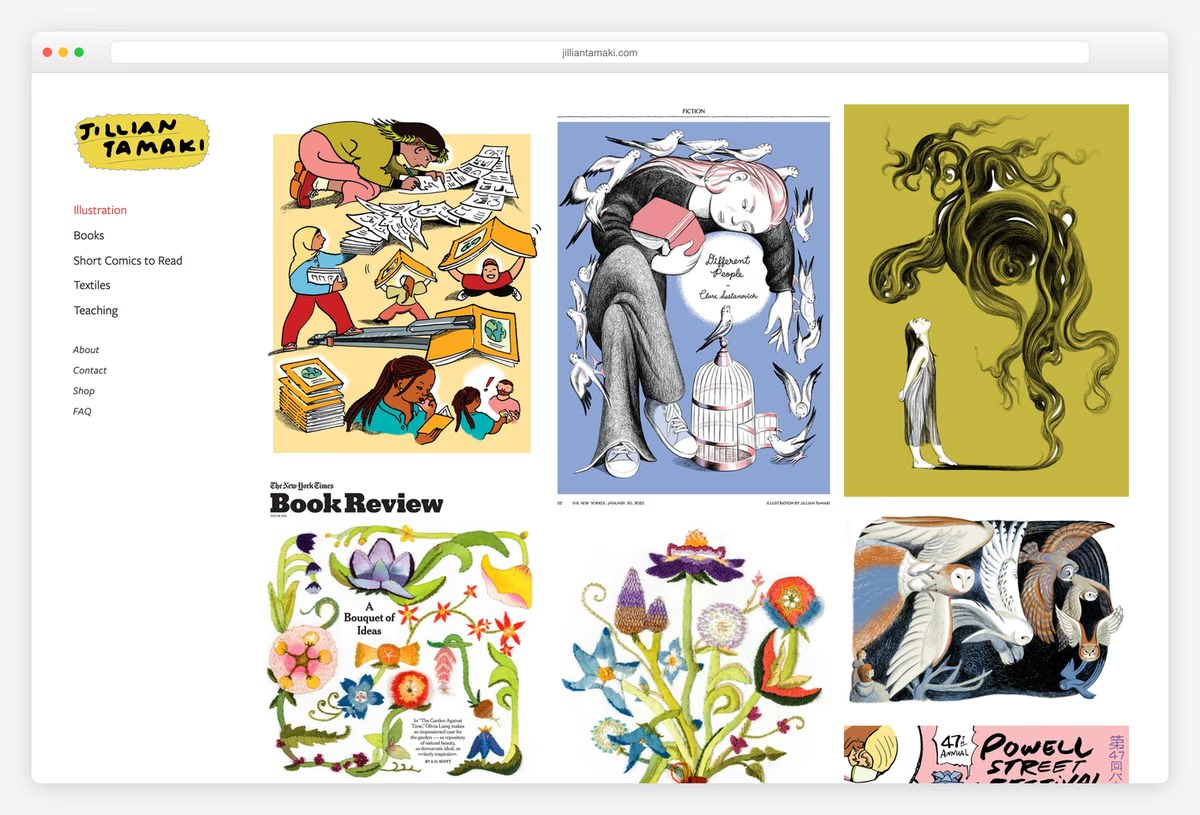
Jillian Tamaki is a Toronto cartoonist and illustrator working across comics, editorial and picture books, and her menu keeps the three apart. The standout section is Short Comics to Read, which lets visitors read her comics on the site rather than only look at stills.
All enquiries go to one agent, Steven Malk at Writers House, and an FAQ answers students before they write in. The contact page even redirects people looking for her cousin, Mariko Tamaki, to Mariko’s agent. Clients include The New Yorker, Marvel and MoMA.
What stands out: An FAQ that answers the emails before they are sent.
14. Sydney Smith
Built with: Squarespace
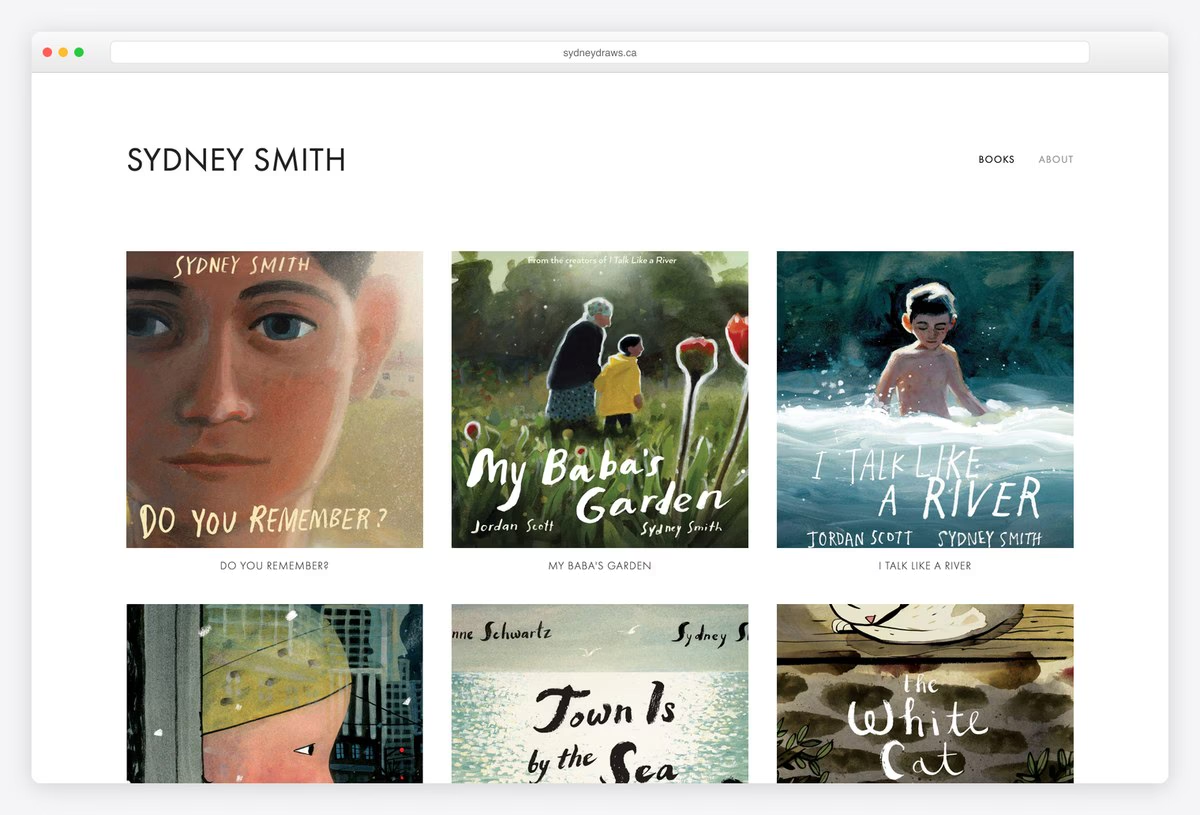
Sydney Smith is a picture-book illustrator in Halifax, Nova Scotia, and his site is the most minimal in this list: two menu items, Books and About, and a homepage made of book covers. The covers carry the whole argument, and nothing on the page competes with them.
His About page records the Hans Christian Andersen Award for Illustration, the field’s top honour, and gives two contact routes: his own email and his publishing agent, Emily Van Beek at Folio Lit.
What stands out: Two menu items, because the covers do the work.
15. Lydia Hill
Built with: Wix
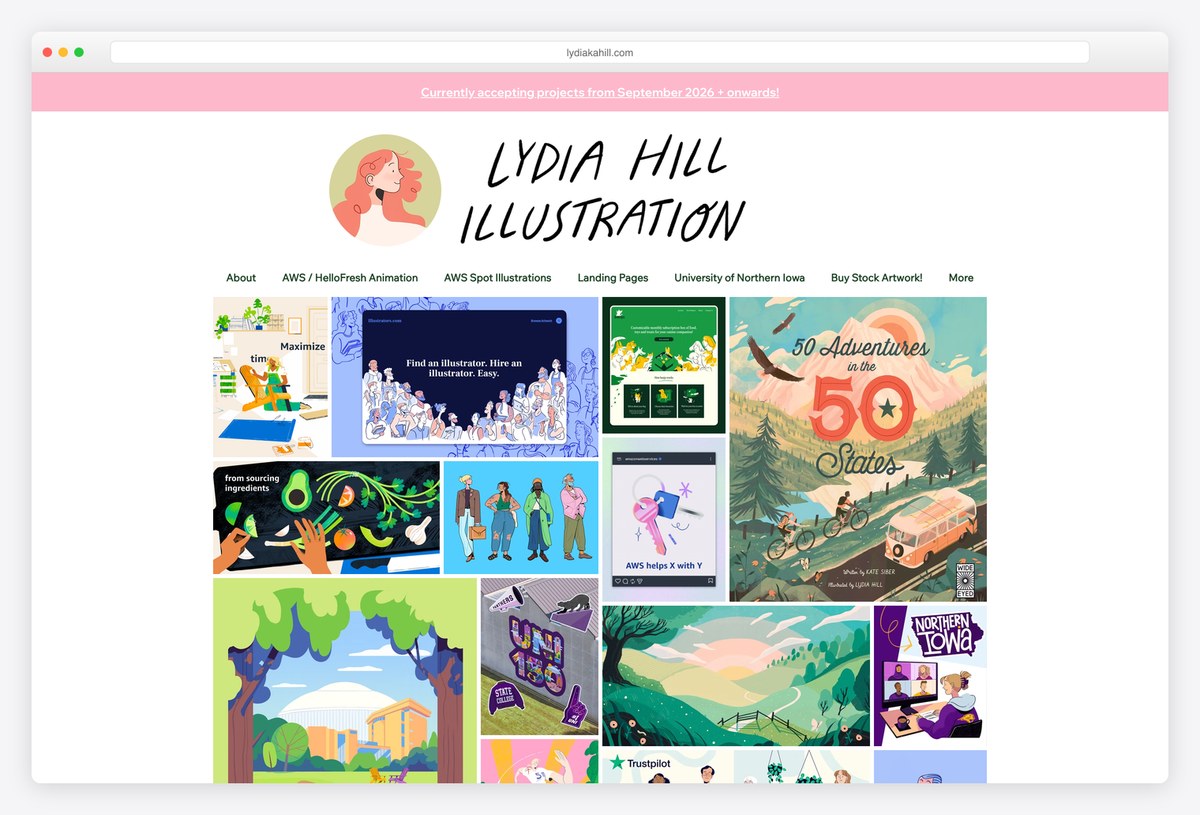
Lydia Hill draws spot illustrations and animation for tech brands from Sheffield, and her navigation is a list of client projects, such as AWS Spot Illustrations, SAP The Inside Track and University of Northern Iowa. A software company sees comparable work before it has scrolled.
Above everything, a banner states when she is next taking on projects. A testimonial from Jonathan Hoefler backs the client list, a Kid Lit section covers her books work, and a Buy Stock Artwork link sells ready-made pieces through Adobe Stock.
What stands out: Availability is the first line on the site.
16. Owen Gildersleeve
Built with: WordPress
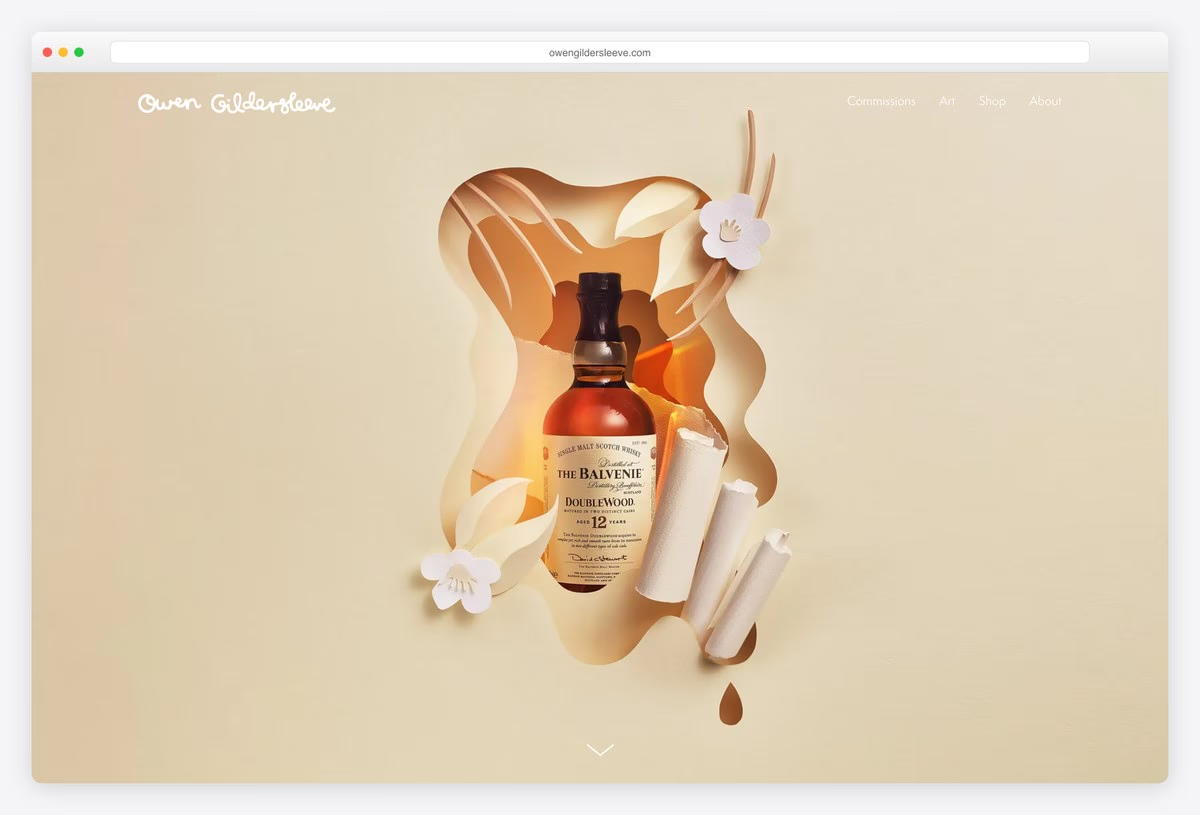
Owen Gildersleeve makes illustration from cut paper and paper sculpture, and his homepage opens on one full-bleed piece, which on our visit was a paper set framing a bottle of The Balvenie whisky. The menu is four words: Commissions, Art, Shop and About.
He has agents on both sides of the Atlantic, Grand Matter in the UK and Levine/Leavitt in the US. His About page lists an ADC Gold for a Politico project alongside clients such as Apple, NASA and LUSH, and paper-cut originals sell through a separate shop.
What stands out: Handmade work shown large enough to see the craft.
17. Ping Zhu
Built with: Cargo
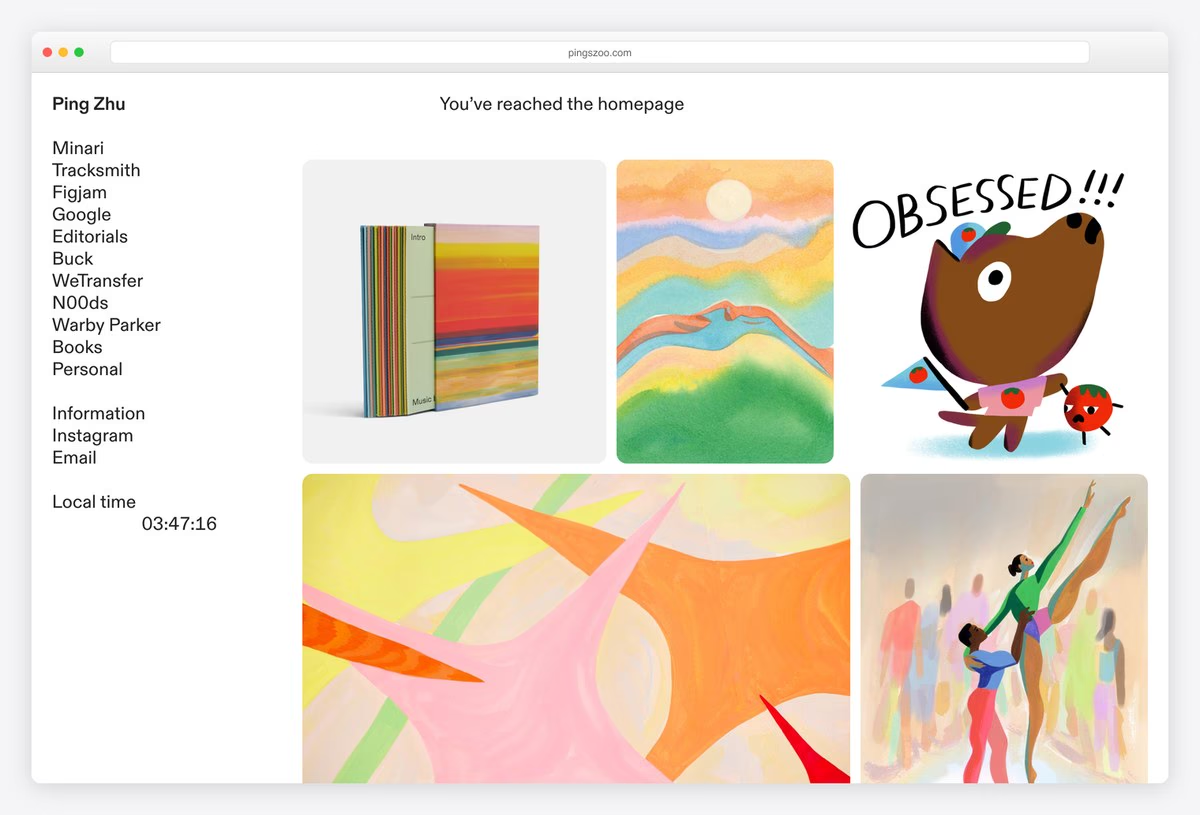
Ping Zhu is a Brooklyn illustrator whose left-hand menu is her client list: Minari, Tracksmith, FigJam, Google, WeTransfer and Warby Parker, followed by editorial, books and personal work. Each client is its own section, so an art director can go straight to the closest match.
The personality is in the details. A live local-time clock sits in the sidebar, and the Info page is a list of likes and dislikes instead of a bio, with writing a bio among the dislikes. Both an email link and a contact form are offered.
What stands out: A client-named menu with a sense of humour.
18. Beatrice Blue
Built with: Format
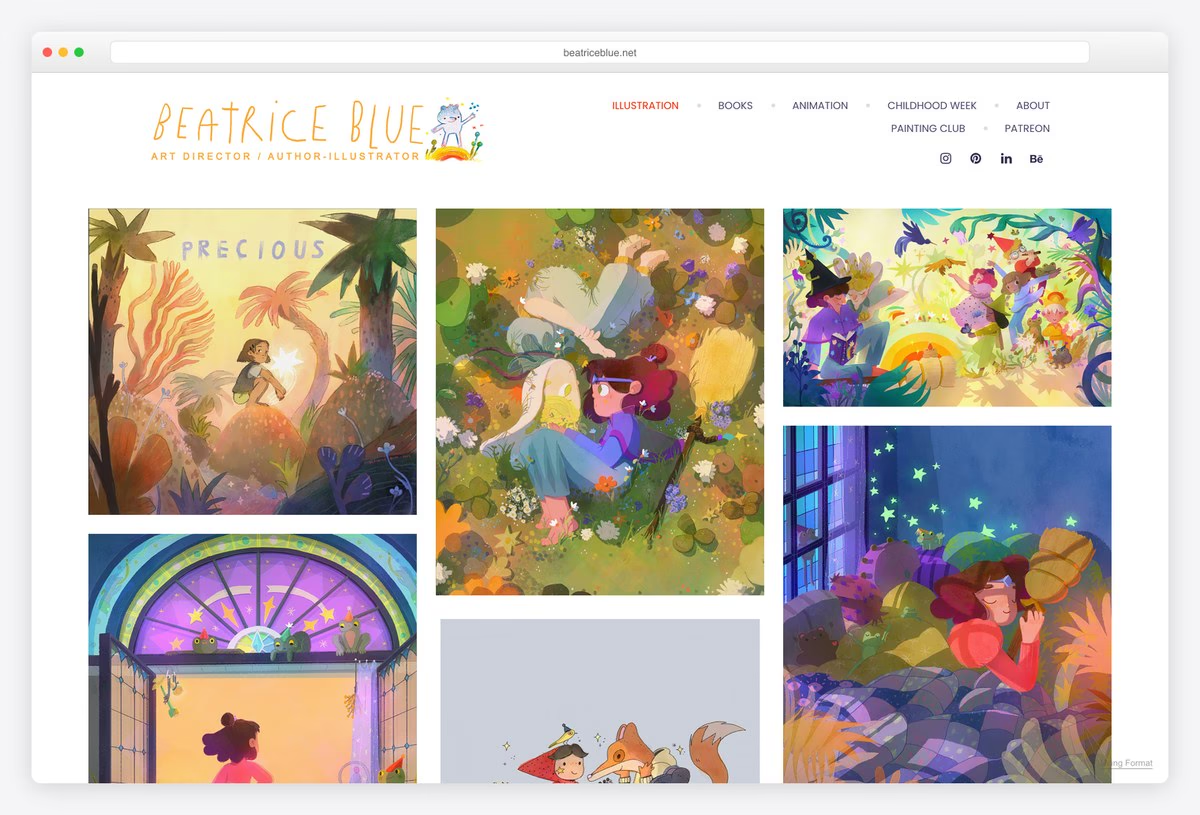
Beatrice Blue works in picture books and in visual development for animation, and her contact page splits the two cleanly: Paul Moreton at Bell Lomax handles publishing, and Alison Mann at Fourth Wall handles TV and film, each with a direct email.
Her painterly grid fills the first screen, and credits for Netflix, DreamWorks Animation, Apple TV+ and Penguin Random House appear across the site. Community projects share the main menu, including a Painting Club, Childhood Week and Patreon, and a Gumroad store is linked as well.
What stands out: One agent per industry, both with direct emails.
19. Susann Hoffmann
Built with: Adobe Portfolio
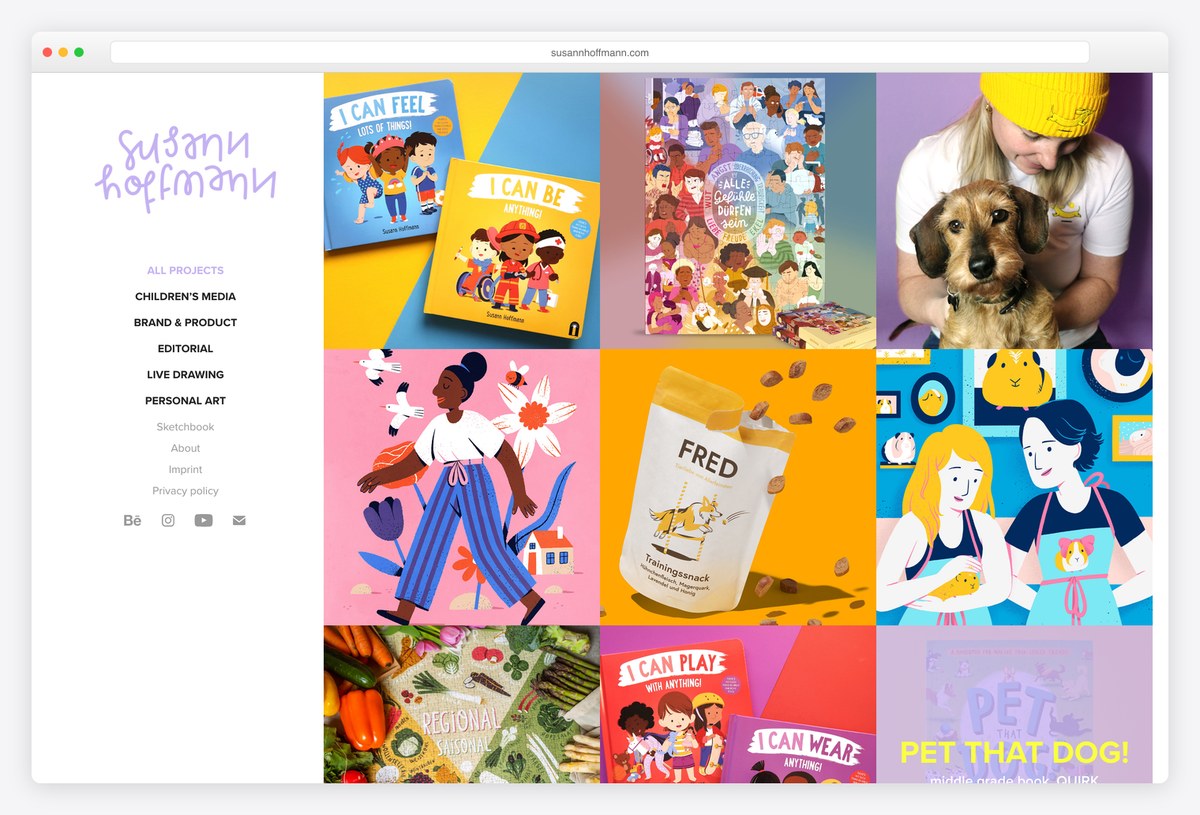
Susann Hoffmann is a Hamburg illustrator whose sidebar sorts her work by market: Children’s Media, Brand and Product, Editorial, Live Drawing, Personal Art and Sketchbook. A publisher and a brand manager can each go straight to their own shelf.
Her lead children’s project is described as two board books against gender stereotypes, one of six published board books. Commissions can go to her directly or to her agency, Die Illustratoren, whose contact details are listed, and art prints and free printables are linked from the site.
What stands out: Categories named for the buyer, not the medium.
20. Lisa Maltby
Built with: Squarespace
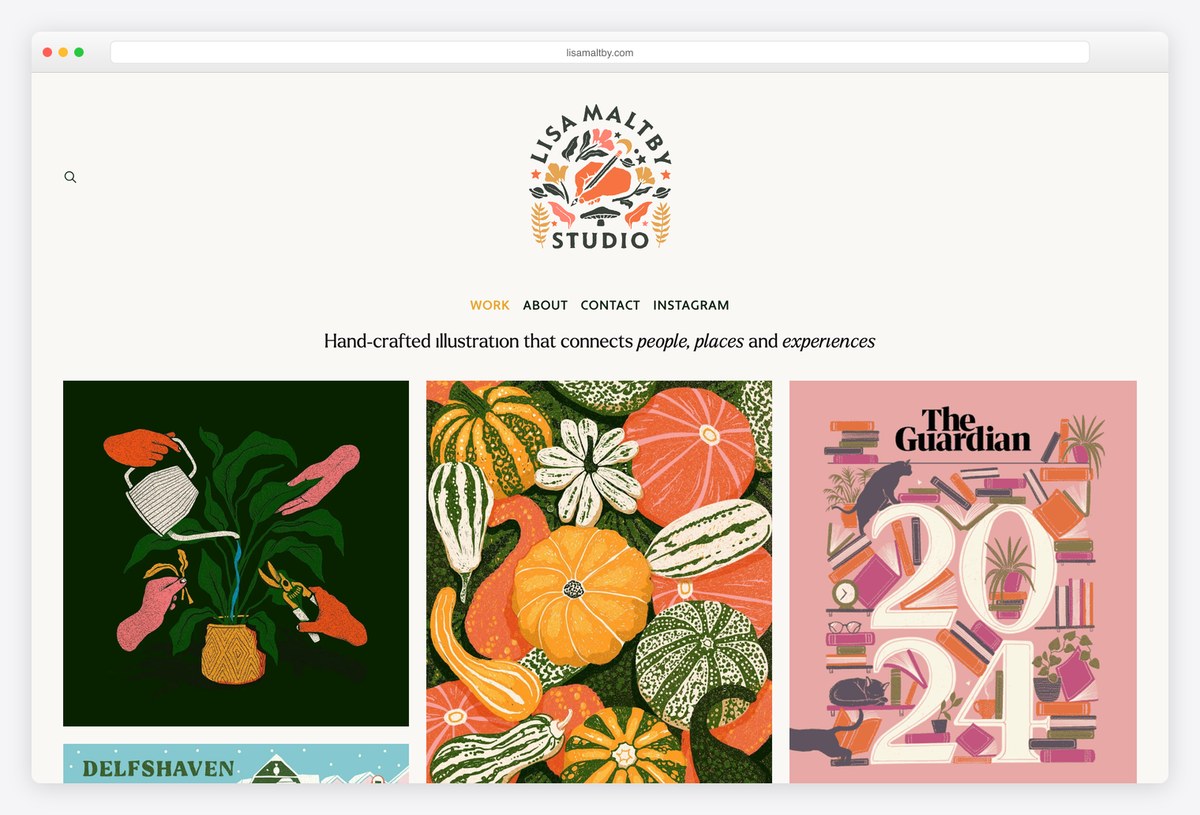
Lisa Maltby’s tagline sits under her logo and does the positioning in one line: hand-crafted illustration that connects people, places and experiences. The homepage grid backs it up with titled projects such as Yorkshire Tea Packaging Re-Design and an Illustrated Map of Sheffield, covering packaging, editorial, maps and murals.
Her About page carries testimonials, including one from Penguin Random House art direction, and names clients from Bloomsbury and The Guardian to the National Trust and Virgin Atlantic. Email links pre-fill the subject line Illustration Enquiry.
What stands out: A pre-filled subject line, a small touch that sorts the inbox.
21. Malika Favre
Built with: Shopify
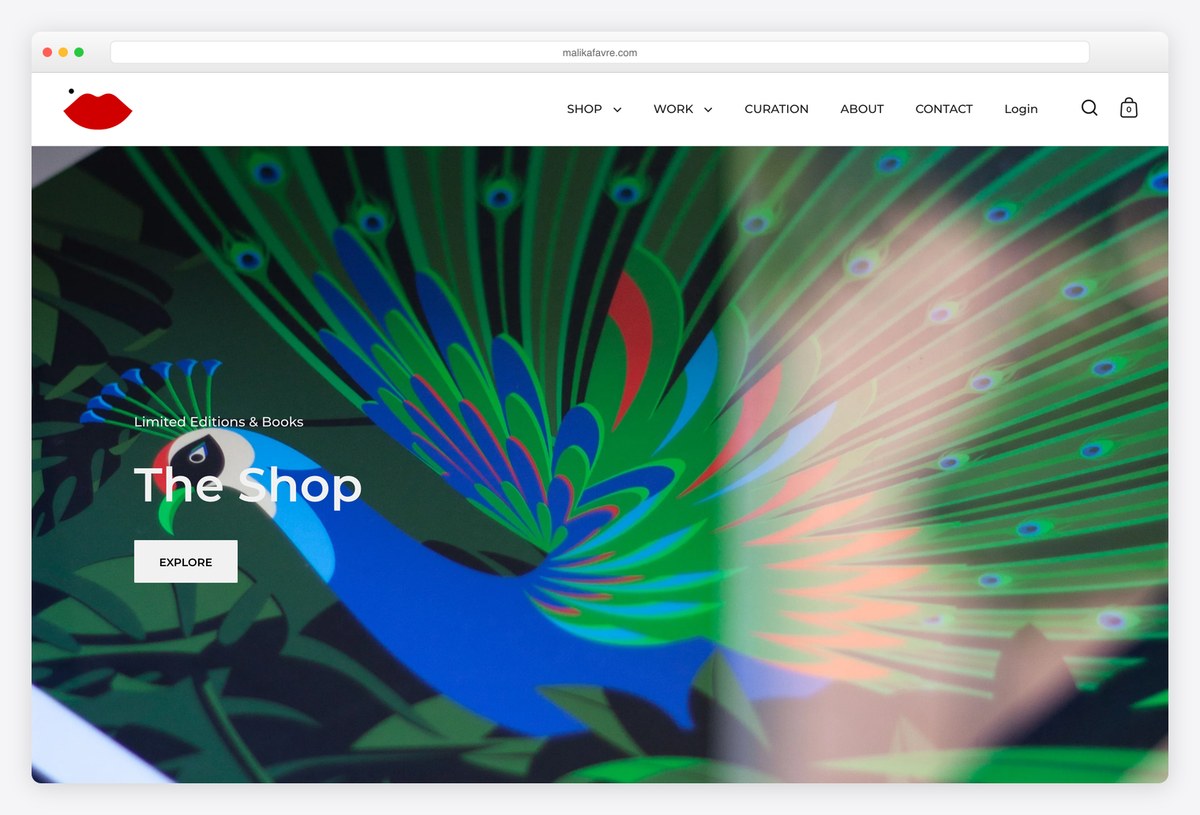
Malika Favre is a French illustrator in Barcelona, and her site is built as a shop first: the opening screen sells limited editions and books, and the portfolio sits behind it. The Work menu is sorted by theme, including Women, Fashion, Geometry and her New Yorker covers.
A Curation section, The Bazaar, sells other artists’ work alongside hers, and the newsletter offers a discount on a first order. Commissions have their own email address, separate from shop orders. It suits an established name; a newer illustrator should let the work lead.
What stands out: Proof that a portfolio and a store can be the same site.
22. Olimpia Zagnoli
Built with: WordPress
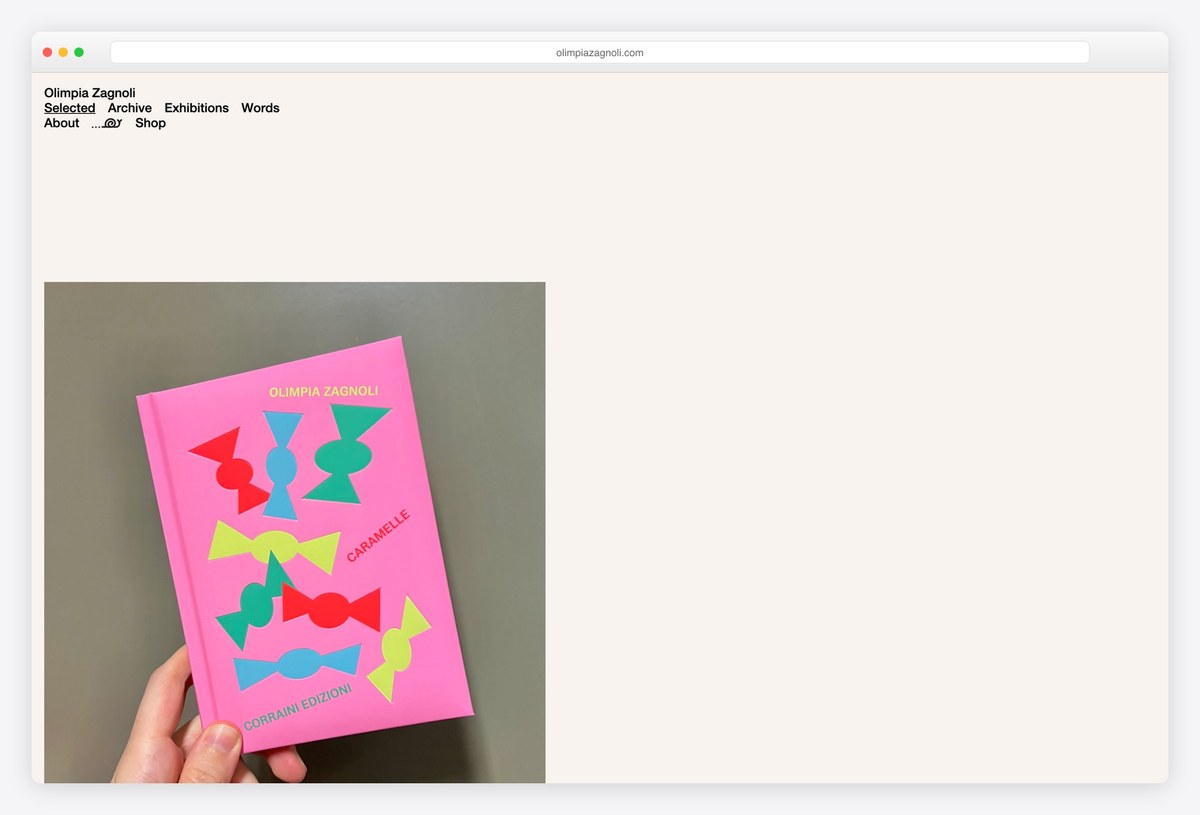
Olimpia Zagnoli is a Milan illustrator working in editorial and fashion, and her menu solves a problem every long career creates: a Selected section keeps the homepage curated, while an Archive holds everything else. The first screen shows a single piece.
Exhibitions, Words and a Shop have their own pages, and the About page names clients such as Taschen, Barilla, Apple, Prada and Fendi before ending on a line few bios would risk: she lives in Milan in an apartment with a silver bathroom.
What stands out: Selected versus Archive, so the homepage stays sharp.
23. Essi Kimpimäki
Built with: Cargo
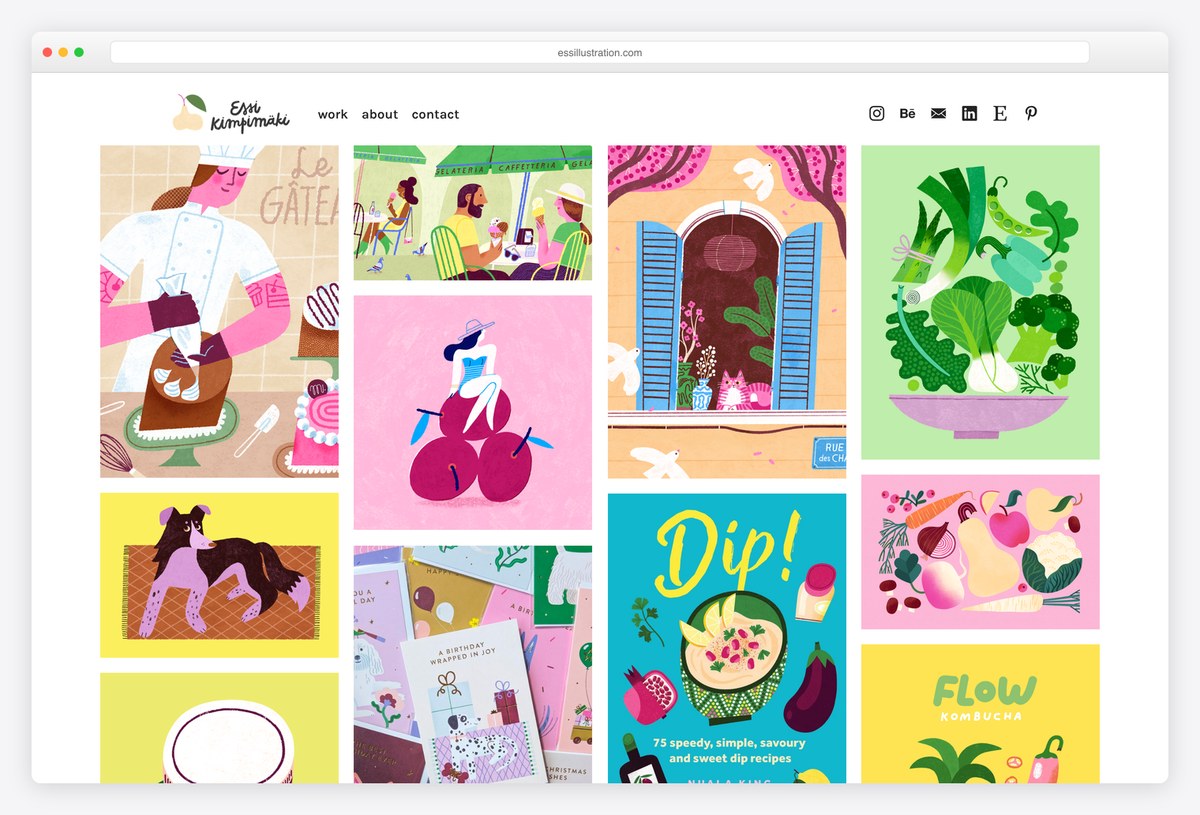
Essi Kimpimäki is a Finnish illustrator in Glasgow who specialises in food and packaging, and her homepage is one dense captioned grid: Pastry Chef, Gelateria, Dip! Cookbook, Flow Kombucha. A consistent pastel palette makes dozens of projects read as one body of work.
Clients named on the site include Dior, Scottish Opera, Oxford University Press and The Boston Globe. Her About page mentions the Procreate texture brushes she sells, prints go through an Etsy shop, and commissions go to one direct email address.
What stands out: A recognisable palette that makes the whole grid read as one portfolio.
What the best illustration portfolios have in common
The work is the first thing on screen. Every portfolio here shows illustration in the first view, whether it is one full-bleed piece, as with Christoph Niemann and Owen Gildersleeve, or a dense grid, as with Essi Kimpimäki and Chris Haughton. The weakest sites we reviewed opened on a logo, an introductory paragraph or a photo of the artist at work, which makes a busy art director scroll before deciding anything.
Captions turn pictures into proof. Katie Scott labels a tile Toucans de Paradis for Hermès, Mary Kate McDevitt writes Sur La Table Holiday Packaging, and Lisa Maltby writes Yorkshire Tea Packaging Re-Design. An uncaptioned image shows skill; a captioned one shows that a real client paid for it. Sara Andreasson and Marylou Faure go further and put the client list in the first screen.
Navigation follows how the buyer thinks, not the medium. Lydia Hill and Ping Zhu name menu items after clients, Chris Haughton lists every book by title, Susann Hoffmann sorts her work by market, and Chris Gralapp keeps separate portfolios for medical and med-legal work. A client scanning the menu should find their kind of job at a glance.
Representation is named, with a direct email. Jean Jullien’s contact page lists galleries by city, commercial agents by territory and a separate literary agent. Beatrice Blue splits publishing from TV and film, and Jillian Tamaki sends every enquiry to one named agent. If you have an agent, say who it is and how to reach them; if you don’t, put your own email where it is easy to find.
A current site beats a famous name. Tom Gauld’s news log and Lydia Hill’s availability banner show that someone is looking after the site. We left out some excellent illustrators because their newest homepage work or their footer copyright was years old, which leaves a client wondering whether anyone will read the enquiry.
Selling sits beside the portfolio, not in front of it. Most of these illustrators sell prints, originals, books or figurines, usually through a separate store, as Christoph Niemann, Jean Jullien and Owen Gildersleeve do. Malika Favre is the exception who puts the shop first, which works for an established name but can bury the commissions for someone newer.
Minimal is fine when the work is strong. Sydney Smith has two menu items and Sara Andreasson has none. What the weaker sites we reviewed lacked was not features but basics: captions, a client list and an obvious way to get in touch.
Check the basics, including the domain. While checking, we found an email link ending in .co instead of .com, another that repeated mailto: so it could not open, and a contact page still carrying the builder’s placeholder bio about a different city. Several well-known picture-book illustrators’ old domains now serve spam, parking pages or unrelated businesses, so keep renewing a domain even after you move.
Frequently Asked Questions
What should an illustration portfolio include?
A focused selection of your strongest finished work, captioned with the client or the use, plus a short bio, a client list and a direct email or your agent’s contact. Show the kind of work you want more of. The portfolios above often add a shop, a newsletter or a news page, but captioned work and a clear contact route come first.
How should I organise an illustration portfolio?
Organise it the way your clients buy. Picture-book illustrators such as Chris Haughton list each book, editorial and brand illustrators such as Lydia Hill and Ping Zhu name sections after clients, and Susann Hoffmann separates children’s media from brand and product work. Avoid sorting only by medium, such as ink or digital, because buyers rarely search that way.
What is the best platform for an illustration portfolio?
WordPress and Squarespace are the most common platforms among the portfolios above, followed by Cargo, with Format, Shopify, Adobe Portfolio and Wix also represented. Choose one that shows large images cleanly and that you will keep updating. If you sell prints, a separate store linked from the menu stops selling from crowding out the commissions.
Should an illustrator list their agent on their portfolio?
Yes, if you have one, name the agency and give a direct email. Jean Jullien routes enquiries to a different agent in each territory, and Beatrice Blue separates publishing from TV and film. If you are unrepresented, a plain email address in the first screen, as Sara Andreasson and Marylou Faure show, works just as well.
Should an illustration portfolio include a shop?
It can, as long as the shop sits beside the portfolio rather than in front of it. Most of the illustrators above sell prints, originals, books or figurines, usually through a separate store linked from the menu. Putting the shop first, as Malika Favre does, suits an established name whose buyers already know the work.
How do I make an illustration portfolio with no clients?
Create self-initiated pieces that look like the jobs you want, such as a book cover, a map or an editorial spot, and label them as personal work. Jenni Sparks, Ping Zhu and Susann Hoffmann all keep personal work in its own section beside their commissions. Add a direct email, caption everything and keep the site current.
Wrapping Up
An art director gives an illustration portfolio a few seconds, so the strongest ones spend them well: work in the first screen, captions that name the client, a menu organised the way buyers look, and a named person to contact.
For more inspiration, see our best portfolio website examples, artist portfolio websites, art websites, UX portfolio examples, graphic design portfolio examples and web designer portfolios. Ready to build your own? Start from our portfolio website templates, a Squarespace portfolio template or a free portfolio website builder.

Related Posts




Comments (0)