
20 Best Web Designer Portfolio Examples 2026
The best web designer portfolios say who they design for, show real websites early and link to the live work. These 20 portfolios come from freelance web designers, Webflow and Framer specialists, a Squarespace-only designer and art directors, and every one puts real website work on the page, not just a list of skills.
We opened every site, read its project pages and identified the platform from its code rather than guessing. Of the 162 portfolios we examined, 11 were dead or had been handed over to someone else, nearly all of them taken from other roundups, so every example here was live when we checked it.
Best Web Designer Portfolio Examples
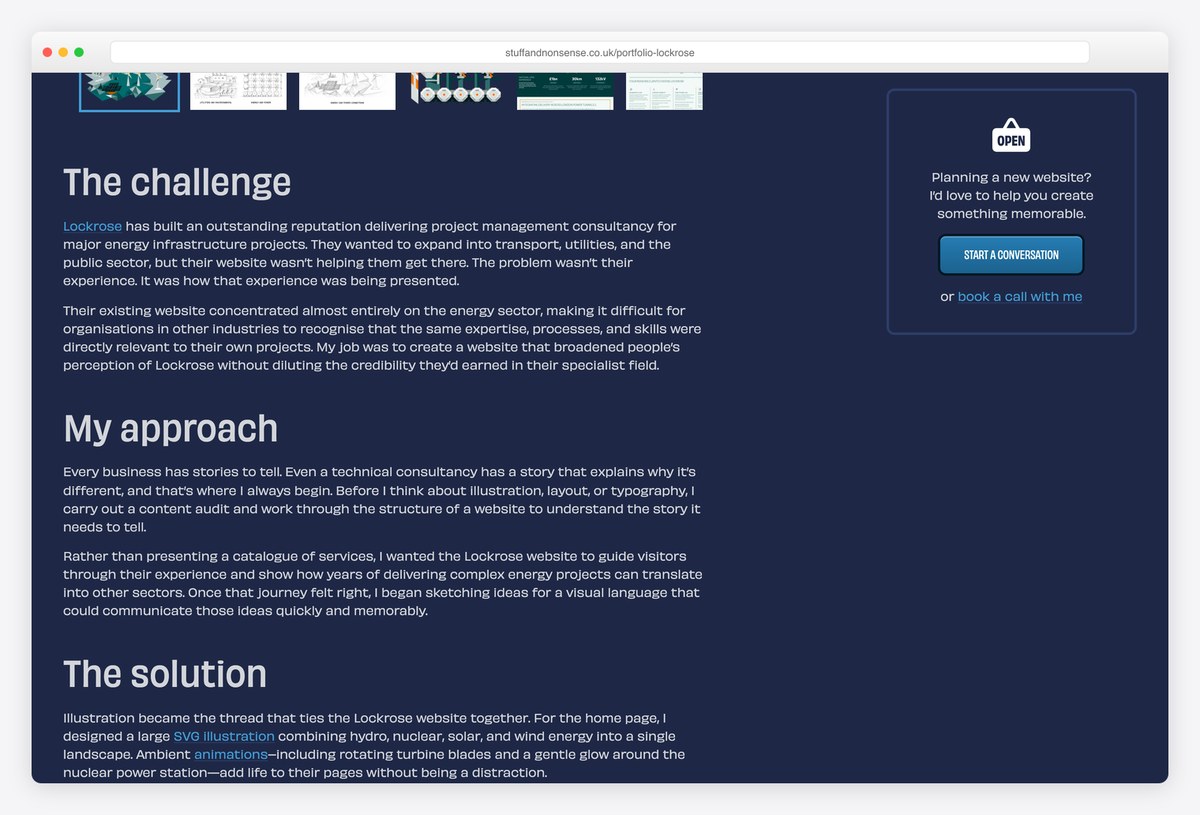
1. Andy Clarke (Stuff & Nonsense)
Built with: Eleventy
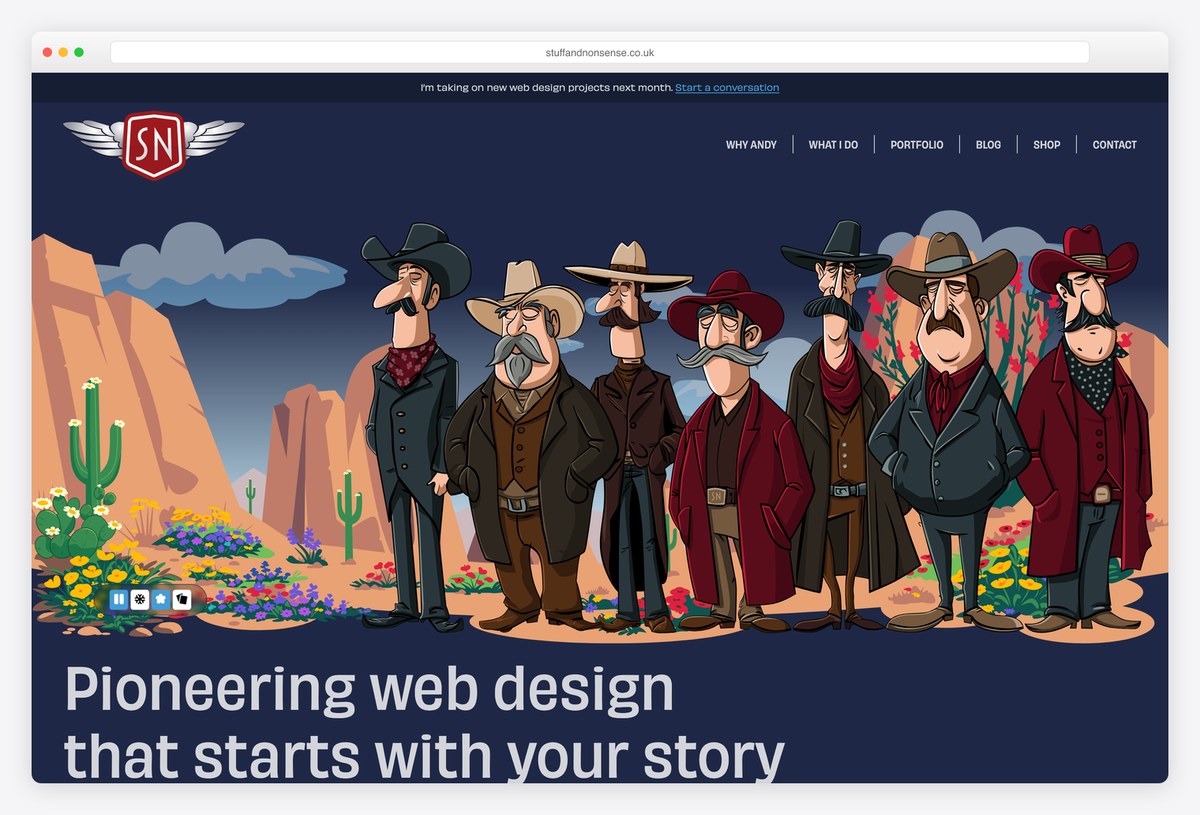
Andy Clarke runs Stuff & Nonsense, a one-person website design studio in North Wales, and his case studies are written for the paying client. Each opens with a section called ‘The challenge’, and each has a companion blog post walking through how he designed the site.
His availability sits in a banner above the navigation on every page, and a visitor can book a call through Calendly, phone or send a WhatsApp message. The portfolio filters by client sector, and his client list includes Disney Store UK, Greenpeace Poland and WWF UK.
What stands out: Open every case study with the client’s problem, not the mood board.
2. Mike Kus
Built with: Framer
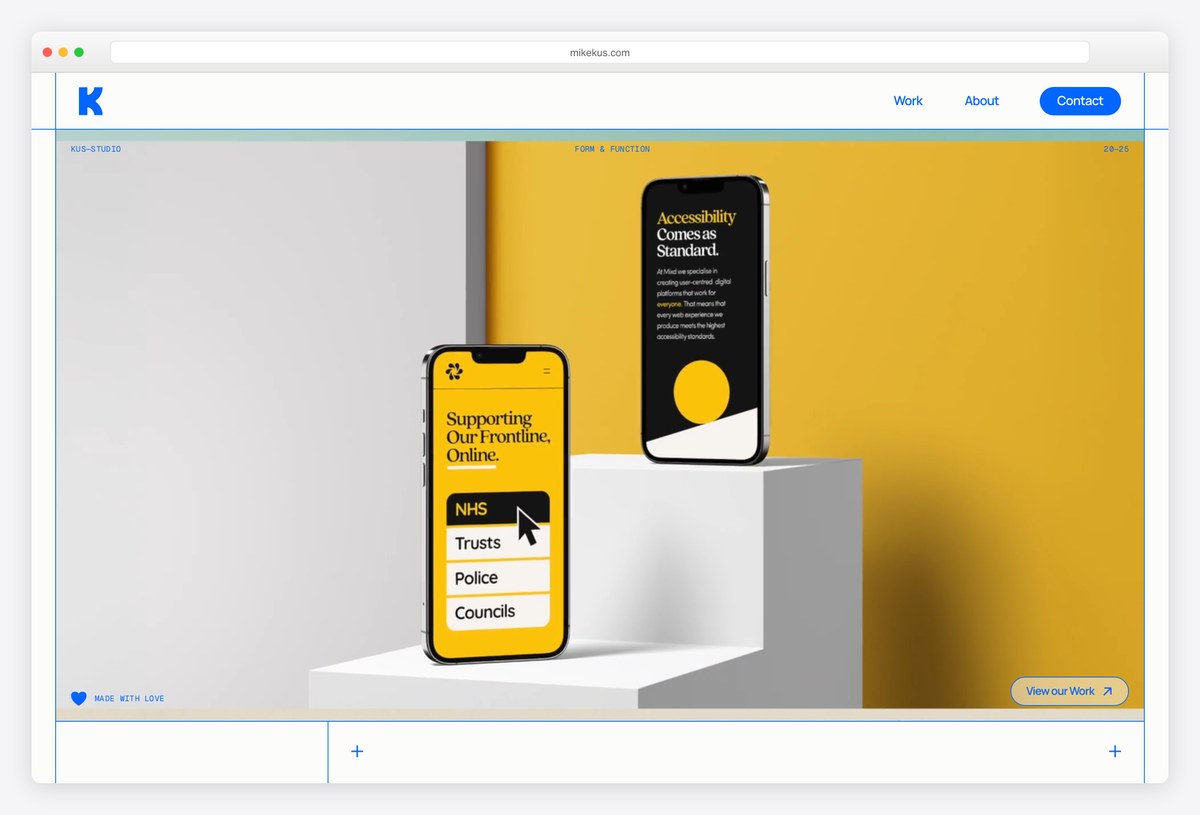
Mike Kus is a brand and web designer, and his first screen is a collage of website mockups on a gradient, so the work arrives before any introduction. Four highlighted projects follow, including Slashwork, Epic Travel and MIXD.
Project pages split into ‘What they do’, ‘Project info’ and ‘What we did’, with a list of deliverables. Just Phil, for example, is a campaign site for an unsupported Tour de France ride raising money for Alzheimer’s Research UK. His email address has a copy-to-clipboard button, and the footer links Foliostack, a Framer portfolio template he made.
What stands out: Work before words in the first screen.
3. Jerry Rodriguez (Graphical Jerry)
Built with: Webflow
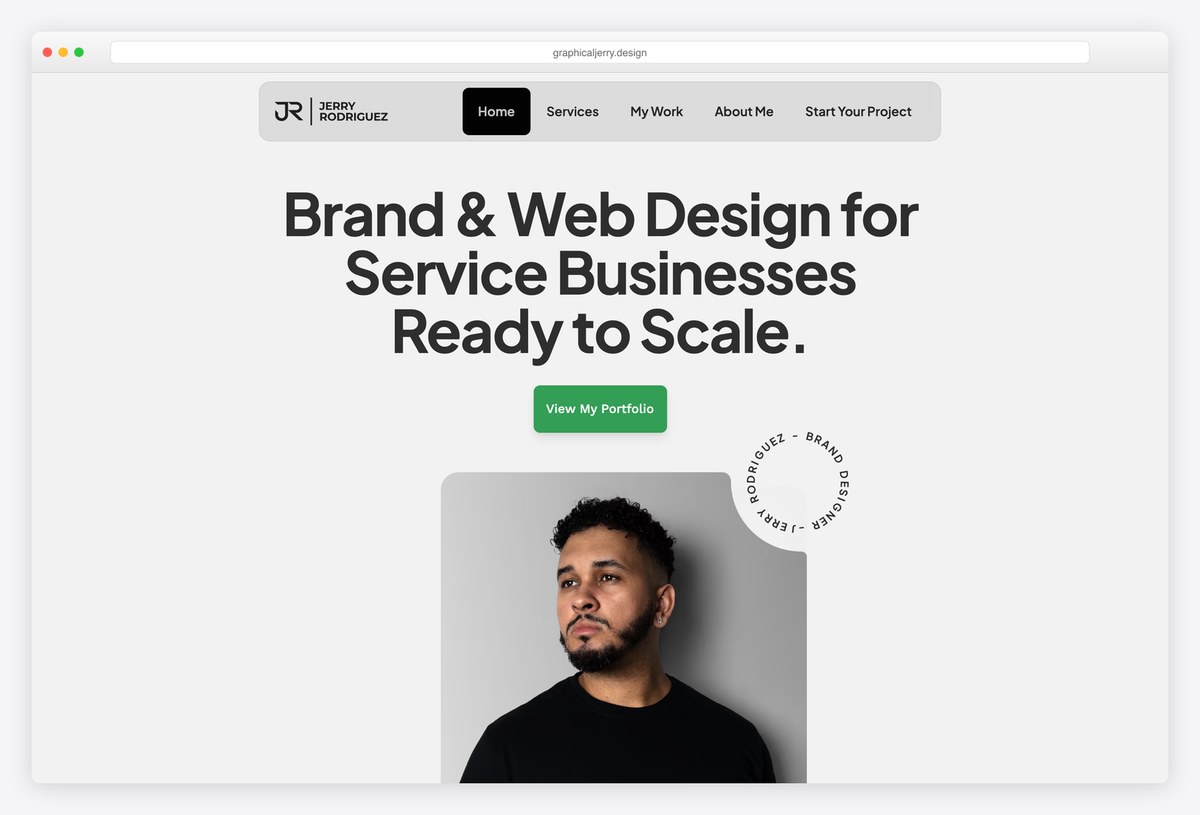
Jerry Rodriguez, who works as Graphical Jerry from Orlando, names his buyer in the headline: ‘Brand & Web Design for Service Businesses Ready to Scale.’ The case studies match that promise, with Executive Parking Service, Junk It Plus and Jalisco Tienda Mexicana on the homepage.
Each case runs through Background, Challenges, Discovery, Design Process and Showcase, with a ‘Skip to the End Result’ link for readers in a hurry. His project form asks for a timeline and service type up front, and he sells monthly maintenance covering hosting, SEO and content updates alongside the design.
What stands out: Name your client in the headline and let the form qualify the lead.
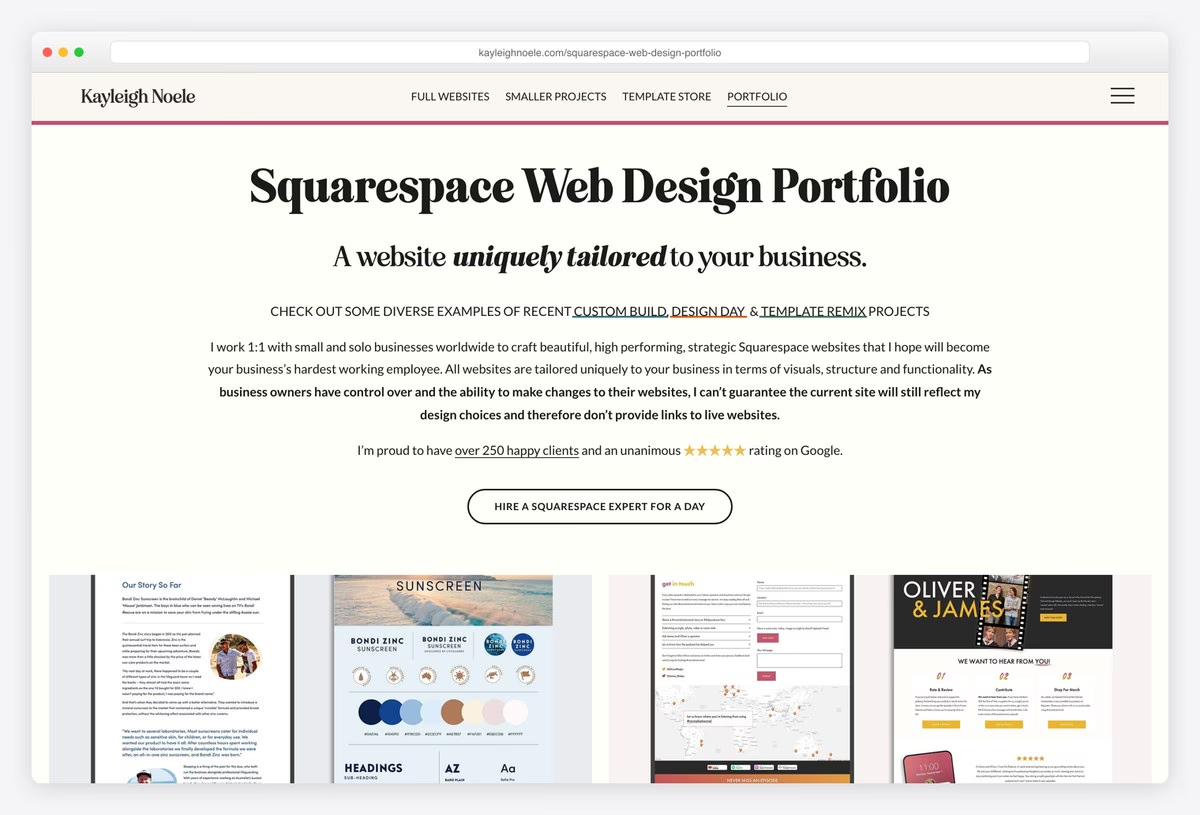
4. Kayleigh Noele
Built with: Squarespace
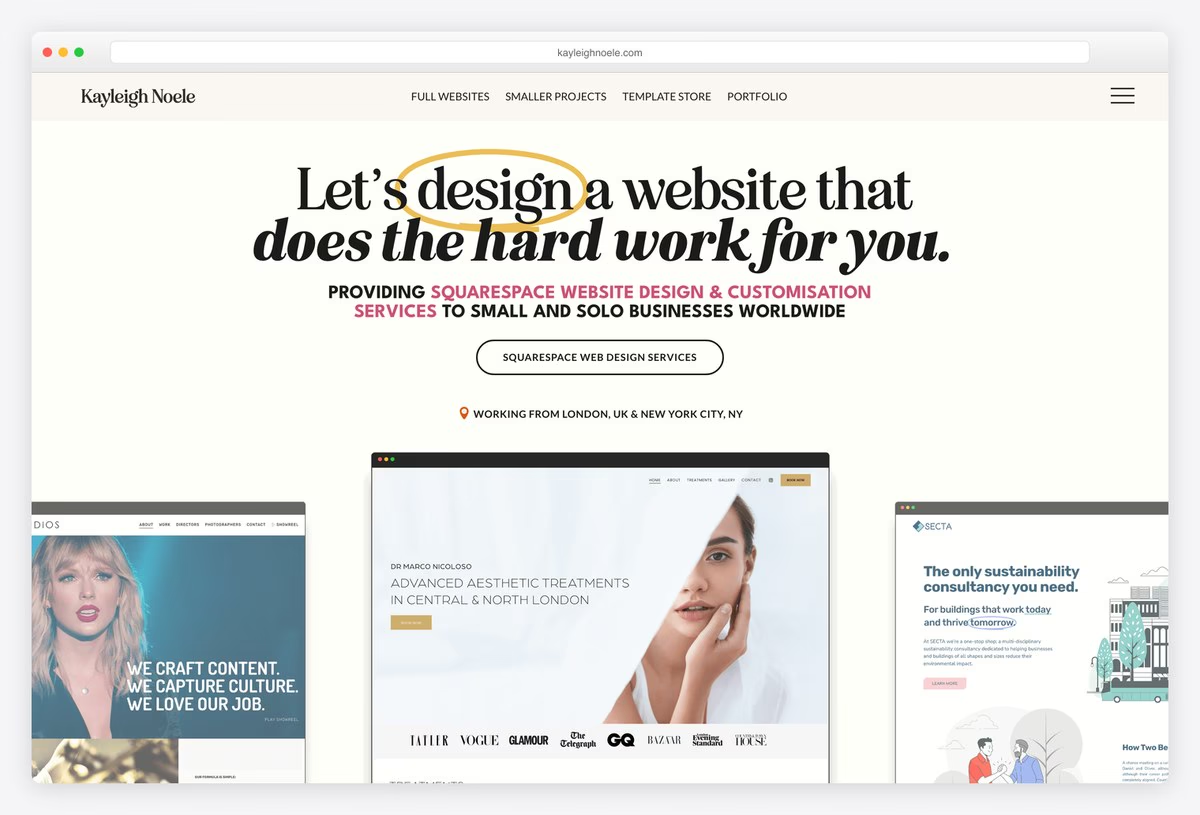
Kayleigh Noele designs only on Squarespace, for small and solo businesses, and her homepage opens with three site mockups and a claim of more than 500 Squarespace websites built and customised. The navigation doubles as a service menu: custom sites, a budget Template Remix, intensive design days and a template store.
Her portfolio page explains why she does not link to live client sites: owners can change them after handover, so she shows mockups instead. Enquiries go through a Book A Call page.
What stands out: Specialise in one platform and package your services around it.
5. Gil Huybrecht
Built with: Nuxt
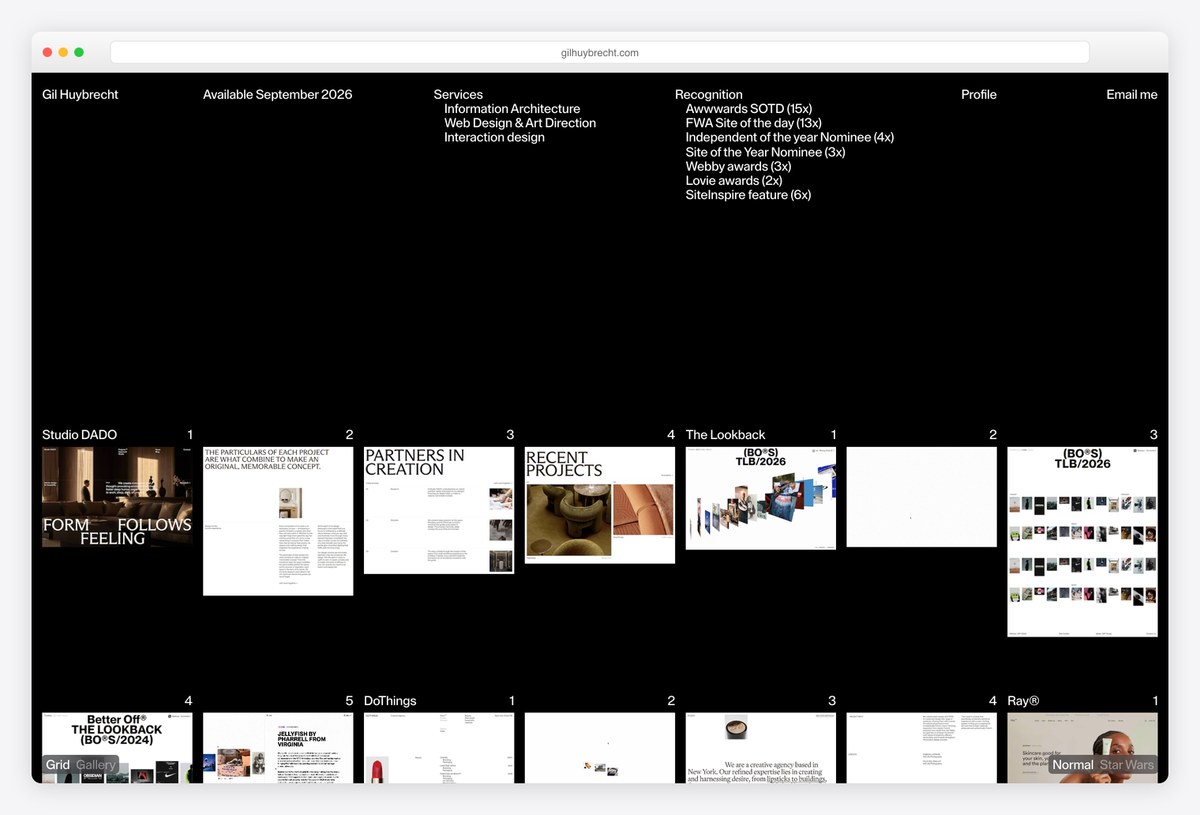
Gil Huybrecht’s homepage is the whole portfolio: about 22 projects from the freelance designer and art director, each shown as a horizontal strip of full-page screenshots, with a switch between grid and gallery views. There are no case-study pages, so the screenshots do all the explaining.
The header row states when he is next available and carries an ‘Email me’ link, while a tally of Awwwards, FWA and Webby recognition sits in the first screen. The footer links a web design course and a newsletter.
What stands out: Let full-page screenshots carry a visual portfolio.
6. Irene Butenko
Built with: Webflow
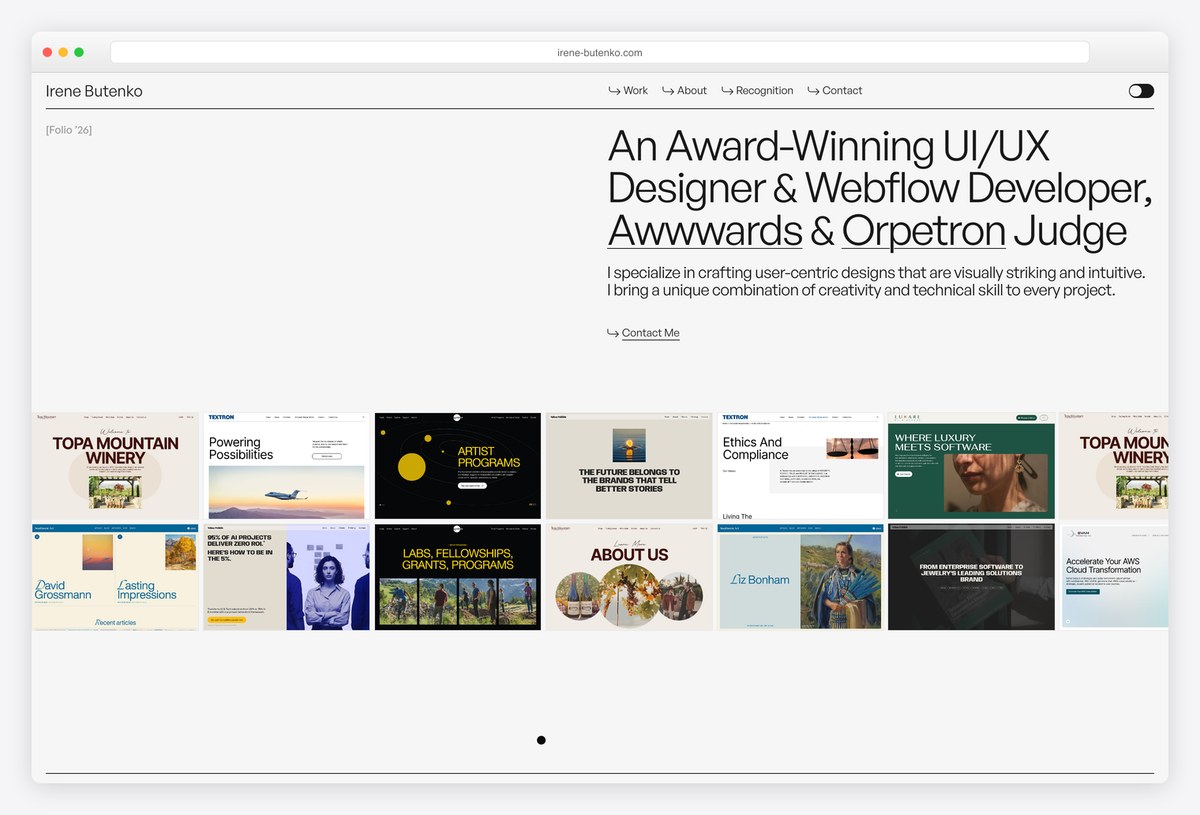
A strip of about 20 website thumbnails runs through the first screen of Irene Butenko, a UI/UX designer and Webflow developer in Los Angeles. Her headline calls her an Awwwards and Orpetron judge and links both roles, so a reader can check the claim immediately.
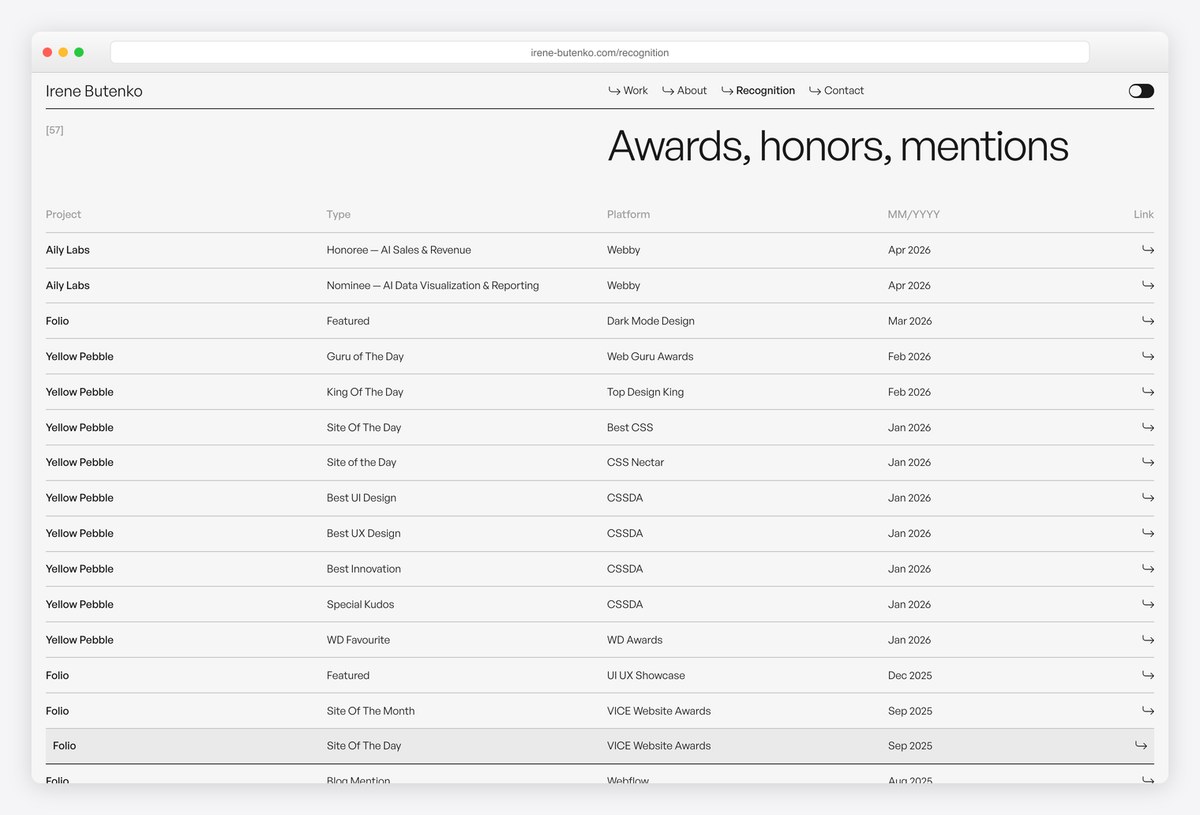
A Recognition page backs it up with a dated table of awards, each linked to its source. Case studies such as Revalia Bio and MUUS Media label the project type and credit the agency she worked through, and her client testimonials are dated too.
What stands out: Make every claim checkable.
7. Kyne Jang
Built with: Framer
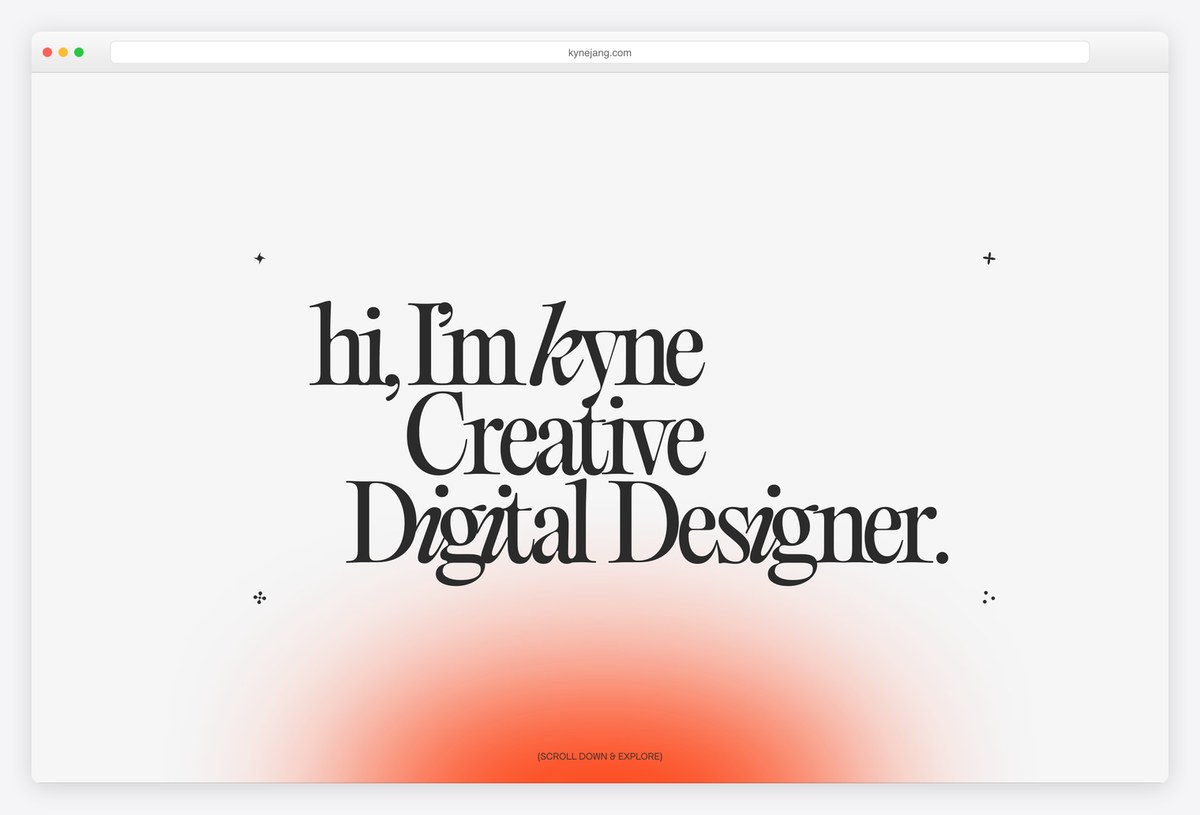
Kyne Jang is a web designer in Paris whose portfolio is written for small-business owners. Every project is labelled in plain words, such as restaurant website design and development or an e-commerce jewellery store powered by Stripe, and each case study ends with a link to the live site.
The case structure includes a CMS Setup section, which answers what most owners want to know: can I update it myself? The Ervy study is candid about scope, noting that the site was built in Framer from a complete Figma design the client supplied. Testimonials follow.
What stands out: Explain the CMS handover, not only the design.
8. Lynn Fisher
Built with: Hand-coded HTML
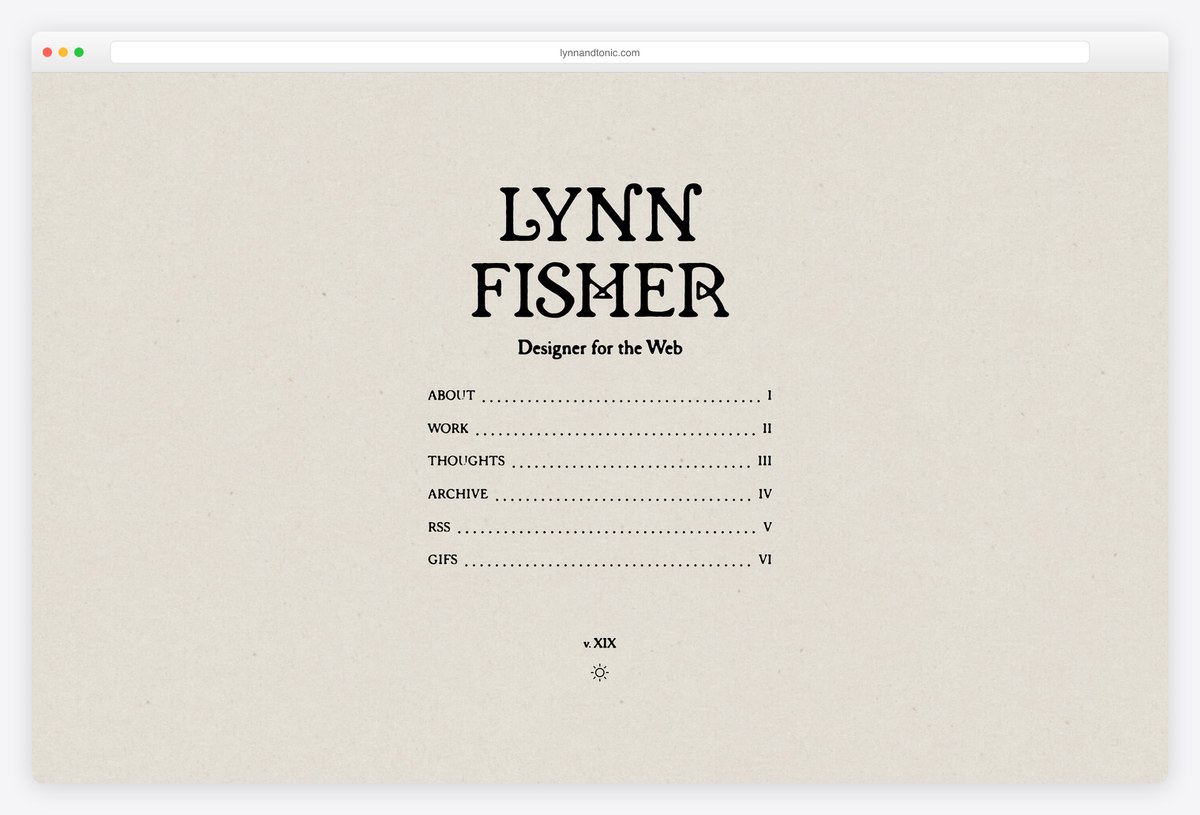
Lynn Fisher calls herself a designer for the web, and her portfolio is its own best case study: it changes every year, and an archive keeps every past version, most with a write-up of that redesign. The homepage is laid out like the table of contents of a book.
Her work page is mostly self-initiated projects, such as Nestflix, Airport Codes and A Single Div, each linking to the live site. Contact is a plain email link in the footer of that page, and a toggle switches the site between light and dark modes.
What stands out: The portfolio site itself is the strongest proof of skill.
9. Daniel Sun
Built with: Framer
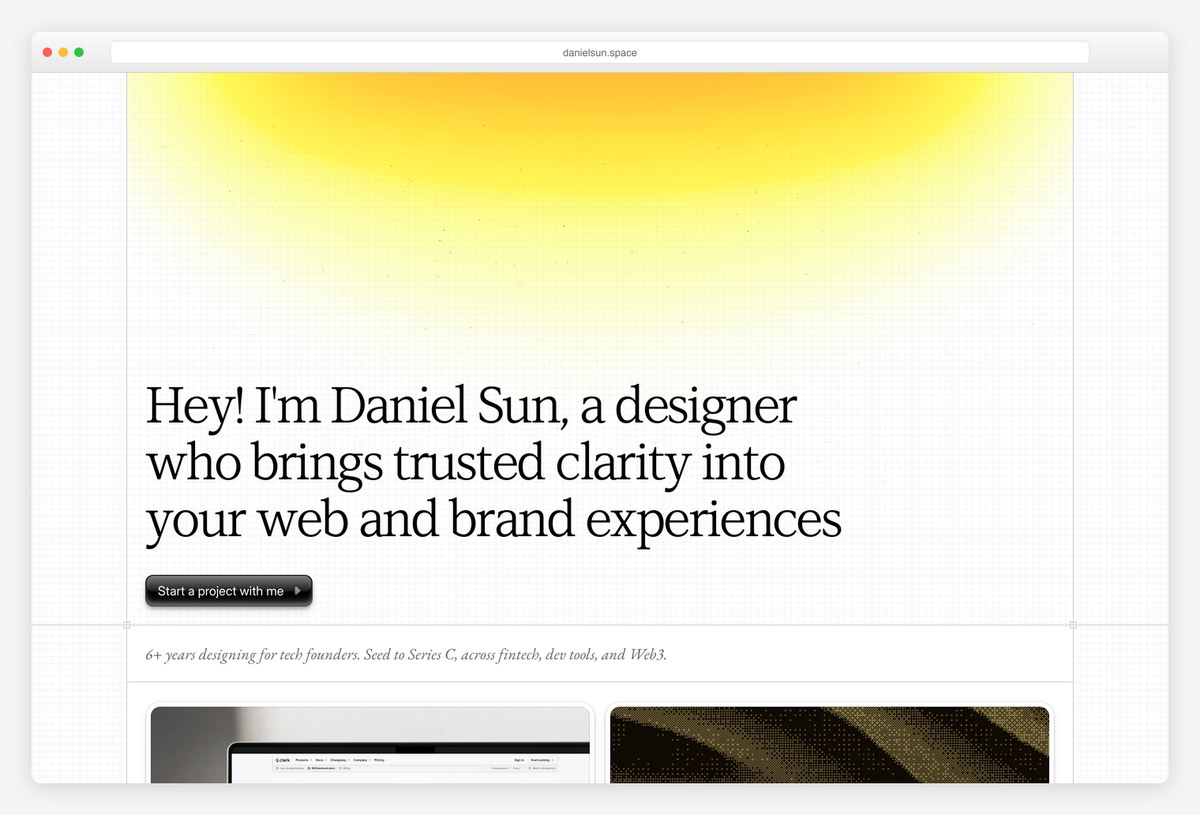
Daniel Sun designs websites and brands for startup founders, and one line sets his scope: ‘Seed to Series C, across fintech, dev tools, and Web3.’ He also builds what he designs, in Framer or Webflow.
His Clerk case study is the one to read. It names the core problem of marketing a developer tool in two sentences, ‘Authentication isn’t visual. So most of the job was translation,’ and the rest follows from it. Work starts at the bottom of the first screen, and both Start a project and Let’s chat open an email.
What stands out: State who you design for and at what stage.
10. Eliot Besson
Built with: Webflow
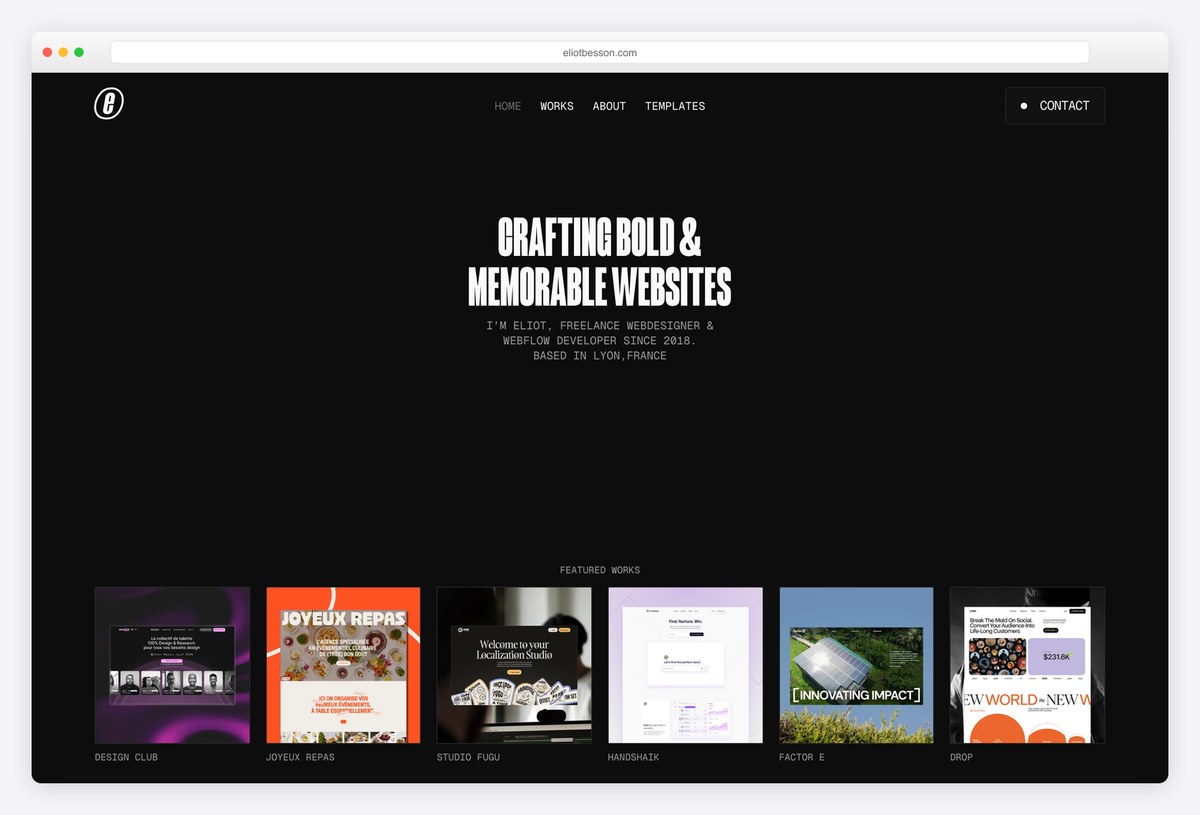
Before any scrolling, Eliot Besson shows a row of six video previews of real projects under his headline. The Lyon-based web designer and Webflow developer lets a visitor see finished, moving sites without clicking anything.
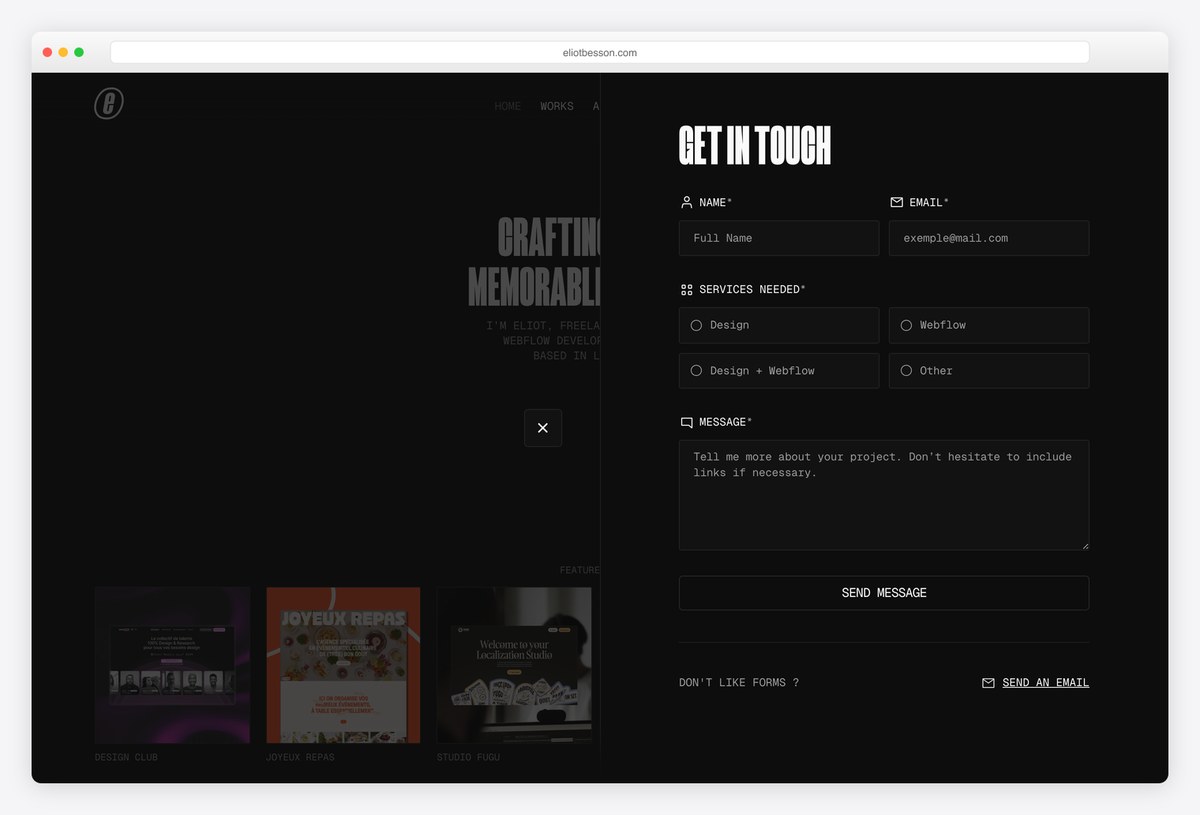
His works list is dated and separates full design jobs from development-only ones, so a client can tell which projects he actually designed. The contact form carries a fallback for anyone who would rather write directly: ‘don’t like forms? send an email’. He also sells Webflow templates, linked from the homepage.
What stands out: Separate what you designed from what you only built.
11. Iñaki Soria
Built with: Custom code
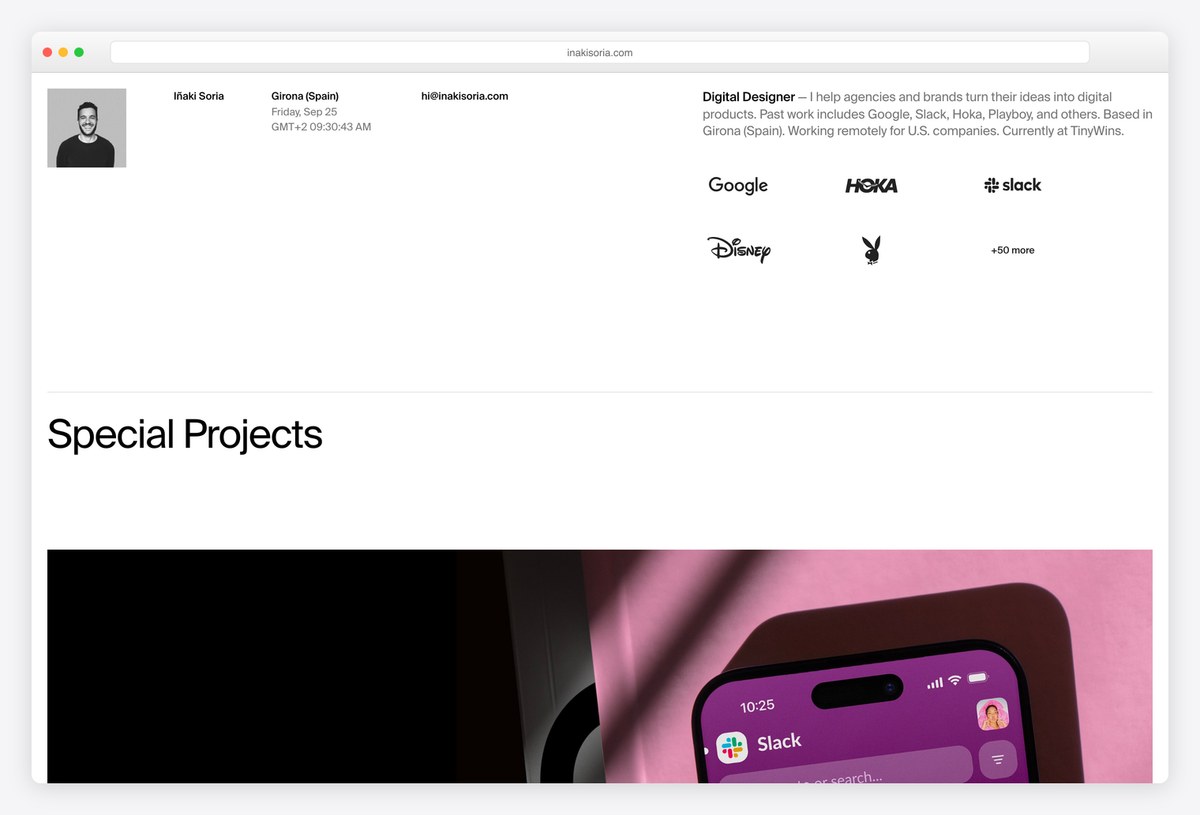
Iñaki Soria is a digital designer in Girona who states his market in one line: ‘Working remotely for U.S. companies.’ His photo, city, local time and email share a single header row, followed by client logos including Google, Hoka, Slack and Disney.
Around 20 selected projects are labelled by type, such as website design or app design, and NDA work is named openly rather than hidden, as in ‘Playboy · Under NDA’. Short testimonials from clients at Apple and Casper name the people quoted.
What stands out: List NDA work by name and label it, instead of leaving a gap.
12. Dennis Snellenberg
Built with: Custom code (GSAP)
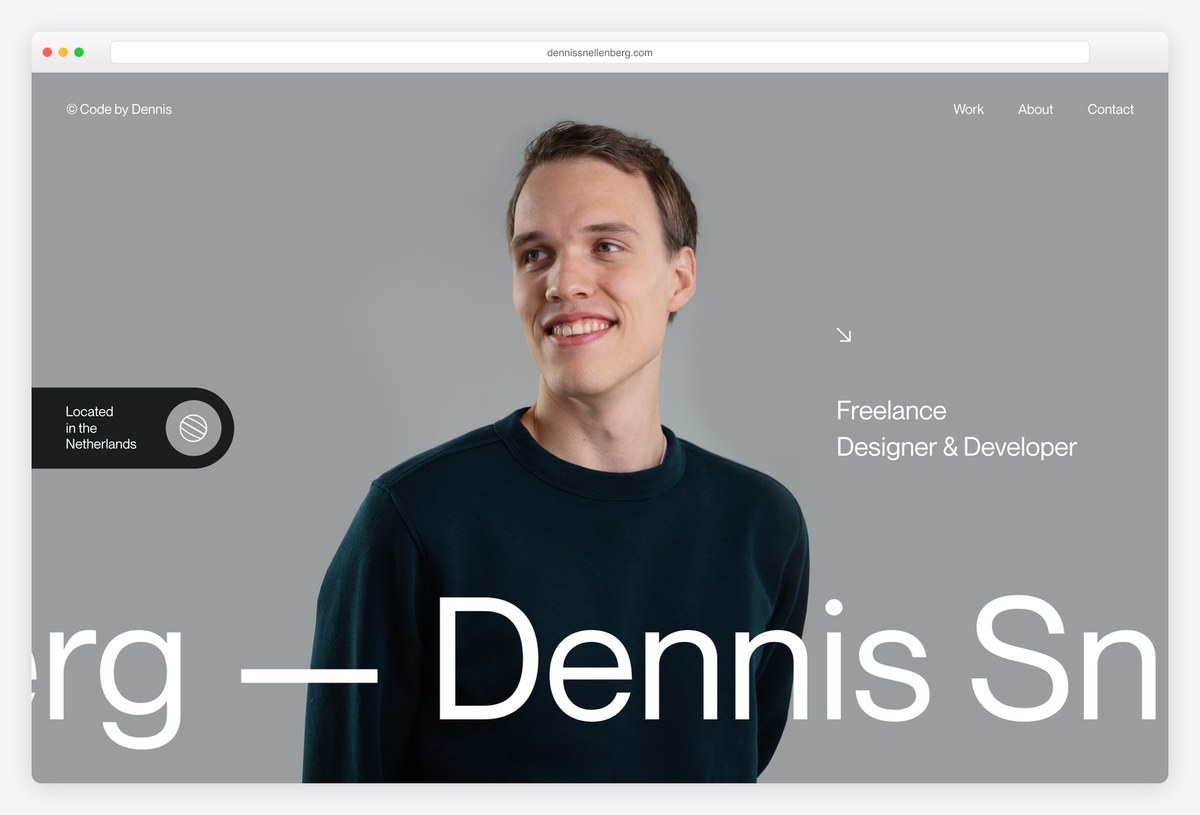
Dennis Snellenberg is a freelance designer and developer in the Netherlands, and his site leads with personality: a loader says hello in nine languages, then a portrait and his name, scrolling across the screen at giant size, fill the first view. Four recent projects follow.
Project pages are short but precise. They list his role and services, the location and year, and a link to the live site, and the TWICE page credits its designer, Dylan Brouwer, who also appears in this list. Email and phone sit on the homepage.
What stands out: Credit collaborators so your own role is clear.
13. Jose Ocando
Built with: Webflow
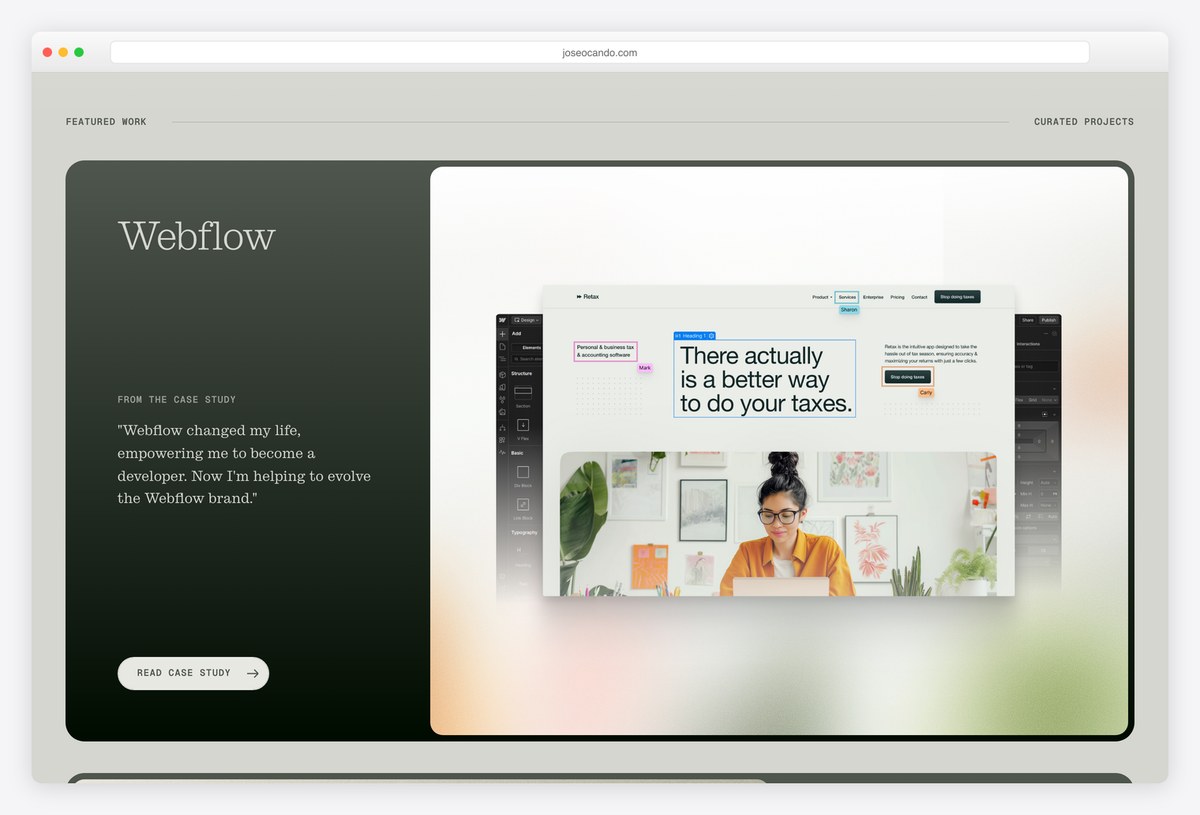
Jose Ocando, a brand designer and Webflow developer, uses his first screen to ask visitors where they want to start: fun facts about him, his work history, a featured case study or a recent blog post. A recruiter and a prospective client each get their own route in one click.
Featured projects are teased with a first-person pull quote, such as one noting that his work on aro won an Awwwards Site of the Day. The featured case study, ‘Building for the builders’, covers his work as a Staff Brand Designer at Webflow itself.
What stands out: Give different visitors a different starting point.
14. Eva Sánchez
Built with: WordPress
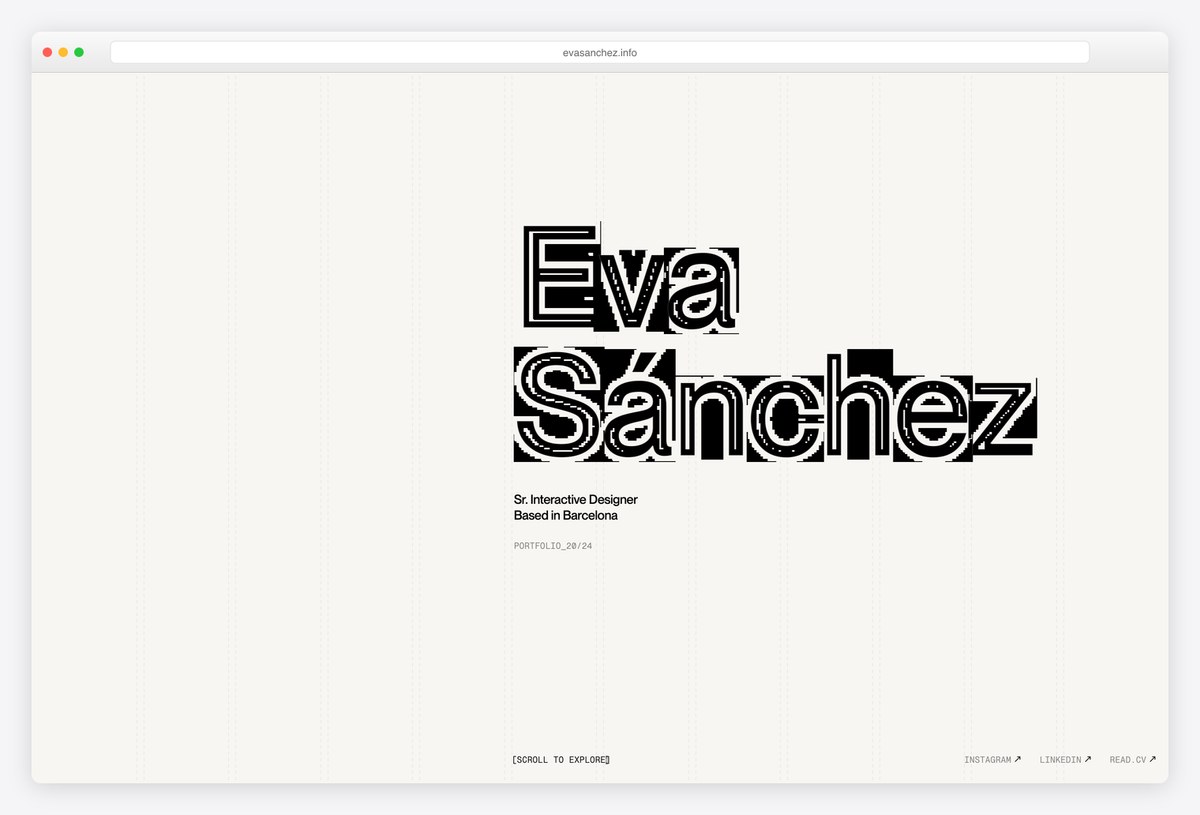
Eva Sánchez is a senior interactive designer in Barcelona who also speaks and teaches, and her portfolio has an experimental, editorial feel, starting with her name in glitching type. Featured work includes a Gemini microsite and the website for Ciclope Fest.
Her case study for Banjo, a sound design studio, treats sound and visuals as equal parts of the site, a reminder that web design is not only visual. The footer credits the developer who built her WordPress theme, and an email link sits in the navigation.
What stands out: Clear credit for who designed the site and who built it.
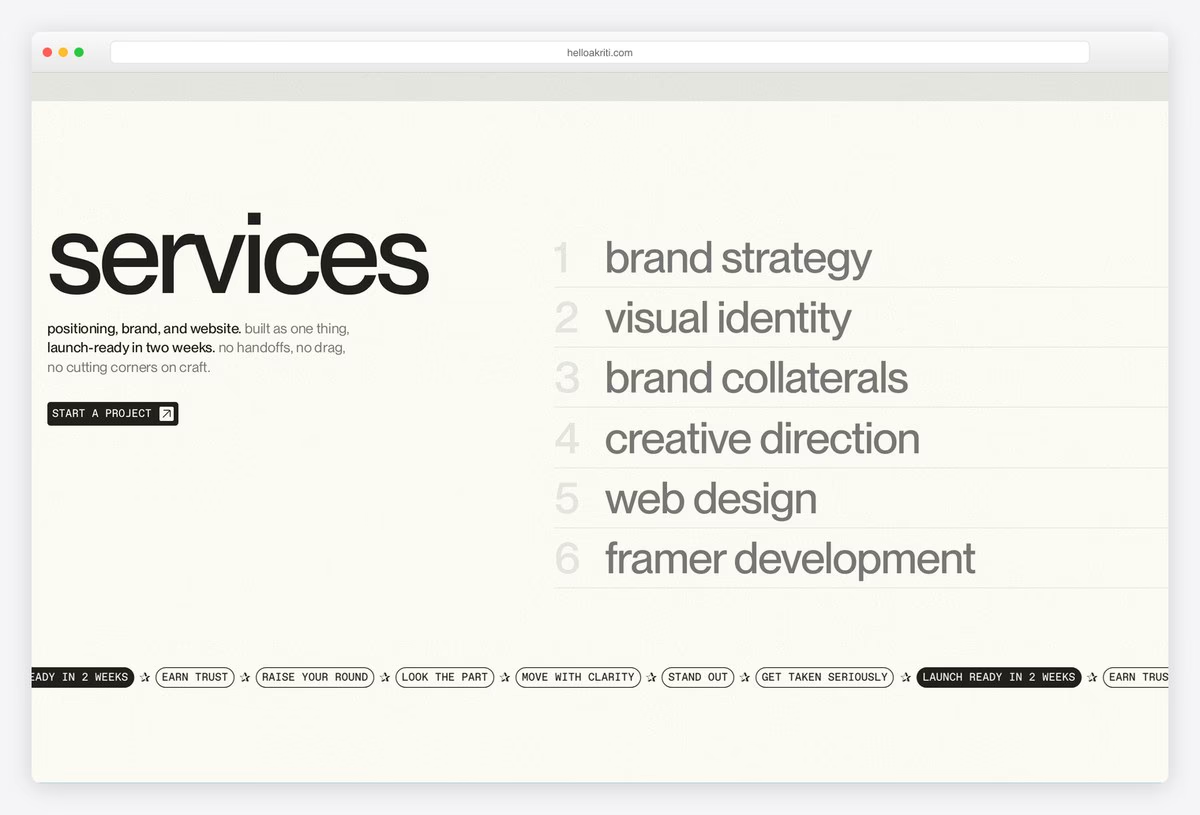
15. Akriti Jaiswal
Built with: Framer
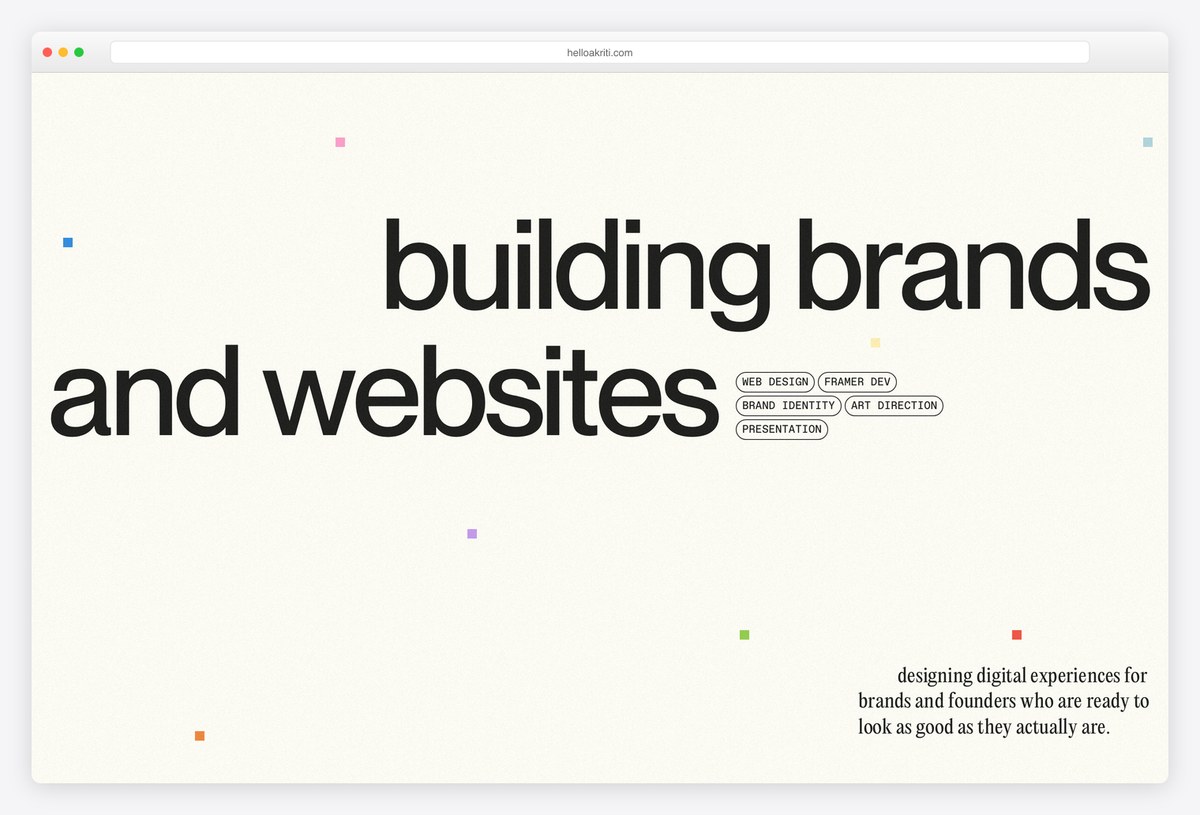
Akriti Jaiswal sells her service like a product: positioning, brand and website, built as one thing and, in her words, ‘launch-ready in two weeks’. A three-step process, the story, the design and the launch, sits on the homepage, so a founder knows what happens after getting in touch.
The Start a project button opens a 30-minute Calendly booking rather than a form. Her six selected projects link out to the live sites or to Contra project pages, with more on a separate Explorations page.
What stands out: Package the offer with a scope and a timeline.
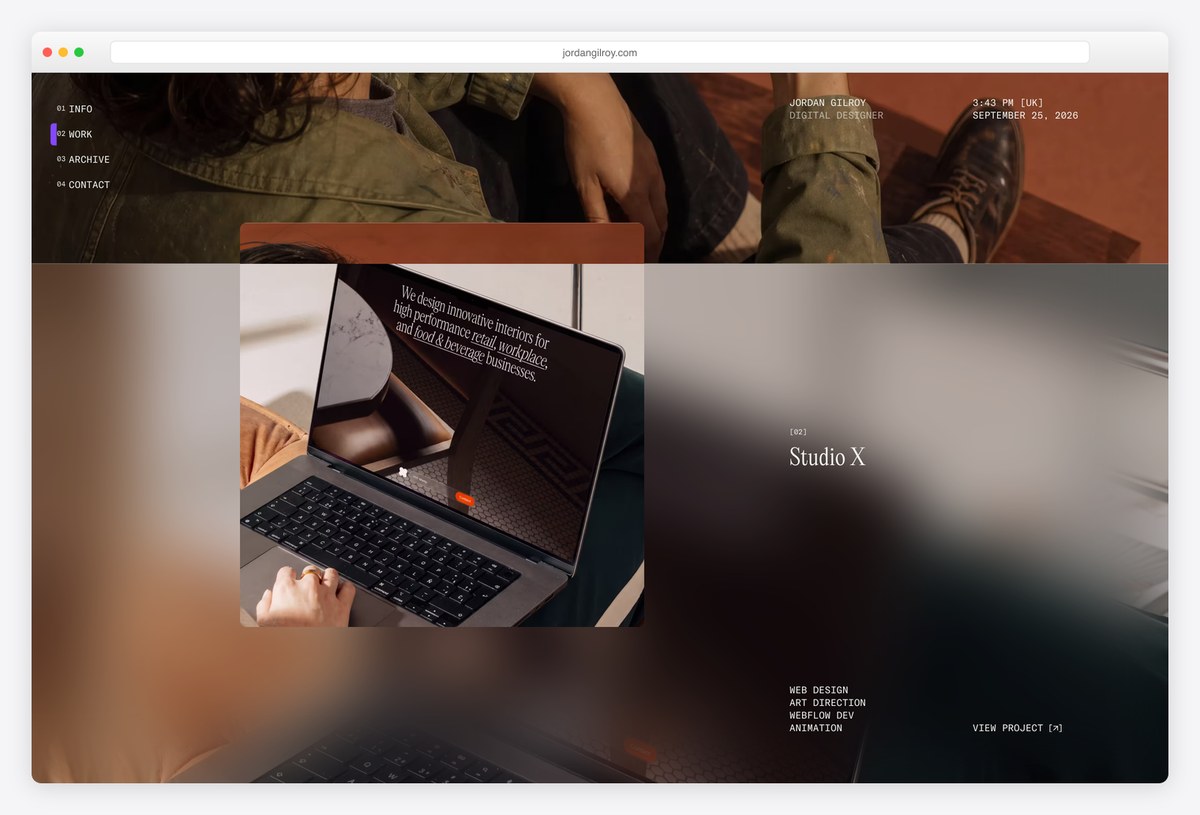
16. Jordan Gilroy
Built with: Webflow
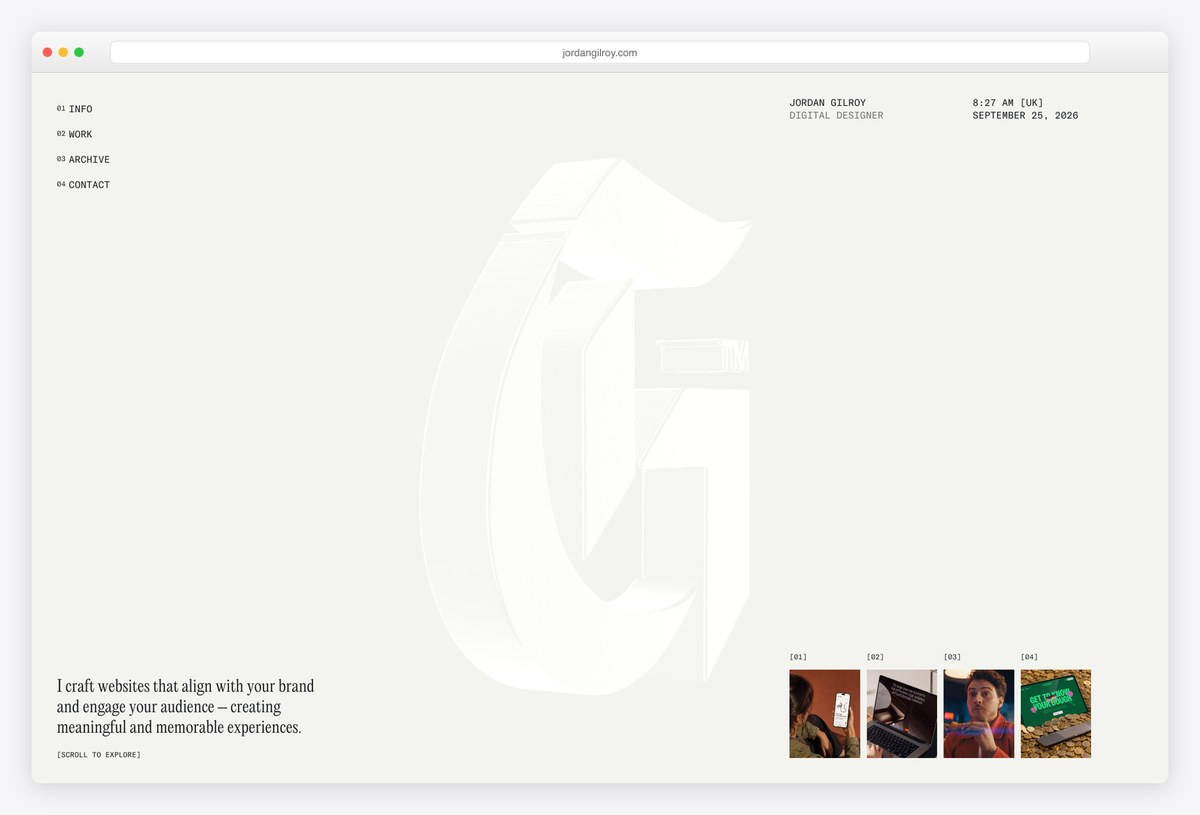
Jordan Gilroy is a UK web designer and Webflow developer, and every project on his homepage is tagged with exactly what he did: web design, art direction, Webflow development, animation or 3D. For a client deciding whether they need a designer, a builder or both, that is the most useful detail on the page.
One project covers his Webflow build and animation work on Anthropic’s Claude marketing site, done with Design Business Company. Numbered projects sit above an archive, the header shows a live UK clock, and he notes that he is a Webflow Partner.
What stands out: Tag every project with your exact role.
17. Dylan Brouwer
Built with: Webflow
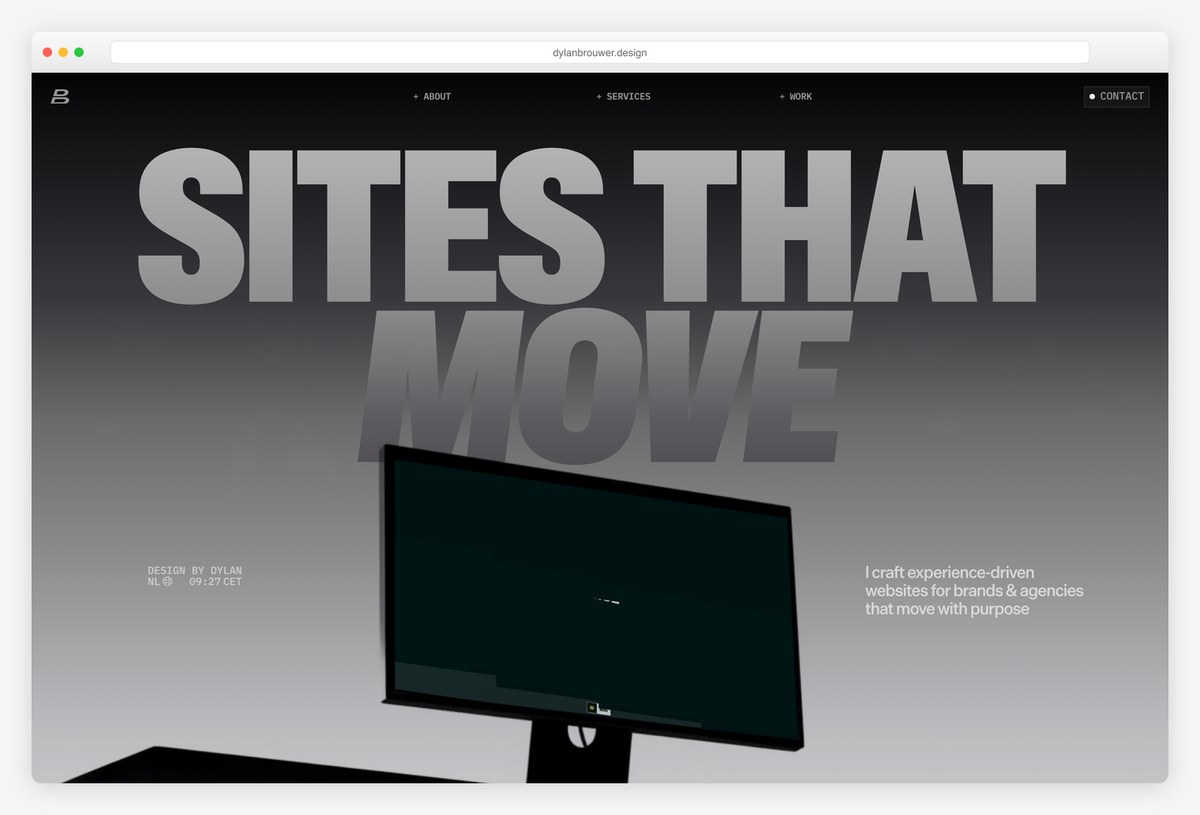
‘SITES THAT MOVE’ is Dylan Brouwer’s headline, set over a 3D desk monitor playing one of his own sites. For this digital designer and Webflow developer in Enschede, motion is the pitch, and the first screen demonstrates it.
His services are split into Define, Design and Develop, taking work straight from Figma into Webflow. The project index has a column for awards, and each project page lists the services, location and year. The site also answers common questions in an FAQ alongside its contact section.
What stands out: A first screen that demonstrates the skill being sold.
18. Paul Hahn
Built with: Framer
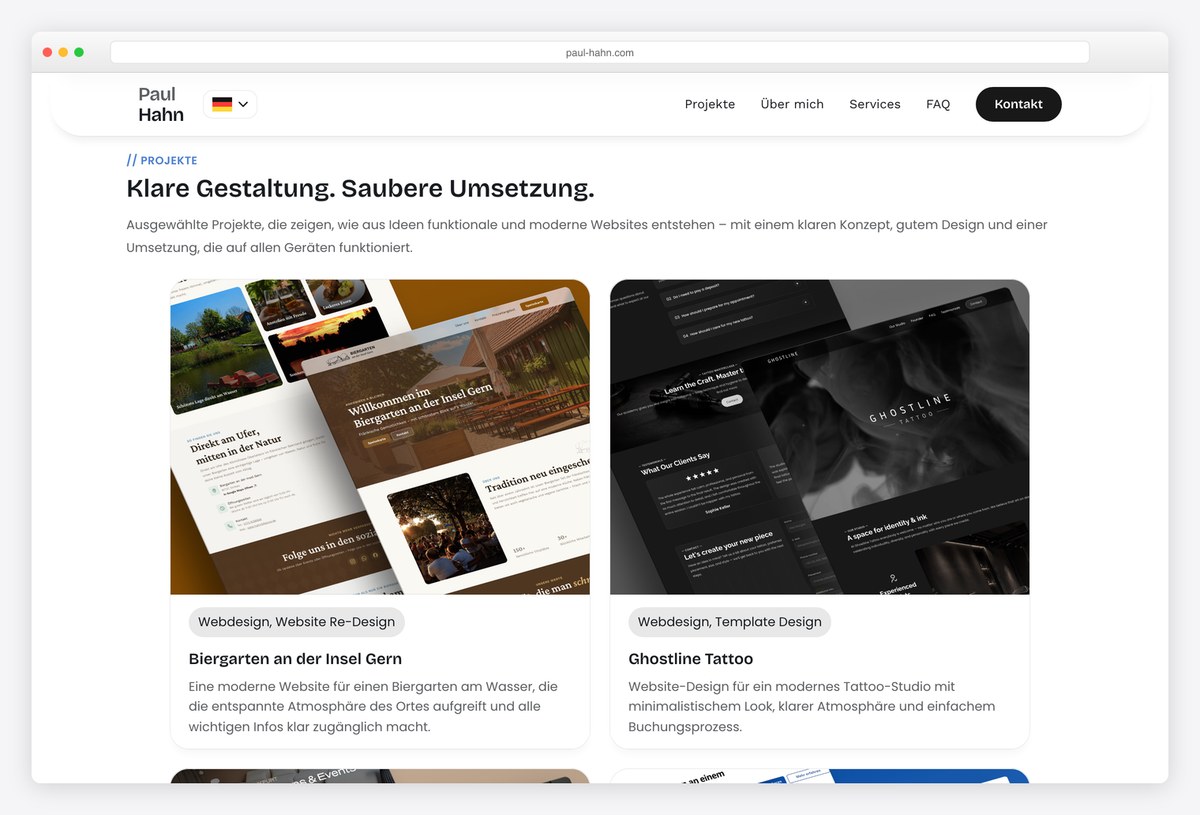
Paul Hahn is a web designer in Munich who works for local businesses, and his portfolio speaks their language, literally: the site is in German, with a language switcher and an FAQ. His clients are the kind any freelancer could win, from a beer garden to a tattoo studio and an event venue.
Project pages are short, giving the category, his role, the year and a link to the live site, and every one ends with a contact form. It shows that a handful of projects can look professional when each is presented cleanly.
What stands out: Write in your clients’ language and put a contact form on every project.
19. Alex Beige
Built with: Webflow
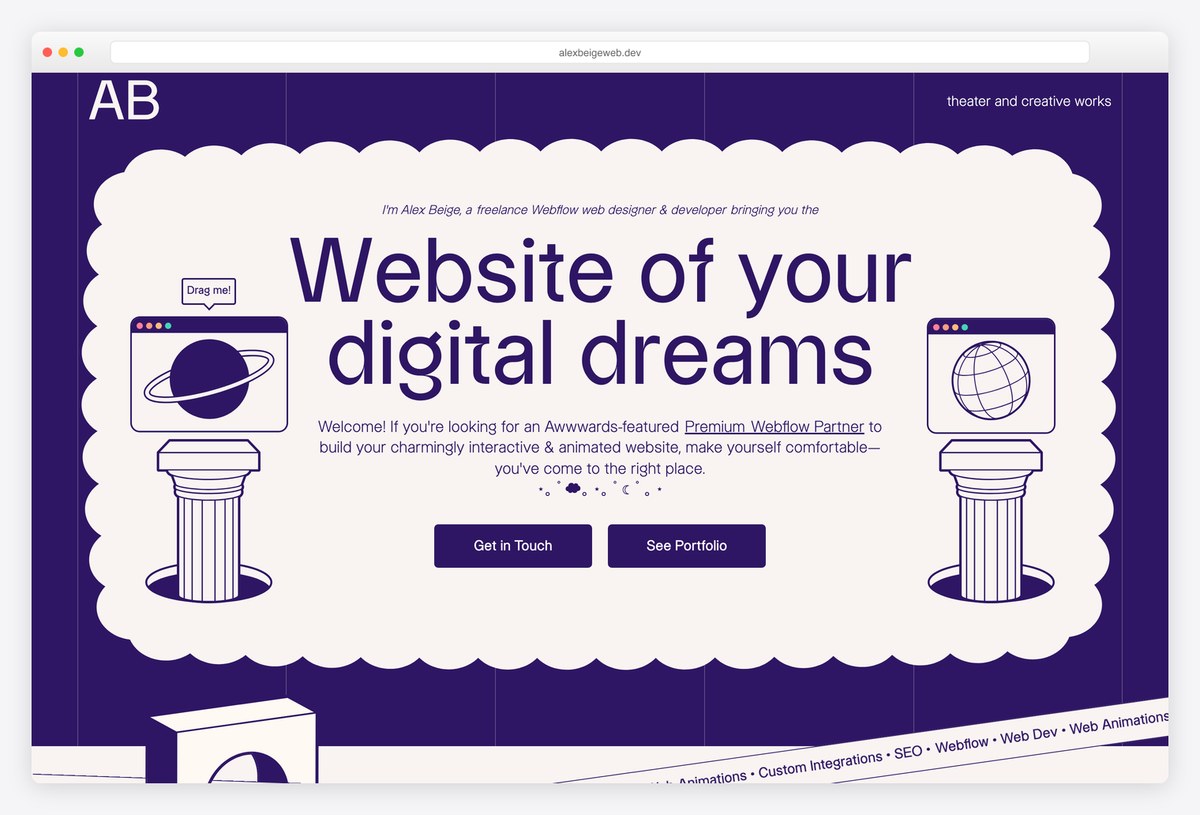
Alex Beige skips case studies and lets live sites carry the proof: a dozen client projects, from Juniper VC to Princeton LGBTQ History, each with a ‘Go to Website’ button. For a Webflow designer and developer, a working site says more than a write-up.
The hero is a playful illustration with a draggable element labelled ‘Drag me!’, and a corner link leads to theatre and creative work kept on the same site. Contact is a Get in Touch button, a form and an email link that even pre-fills a friendly subject line.
What stands out: Link every project to the live site.
20. Karim Saab
Built with: Webflow
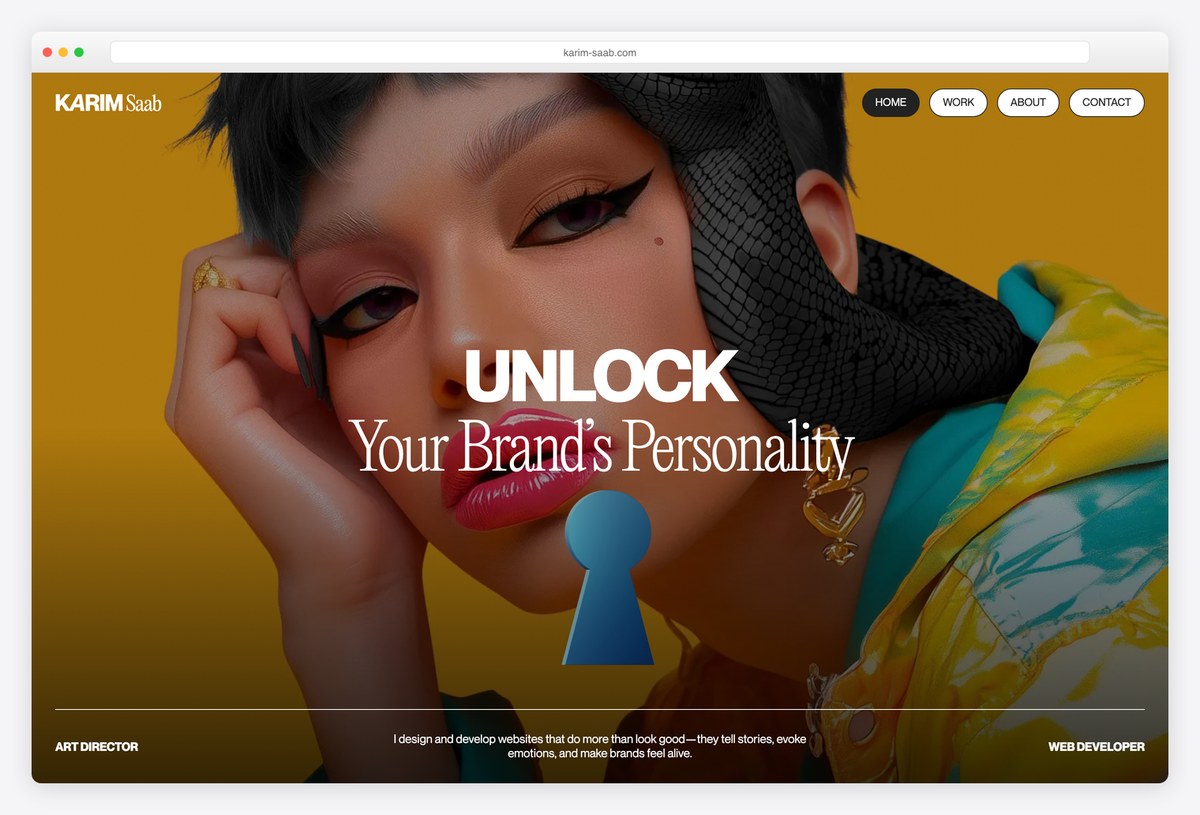
Before a single project appears, Karim Saab’s hero sells the look: a full-bleed, art-directed image with a keyhole motif and the line ‘UNLOCK Your Brand’s Personality’. He works in Paris as an art director, web designer and developer.
Project pages are credits rather than stories: client, role, year and awards, then a link to the live site. Casa Lunara lists recognition from FWA, Awwwards and CSSDA. The homepage names his tools, Webflow, GSAP, Three.js and Shopify, which tells a client what he can build.
What stands out: Name your tools so clients know what you can build.
What the best web designer portfolios have in common
They name the buyer and the offer in the first sentence. Jerry Rodriguez designs for service businesses ready to scale, Daniel Sun for founders from seed to Series C, Kayleigh Noele for small and solo businesses on Squarespace, and Akriti Jaiswal promises a site launch-ready in two weeks. The weaker portfolios we reviewed open with a mood line such as “Creative Designer” and never say who the work is for.
Work appears in the first screen, or one scroll below. Mike Kus opens with a collage of mockups, Irene Butenko with a strip of site thumbnails, Eliot Besson with video previews and Gil Huybrecht with full-page screenshots. Nine of the twenty portfolios here show real sites before any scrolling. At the weak end, a homepage is a single bio paragraph, or the “work” page describes job roles instead of projects.
The live site is the proof. Alex Beige links a dozen client sites, and Kyne Jang, Karim Saab, Dennis Snellenberg and Paul Hahn end their project pages with a live link. Kayleigh Noele is the considered exception: she explains that owners change their sites after handover, so she shows mockups instead. Either choice works when it is explained.
They say exactly what their role was. Jordan Gilroy tags every project with web design, art direction, Webflow development or animation, Eliot Besson separates design jobs from development-only ones, and Dennis Snellenberg credits the designer he worked with. Design, build, and design plus build are three different hires, so a client needs to know which one you did.
Case studies read as business problems, not galleries. Andy Clarke opens every study with the challenge, Jerry Rodriguez walks from background to showcase with a shortcut to the result, and Kyne Jang covers CMS setup, which is exactly what a small-business owner worries about. Credits-only project pages suit visual work, but they give a client nothing to read.
Availability and contact are one click away. Andy Clarke runs an availability banner on every page, Gil Huybrecht states when he is next free beside his name, and Akriti Jaiswal and Andy Clarke both take bookings through Calendly. Eliot Besson’s form even offers an email fallback. The failures are small but costly: one email link we found pointed at a domain name instead of an email address, and another homepage had no email or form at all.
The proof can be checked. Irene Butenko’s recognition table links every award to its source, Andy Clarke and Iñaki Soria name their clients, and Iñaki also names the people quoted in his testimonials. Unverifiable claims stand out for the wrong reason, such as stat counters that read “0+” when the page loads.
Upkeep matters more than the platform. These portfolios run on Webflow, Framer, Squarespace, WordPress, Eleventy, Nuxt and hand-written code. What they share is upkeep. Small slips we found while checking, such as a footer copyright years out of date, an editing note left in the page text or a “More projects coming soon” tile, tell a client the site has been left alone.
Frequently Asked Questions
What should a web designer portfolio include?
A one-line statement of who you design for, three to six projects with links to the live sites, your exact role on each, and an obvious way to get in touch. The strongest portfolios above also add short case studies that explain the client’s problem, plus your availability and a booking link, so a client can act without searching.
How many projects should a web designer portfolio show?
Three to six featured projects on the homepage is typical among the portfolios above, with more on a separate work page. Jerry Rodriguez features three case studies, while Gil Huybrecht shows about 22 as screenshot strips. Choose the projects closest to the clients you want next, and leave out anything you would not want to repeat.
Should a web designer portfolio link to live websites?
Yes, where you can, because a working site is the strongest proof a web designer has. Most portfolios here end each project with a live link. If clients change their sites after handover, show mockups or full-page screenshots instead and say why, as Kayleigh Noele does, so the missing link does not look like something to hide.
What is the best platform for a web designer portfolio?
The platform you sell is usually the best choice, because your own site becomes a sample of your work. Webflow is the most common platform here, followed by Framer and custom code, with one Squarespace and one WordPress site. Whichever you pick, keep it maintained, since a stale footer or dead link undermines the pitch.
Do web designers need a résumé on their portfolio?
Usually not, because most web designers sell to clients rather than apply for jobs. Only one of the twenty portfolios above links a CV. Clients look for a clear offer, live work, your availability and a quick contact route instead. If you are applying for in-house or agency roles, add a résumé link and check that it still works.
How do I build a web designer portfolio with no clients?
Design and launch your own projects, then present them as real, working sites. Lynn Fisher’s work page is almost entirely self-initiated projects, and Paul Hahn shows that a handful of local-business sites, presented cleanly, can look professional. Label personal projects honestly, link to the live versions and explain the problem each one solves.
Wrapping Up
A client decides in a minute whether a web designer is right for them, so the strongest portfolios use that minute well: who you design for, real sites where they are seen first, your exact role, and a one-click way to get in touch.
For more inspiration across roles, see our best portfolio website examples, UX portfolio examples, graphic design portfolio examples, illustration portfolios and developer portfolios, or browse the best Webflow websites. Ready to build your own? Start from our portfolio website templates, the best portfolio WordPress themes or a free portfolio website builder.

Related Posts

Comments (0)