
24 Best Architecture Portfolio Websites (Examples) 2026
The best architecture portfolio websites show drawings, not just renders, say exactly what the architect did on team projects, and offer a PDF version for job and school applications. These 24 come from architecture students and recent graduates, practising architects, small practices led by a named architect, landscape architects, visualisation studios and research-led offices, in the UK, Europe, North America, Australia, Latin America, Asia and the Middle East.
We started from a dozen published roundups and our own searches, tested 192 web addresses, and read more than 250 project, about and CV pages on the shortlisted sites. Each platform was identified from the site’s code rather than guessed, and sites that had expired, gone private or been taken over by betting sites were dropped. If you came looking for PDF portfolio layouts, several of these sites, especially the students’, offer a downloadable PDF portfolio or CV as well.
Best Architecture Portfolio Website Examples
1. Hamish Angus McAndrew
Built with: Wix
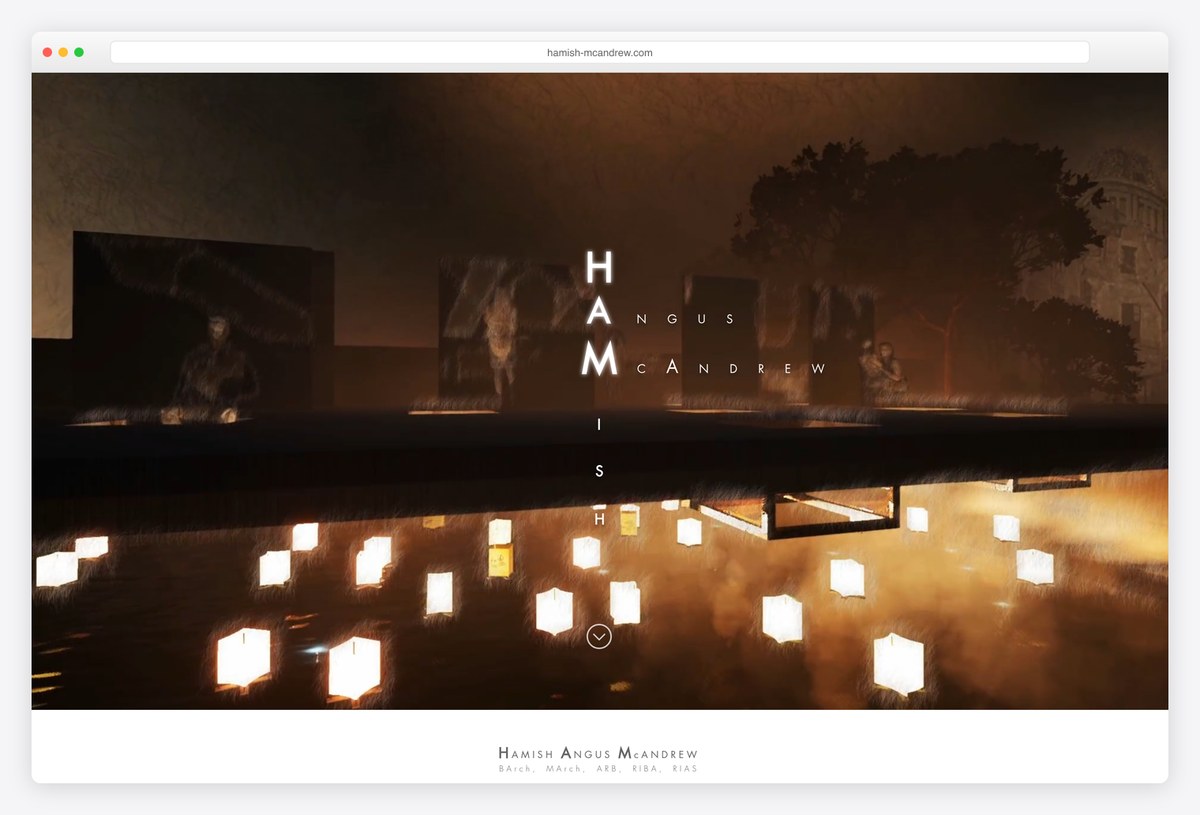
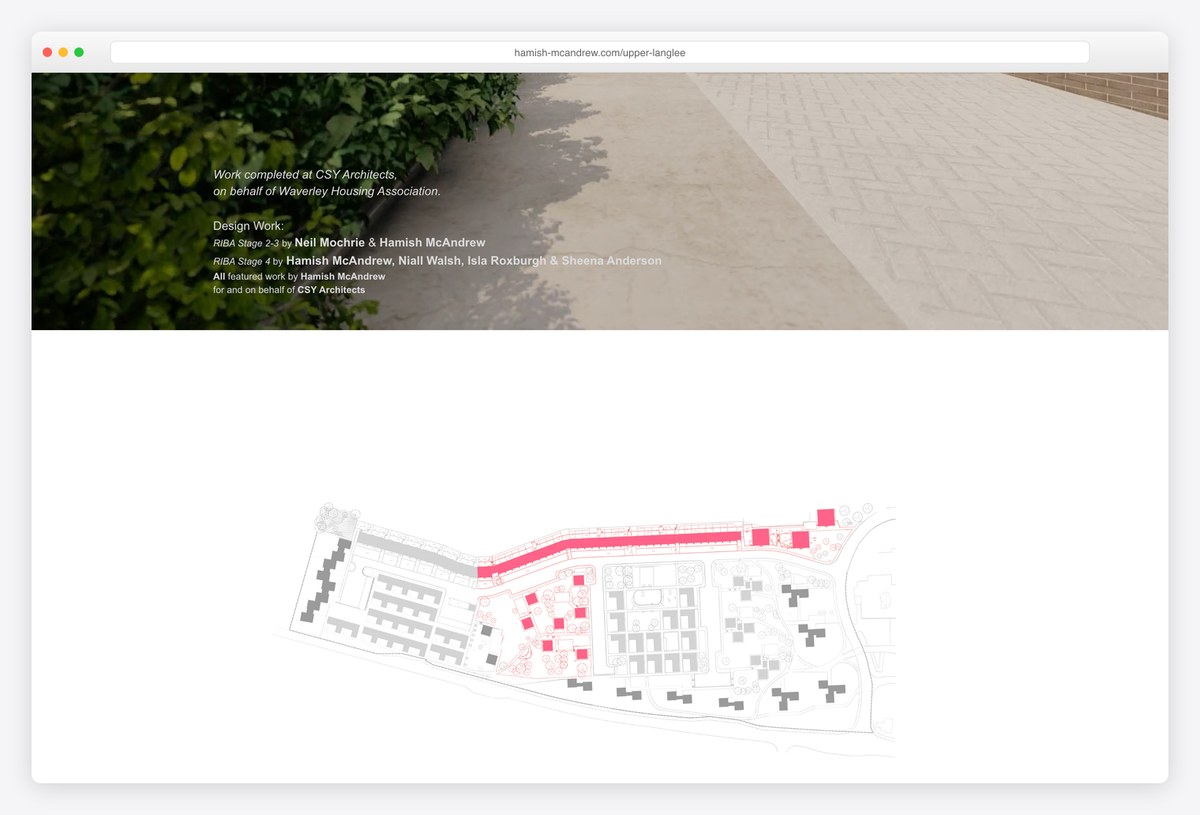
Hamish Angus McAndrew, a chartered architect in the Scottish Borders, offers the clearest model here for crediting team work. The housing regeneration he led at CSY Architects opens with a credit block naming who did each RIBA stage, then states: “All featured work by Hamish McAndrew for and on behalf of CSY Architects.”
Every project on the home page carries a bracketed label, such as competition, M.Arch project or housing project, so academic and professional work never blur. His CV has text and timeline views, and the first screen is one of his own renders.
What stands out: Name who did which stage on every team project.
2. Mia Sherman
Built with: Archifolio
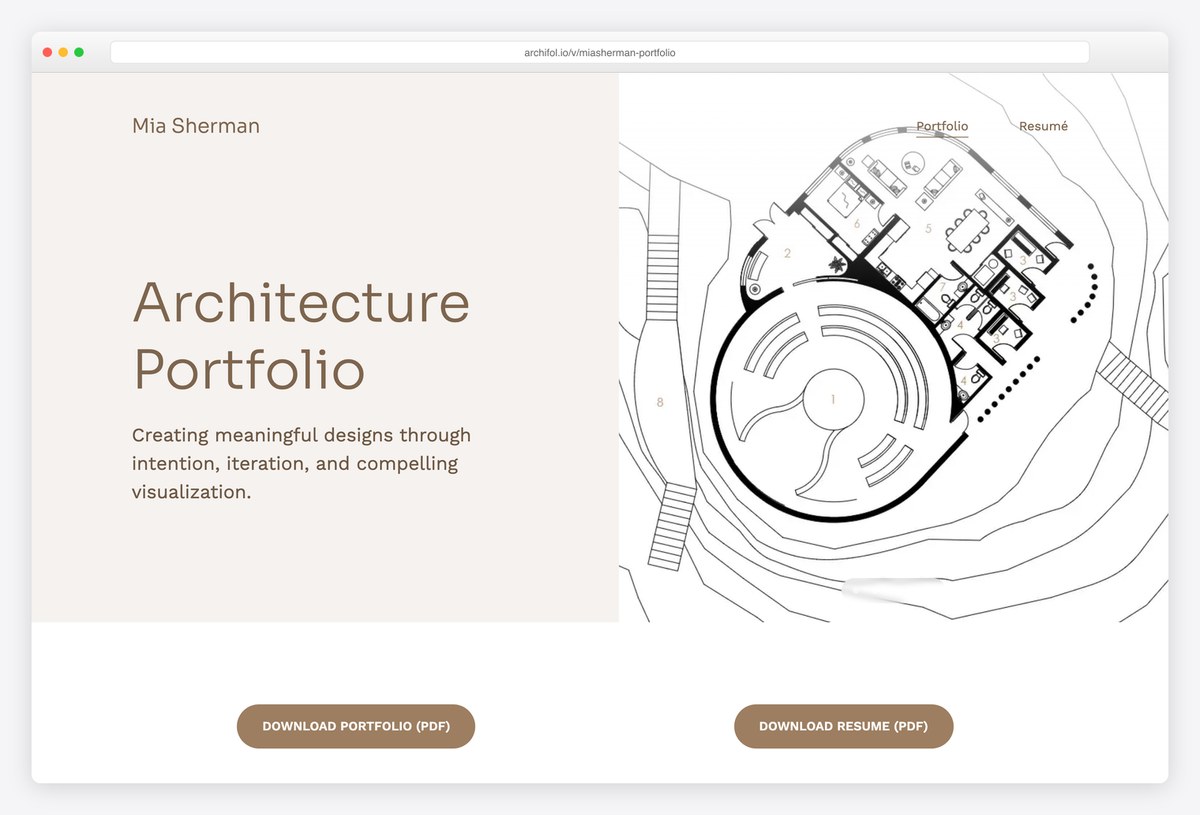
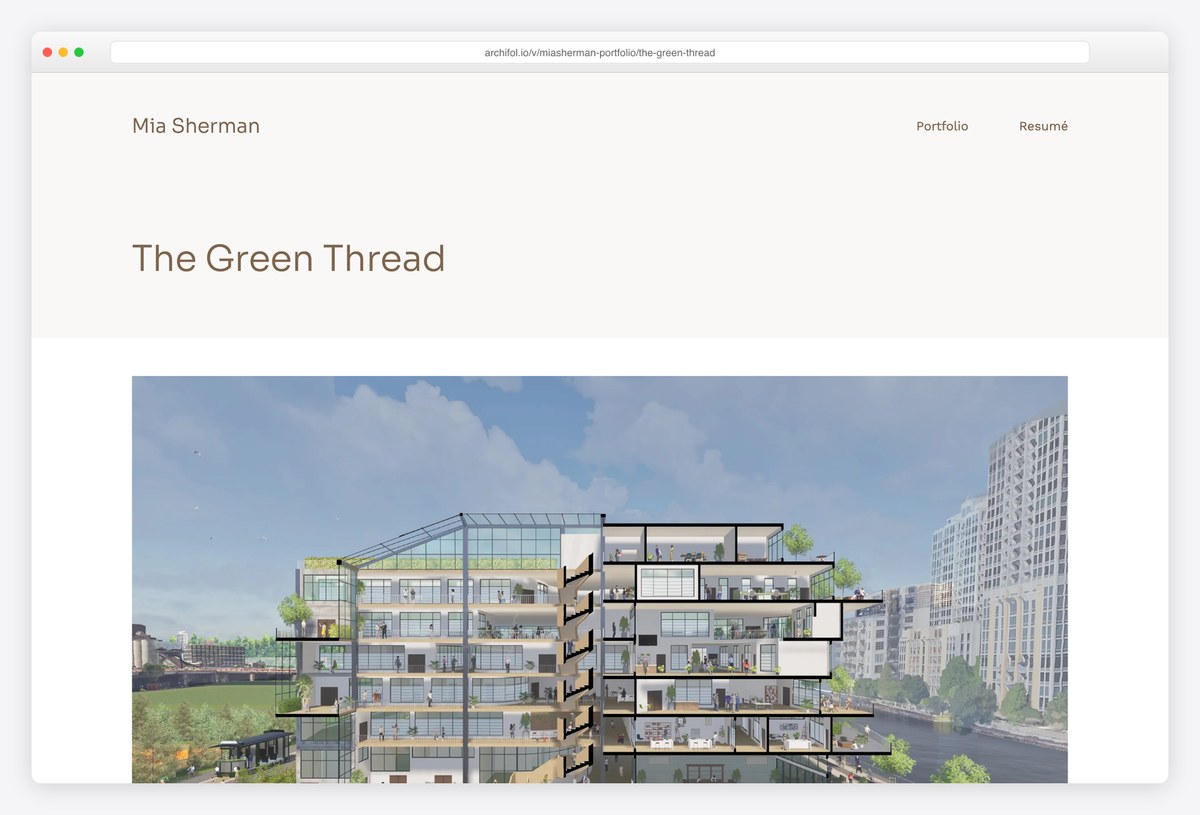
Mia Sherman, a recent Bachelor of Architecture graduate from Ball State University, does what most student sites forget: her first screen has one button for her PDF portfolio and one for her resume. Her first project is the diploma project, an office building and landscape in Chicago designed around public health.
Each project opens with a specifications table that includes a Professional Organization row, so her internship at Wight & Company reads differently from studio work. On team projects she says what she did, such as leading the physical model later donated to the Muncie Visitors Bureau.
What stands out: Put the PDF portfolio and resume on the first screen.
3. Hugh Strange Architects
Built with: Custom code
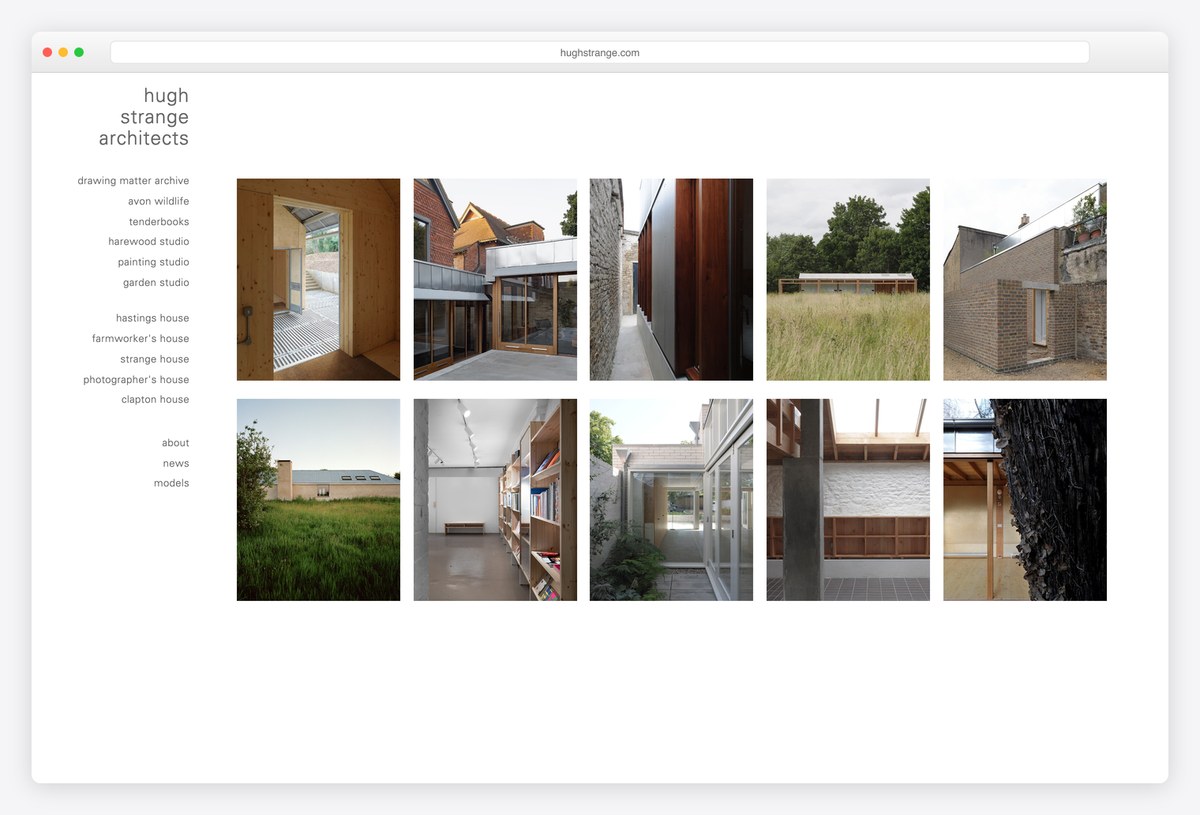
Hugh Strange Architects is an intentionally small London practice with an almost austere, hand-built site: a column of building names beside a grid of photographs. Each building page opens with the place and year, then lists its awards, which for the Hastings house include a Stirling Prize shortlisting.
Magazine coverage is hosted on each page as a PDF, so a client can read the Architect’s Journal review without leaving. A separate models page shows studies and competition entries as captioned physical models, including a private library in a pair of disused silos designed with Alvaro Siza.
What stands out: Host the press coverage on each project page.
4. Ray Zhu
Built with: Cargo
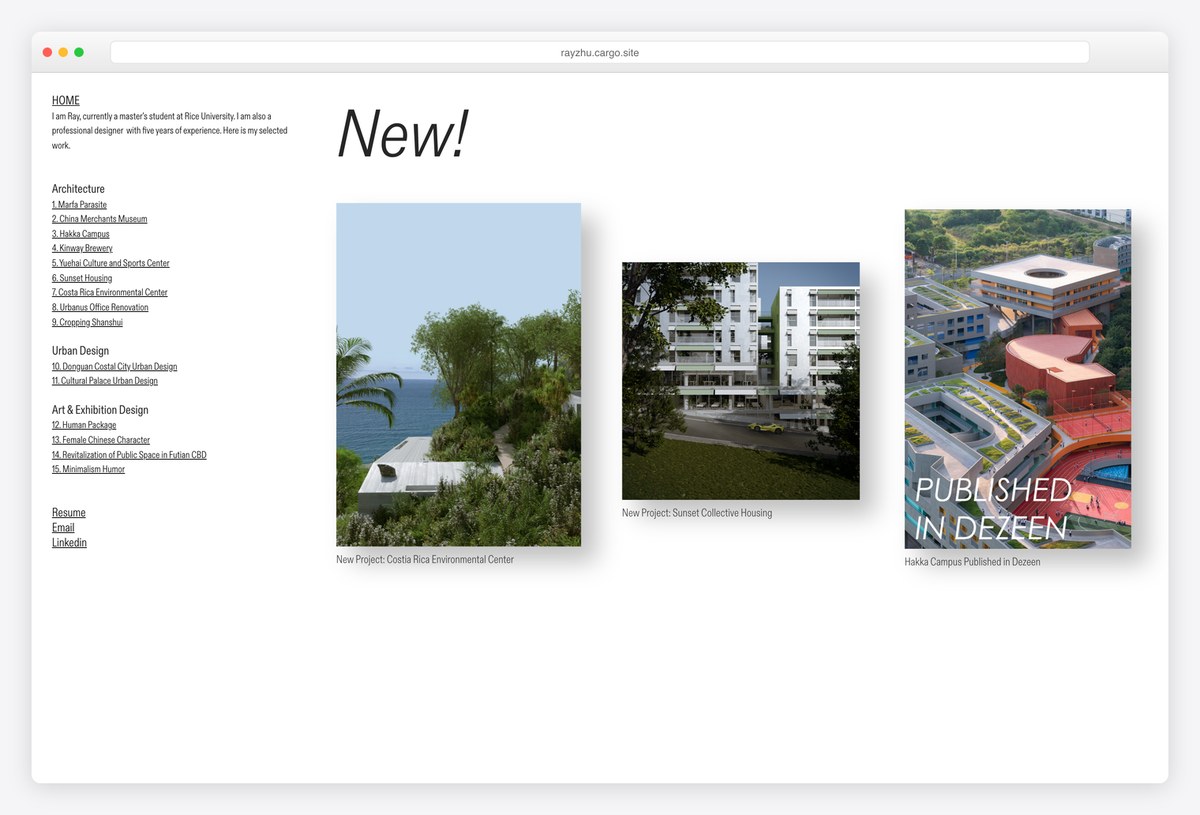
Ray Zhu is a master’s student at Rice University with five years in practice, and his one-page Cargo site keeps the two apart. School projects are marked “Individual Project”, while each building from his time at URBANUS Shenzhen lists his role, from assistant designer to project designer, with the location and floor area.
Every office project links to the firm’s own page and to its ArchDaily feature, so an employer can check the claim. The numbered list is grouped into architecture, urban design, and art and exhibition design, with his resume linked beside it.
What stands out: Link each office project to the firm’s own page.
5. Laura Wiedenhöver
Built with: Squarespace
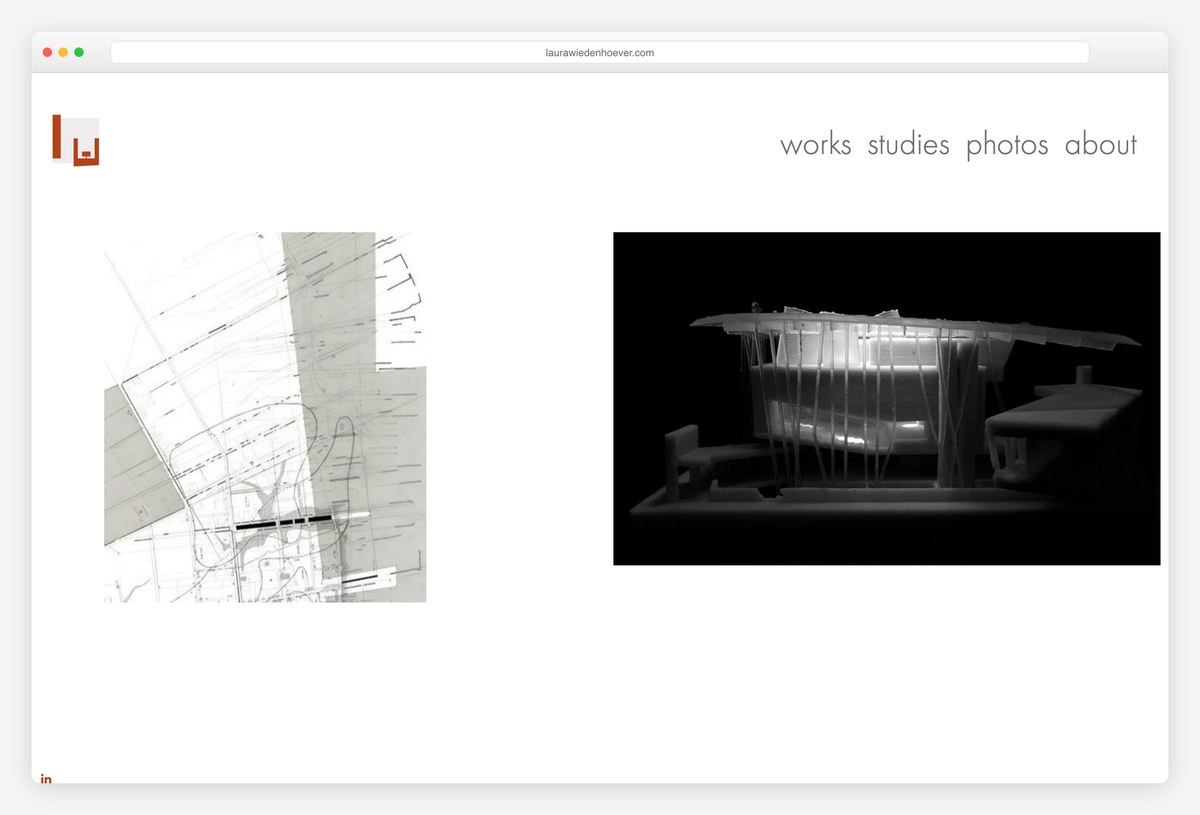
Laura Wiedenhöver studied at the University of Florida and TU Delft, and every project on her site opens with the same short fact lines: site, studio, year, grade and, where it applies, the team or the award. Her graduation project on renovating Dutch concrete buildings links straight to the full thesis in the TU Delft repository.
The home page leads with drawings, a pencil perspective and a site plan, rather than renders. Sketches, models and montages have their own studies menu, separate from finished works, and group projects name her teammates in the first line.
What stands out: Open every project with site, studio, year and team.
6. Hood Design Studio (Walter Hood)
Built with: Squarespace
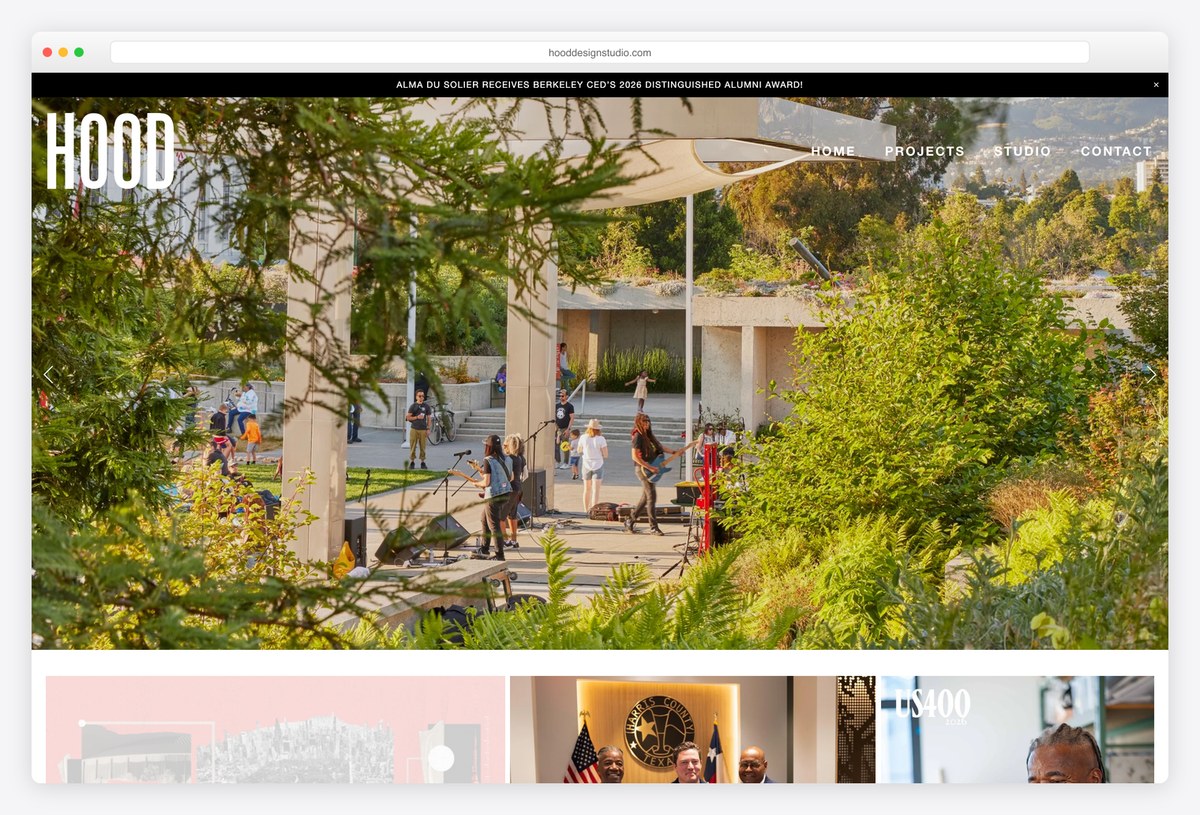
Hood Design Studio is Walter Hood’s landscape architecture and social art practice in Oakland, and its portfolio treats research as work in its own right. Projects are split into landscape, urbanism and research, art and fabrication, and exhibitions, so master plans for Detroit or Berkeley sit apart from built parks.
Each tile gives the project and its city, and the hiring note on the contact page asks applicants for a portfolio of no more than 10 MB with their years of experience in the subject line.
What stands out: File research and master plans apart from built work.
7. Sebastian Nitu
Built with: Wix
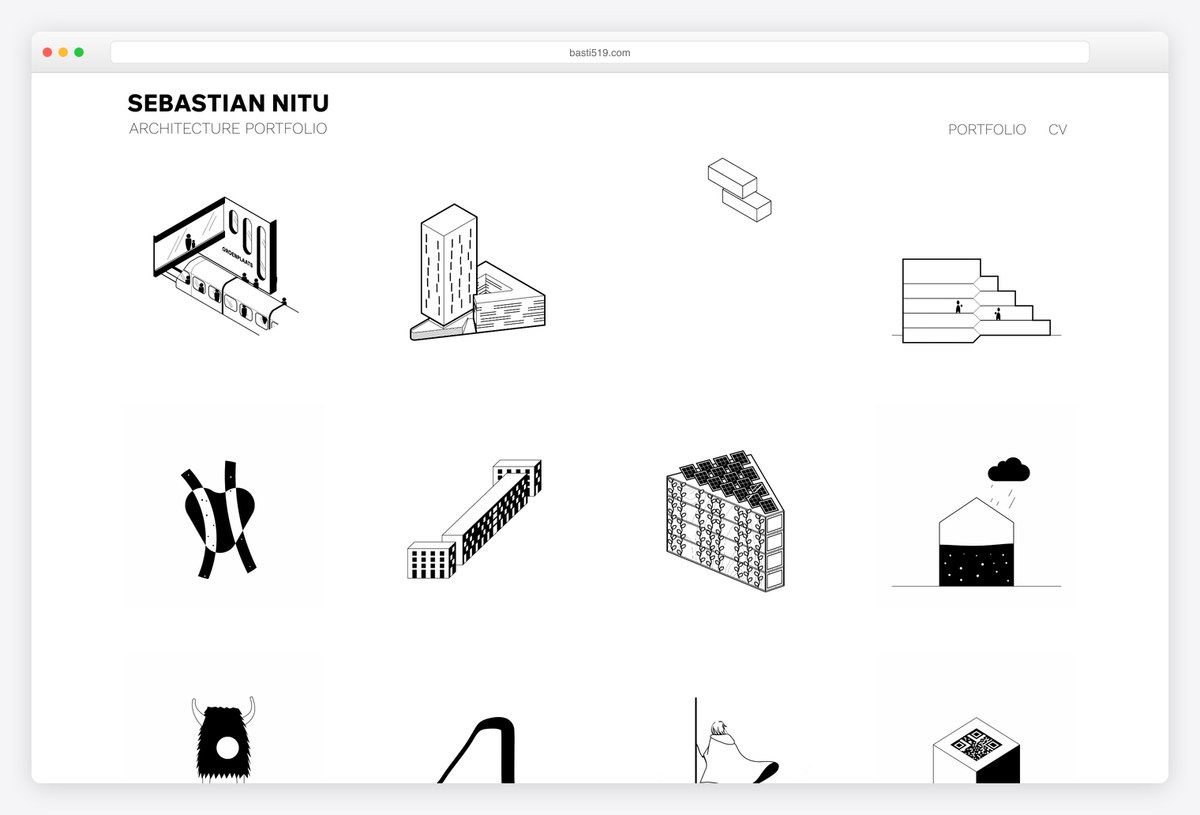
Sebastian Nitu is an Amsterdam architect whose portfolio uses the terms Dutch firms hire on. Every office project opens with the firm, client, location and design phases, then a paragraph on what he was responsible for; on a Utrecht tower that meant the ground-floor layout, facade studies and the renders.
The first screen is a grid of black-and-white axonometric icons, one per project, which says architect before a single photo loads. The site is in Dutch, and the CV lists eight years at Dutch practices plus internships in Rotterdam and Madrid.
What stands out: Give the firm, client and design phase on every office project.
8. Mi Zhou
Built with: WordPress
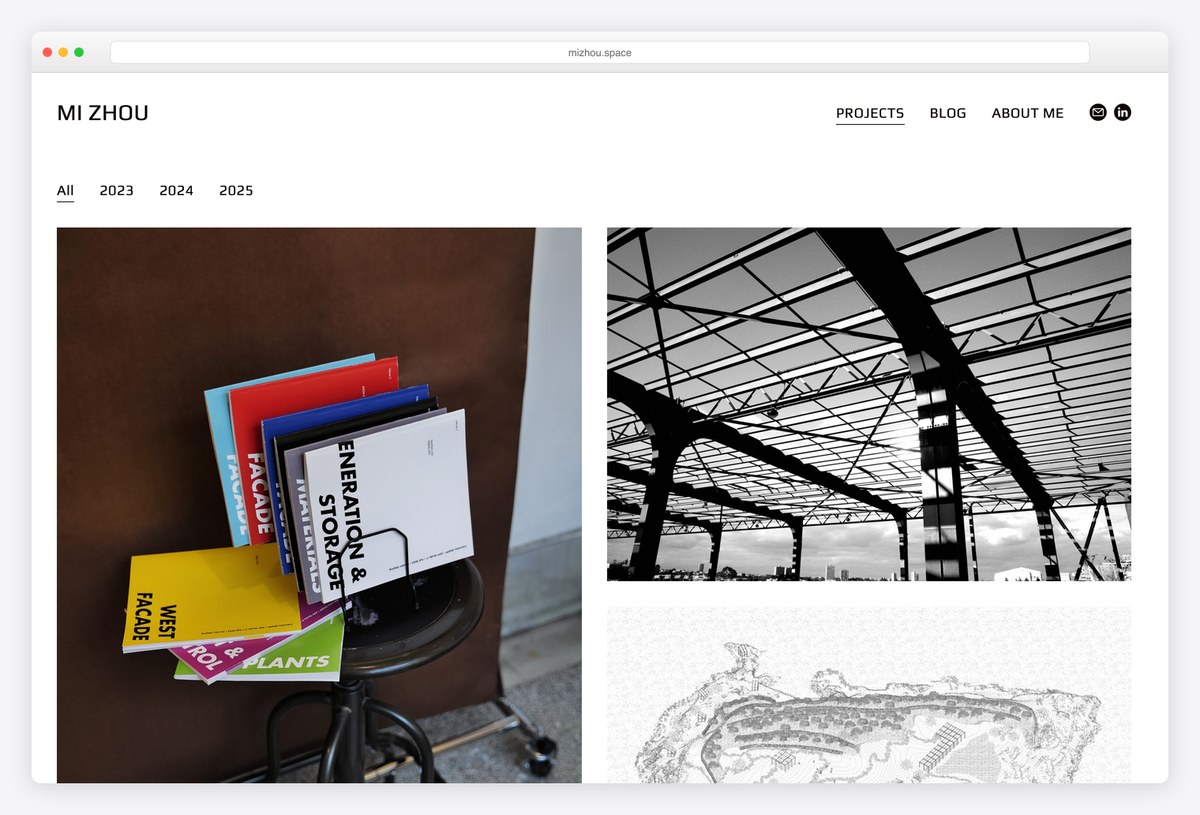
Mi Zhou, studying advanced architectural design at Columbia GSAPP after degrees in China and Australia, writes the tidiest project headers in this list. Each names the school and studio, the site, the instructor, and which parts were team work and which were hers, with the teammate named.
The project grid can be filtered by year, and research counts as work: a mapping atlas of a Manhattan pier on the Hudson River lists its data sources, from NYC Open Data to the US Census. A footer says images, drawings and text are hers unless credited.
What stands out: Say which parts of a studio project were team work.
9. Sean Godsell Architects
Built with: Custom code
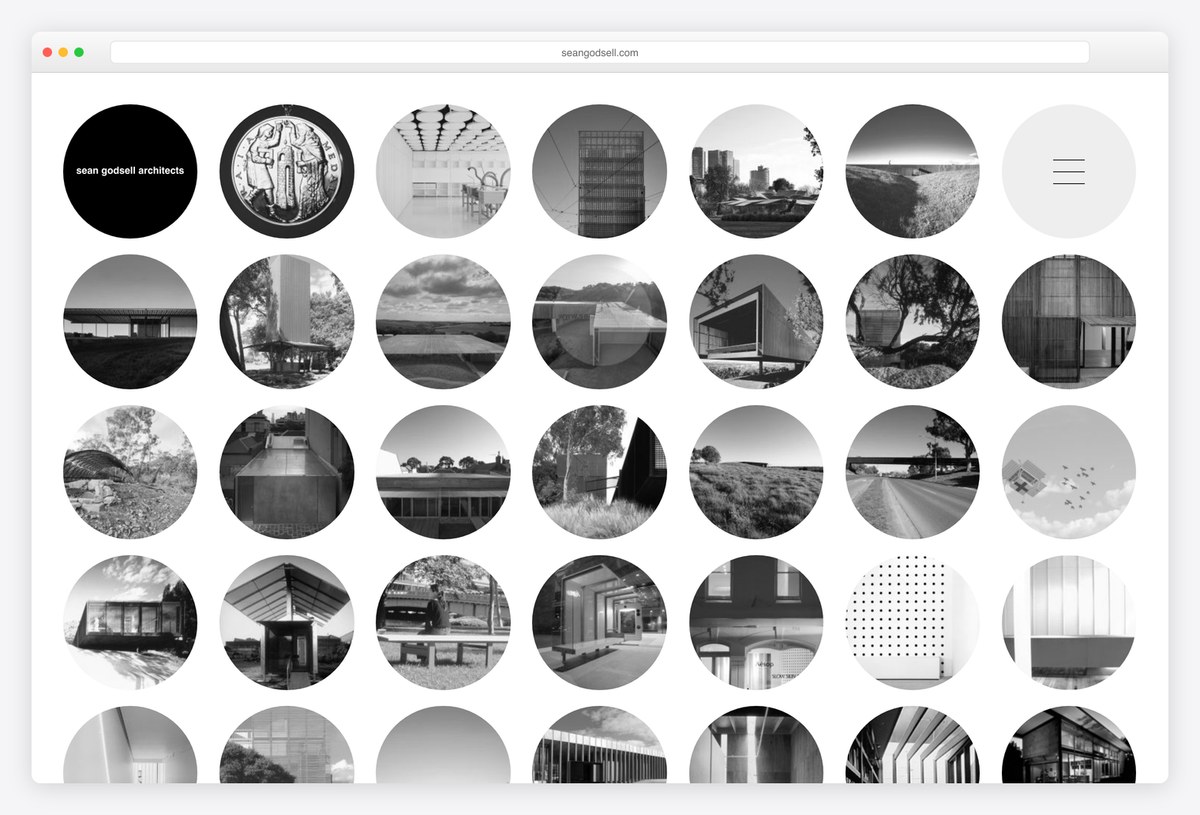
Sean Godsell Architects is a Melbourne practice, and its menu makes a distinction most architecture sites blur: selected built works, projects under construction and selected unbuilt works are three separate lists. Each project page then opens with the years it ran and where it is.
The first screen is a grid of circular black-and-white photographs. Unbuilt ideas get full write-ups, such as the Future Shack, an emergency house made from a shipping container and explained in six numbered points. The contact page tells job applicants to apply by post, not by email.
What stands out: List built, under-construction and unbuilt work separately.
10. Brandon Kemp
Built with: Adobe Portfolio
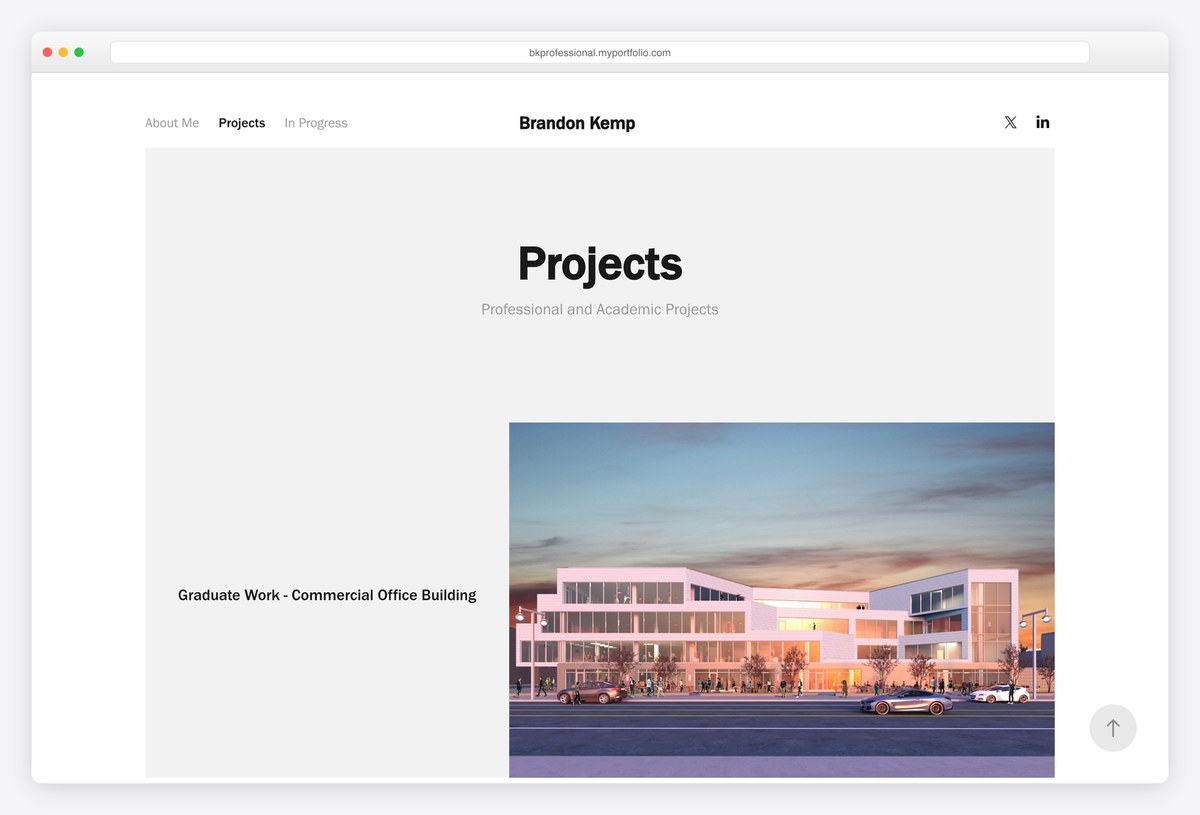
Brandon Kemp is a Los Angeles architectural designer looking for a position at a firm, and his captions are the most candid in this list. Office projects list the team by role, with (Self) marking his own, and credit the renderings to the consultant rendering company and the photos to the office.
He describes his part plainly, such as helping with permit drawings in Revit, and a university design-build pavilion notes that its drawings were made by the whole team. His graduate project shows site analysis diagrams, plans, elevations and a section, not only renders.
What stands out: Credit the renders and photos you did not make.
11. Design Distill
Built with: Squarespace
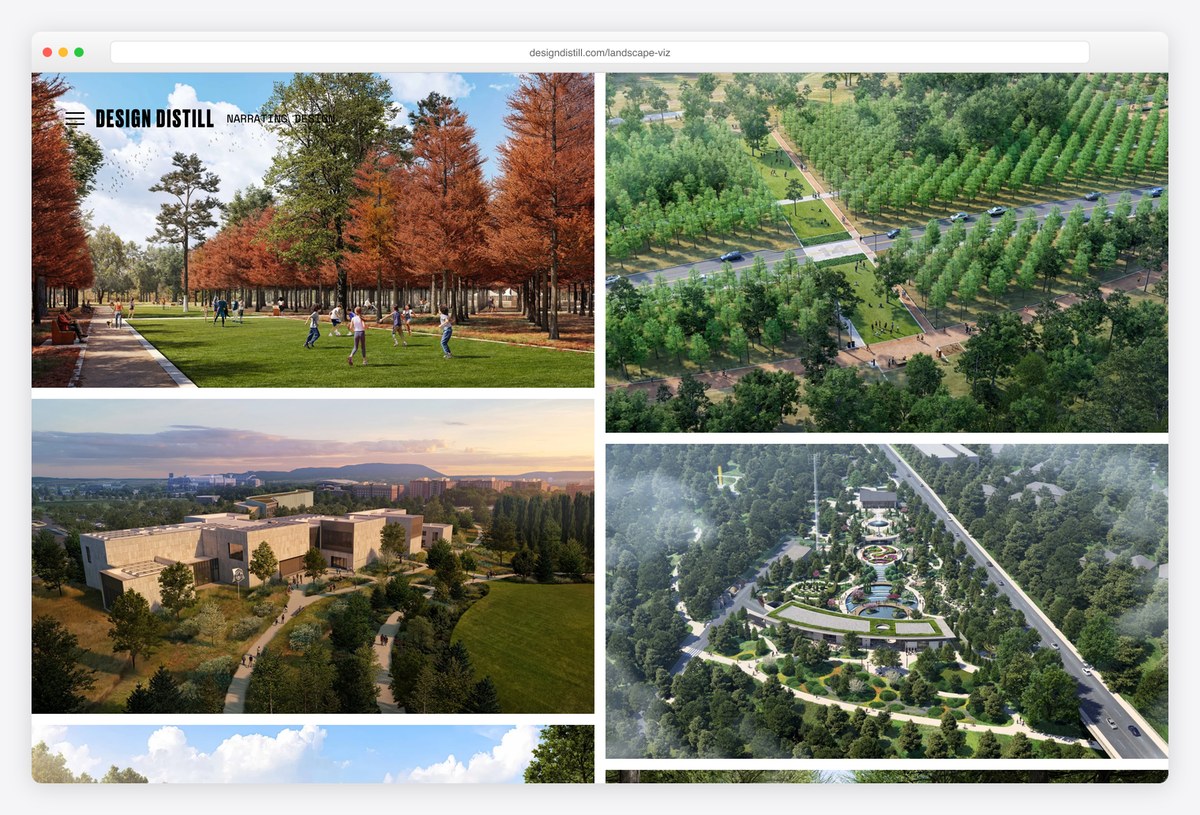
Design Distill is a visualisation studio in Cambridge, Massachusetts whose partners include Alex Hogrefe of Visualizing Architecture, and every rendering is captioned with the project and the firm it was made for, such as Sasaki or Nelson Byrd Woltz.
Work is split by what is being shown: architecture, urban design, landscape, interiors and animation. A process page answers a client’s practical questions, with a turnaround of about two days per image, bookings four to six weeks ahead, and a warning that a camera angle cannot move once it is approved.
What stands out: Name the architect on every rendering.
12. Christina Vogiatzis
Built with: Adobe Portfolio
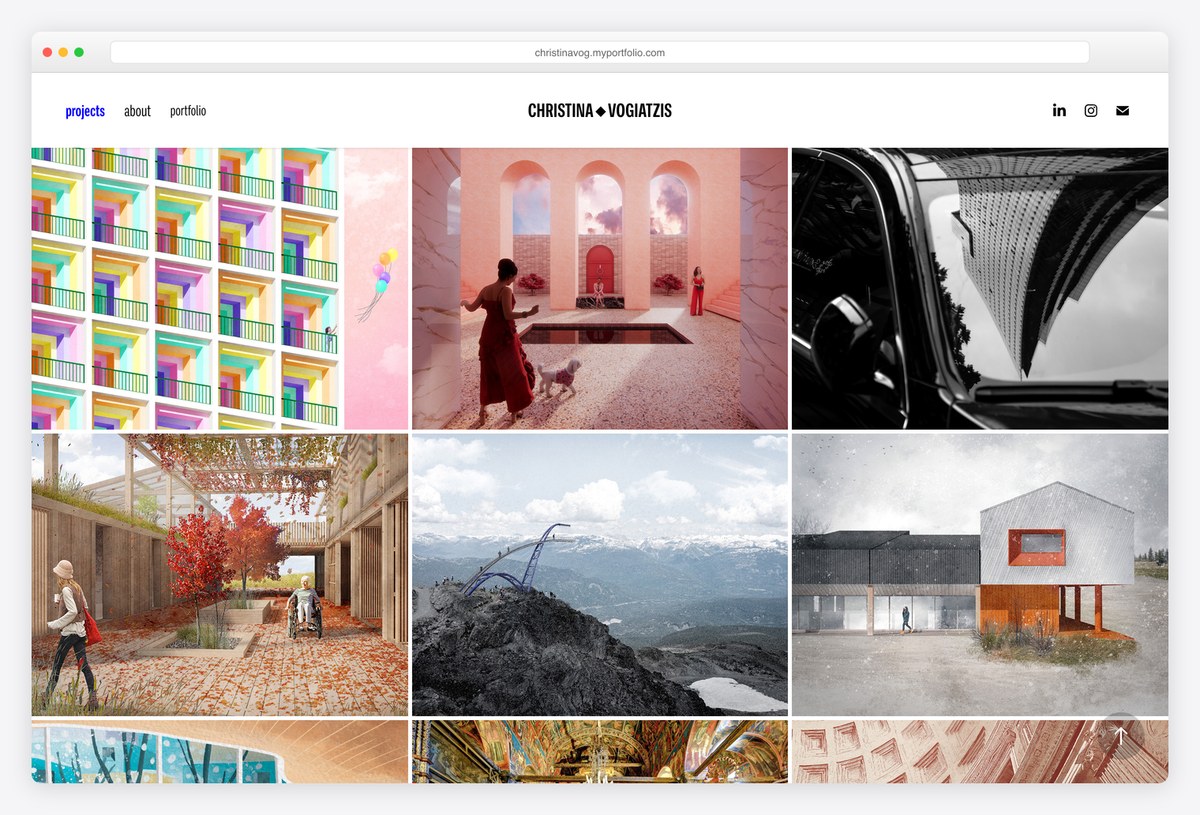
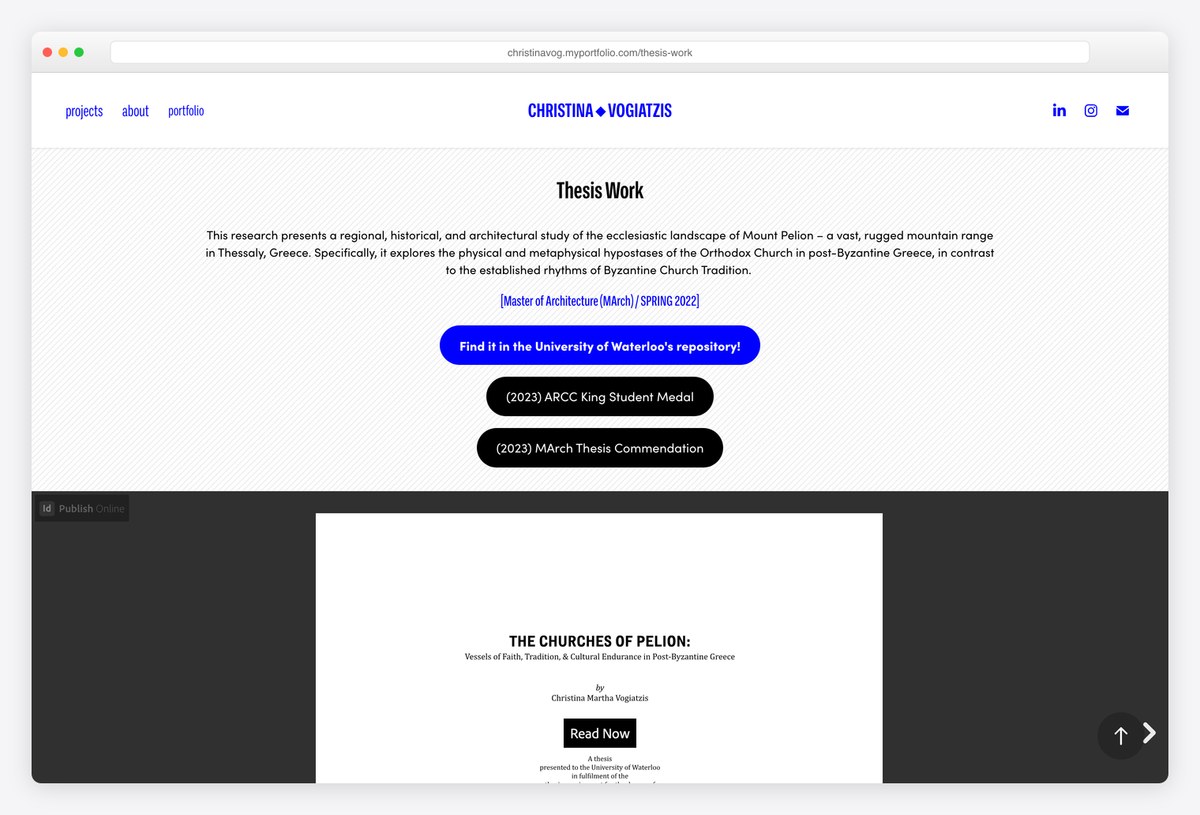
Christina Vogiatzis is an architectural designer in Southern Ontario with a Master of Architecture from the University of Waterloo, and her thesis page is a model for students. A study of the churches of Mount Pelion in Greece, it lists the awards it won, including the ARCC King Student Medal, and links to the thesis in the university repository.
Every drawing on the page is captioned, from hand sketches of church plans to maps and a timeline. Other projects carry studio and term, and a print version of the portfolio is one click away in the menu.
What stands out: Caption every drawing on the thesis page.
13. Alda Capi Architecture
Built with: Squarespace
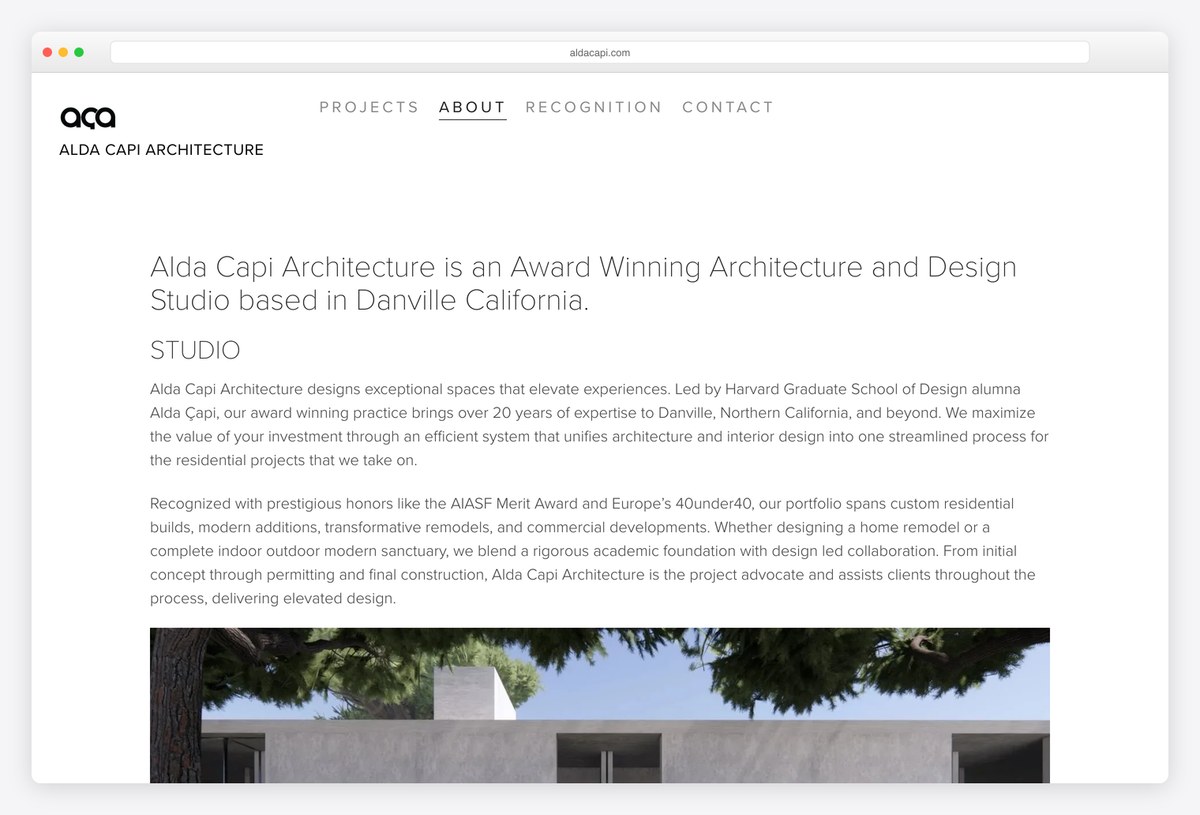
Alda Capi leads a small practice in Danville, California after years at firms such as NADAAA and Kennedy Violich, and her portfolio keeps that earlier work with an honest label. The Harvard Tozzer Library page says: “Design, coordination, documentation while at Kennedy & Violich Architecture.”
Her own projects, mostly homes and remodels, get long descriptions of what changed and why, such as swapping the kitchen and dining room to put the kitchen at the heart of a house. A recognition page lists her awards, and the contact page gives office hours by appointment.
What stands out: Label work done at previous firms.
14. David Whitney
Built with: WordPress
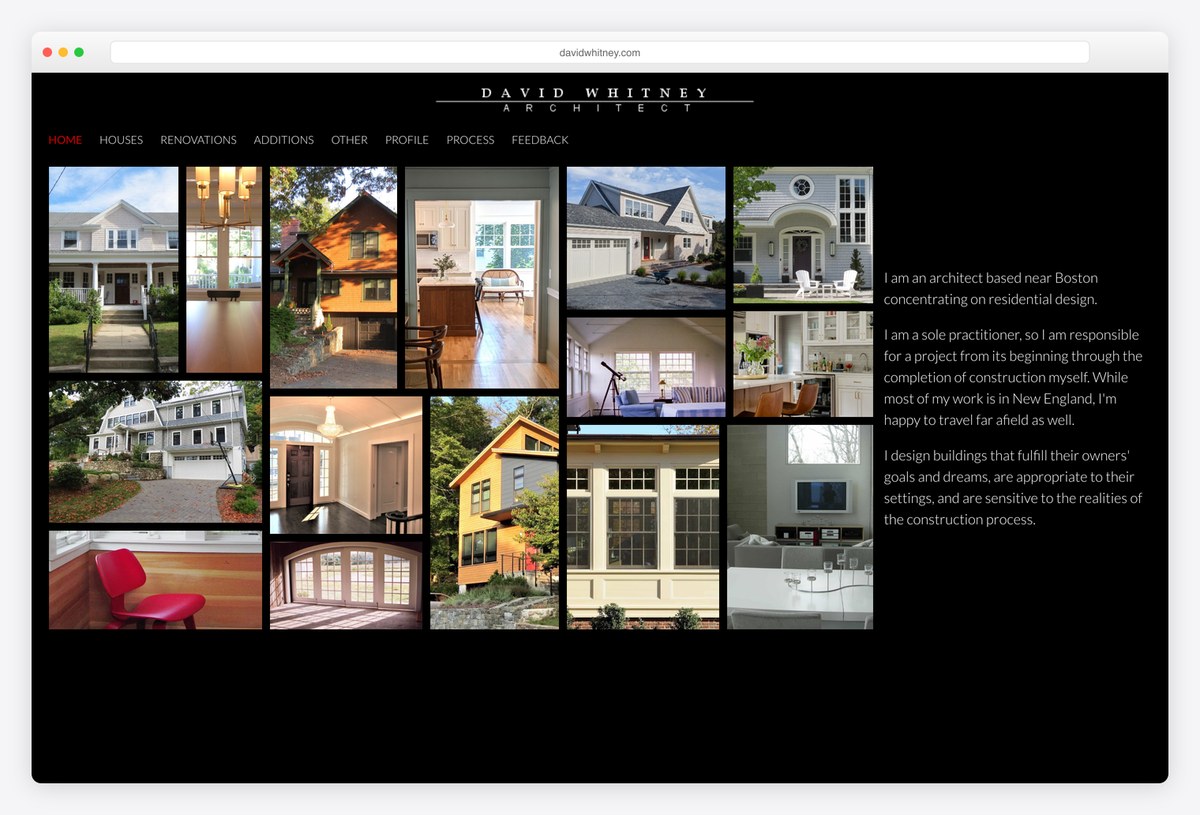
David Whitney is a sole practitioner near Boston, and his site is organised the way homeowners think: houses, renovations, additions and other. The first screen explains in three sentences who he is and that he runs each project himself, from the beginning through the completion of construction.
A process page walks through the standard phases, from pre-design to construction administration, and a credits page names the photographer of each project. Unusually, a feedback page invites anonymous comments on his work and his website. Project pages are short, which suits homeowners but leaves out drawings.
What stands out: Organise residential work by house, renovation and addition.
15. Mohammed Saad Aljarallah
Built with: Archifolio
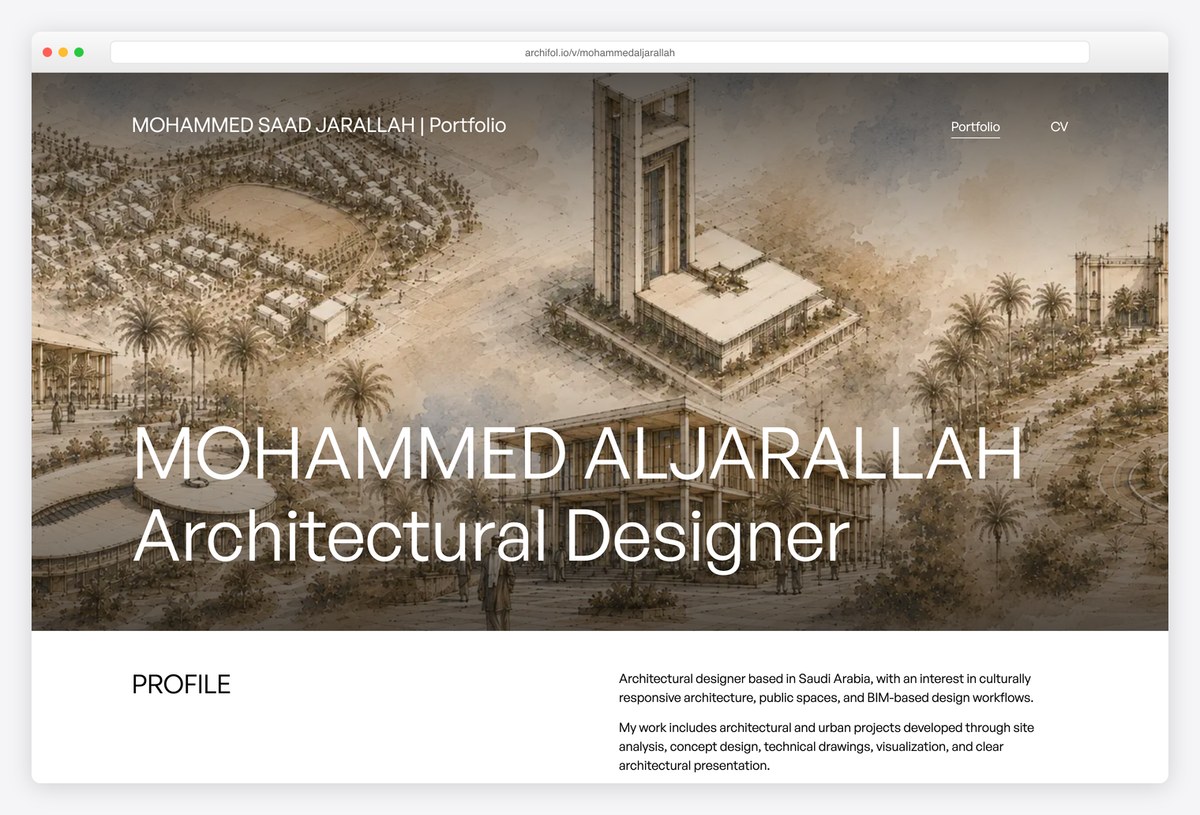
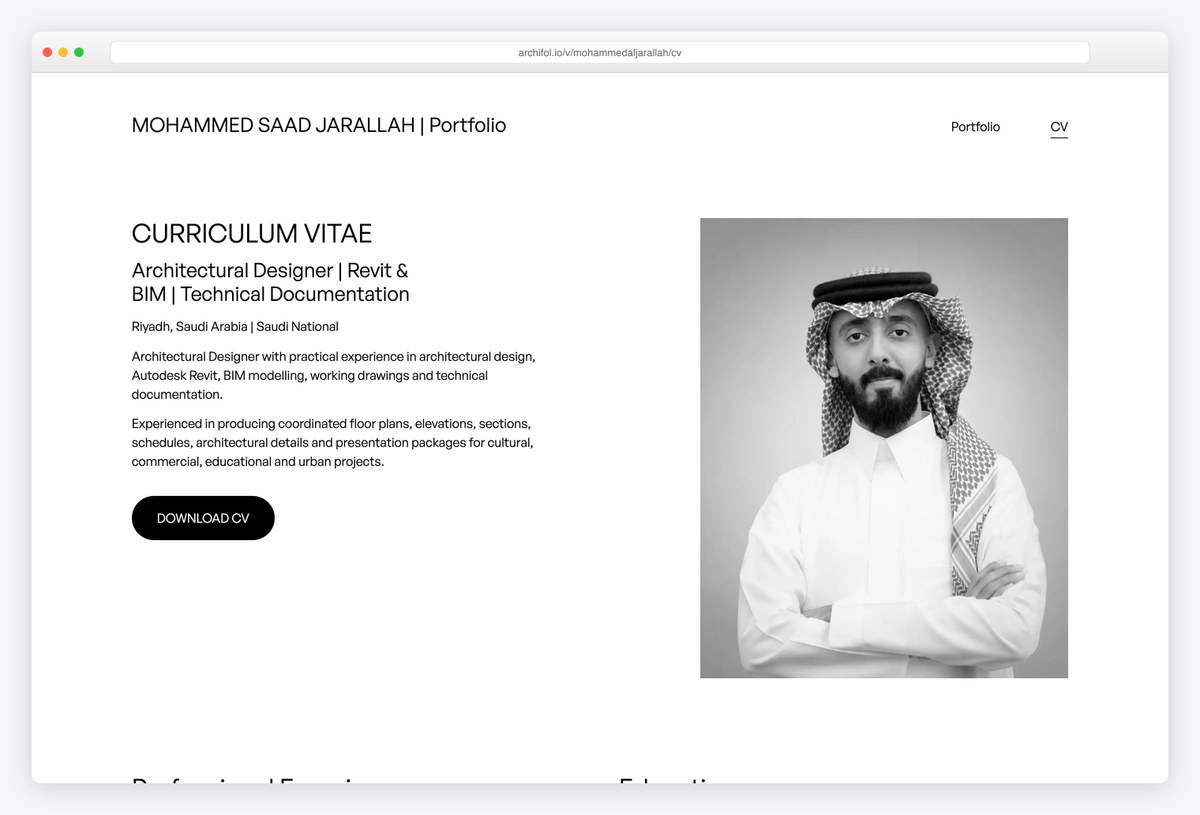
Mohammed Aljarallah is an architectural designer in Riyadh who graduated from King Khalid University, and his portfolio gives technical documentation its own section, with working drawings and BIM sets alongside the design studios. That is the work graduates are often hired to produce, and few student sites show it.
Each studio project opens with a table of location, studio, scope and his role, followed by site analysis, plans, elevations and sections. The CV page has a download button, lists internships at BEEAH and Soudah Development, and states the kinds of work he is available for.
What stands out: Show working drawings, not only design studios.
16. Anna Heringer
Built with: Custom code
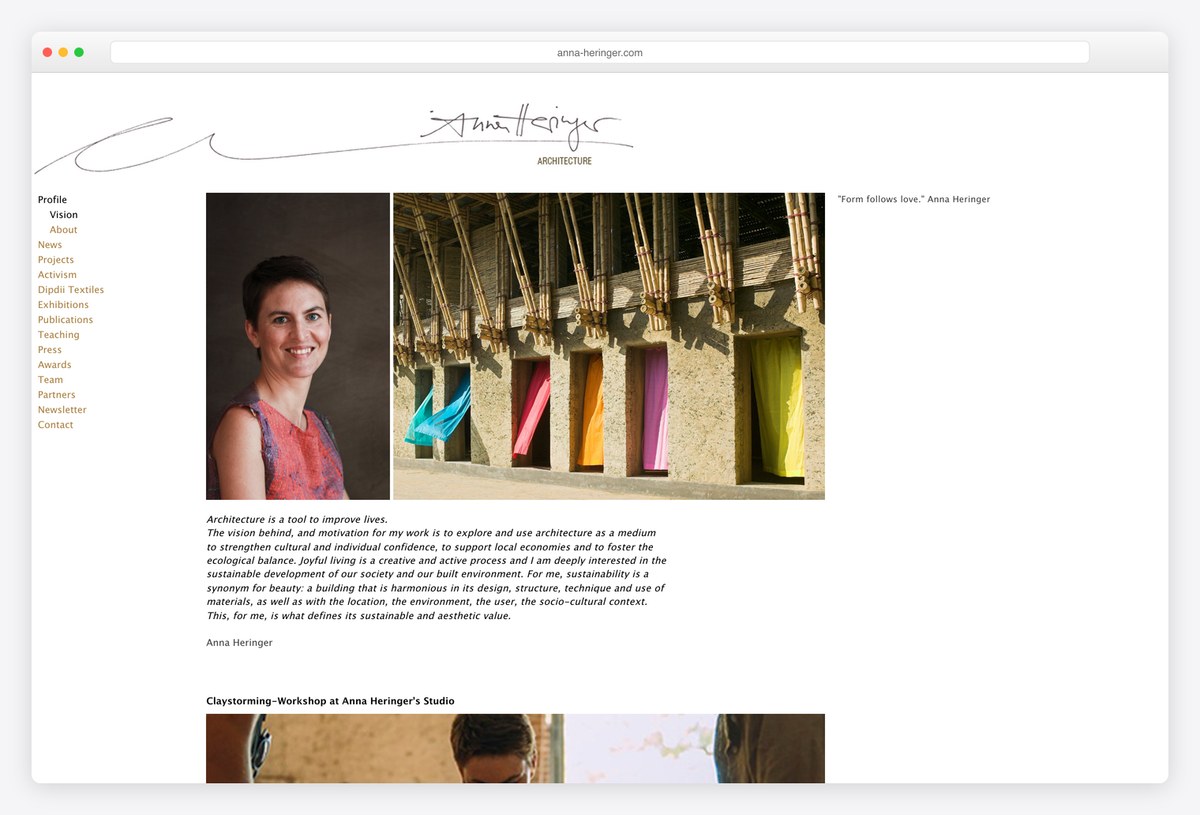
Anna Heringer builds with earth and bamboo, from Bangladesh to Ghana, and her site shows how a building was made as much as how it looks. Project slideshows mix finished photos with construction-stage images, elevations, plans and sketches, and every image names its photographer.
The text credits the people who built it, down to the local contractor of a centre for people with disabilities in Rudrapur. Teaching, activism, publications and a textile project each have their own menu, which suits an architect whose research matters as much as her buildings.
What stands out: Show construction photos and credit the builders.
17. Nicole Ross
Built with: Adobe Portfolio
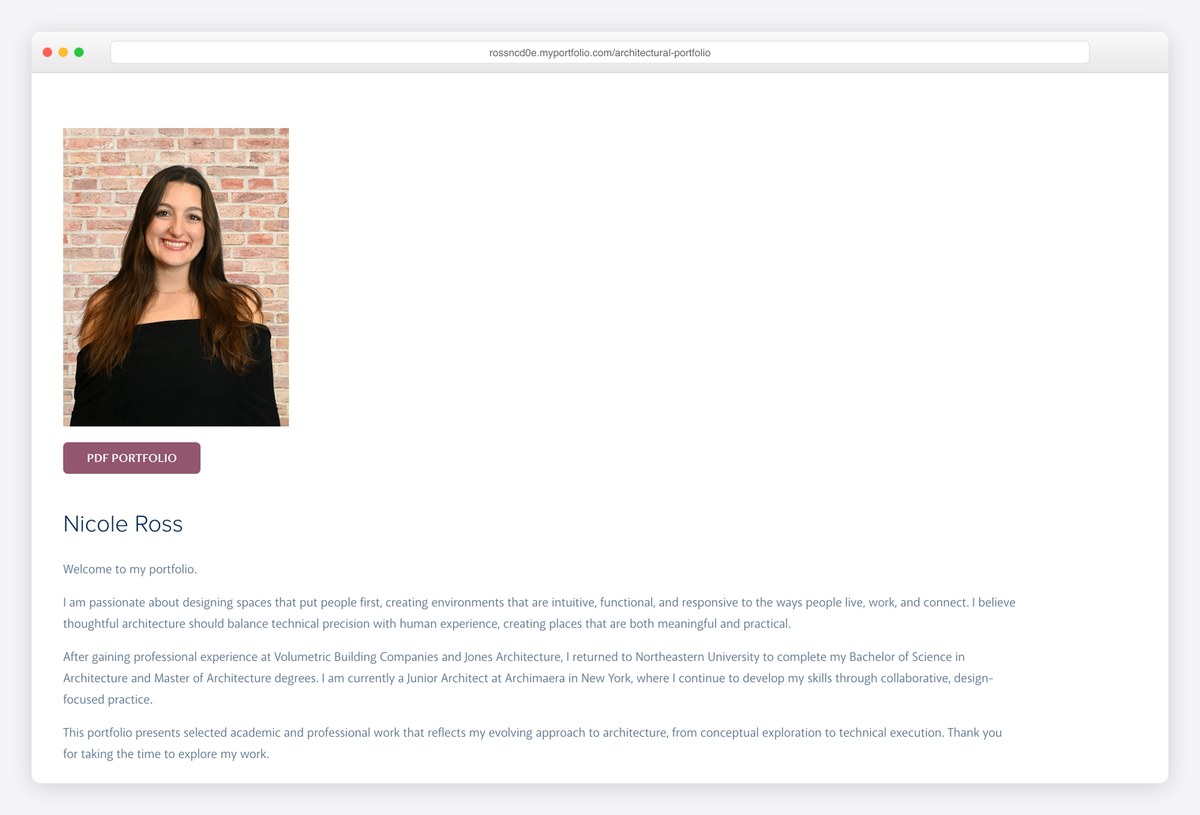
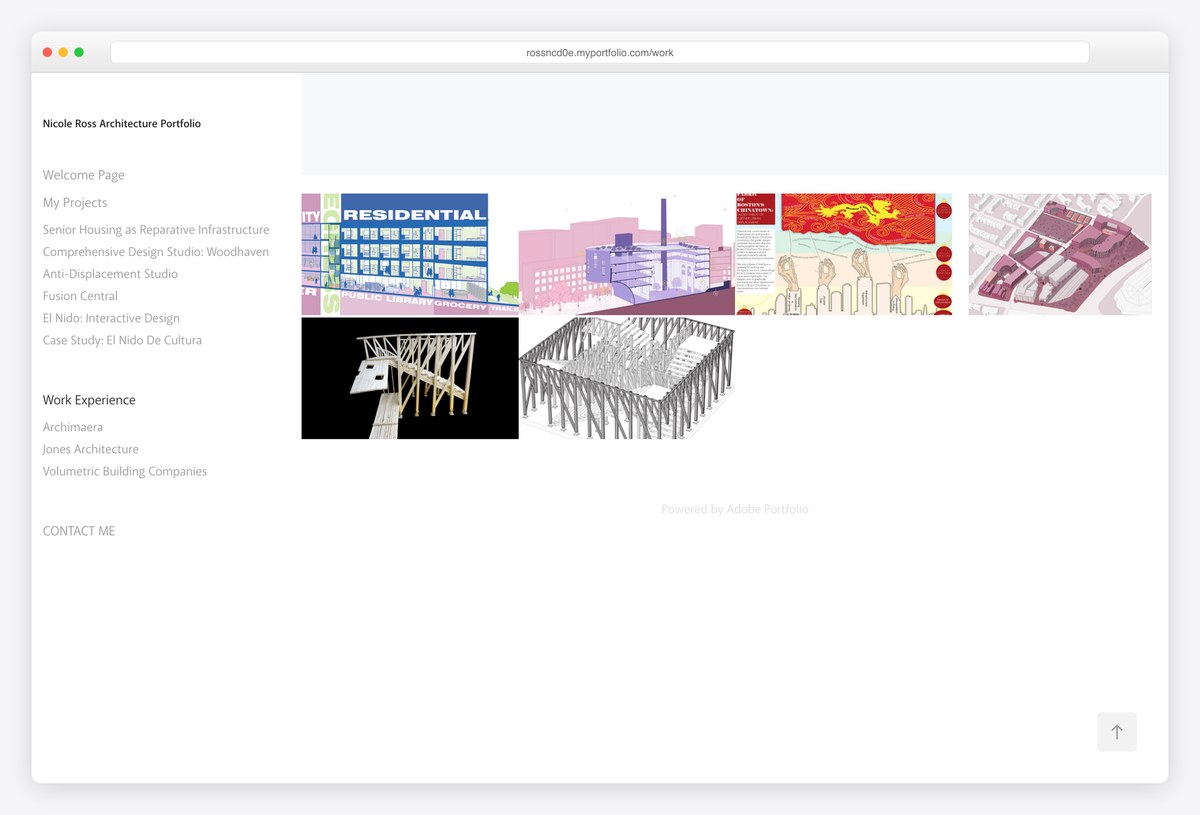
Nicole Ross completed her Master of Architecture at Northeastern University and works as a junior architect in New York, and the first button on her site downloads a PDF portfolio. For a recruiter who wants the file, that is one click.
Projects are listed with a year each, and her work experience at three firms sits in its own group, apart from studio projects such as senior housing and an anti-displacement studio. The home page also lists the software she uses, from Revit and Rhino to Enscape, which saves a recruiter a trip to the CV.
What stands out: Make the PDF portfolio the first button.
18. Lateral Office
Built with: Cargo
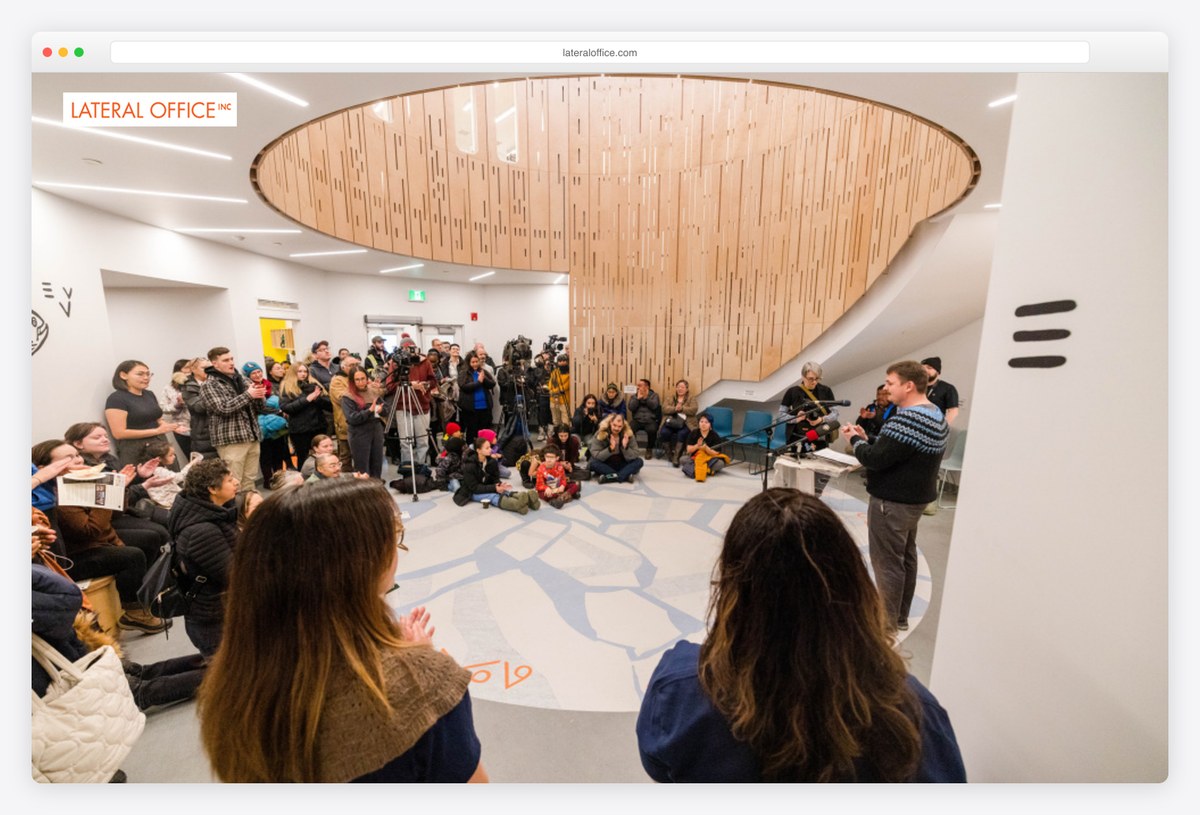
Lateral Office, led by Lola Sheppard and Mason White, works on research and buildings in the Canadian Arctic, and its site treats lectures, exhibitions and awards as part of the portfolio. Every post is tagged, with labels such as Arctic or health, so a reader can follow one thread.
The Inuusirvik community wellness hub in Iqaluit shows what a full project page can hold: plans, sections, elevations, axonometric diagrams and models, its awards, and a team list marking each person’s firm.
What stands out: Credit every team member with their firm.
19. Kim Wilkie
Built with: WordPress
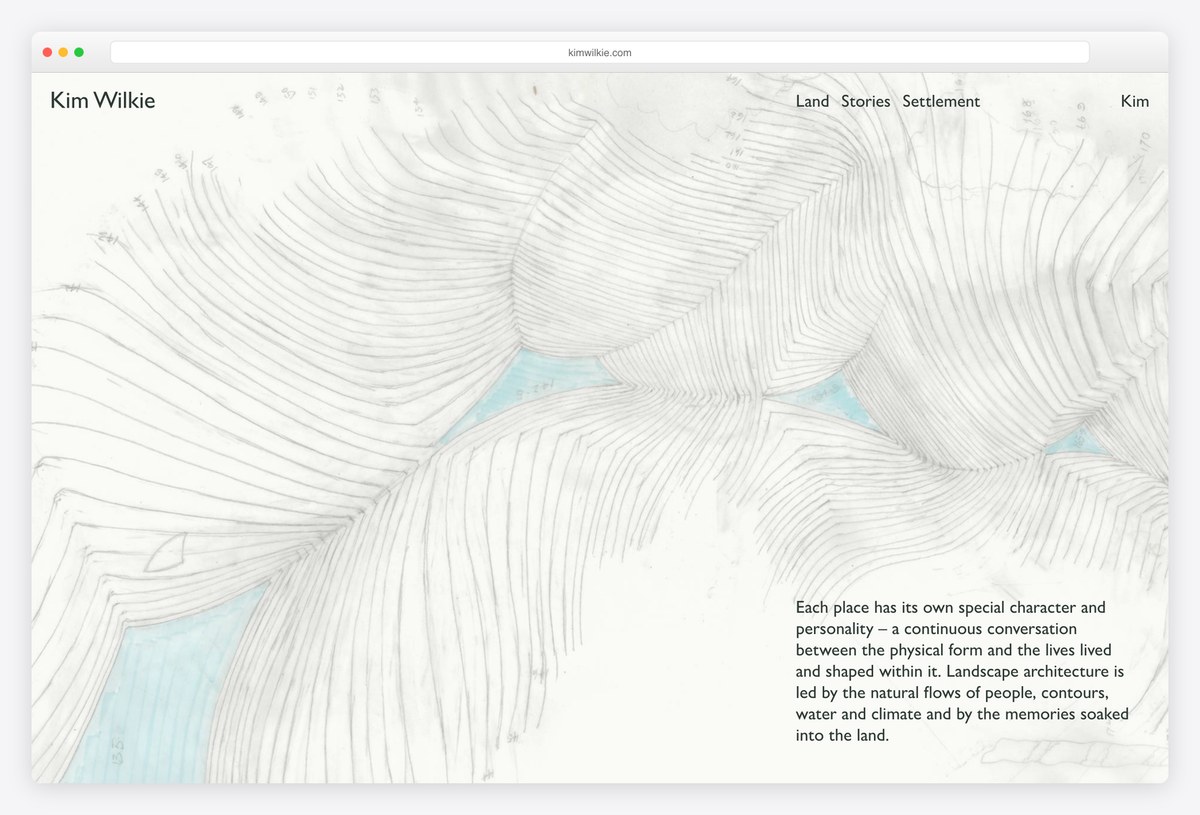
Kim Wilkie is a British landscape architect, and his site organises work by the kind of place, Land, Stories and Settlement, rather than by client type. The home page is a pale contour drawing, which sets the tone before any photograph.
Each project ends with who it was for and when it started, which matters for landscapes that unfold over decades, such as a Suffolk estate where over a million trees are being planted. Separate pages hold his books and essays and a page on his sketching.
What stands out: Say who a long project is for and when it started.
20. Maya O’Neill
Built with: Archifolio
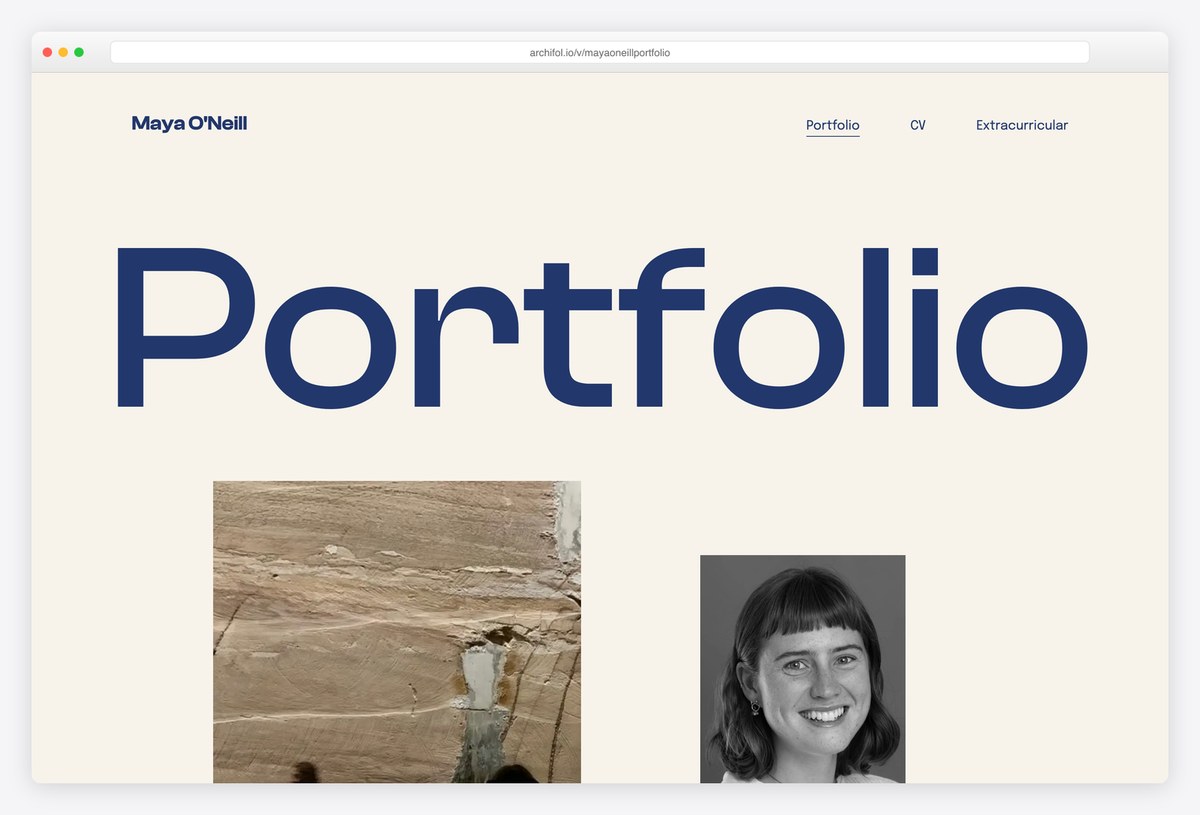
Maya O’Neill is a recent architecture graduate from the University of Newcastle in Australia, and her site says plainly that she is seeking practical experience in a firm. Each project ends with a specifications table giving site area, date, team size and tools, so a group project is marked as one.
Her housing proposal for a former steelworks site explains which part was her focus, and the CV lists software, hands-on earth building training and graduate consultancy work designing floating community spaces in Fiji. The project list closes with an Acknowledgment of Country.
What stands out: Give team size and tools on every project.
21. Nicholas Gurney
Built with: Format
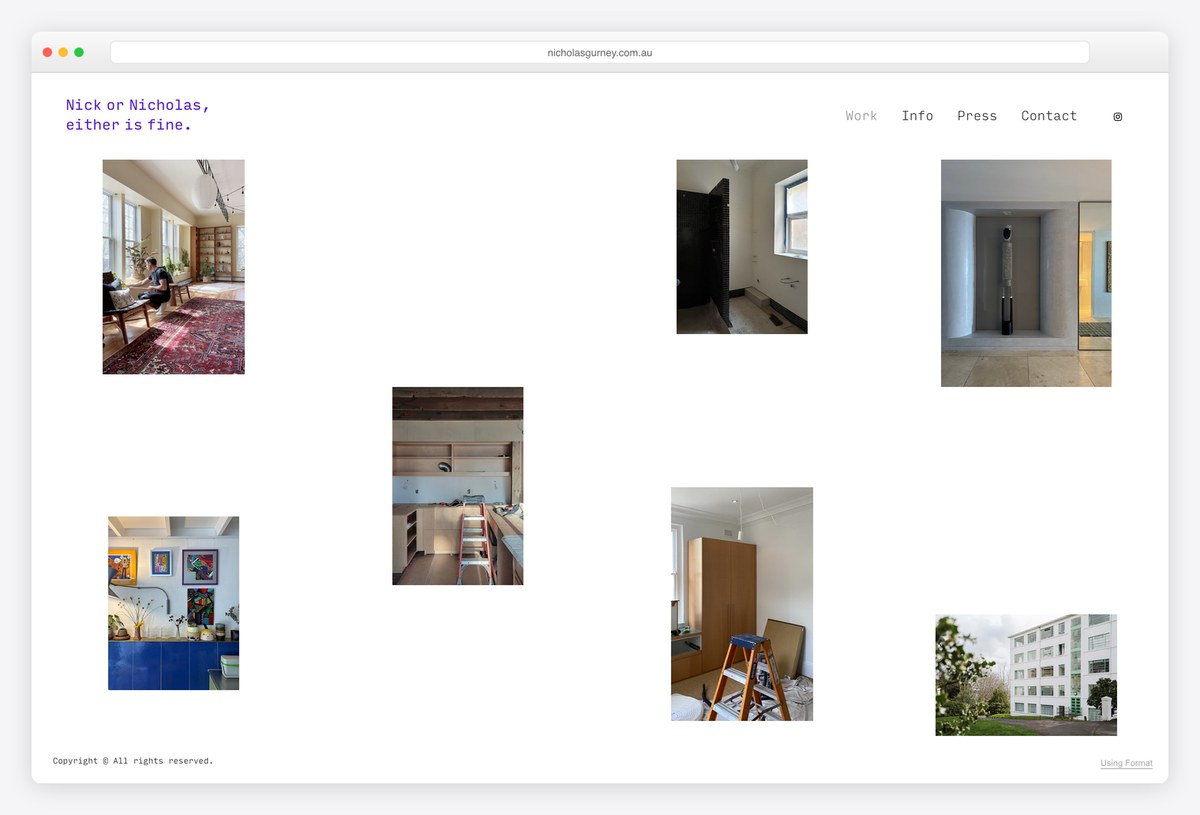
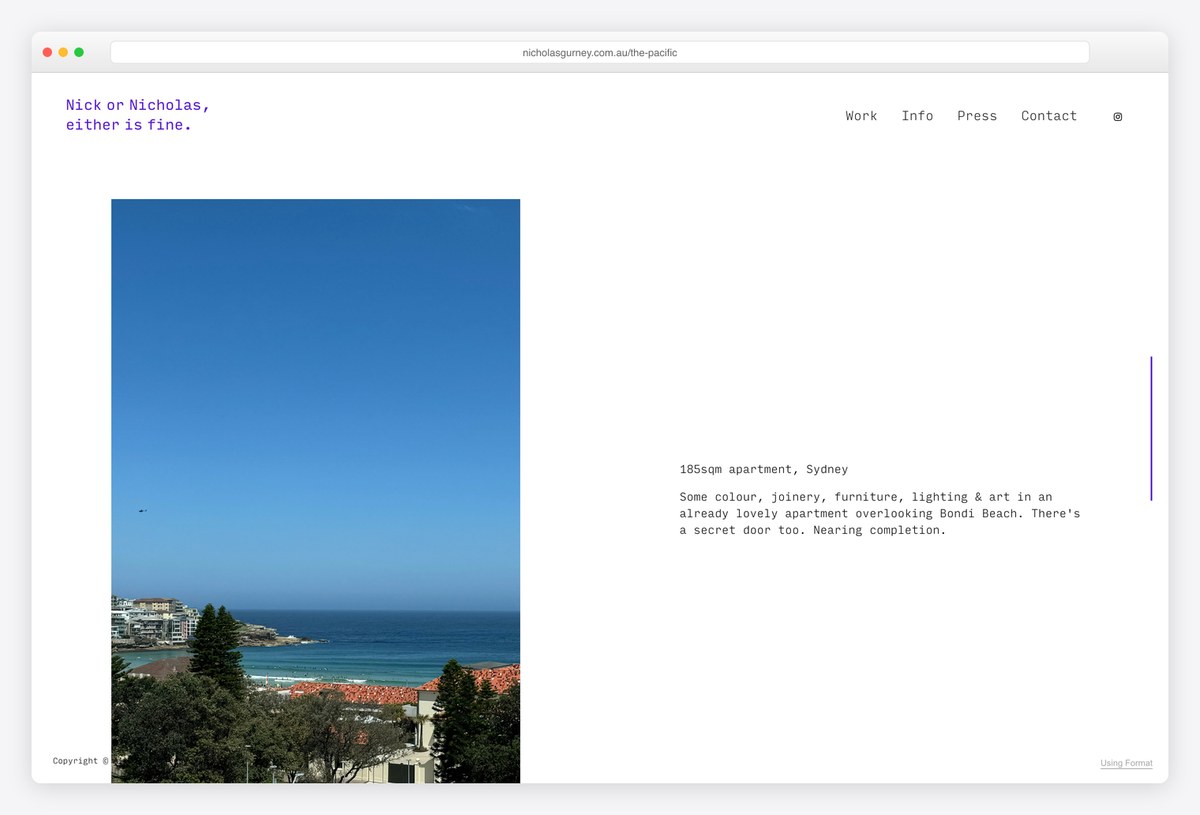
Nicholas Gurney is an Australian designer of small homes who describes himself as “one man and a laptop”, and his captions lead with what a small-space client wants to know: floor area, city and status. A Melbourne flat is a “66sqm apartment”, and unfinished jobs say “Nearing completion” or “Photography soon”.
The first screen is a grid of about fifty projects, newest first, and a press page lists every feature with the project it covered in brackets. Press inquiries are promised a reply within three days.
What stands out: Lead captions with floor area, city and status.
22. Mir
Built with: Webflow
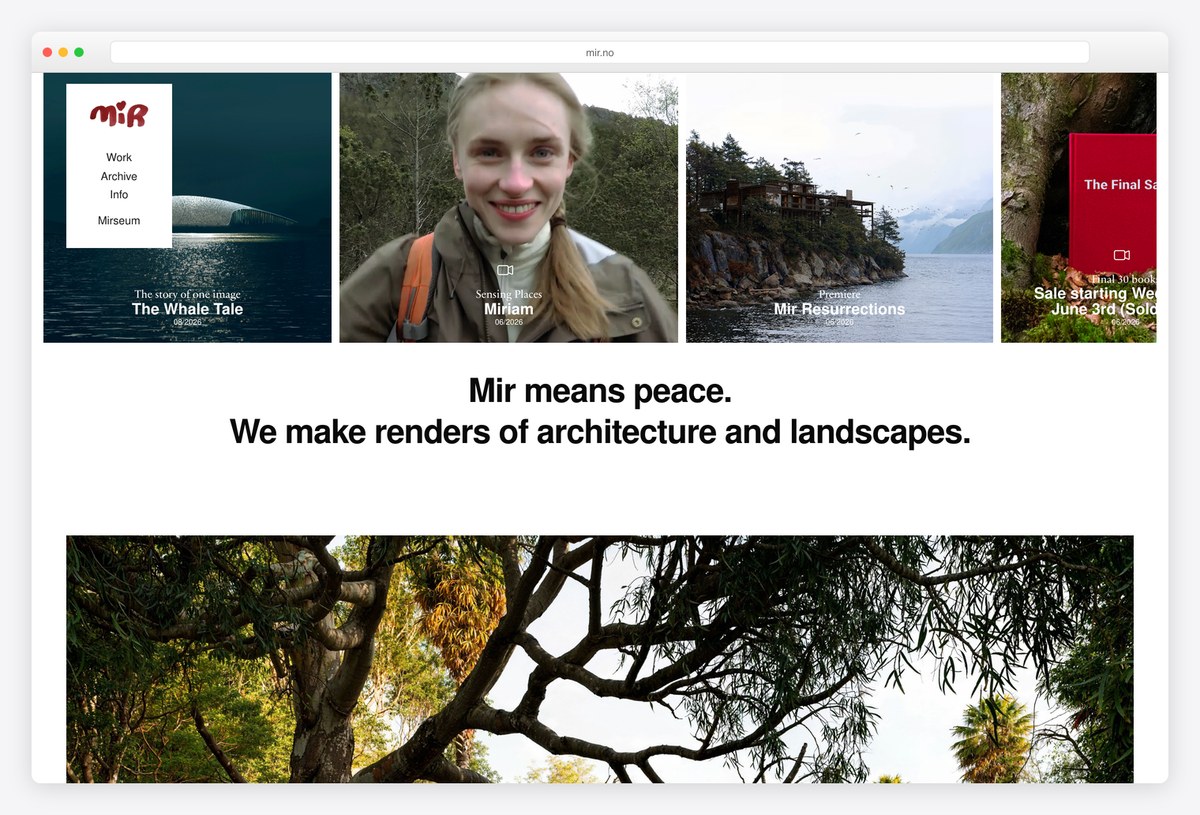
Mir is a visualisation studio in Bergen, Norway, founded by two students who still run it, and its work page puts the architect before the project on every image, from Heatherwick Studio to Dorte Mandrup and Snøhetta. For a visualiser, the client list is the portfolio.
The home page is a feed of dated posts above one line: Mir makes renders of architecture and landscapes. An essay, Render vs Reality, concedes that the charge of dishonesty against visualisation is deserved, and explains how the studio answers it.
What stands out: Put the architect’s name before the project.
23. Rozana Montiel Estudio de Arquitectura
Built with: WordPress
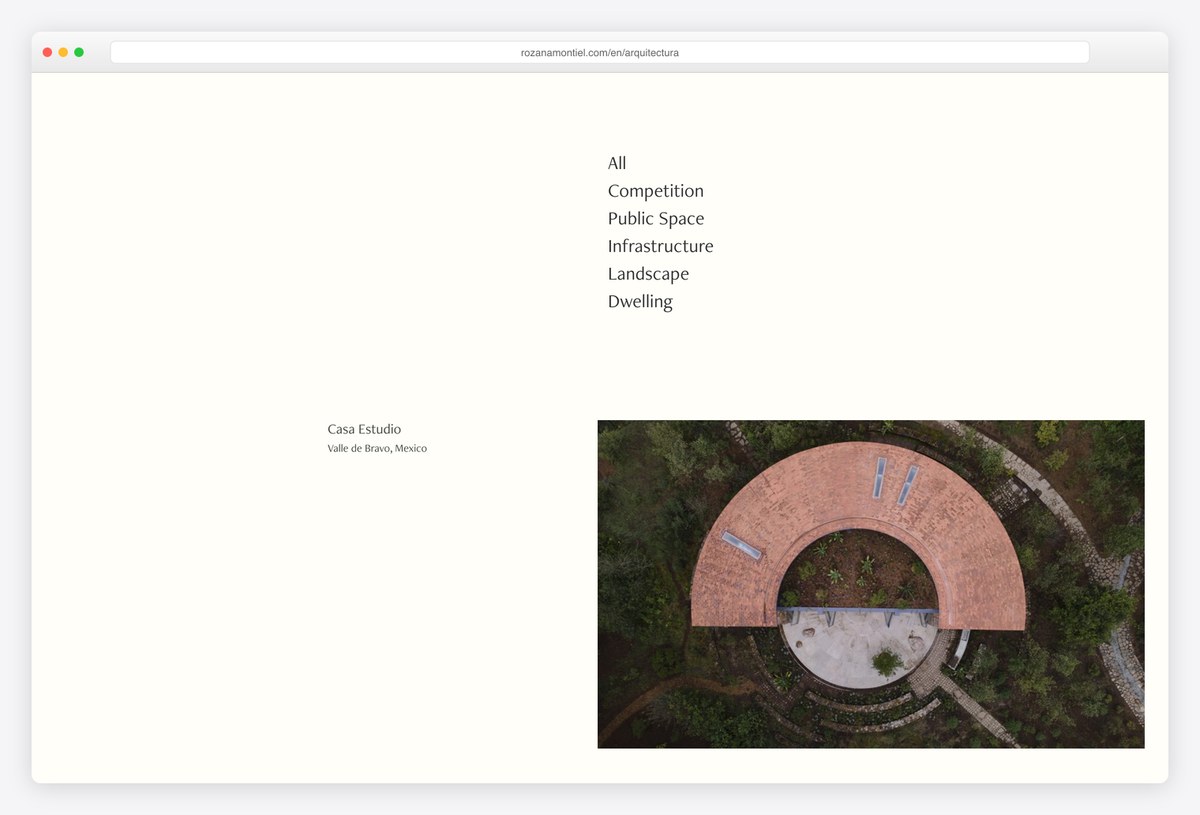
Rozana Montiel leads a Mexico City studio whose work spans buildings, research and art, and the site gives each its own section instead of one mixed grid. The architecture section can be filtered by competition, public space, infrastructure, landscape or dwelling, and every tile names its town.
The research section holds books and studies of housing and public space, and the art section her installations. The contact page separates information, press and jobs. The home page is a text manifesto, so send clients straight to the architecture index.
What stands out: Give research and competitions their own sections.
24. Andrés Jaque / Office for Political Innovation
Built with: WordPress
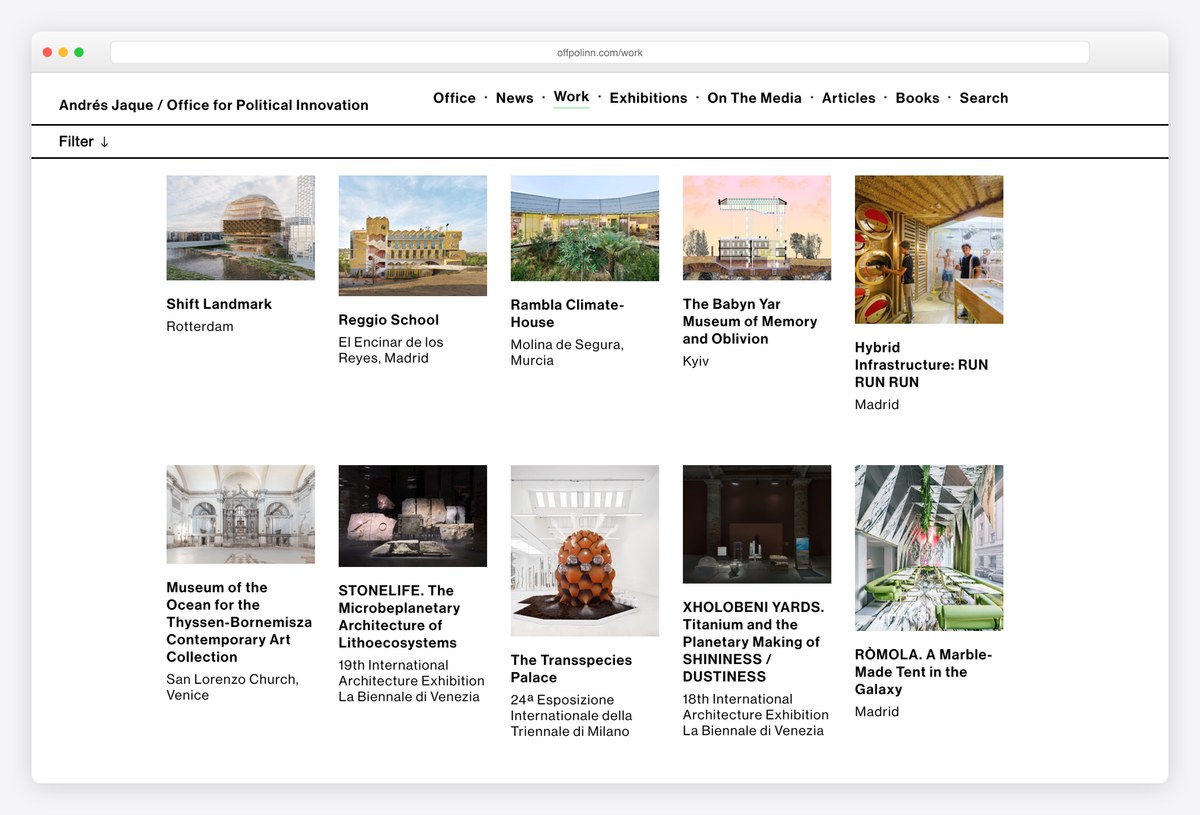
Andrés Jaque’s Office for Political Innovation, based in New York and Madrid, won a Silver Lion at the Venice Biennale for the best research project, and its site files research as work. Buildings, installations and biennale projects share one filterable archive, each named with its place or venue.
Exhibitions, articles, books and media coverage have archives of their own, with the books listed by publisher. It is a model for a research-led architect whose output is as much writing and exhibitions as buildings. Each of the two offices has its own email.
What stands out: Treat books and exhibitions as part of the portfolio.
What Makes a Great Architecture Portfolio Website?
Show drawings, not only renders. Employers read plans and sections to judge how you think. Laura Wiedenhöver’s home page opens on a pencil perspective and a site plan, Mia Sherman follows her diploma project’s section perspective with a site plan, floor plans and a physical model, and Hugh Strange gives models a page of their own. Mohammed Aljarallah keeps a whole section for working drawings.
Say what you did on team projects. Architecture is team work, and the strongest sites never let a firm’s building pass as a solo effort. Hamish McAndrew names who did each RIBA stage, Ray Zhu gives his role and links the firm’s own project page, Sebastian Nitu adds a paragraph on his responsibilities, and Brandon Kemp credits the rendering company. Alda Capi labels the work from her years at Kennedy & Violich.
Separate academic, professional and competition work. A reader should know at a glance whether something was built, a studio brief or a competition entry. Hamish McAndrew labels every project, Nicole Ross lists her work experience apart from studio projects, Sean Godsell keeps built, under-construction and unbuilt work in three menus, and Rozana Montiel filters her architecture by competition and gives research its own section.
Offer the PDF and the CV. Many firms and graduate schools still ask for a PDF, so let the website and the file work together. Mia Sherman puts both download buttons on her first screen, Nicole Ross makes the PDF her first button, Mohammed Aljarallah’s CV page has a download button, and Christina Vogiatzis links a print version. Hood Design Studio asks applicants for a portfolio under 10 MB, so keep the file small.
Caption location, size and status. A one-line caption answers the first questions a client or employer asks. Nicholas Gurney leads with floor area and city and marks jobs nearing completion, Sean Godsell opens every project with its years and place, Laura Wiedenhöver gives site, studio, year and grade, and Ray Zhu adds floor area to each office project. Kim Wilkie ends each landscape with its client and start date.
Keep the site fast, even with big images. Architecture portfolios are image-heavy, and large files cost visitors on phones. In our test, Kim Wilkie’s home page loaded under a megabyte and Hugh Strange’s hand-built site about two, while several others passed 20 MB, one of them because of a single animated GIF of almost 7 MB. Compress images, avoid autoplaying video on the first screen, and let project pages load images as the reader scrolls.
Students: lead with the thesis or your best studio project. Mia Sherman’s diploma project is her first card, Christina Vogiatzis gives her award-winning thesis a fully captioned page, and Laura Wiedenhöver links her graduation project to the full thesis in the TU Delft repository. Mi Zhou shows how to head a studio project: school, site, instructor and which parts were team work. Early exercises can go further down, or into a separate studies page.
Check the basics, including the domain. Among the architecture portfolios we checked, four domains now serve casino or betting sites, two of them still listed in published roundups; several Squarespace and Wix sites have expired or lost their domain, and one architect’s project pages and CV link return errors. Older lists of examples are full of portfolios that now return errors or say coming soon, so recheck your own links after any rebuild.
Frequently Asked Questions
What should an architecture portfolio include?
Your strongest four to eight projects, each with drawings as well as images: plans, sections, diagrams and models, not only renders. Caption every project with location, size, date and status, say what you did on team work, and add an about page, a CV and a contact route. Students should add studio, instructor and year, as Mi Zhou does.
Do I need a website or a PDF portfolio?
Both. Firms and graduate schools often ask for a PDF, usually under a size limit, while a website is what they find when they search your name and what you can link in an email. Build the site first, then export a shorter PDF, as Mia Sherman and Nicole Ross do, and link the PDF from the site.
How many projects should an architecture portfolio have?
Enough to show range, and few enough that each gets a proper page. The students above show from four projects to about twenty, and the clearest put the thesis or best studio project first. Practices show more but sort them: Sean Godsell splits built and unbuilt work, and David Whitney splits houses, renovations and additions.
How is a student architecture portfolio different from a professional one?
A student portfolio sells how you think, so it leads with the thesis and shows process, drawings and models, with studio, instructor and year on each project. A professional portfolio sells what you have delivered, so it leads with built work and adds client, location, size, status and your role in the team.
What is the best platform for an architecture portfolio website?
There is no single winner. Among the 24 sites above, WordPress was the most common (5), followed by Squarespace (4), then Adobe Portfolio, Archifolio and custom-coded sites (3 each), Cargo and Wix (2 each), Format and Webflow. Students on a budget often choose Adobe Portfolio, Archifolio or Cargo. Pick a platform you will keep updated and whose images stay sharp and fast.
How do I show team projects I did not lead?
Include them, but credit them honestly. Name the firm, the project lead and the team, then say what you did, such as design development, facade studies, construction documents or renders. Hamish McAndrew names who did each RIBA stage, Sebastian Nitu writes a paragraph on his part, and Brandon Kemp marks his own role within the listed team.
Wrapping Up
Whoever reads an architecture portfolio, a hiring partner, a graduate school or a client, looks for the same things the strongest sites above provide: drawings that show how you think, captions that say where, how big and whether it was built, an honest account of your part in team work, and a PDF and CV that are easy to find.
For more inspiration, see our best portfolio website examples, student portfolio examples and interior design portfolios, or browse architecture website designs from established firms. Ready to build your own? Start from our architecture website templates or a Squarespace architect template.

Related Posts






Comments (0)