
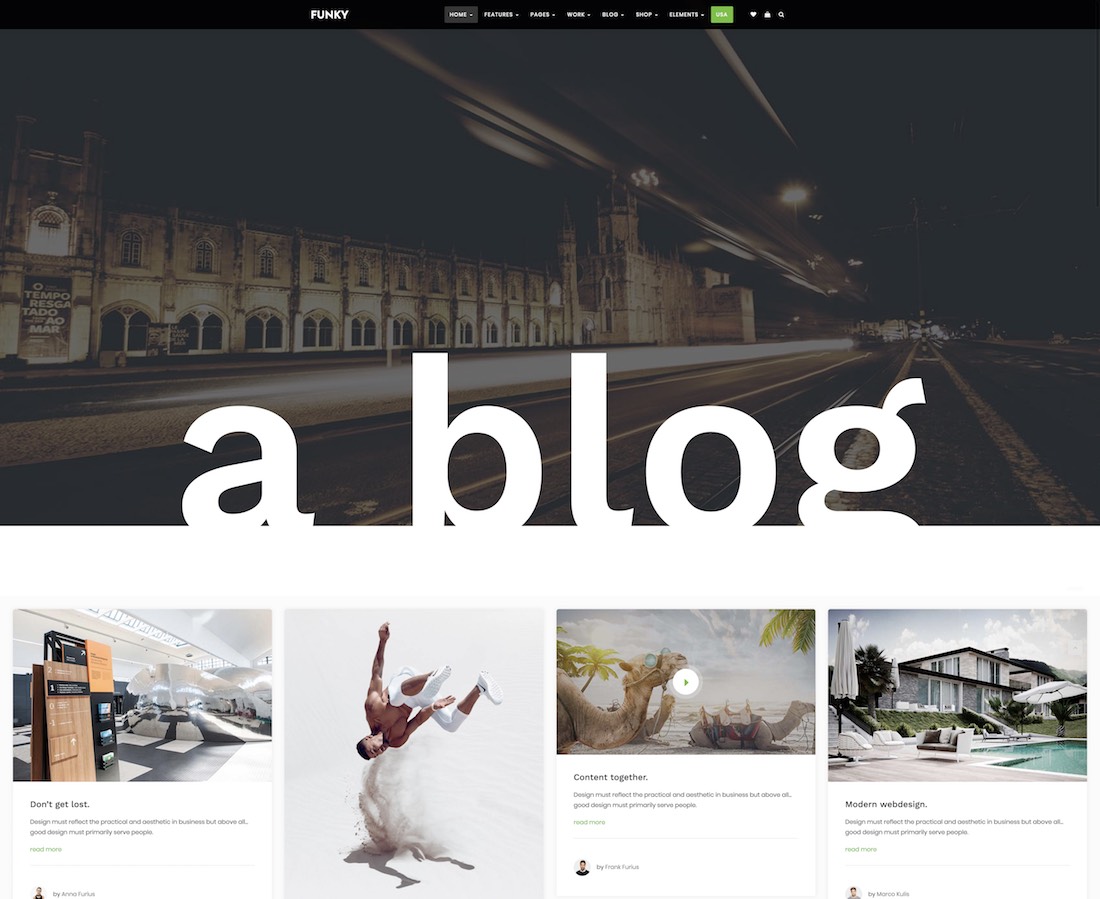
12 Best Writer Website Templates For Authors 2026
If you are a blogger, a journalist, or someone who likes everything related to writing, you will love our list of the best writer website templates.
Let me ask you a question: Do you like to write, but do not have a website yet? This needs to change right about now. That’s why we prepared the ultimate collection of the finest, content-focused website templates for writers.
Instead of writing on a blank piece of paper, why wouldn’t you want to start publishing articles online? Or even if you are already using platforms like Medium and WordPress?
Table of contents — all 12 templates
If you have a long-term plan for your writing project, you must bring it to fruition. And even if that means the simplest and most minimal blog with a posts section and a sidebar. As long as it is yours, you fully control your project and might soon expand it into a full-time business.
Search engines will quickly pick up your website with compelling articles and an SEO-friendly website, and organic traffic will start flowing toward your page. Slowly and steadily, you will grow your readership, and before you know it, advertising opportunities will arise.
Do it like professionals do with writer website templates and quickly and easily achieve outstanding results.
Best WordPress Themes For Writers & Authors
1. Divi
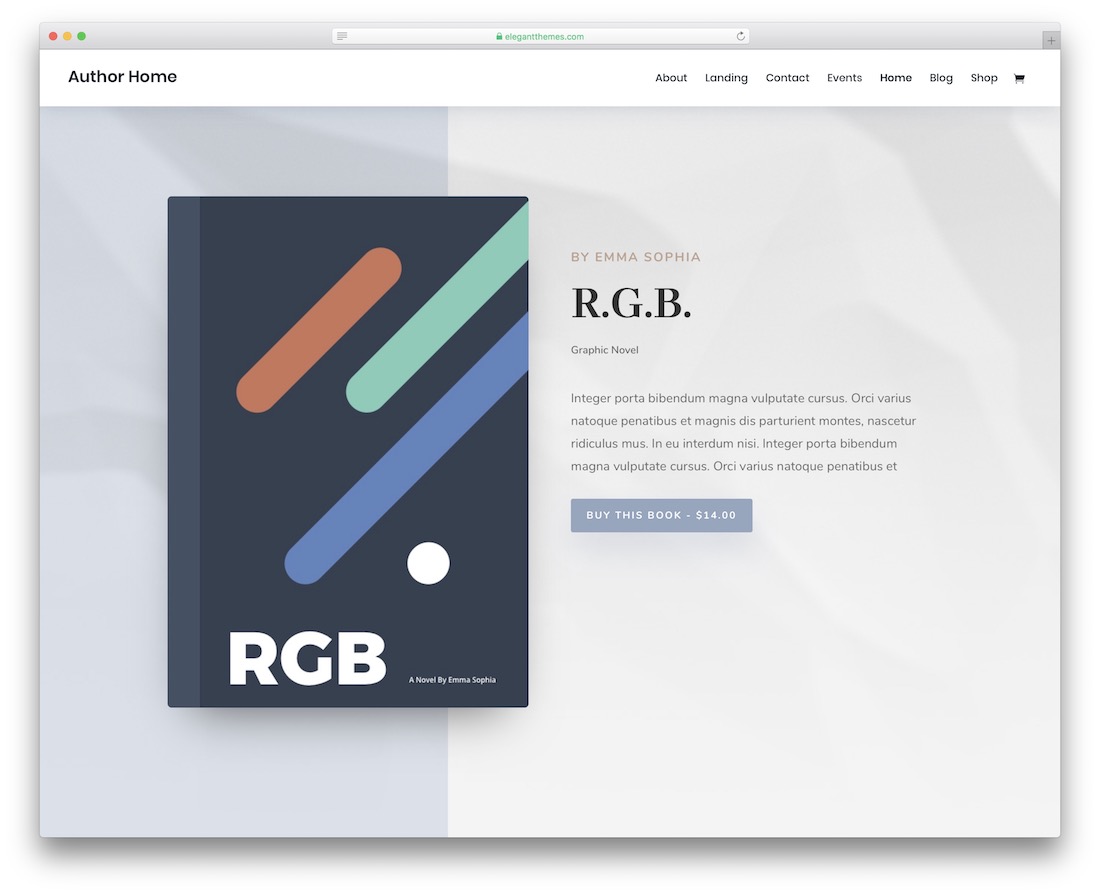
Premium WordPress · Best for: Authors who want full visual control
Divi’s integrated drag-and-drop builder lets an author assemble a complete site without touching code. It ships a broad set of full-website demos you can install and rework, and every layout detail — colors, text, spacing — stays editable, whether you are a first-time site owner or a developer building an author site for a client.
2. Gillion

Premium WordPress · Best for: Multi-category blogs and story magazines
Gillion builds in the reader-retention details most blog themes skip: a review system, a post view counter, and read-time display. Over fifteen demos and more than fifty templates install with one click and are edited through a drag-and-drop builder; Slider Revolution, social sharing, and sticky navigation are included, with video tutorials covering setup.
3. Jevelin

Premium WordPress · Best for: Launching a writing site from a ready demo
Jevelin pairs ready-to-use demos with the WPBakery drag-and-drop builder, so a writing site can go live without code. Use a demo exactly as shipped and start publishing straight away, or rework its layouts page by page in WPBakery when your blog outgrows the defaults.
4. Lemars

Premium WordPress · Best for: Journalists covering several beats
Lemars keeps multi-category archives navigable, so a writer covering several topics does not end up with a cluttered front page. Five ready-to-use demos come in the box, and selling products or translating the site works out of the box rather than through extra extensions.
5. Behold
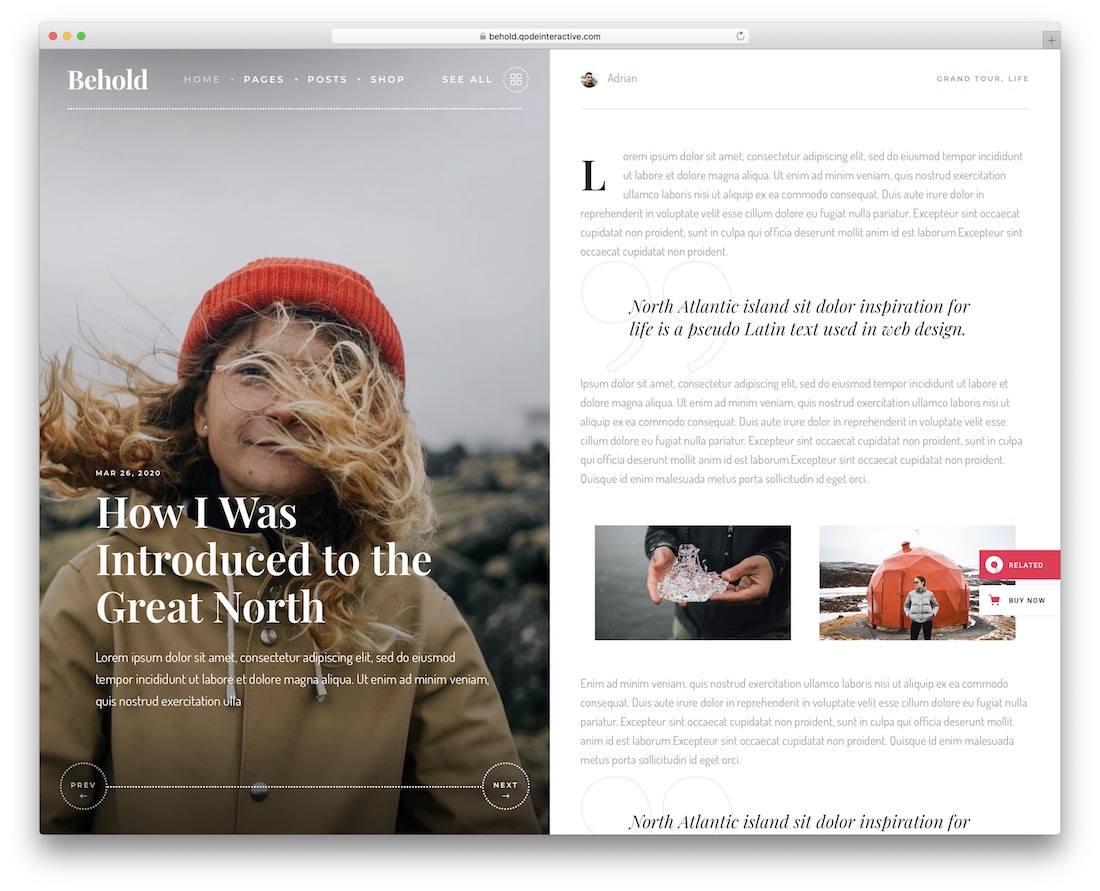
Premium WordPress · Best for: Personal blogs mixing media formats
Behold handles six post formats — standard, gallery, audio, video, link, and quote — so essays, podcast episodes, and photo diaries share one blog. Nine predesigned homepages and six header types are edited through the Elementor drag-and-drop builder, with Slider Revolution bundled; the live demo shows the reading experience better than any description.
6. Newspoint
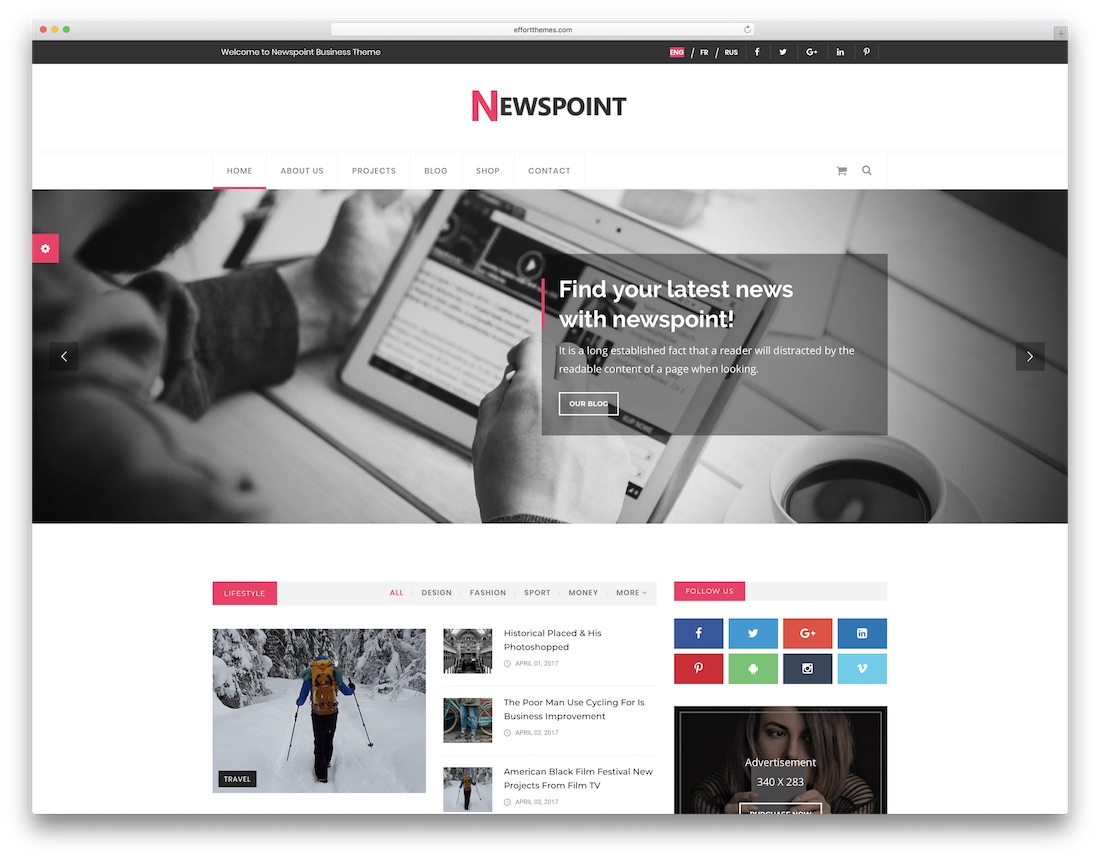
Premium HTML Bootstrap · Best for: News-style multi-topic publishing
Newspoint arranges writing like a news desk — a clean, flat, category-led front page with multiple post layouts and widget columns. The Bootstrap-based HTML template lazy-loads images to keep article-heavy pages quick and includes newsletter signup functionality for building a reader list.
7. Cryptex

Premium HTML · Best for: Writers pitching services alongside a blog
Cryptex ships a working newsletter form next to its contact form — the piece a writer actually needs to grow a mailing list from day one. The HTML template mixes corporate pages with blog layouts and includes two front pages, two header and two footer variants, a mega menu, and an Owl carousel.
8. Tri-O
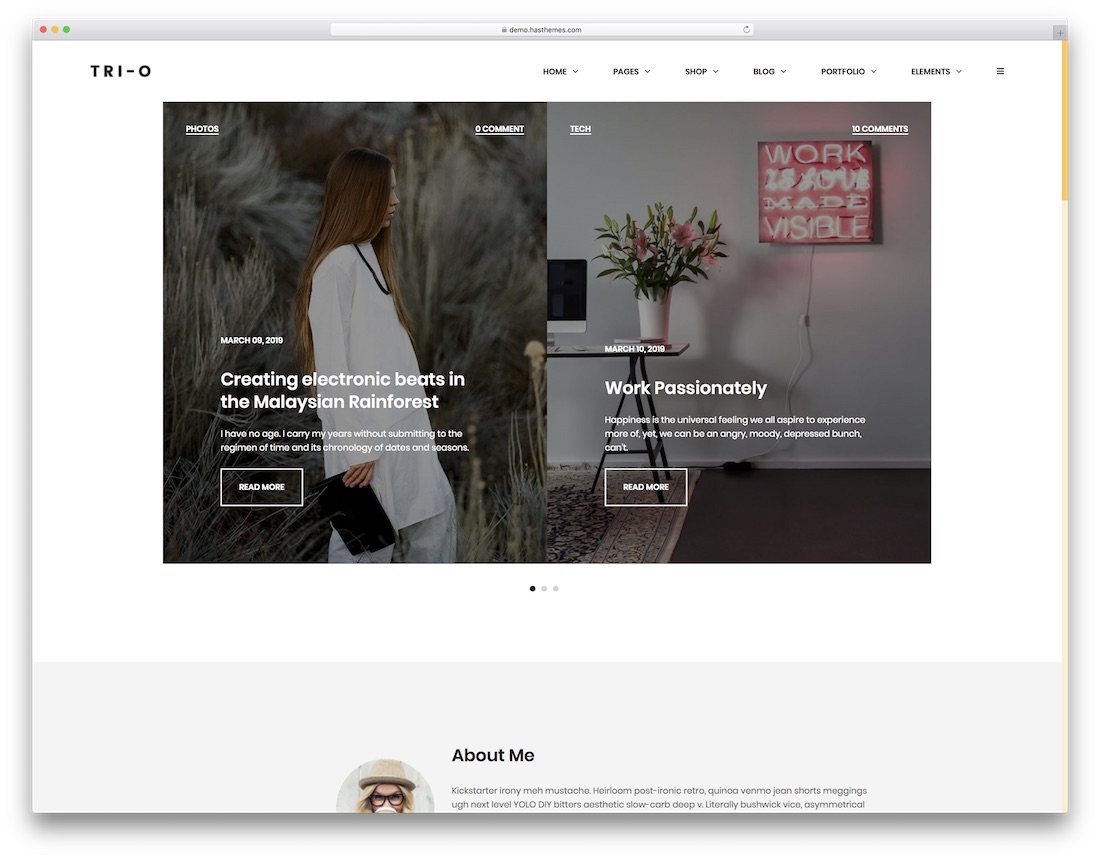
Premium HTML Bootstrap · Best for: Bold multi-topic blogs
Tri-O is a multipurpose Bootstrap template whose template, icon, and font combinations keep a multi-topic blog visually distinct. Its support team answers questions around the clock — worth having if this is your first hand-coded site and it keeps guiding you after launch.
9. Wroot
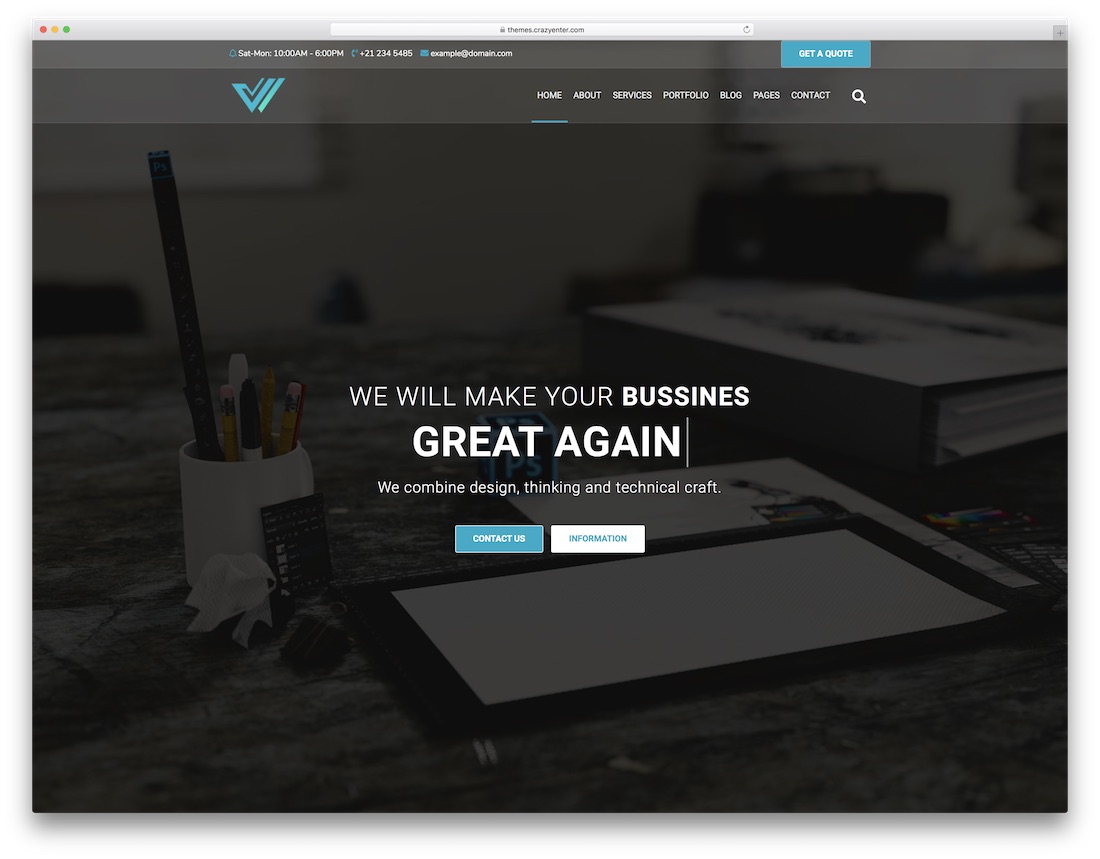
Premium HTML · Best for: Creative writer portfolios
Wroot’s typewriter hero effect puts a writing metaphor right on the front page. The multipurpose HTML kit includes four home demos, video background support, WOW scroll animations, and a working contact form, and its SEO-friendly markup helps the site get picked up by search engines.
10. Cabe

Premium HTML Bootstrap · Best for: Minimal blogs that also sell books
Cabe counts 25 home page designs for what bills itself as a minimal personal blog template. Typography does the heavy lifting across its post and about layouts, and the Bootstrap package also includes shop, product, cart, and checkout pages — useful when you sell books or merch directly. Lifestyle, food, fashion, and personal blogging all fit.
11. a.k1
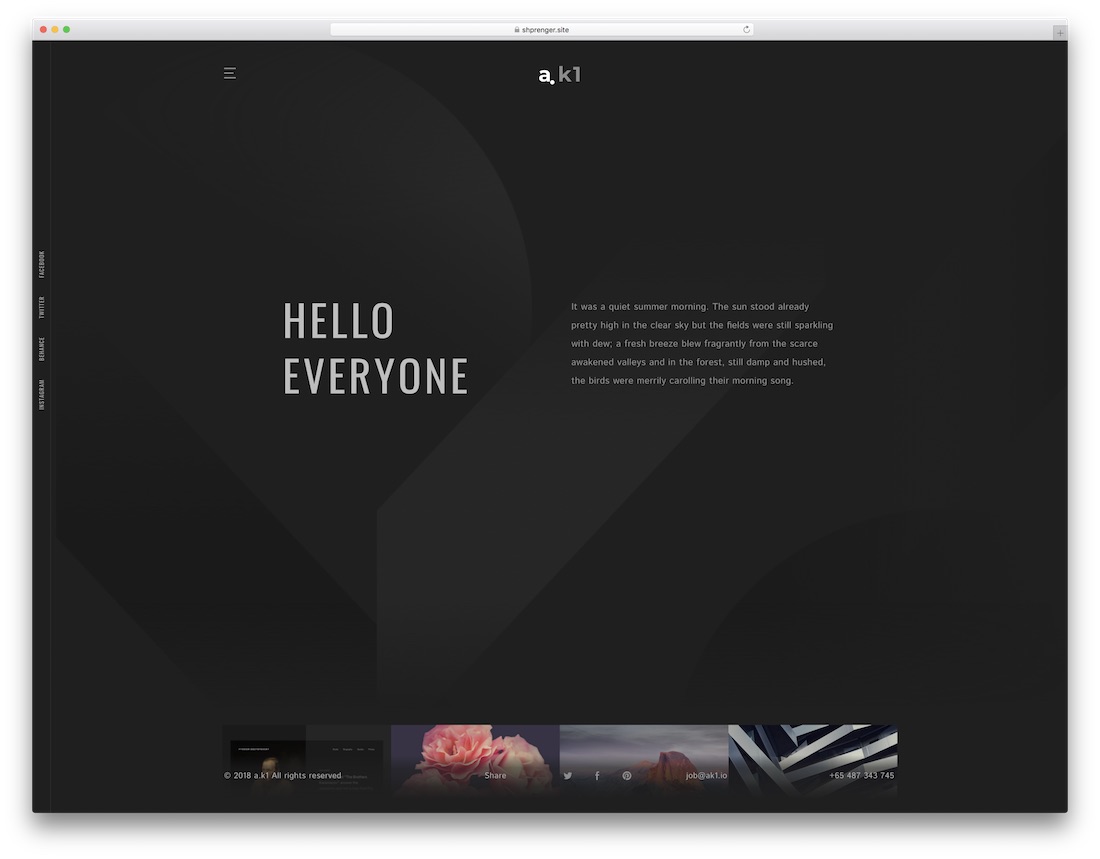
Premium HTML Dark Mode · Best for: Portfolio-plus-blog author sites
a.k1 starts with a choice between dark and light designs, then layers style variations, color backgrounds, content pages, and custom headers on top. The portfolio-plus-blog HTML template keeps its files well documented, and a responsive layout plus reachable customer support make it manageable for a writer maintaining the site alone.
12. Crea;tink
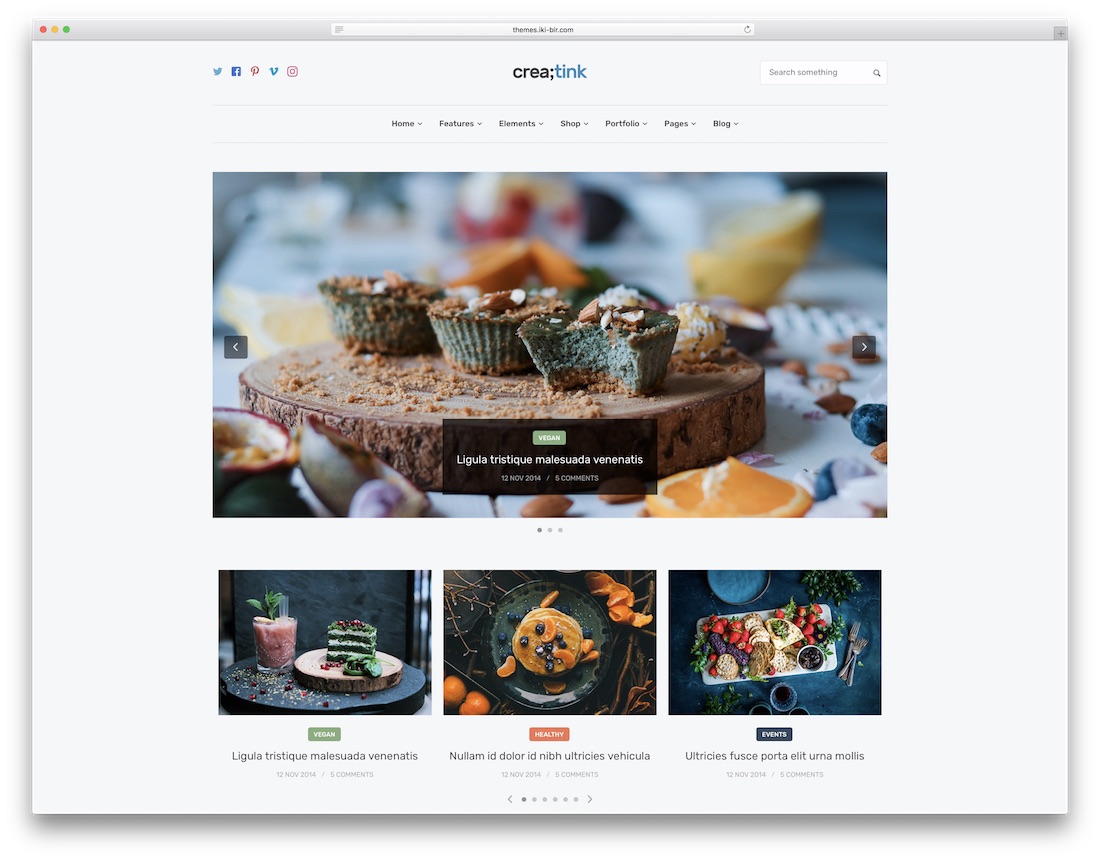
Premium HTML · Best for: Heavily customized blog designs
Crea;tink stacks more than 300 reusable UI elements, twelve pre-made headers, fourteen color presets, and three icon sets into one multi-concept template. Many predesigned blog pages get a writing project moving, four premium extensions are bundled, and the live preview is the quickest way to gauge which of its looks fits your blog.
I hope you were able to find the right website templates for your site. Alternatively, you can look at the best writer websites for some extra inspiration. Furthermore, you can use a drag-and-drop website builder to create your website. Here are Squarespace website templates for writers that you can use to create the website of your dreams without hiring a website designer.
Frequently Asked Questions
What does an author website need?
A books page with buy links per retailer, an about page with your bio and press photos, a newsletter signup, and a contact/press section. Every entry here covers books plus about; the descriptions note which add blogs and events.
Should authors blog on their website?
Only if you’ll sustain it — a stale blog reads worse than none. A newsletter converts better for book launches; all these templates include signup sections you can wire to your email service.
How do I link to multiple retailers per book?
Use the book detail sections’ button rows — Amazon, Bookshop, and your publisher — or route every button through a universal link service like Books2Read to keep one URL per book.
HTML or WordPress for an author site?
If you publish rarely, static HTML is cheap and secure. If you post updates, tour dates, or a blog, choose the WordPress entries — editing HTML for every event gets old fast.

Related Posts





Comments (0)