
10 Best Free SVG Editors Online (Tested & Compared) 2026
SVG (Scalable Vector Graphics) is the standard format for logos, icons, illustrations, and web graphics — and you do not need expensive software to create or edit it. From full-featured desktop applications like Inkscape to browser-based editors you can use without installing anything, the free SVG editing landscape has matured significantly. This guide compares 10 free SVG editors side-by-side by platform, features, collaboration support, and pricing, so you can find the tool that matches your workflow and skill level.
Key Highlights
- Inkscape remains the most powerful free SVG editor available — fully open source with features rivaling Adobe Illustrator
- Figma has become the de facto design tool for web and UI designers, with a generous free tier that includes SVG editing and export
- Linearity Curve (formerly Vectornator) has a free plan on Mac, iPad and iPhone with professional-grade vector tools
- SVG-Edit and Method Draw are fully free, browser-based SVG editors that require no account or installation
- SVGator is the only tool on this list that creates SVG animations — a growing need for modern web design
- The global graphic design services are a $57 billion global industry in 2026 (IBISWorld), yet several professional-grade SVG tools are completely free
Free SVG Editor Comparison (2026)
| Editor | Platform | Layers | Export Formats | Collaboration | Pricing |
|---|---|---|---|---|---|
| Inkscape | Win / Mac / Linux | Yes | SVG, PNG, PDF, EPS, DXF, EMF | No | Free (open source) |
| Boxy SVG | Web + Desktop | Yes | SVG, PNG, JPG, WebP, PDF | No | Free (limited) / $10/yr |
| Vectr | Web (browser) | Yes | SVG, PNG, JPG | Yes (real-time) | Free |
| Figma | Web + Desktop | Yes | SVG, PNG, JPG, PDF | Yes (real-time) | Free tier / from $16/mo |
| Linearity Curve | Mac / iPad / iPhone | Yes | SVG, PNG, JPG, PDF, AI | No | Free plan / paid tiers |
| SVG-Edit | Web (browser) | Yes | SVG, PNG | No | Free (open source) |
| Method Draw | Web (browser) | No | SVG, PNG | No | Free |
| Canva | Web | Limited | SVG (Pro), PNG, JPG, PDF | Yes | Free tier / $15/mo |
| SVGator | Web (browser) | Yes | SVG (animated), GIF, MP4 | No | Free (static export) / from $20/mo |
| Vecteezy Editor | Web (browser) | Yes | SVG, PNG, JPG | No | Free (with library) |
1. Inkscape
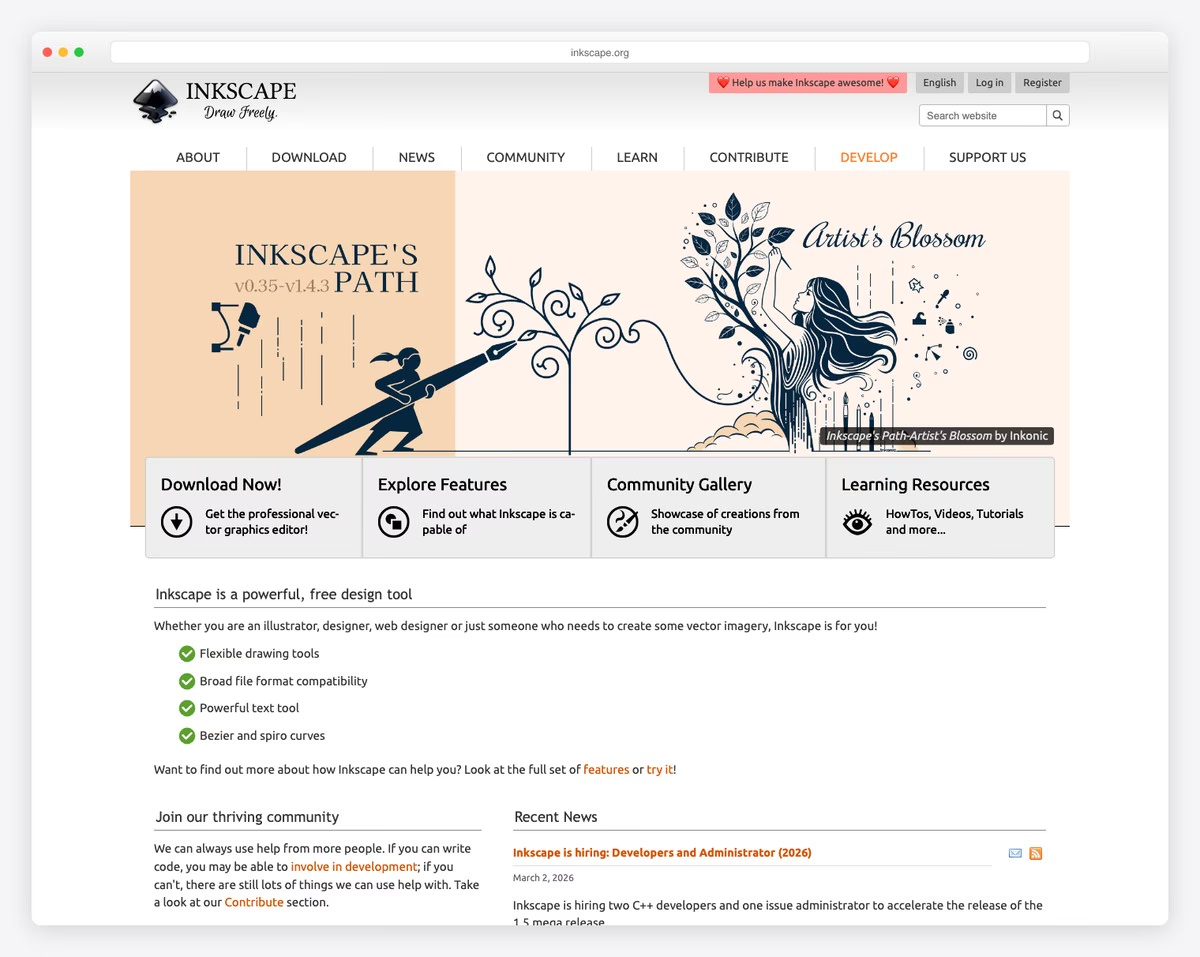
Inkscape is the most feature-complete free SVG editor available and the closest open-source equivalent to Adobe Illustrator. Available on Windows, macOS, and Linux, it supports virtually every SVG feature including complex paths, gradients, patterns, filters, masks, clones, and text on path. Inkscape 1.4 and its 1.4.x maintenance releases added a filter gallery, modular grids, Affinity Designer file import, and refined UI elements that make it more approachable for new users.
For professional SVG work, Inkscape offers Boolean operations (union, difference, intersection), node editing with full bezier control, layer management, extensions/plugins, and batch processing capabilities. It imports and exports a wide range of formats including SVG, PDF, EPS, AI (partial), PNG, and DXF. The extension ecosystem adds functionality like laser cutting preparation, barcode generation, and gear creation.
Inkscape’s main weaknesses are performance on complex files and a learning curve that can intimidate beginners. The interface has improved significantly over the years but still feels less polished than commercial tools like Figma or Illustrator. There is no real-time collaboration, no cloud syncing, and no mobile version. For solo designers and developers who need maximum SVG editing power at zero cost, Inkscape is the undisputed champion. Check our guide to free Photoshop alternatives for raster editing options.
2. Boxy SVG
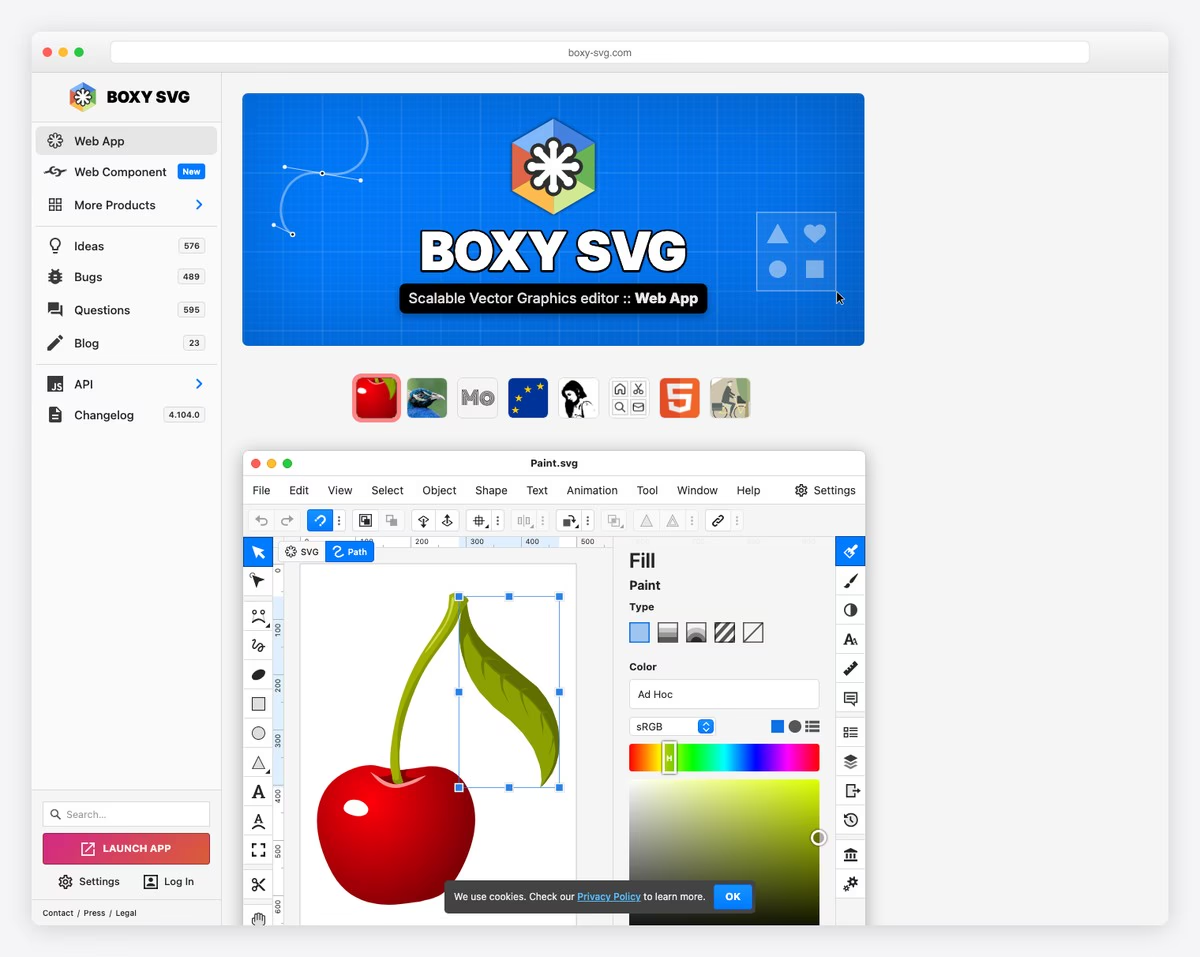
Boxy SVG is a modern SVG editor with a clean, minimal interface that feels more contemporary than Inkscape. It runs both in the browser and as a desktop app (Chrome OS, macOS, Windows, Linux). The free version covers basic SVG editing — shapes, paths, text, gradients, and groups. The premium version ($10/year) adds features like advanced CSS styling, JavaScript editing, and export to additional formats.
What makes Boxy SVG unique is its focus on clean SVG output. While many editors produce bloated SVG code full of unnecessary attributes, Boxy SVG generates lean, well-structured SVG that is ready for web use. For web developers who need to edit SVGs and care about the resulting code quality, this focus is a significant advantage. The editor also provides a built-in code view where you can edit SVG markup directly alongside the visual canvas.
Boxy SVG’s limitations are its smaller feature set compared to Inkscape (no extensions, fewer path operations) and no real-time collaboration. The $10/year premium is modest for the added features, but the free tier is capable enough for basic SVG creation and editing. For web-focused SVG work where clean code output matters, Boxy SVG punches well above its price.
3. Vectr
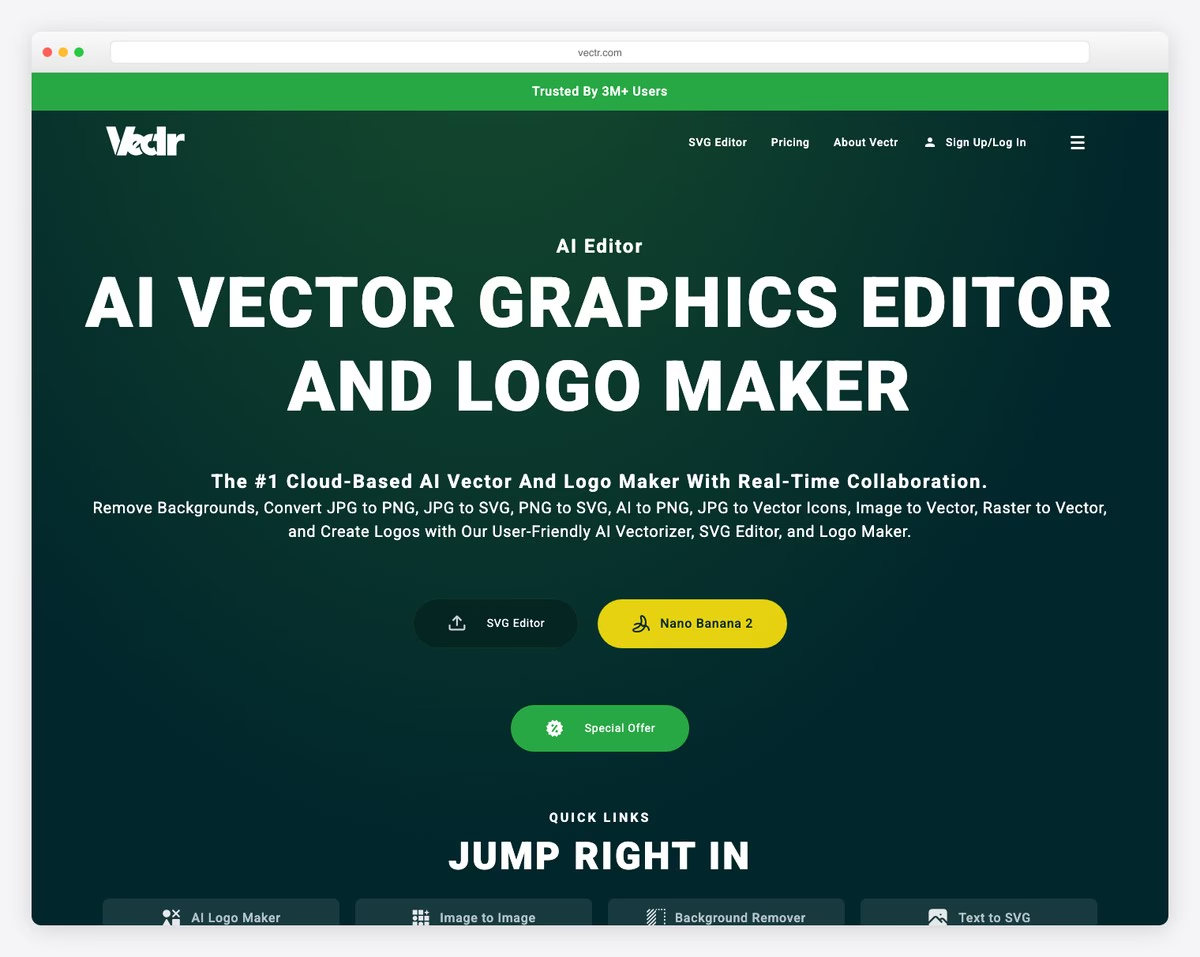
Vectr is a free vector graphics editor that runs in the browser, with optional paid credits for its newer AI tools. Its standout feature is real-time collaboration — multiple people can edit the same document simultaneously, similar to Google Docs. For teams working on SVG assets together, this collaboration feature is rare among free tools and eliminates the need for file-passing workflows.
The editing tools cover shapes, paths, text, layers, gradients, shadows, and filters. Vectr exports to SVG, PNG, and JPG. The interface is deliberately simple, which makes it accessible to beginners but limits advanced users who need features like Boolean operations, mesh gradients, or complex masking. Vectr includes tutorials and tooltips throughout the interface to help new users learn vector editing concepts.
Vectr is best for teams and beginners who need collaborative vector editing without complexity. For solo professionals doing advanced SVG work, Inkscape or Figma will serve better. But for quick SVG creation, simple icon design, and collaborative projects where multiple team members need to contribute, Vectr’s combination of free pricing and real-time collaboration is unique at this price point.
4. Figma
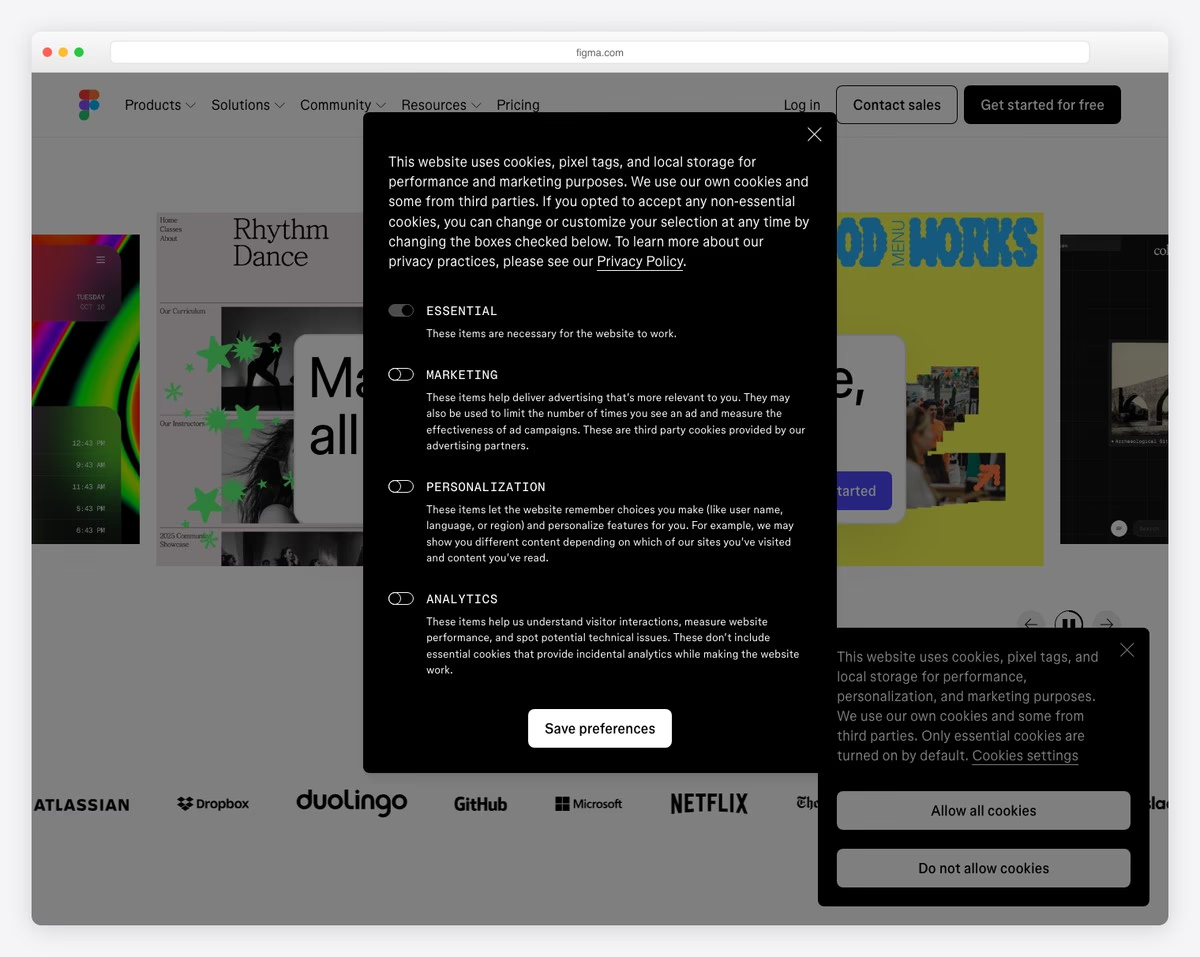
Figma is not an SVG editor by design — it is a comprehensive UI/UX design tool. But its vector editing capabilities, combined with SVG import/export, make it one of the most practical SVG tools available, especially for web designers who already use it for interface work. The free Starter plan includes unlimited personal drafts, a limited number of shared team files, unlimited viewers and real-time collaboration; Professional seats start at $16/month.
Figma’s vector tools include pen tool, Boolean operations, component systems, auto-layout, and constraints. You can import SVG files, edit paths and shapes, apply fills and strokes, and export clean SVG. The plugin ecosystem extends functionality with SVG optimization, icon management, and code generation tools. Real-time collaboration means teams can work on vector assets simultaneously.
Where Figma falls short for dedicated SVG work is in advanced features like node editing precision (Inkscape is superior), mesh gradients, pattern fills, and extensions. Figma also requires an internet connection for the web app (the desktop app has limited offline capability). For UI/UX designers who occasionally need SVG editing integrated into their existing workflow, Figma is the most convenient choice. For dedicated vector illustration or complex SVG creation, Inkscape offers more specialized tools.
5. Linearity Curve (formerly Vectornator)
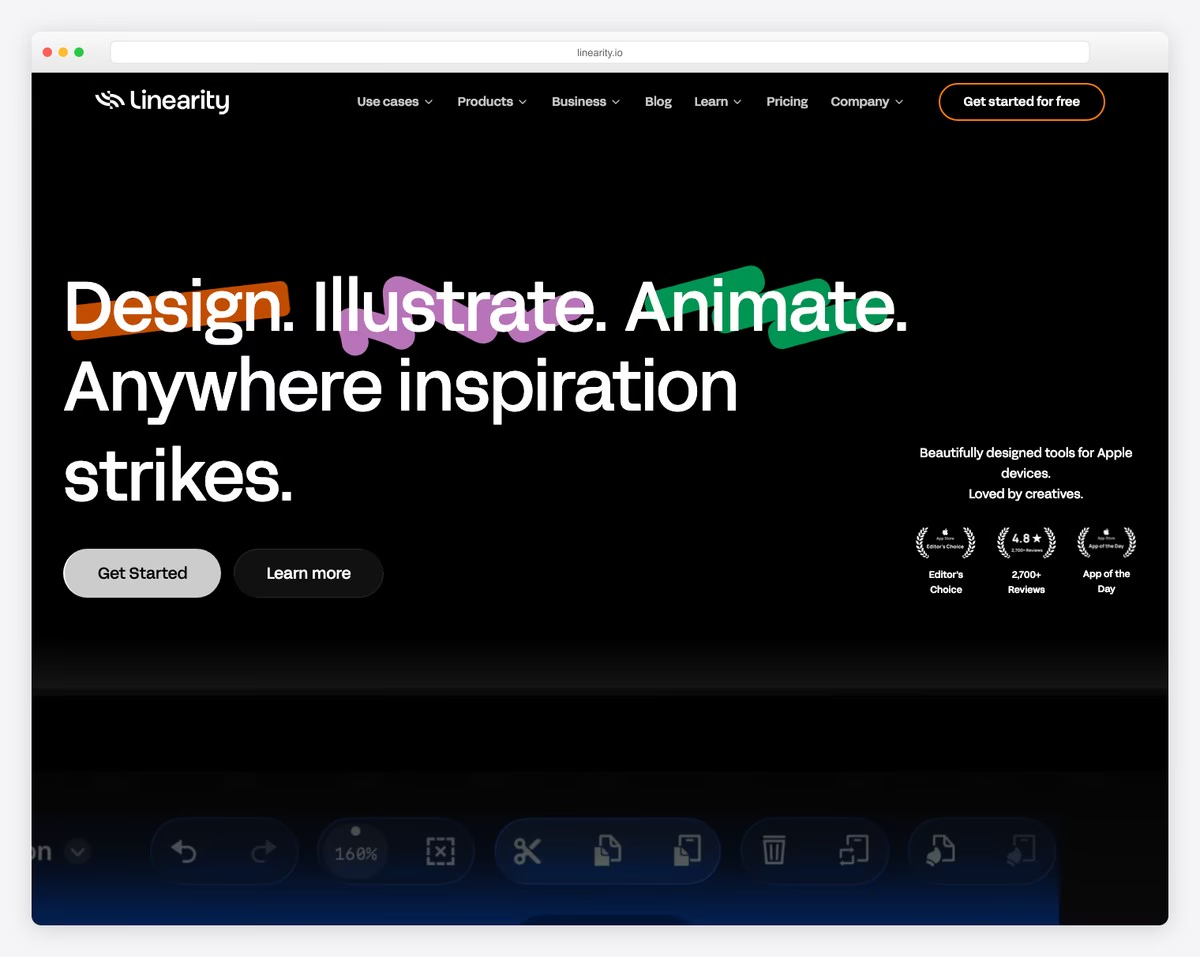
Linearity Curve, previously known as Vectornator, is a professional vector design tool for Mac, iPad and iPhone with a free plan; paid Pro and Studio plans add more AI credits, brand kits and storage. Since Vectornator rebranded as Linearity in 2023, the app has continued to evolve with features like auto-trace (converting raster images to vectors), advanced typography tools, and a growing template library. It supports Apple Pencil on iPad, making it the best free option for tablet-based vector work.
The tool offers pen/pencil tools, shape builder, Boolean operations, gradients, masks, layers, and symbols. Export formats include SVG, PNG, JPG, PDF, and even AI (Adobe Illustrator) files. The interface is polished and feels native on Apple devices, with smooth performance even on complex documents. Linearity also offers Linearity Move for vector animation, extending your workflow beyond static SVGs.
The main limitation is Apple-only availability — there is no Windows, Linux, or web version. If you are in the Apple ecosystem, Linearity Curve is arguably the best free vector tool available, rivaling paid apps in fit and finish. For iPad users specifically, the Apple Pencil integration makes it the premier tool for hand-drawn vector illustration. Windows users will need to look at Inkscape, Figma, or one of the web-based options instead.
6. SVG-Edit
SVG-Edit is a fully open-source, browser-based SVG editor that you can use at svgedit.netlify.app or host on your own server. No account, no installation, no cost — open the URL and start editing. It supports basic shapes, paths, text, images, layers, gradients, and groups. The interface is functional if somewhat utilitarian, focusing on direct SVG manipulation.
As an open-source project on GitHub, SVG-Edit has been maintained by a community of contributors for over 15 years. It supports SVG 1.1 features and can import/export SVG and PNG. For developers, the ability to self-host SVG-Edit means you can integrate it into internal tools or customize it for specific workflows. The source code is well-documented and actively maintained.
SVG-Edit is limited compared to desktop editors — no Boolean operations, no advanced path editing, and no plugin system. But for quick SVG edits — changing colors, modifying paths, adding text, resizing elements — it is the fastest tool available because there is literally zero setup. Bookmark it as your go-to for quick SVG fixes when you do not want to open a full editor.
7. Method Draw
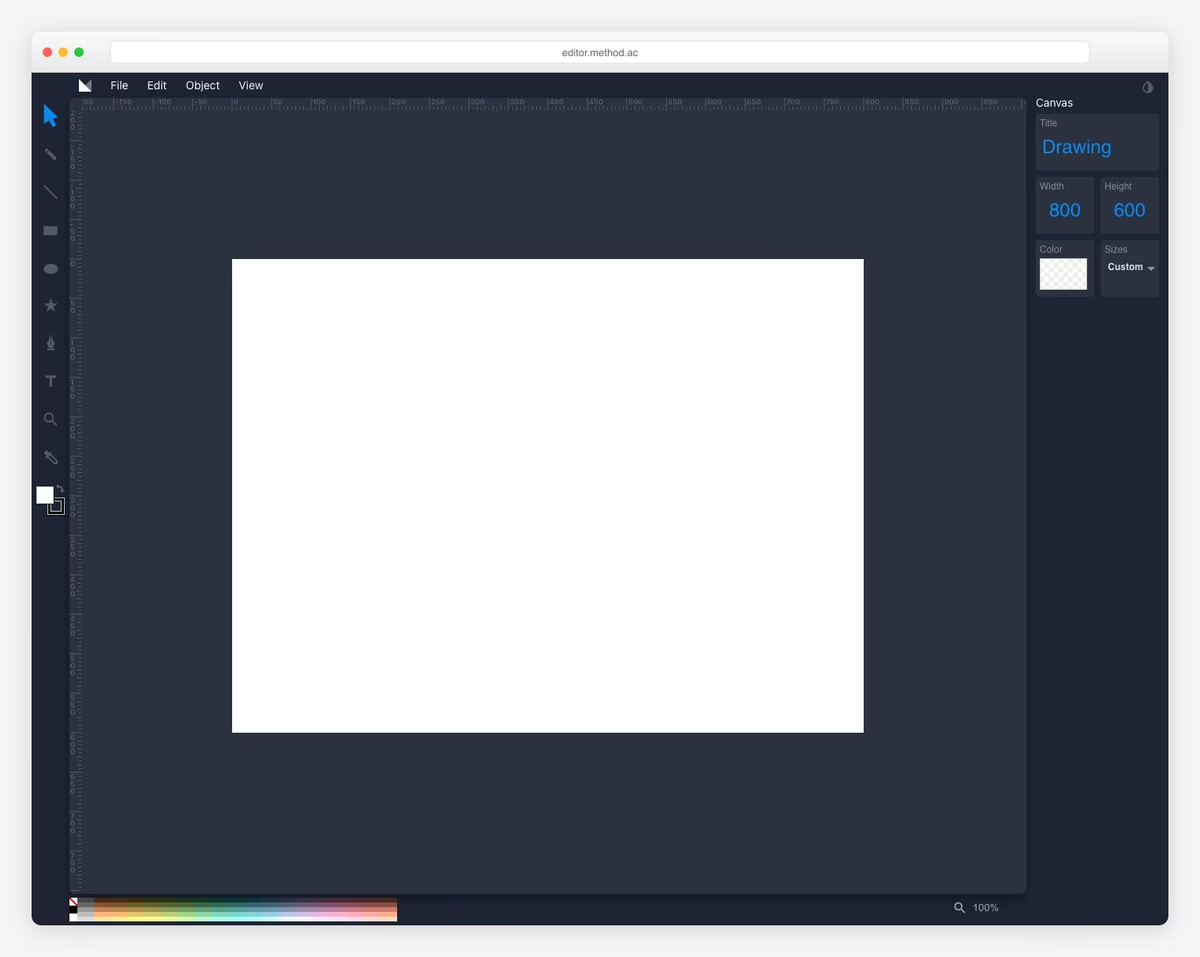
Method Draw is a simplified fork of SVG-Edit with a cleaner, more modern interface. Like SVG-Edit, it runs entirely in the browser with no installation or account required. The tool focuses on simplicity — basic shapes, paths, text, fills, strokes, and alignment tools. It exports to SVG and PNG, and the entire editing experience is designed to be approachable for non-designers.
The interface is the key differentiator from SVG-Edit. Method Draw strips away complexity and presents a clean canvas with intuitive tools. For people who need to create simple SVG icons, logos, or graphics without learning a complex application, Method Draw’s minimal approach is its strength. The tool loads instantly in any modern browser and works on tablets as well as desktops.
Method Draw lacks layers, advanced path editing, gradients, and most features that professional designers need. It is not a substitute for Inkscape or Figma. But for its intended use case — quick, simple SVG creation and editing in the browser — Method Draw is the most user-friendly option available. It is especially useful for developers who need to create basic SVG graphics for web projects without leaving the browser.
8. Canva
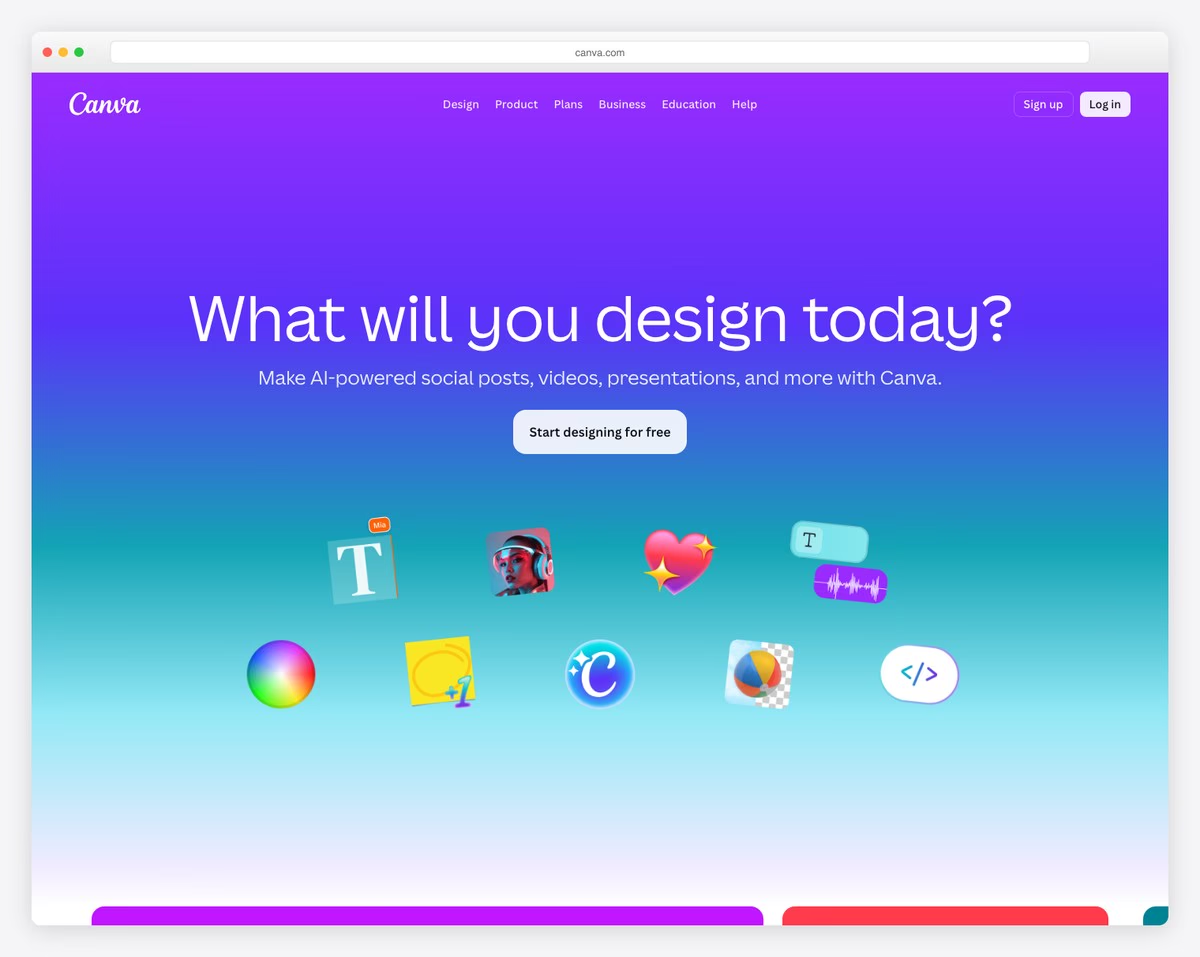
Canva is primarily a graphic design platform for creating social media posts, presentations, and marketing materials. It can import and edit SVG files, though its vector editing capabilities are basic compared to dedicated tools. The free tier includes a massive template library, stock assets, and basic editing. SVG export is only available on Canva Pro ($15/month) — a significant limitation for the free tier.
Canva’s SVG editing allows you to change colors, resize elements, add text, and group/ungroup objects. You can import SVG files and modify them within Canva’s editor, then export as PNG, JPG, or PDF (SVG on Pro only). Canva also offers real-time collaboration, shared brand kits, and integration with stock photo/video libraries.
For dedicated SVG creation and editing, Canva is not the right tool — its vector capabilities are too limited and SVG export requires a paid plan. However, if you already use Canva for other design work and occasionally need to modify SVG files, the integrated workflow can be convenient. For serious SVG work, use Inkscape, Figma, or Boxy SVG instead.
9. SVGator
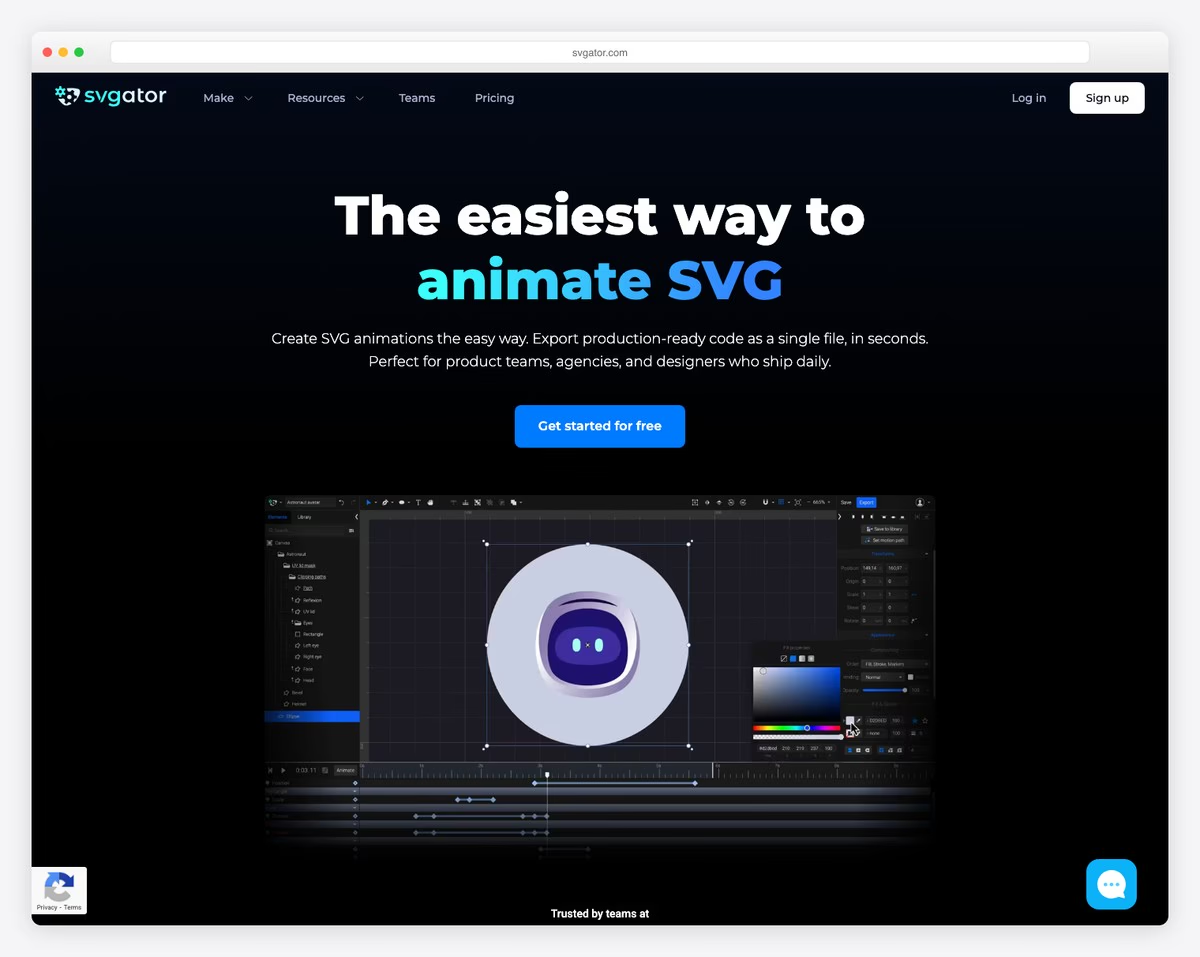
SVGator is the only tool on this list focused on SVG animation. While other editors create static SVGs, SVGator lets you add keyframe-based animations — transitions, morphing, rotation, scaling, opacity changes — and export the result as an animated SVG file that plays natively in web browsers. The free plan includes the full editor and every animator, but only static SVG export; exporting animations requires a paid plan.
The animation editor uses a timeline interface similar to video editing tools. You import a static SVG, select elements, add keyframes on the timeline, and preview the animation in real-time. SVGator supports CSS animations, SMIL, and JavaScript-based animations within the SVG. Export options include animated SVG, GIF, and MP4 video. For web developers and marketers creating animated icons, loading spinners, and interactive graphics, SVGator fills a unique gap.
Paid plans start at $20/month (billed yearly) for animated SVG and Lottie export, with video and GIF export on the Pro plan. SVGator is not designed for creating SVGs from scratch (use Inkscape or Figma for that) — it is specifically for animating existing SVG files. Within that niche, it is the most accessible tool available, requiring no coding knowledge to produce professional SVG animations.
10. Vecteezy Editor
Vecteezy is best known as a free vector asset marketplace, but it also includes a browser-based vector editor that can create and edit SVG files. The editor supports shapes, paths, text, layers, and basic formatting. Its unique advantage is direct access to Vecteezy’s massive library of free vector assets — you can browse, customize, and download SVG files all within the same platform.
The editing tools are mid-range in capability — more powerful than Method Draw but less than Inkscape or Figma. You can edit paths, change colors, add and modify text, and export to SVG, PNG, and JPG. The integration with Vecteezy’s library means you can start with a professional template or illustration and customize it rather than creating from scratch.
The editor runs in Chrome, Chromium or Opera. Vecteezy’s free tier includes ads and attribution requirements on some assets. The Pro plan ($14/month) removes these limitations and adds premium content. As a standalone SVG editor, Vecteezy is decent but not exceptional. Its real value is the combined editing plus asset library — if you frequently start with existing vector assets and need to customize them, Vecteezy’s integrated approach saves time compared to downloading from one site and editing in another tool.
Frequently Asked Questions
What is the best free SVG editor overall?
Inkscape is the best free SVG editor for power and features — it supports virtually every SVG feature and rivals Adobe Illustrator for vector work. For a more modern, user-friendly experience, Figma (free tier) or Linearity Curve (Mac/iPad) are excellent alternatives. If you want something that works instantly in the browser with no setup, Boxy SVG is the best browser-based option.
Inkscape vs Figma — which should I use for SVG editing?
Use Inkscape if you need advanced SVG features like mesh gradients, extensions, pattern fills, or precise node editing — it is the more capable SVG editor. Use Figma if you are already in its ecosystem for UI/UX design and need occasional SVG editing integrated into your existing workflow. Figma is easier to learn, has real-time collaboration, and works in the browser, but its vector tools are less specialized than Inkscape’s.
Can I edit SVG files in a web browser?
Yes — several excellent browser-based SVG editors exist. Boxy SVG offers the best combination of features and interface quality. SVG-Edit is fully open source and requires no account. Method Draw is the simplest option for quick edits. Figma, Vectr, and Vecteezy Editor also work entirely in the browser. All of these work without installing any software.
What is the best SVG editor for beginners?
Vectr is the most beginner-friendly SVG editor with its simple interface and built-in tutorials. Method Draw is even simpler if you just need basic shapes and paths — open it in your browser and start drawing. Canva is the easiest if you are modifying existing designs rather than creating from scratch. For beginners who want to grow into professional-level work, Figma has the gentlest learning curve among powerful tools.
Key Takeaways
- Inkscape is the most powerful free SVG editor available, with features approaching Adobe Illustrator — ideal for professional vector work on any operating system.
- For web-focused SVG editing with clean code output, Boxy SVG generates the leanest SVG markup among all editors tested.
- Figma and Vectr are the only free options with real-time collaboration, making them essential for team-based vector workflows.
- If you need SVG animation, SVGator is the only tool on this list that supports it — no coding required, though exporting animations needs a paid plan.
- Apple users should try Linearity Curve — it has a free plan, is professional-grade, and has the best Apple Pencil support for vector illustration on iPad.

Related Posts
Very use full article!!
But i think Adobe Illustrator is the best option for SVG File creation…
Ravi,
That’s like saying the Bugatti Chiron is the best car for everyone. It might well be, but can everyone afford it? Illustrator is a great tool, but not everyone can afford it and not everyone needs it. For example, if you need to create a single SVG image and won’t need the software afterwards, is it really worth buying?