

Where to Sell Digital Products: 15 Platforms Compared (Fees & Features)
Last updated: March 2026
Selling digital products — ebooks, courses, templates, software, printables — has never been easier, but choosing the right platform can mean the difference between keeping 90% of your revenue or losing nearly half to fees and commissions. The digital products market hit $331 billion in 2025, and dozens of platforms now compete for creators’ attention with wildly different pricing models, feature sets, and target audiences. This guide compares 15 platforms side-by-side so you can pick the one that fits your product type, audience, and budget.
Key Highlights
- Ko-fi charges 0% transaction fees on all sales — the lowest fee of any platform on this list
- Gumroad simplified to a flat 10% fee with no monthly costs, making it the easiest platform to start selling on
- Lemon Squeezy acts as merchant of record, handling global sales tax automatically — a major advantage for SaaS and software sellers
- WooCommerce is the only fully self-hosted, free option, giving you complete control but requiring technical setup
- Creative Market takes a 50% commission — the highest on this list — but provides access to millions of design-focused buyers
- Kajabi is the most expensive at $149/mo but is the only all-in-one platform with website builder, email marketing, course hosting, and community built in
- The global digital products market is projected to reach $450 billion by 2028, growing at a 10.8% CAGR
Digital Product Platform Comparison (2026)
| Platform | Transaction Fee | Monthly Fee | Free Plan | Best For |
|---|---|---|---|---|
| Gumroad | 10% flat | $0 | Yes | Creators & indie makers |
| Payhip | 5% (free plan) | $0 – $99 | Yes | Ebooks & courses |
| Shopify | 2.9% + 30¢ (payment processing) | $39 – $399 | No (3-day trial) | Full ecommerce store |
| Lemon Squeezy | 5% + 50¢ | $0 | Yes | SaaS & software |
| Stan Store | 0% | $29 | No | Link-in-bio creators |
| Podia | 0% (paid plans) | $39 – $89 | No | Courses + community |
| Teachable | 0% (paid plans) | $39 – $199 | Yes (limited) | Online courses |
| Sellfy | 0% | $29 – $159 | No (14-day trial) | Print-on-demand + digital |
| Ko-fi | 0% | $0 (Gold: $6/mo) | Yes | Small creators |
| Etsy | 6.5% + $0.20 listing | $0 | Yes | Digital art & printables |
| Creative Market | 50% commission | $0 | Yes | Design assets |
| WooCommerce | 0% (self-hosted) | $0 (hosting costs apply) | Yes | WordPress users |
| SendOwl | 0% | $9 – $39 | No | Delivery automation |
| Whop | 3% | $0 | Yes | Communities & memberships |
| Kajabi | 0% | $149 – $399 | No (14-day trial) | Premium course creators |
1. Gumroad
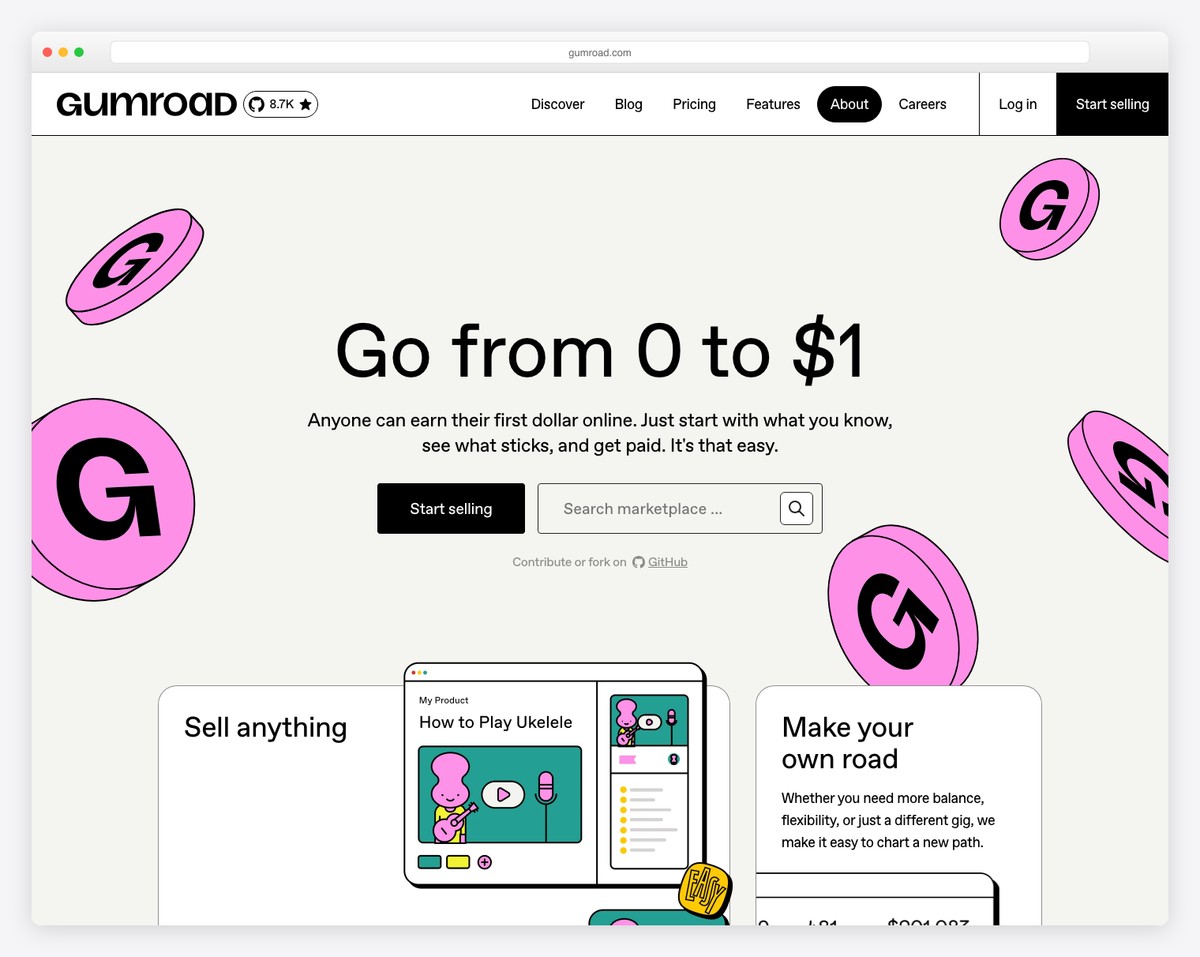
Gumroad is the go-to platform for indie creators who want to start selling digital products in minutes without paying monthly fees. After restructuring its pricing in 2023, Gumroad charges a flat 10% fee on every sale — no monthly subscription, no setup costs. You create a product page, set your price, and share the link. That simplicity is both its greatest strength and its limitation.
The platform supports ebooks, music, software, courses, memberships, and physical products. It handles VAT collection for EU sales, provides basic email marketing tools, and offers customizable product pages. Gumroad processes over $200 million in creator sales annually and has paid out more than $1 billion total since launch. The 10% fee is higher than alternatives like Payhip or Lemon Squeezy, but the zero monthly cost means you never pay when you are not selling.
Where Gumroad falls short is in advanced features. There is no built-in course builder, limited storefront customization, and the analytics are basic compared to platforms like Kajabi or Podia. If you are selling a single ebook or template and want the fastest path to your first sale, Gumroad remains hard to beat. If you are building a brand with multiple product lines, you will likely outgrow it.
2. Payhip
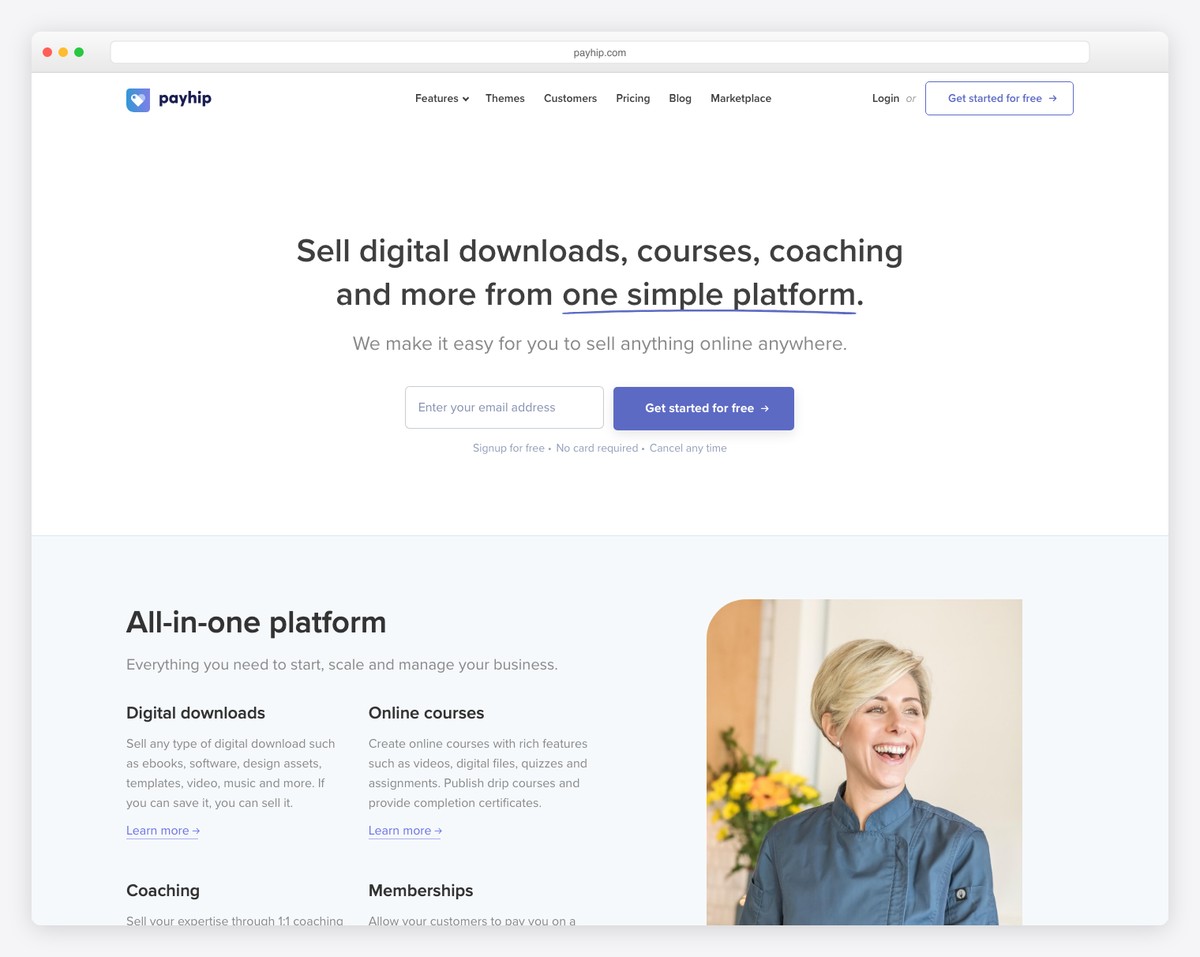
Payhip positions itself as the affordable alternative to Gumroad, and the numbers back it up. The free plan charges just 5% per transaction — half of what Gumroad takes. Upgrade to the Plus plan at $29/month and that drops to 2%. The Pro plan at $99/month eliminates transaction fees entirely. For sellers doing consistent volume, the math favors Payhip heavily.
The platform supports digital downloads, online courses, coaching sessions, and memberships. It includes built-in EU VAT handling, affiliate programs, discount codes, and basic email marketing. The course builder is surprisingly capable for a platform at this price point, offering drip content, quizzes, and completion certificates. You can embed Payhip’s checkout directly on your own website, which keeps the buying experience seamless.
Payhip’s main drawback is visibility. Unlike Etsy or Creative Market, there is no built-in marketplace — you need to drive all your own traffic. The storefront templates are functional but limited in design flexibility. For creators selling ebooks, templates, or small courses who want low fees without the complexity of WooCommerce, Payhip hits a sweet spot that few competitors match.
3. Shopify

Shopify is not a digital-products-first platform, but its sheer scale and flexibility make it a strong contender. With over 4.8 million active stores and a $8.9 billion revenue run rate, Shopify has built an ecosystem that can handle virtually any selling scenario. Digital products work through the free Digital Downloads app or third-party apps like Sky Pilot, which add features like PDF stamping, license keys, and streaming video.
The Basic plan starts at $39/month with payment processing at 2.9% + 30 cents. You get a full-featured online store with custom domains, abandoned cart recovery, discount codes, and access to thousands of apps. Shopify’s checkout is one of the highest-converting in ecommerce, and its built-in Shopify analytics provide deep insights into customer behavior.
The downside for digital-only sellers is that you are paying for physical product features you may never use — shipping settings, inventory management, and warehouse integrations. If digital products are your sole business, platforms like Gumroad or Payhip are more cost-effective. But if you sell both physical and digital products, or plan to scale into a full ecommerce brand, Shopify is the most battle-tested option available.
4. Lemon Squeezy
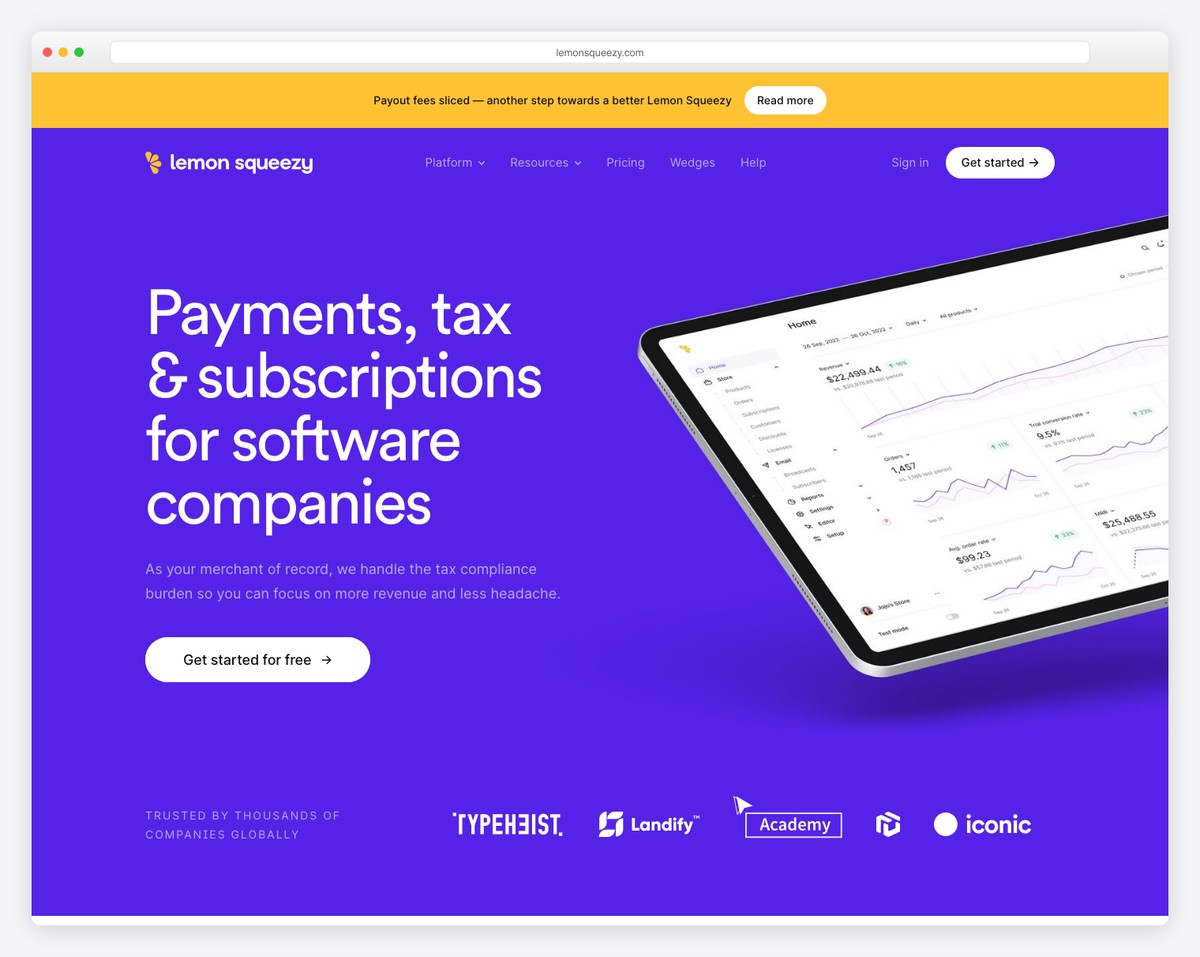
Lemon Squeezy solves the single biggest headache for software and SaaS sellers: global sales tax compliance. As a merchant of record, Lemon Squeezy handles VAT, GST, and sales tax collection and remittance in every country automatically. You do not need to register for tax IDs in the EU, UK, or anywhere else. For solo developers and small SaaS companies, this alone can save thousands in accounting and compliance costs.
The platform charges 5% + 50 cents per transaction with no monthly fees. It supports software licenses, subscriptions, one-time purchases, pay-what-you-want pricing, and lead magnets. The checkout experience is modern and fast, with support for credit cards, PayPal, and local payment methods. Lemon Squeezy also provides built-in affiliate management, email marketing, and a no-code storefront builder.
The 5% + 50-cent fee adds up on lower-priced items — a $5 product loses $0.75 (15%) to fees. For higher-priced software, SaaS subscriptions, and digital tools, the economics work well and the merchant-of-record feature pays for itself. Lemon Squeezy has grown rapidly since launch, processing over $100 million in transactions, and is now the default choice for many indie hackers and bootstrapped SaaS founders.
5. Stan Store

Stan Store is built for social media creators who sell directly from their bio link. For $29/month with zero transaction fees, you get a link-in-bio page that doubles as a storefront. Followers tap your Instagram, TikTok, or YouTube bio link and can immediately purchase courses, digital downloads, coaching sessions, or memberships — all without leaving a mobile-optimized experience.
The platform includes a course builder, email collection, calendar booking for coaching, and basic analytics. It integrates with Stripe for payments and supports one-time purchases, subscriptions, and bundles. The setup is deliberately simple — you can go from signup to first product listed in under 15 minutes. Stan Store also offers an affiliate program where creators can promote each other’s products.
Stan Store’s limitation is its scope. It is designed for a specific workflow — social media to bio link to purchase — and does not try to be a full ecommerce platform. There are no advanced storefront customization options, limited integrations compared to Shopify, and the $29/month feels expensive if you are only making a few sales. But for creators with active social followings who want to monetize without building a separate website, it is purpose-built and effective.
6. Podia
Podia combines digital downloads, online courses, webinars, and community features into a single platform starting at $39/month with zero transaction fees. The pitch is consolidation — instead of paying for a course platform, a community tool, an email provider, and a website builder separately, Podia bundles everything together. For creators who sell knowledge products, this can simplify operations significantly.
The course builder supports video, text, quizzes, and drip scheduling. The community feature lets you create discussion spaces tied to your courses or available as standalone paid memberships. Podia also includes email marketing, affiliate tracking, and custom website pages. The interface is clean and modern, and the learning curve is shallow compared to more complex platforms like Kajabi.
Where Podia struggles is at scale. The analytics are basic, the email marketing tools lack advanced segmentation, and the website builder is limited compared to dedicated tools. Podia works best for solo creators or small teams selling a handful of courses and community memberships. Once you need advanced automation, detailed reporting, or deep integrations, you may find yourself outgrowing what Podia offers.
7. Teachable

Teachable is one of the original online course platforms and remains a strong choice for creators focused primarily on educational content. Plans start at $39/month (Basic) with zero transaction fees, scaling to $199/month (Pro) for advanced features like graded quizzes, custom completion certificates, and priority support. There is also a free plan, though it charges $1 + 10% per transaction.
The course builder is Teachable’s strength. It supports video, text, PDF, and audio lectures with drip scheduling, prerequisite course requirements, and built-in student discussions. Teachable also handles coaching products with milestone tracking and integrated booking. The platform processes payments through its own gateway (Teachable Payments), which simplifies payouts but means you are locked into their payment infrastructure.
Teachable’s weaknesses show outside of course delivery. The website builder is minimal, there is no built-in community feature (you need third-party integrations), and email marketing capabilities are limited compared to Podia or Kajabi. If courses are your core product and you plan to use separate tools for email and community, Teachable’s focused approach and solid course-building tools make it a reliable choice.
8. Sellfy
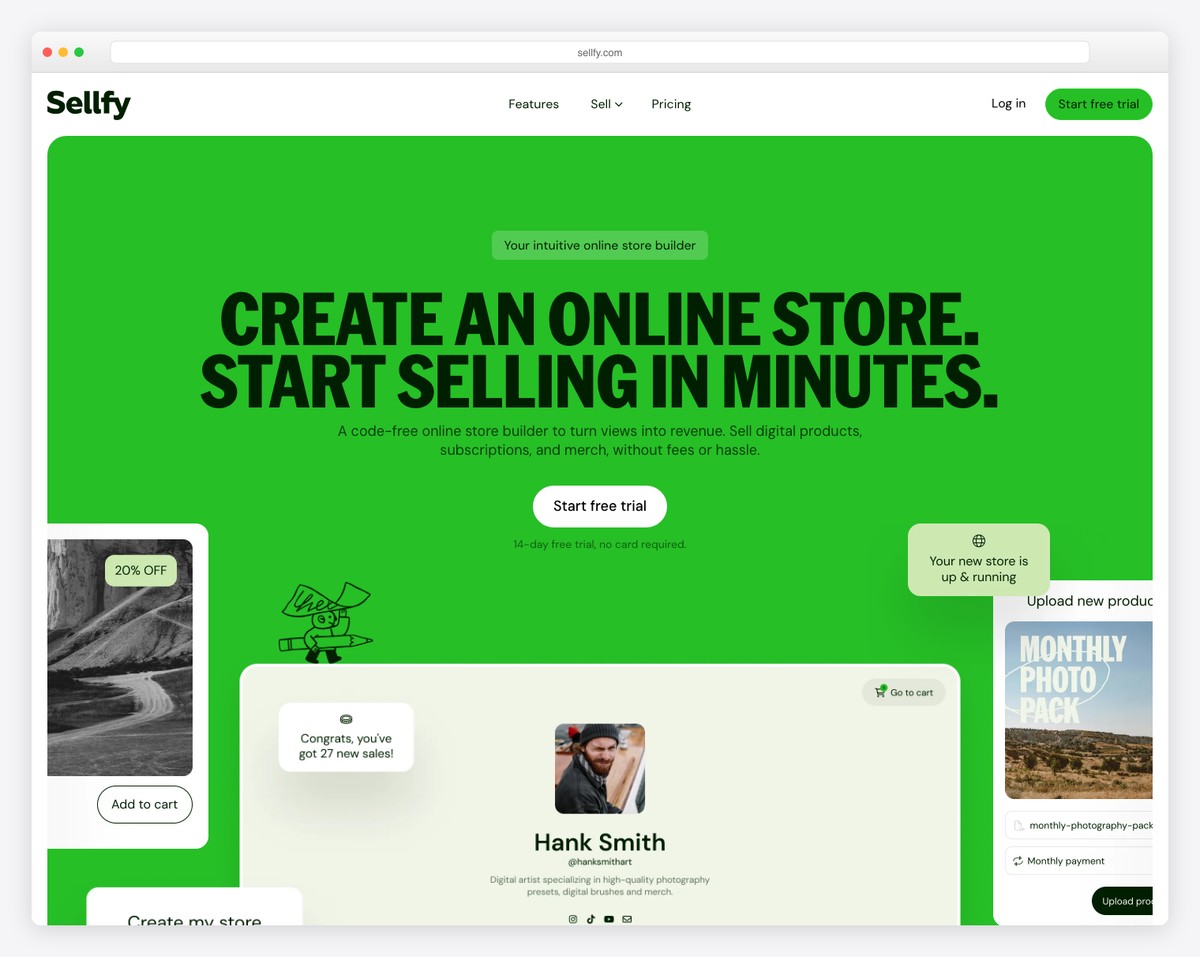
Sellfy stands out by combining digital product sales with print-on-demand in a single platform. Starting at $29/month with zero transaction fees, you can sell ebooks, music, videos, and subscriptions alongside custom t-shirts, mugs, and phone cases — all fulfilled automatically. This hybrid model is unique among digital product platforms and appeals to creators who want to monetize both digital content and merchandise.
The storefront builder creates a clean, mobile-responsive store in minutes. Sellfy includes built-in email marketing, discount codes, upselling features, and basic analytics. Products can be embedded on existing websites or sold through a standalone Sellfy store. The print-on-demand integration handles production, shipping, and customer service for physical products, so you focus on design and marketing.
The trade-off is that Sellfy’s tools are broad but not deep. The email marketing is basic, the course builder is absent, and the storefront customization is limited compared to Shopify. Sellfy works best for creators who want a simple, all-in-one solution for selling a mix of digital and print-on-demand products without juggling multiple platforms. For digital-only sellers, other options on this list offer more for less.
9. Ko-fi
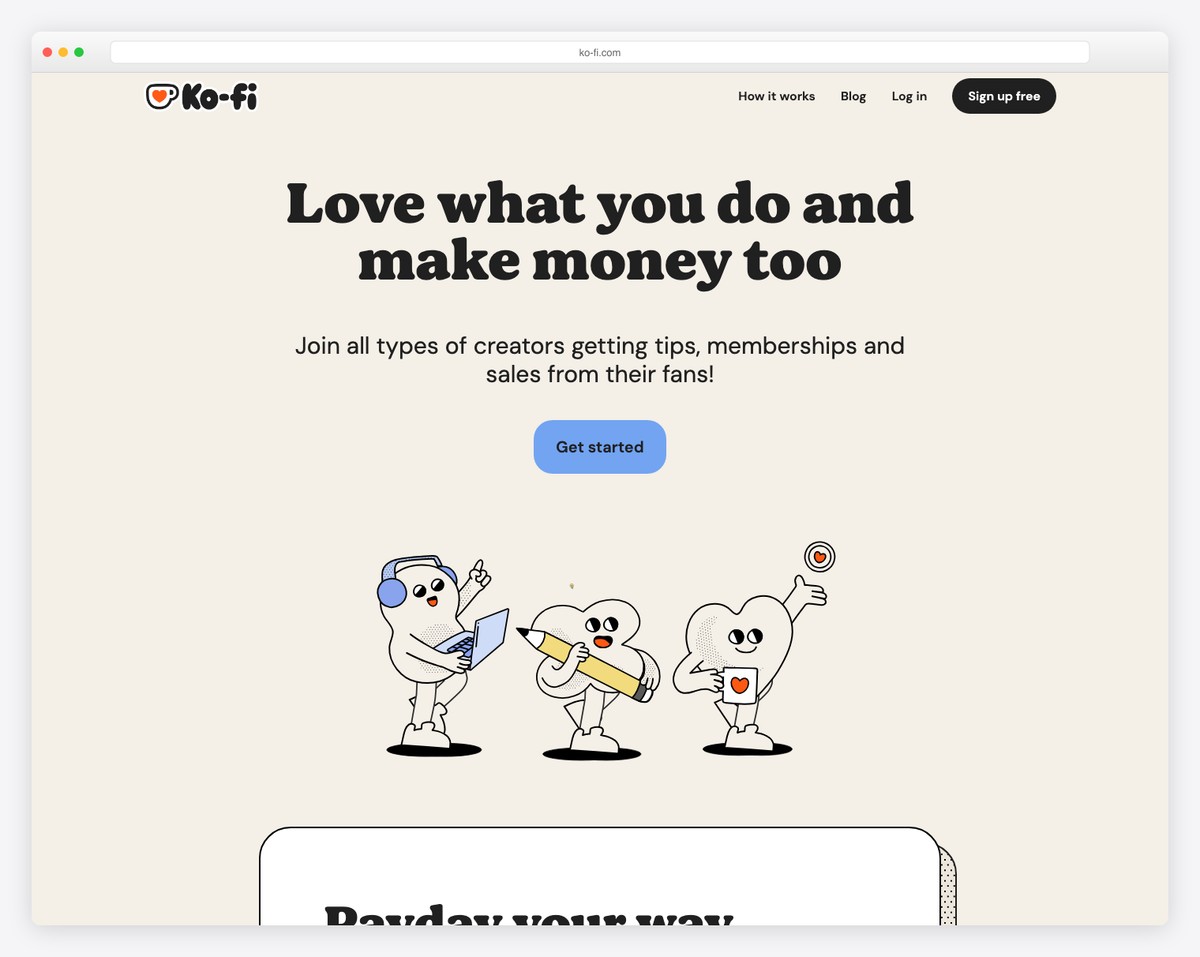
Ko-fi has evolved from a simple tip jar into a legitimate digital product platform with the lowest fees on this list: 0% on all sales, even on the free plan. You keep everything except payment processor fees (Stripe or PayPal). The optional Gold membership at $6/month adds features like shop customization, membership tiers, and advanced analytics — but the core selling functionality is completely free.
You can sell digital downloads, commissions, memberships, and physical products on Ko-fi. The platform also supports donations, goal tracking, and a feed that functions like a mini blog. Ko-fi’s built-in audience discovery helps new creators get found, and the community-oriented design encourages repeat support. Over 1 million creators use Ko-fi, and the platform has processed hundreds of millions in creator earnings.
Ko-fi’s limitations are its simplicity. There is no course builder, no advanced email marketing, and the storefront design options are constrained. Product pages are functional but basic. Ko-fi works best for independent artists, writers, musicians, and small creators selling a few digital products while building a direct relationship with their audience. If you need zero fees and minimal complexity, Ko-fi is unmatched.
10. Etsy
Etsy provides something most digital product platforms cannot: a massive built-in audience. With over 96 million active buyers, Etsy is where millions of people search for printables, digital planners, SVG files, Canva templates, Lightroom presets, and digital art. The platform charges 6.5% per transaction plus a $0.20 listing fee, and listings last four months before requiring renewal.
For digital product sellers, Etsy handles instant delivery automatically. Buyers purchase, and the file is available for immediate download. Etsy’s search algorithm rewards products with good reviews, competitive pricing, and optimized titles and tags, which means success on Etsy requires understanding its SEO system. Top digital product sellers on Etsy report six-figure annual revenues from printables and templates alone.
The drawbacks are the fees (which have increased over the years), the competitive marketplace, and limited branding control. Your shop exists within Etsy’s ecosystem — you cannot fully customize the experience or own the customer relationship the way you can on your own platform. Many successful sellers use Etsy as a discovery channel while building a presence on their own site through Shopify or WooCommerce for repeat customers.
11. Creative Market
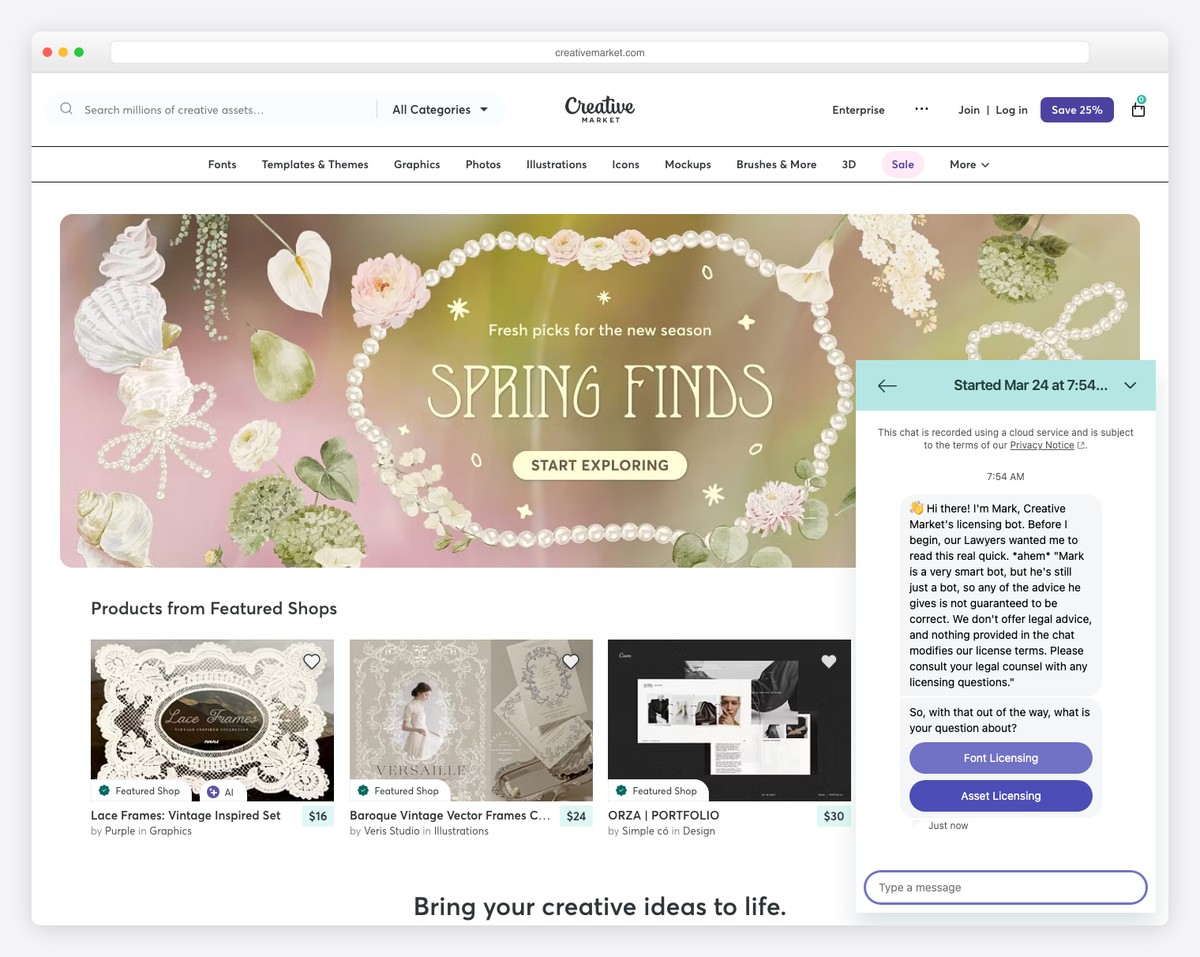
Creative Market is the premier marketplace for design assets — fonts, templates, graphics, themes, photos, and add-ons. The platform takes a 50% commission on all sales, which is the highest on this list by a wide margin. That steep cut pays for access to a highly targeted audience of designers, developers, and creative professionals who come to the platform specifically looking for premium design resources.
Top sellers on Creative Market earn six figures annually, with some font and template creators surpassing $1 million in total earnings. The platform handles marketing, payment processing, and customer support. Your products appear in category pages, search results, and curated collections. Creative Market also runs a weekly Free Goods bundle that drives massive traffic and can significantly boost a new seller’s visibility.
The 50% commission means you need to price accordingly or accept lower margins. Creative Market is best used as a distribution channel alongside your own website — sell through Creative Market for discovery and through your own store (using Gumroad, Payhip, or WooCommerce) for direct sales at full margin. For design assets specifically, no other marketplace matches Creative Market’s buyer intent and traffic quality.
12. WooCommerce

WooCommerce is the only fully self-hosted, open-source option on this list. The plugin is free, charges zero transaction fees, and gives you complete control over your store’s design, functionality, and customer data. It powers over 6.5 million online stores and holds a 36% share of the global ecommerce market. For WordPress users, WooCommerce is the natural choice for selling digital products.
Setting up digital product sales in WooCommerce is straightforward — create a product, mark it as “Virtual” and “Downloadable,” upload your files, and set a price. WooCommerce handles secure file delivery, download limits, and link expiration out of the box. The ecosystem of extensions is enormous: subscription plugins, licensing systems, course add-ons, membership gates, and hundreds of payment gateways. Learn more in our WooCommerce statistics roundup.
The trade-off is technical responsibility. You need hosting (typically $10-30/month), you manage updates and security, and troubleshooting plugin conflicts falls on you. WooCommerce also lacks the built-in marketing and community tools that platforms like Podia or Kajabi include. For technically comfortable users who want maximum control and zero platform fees, WooCommerce remains the most flexible and cost-effective solution at scale.
13. SendOwl
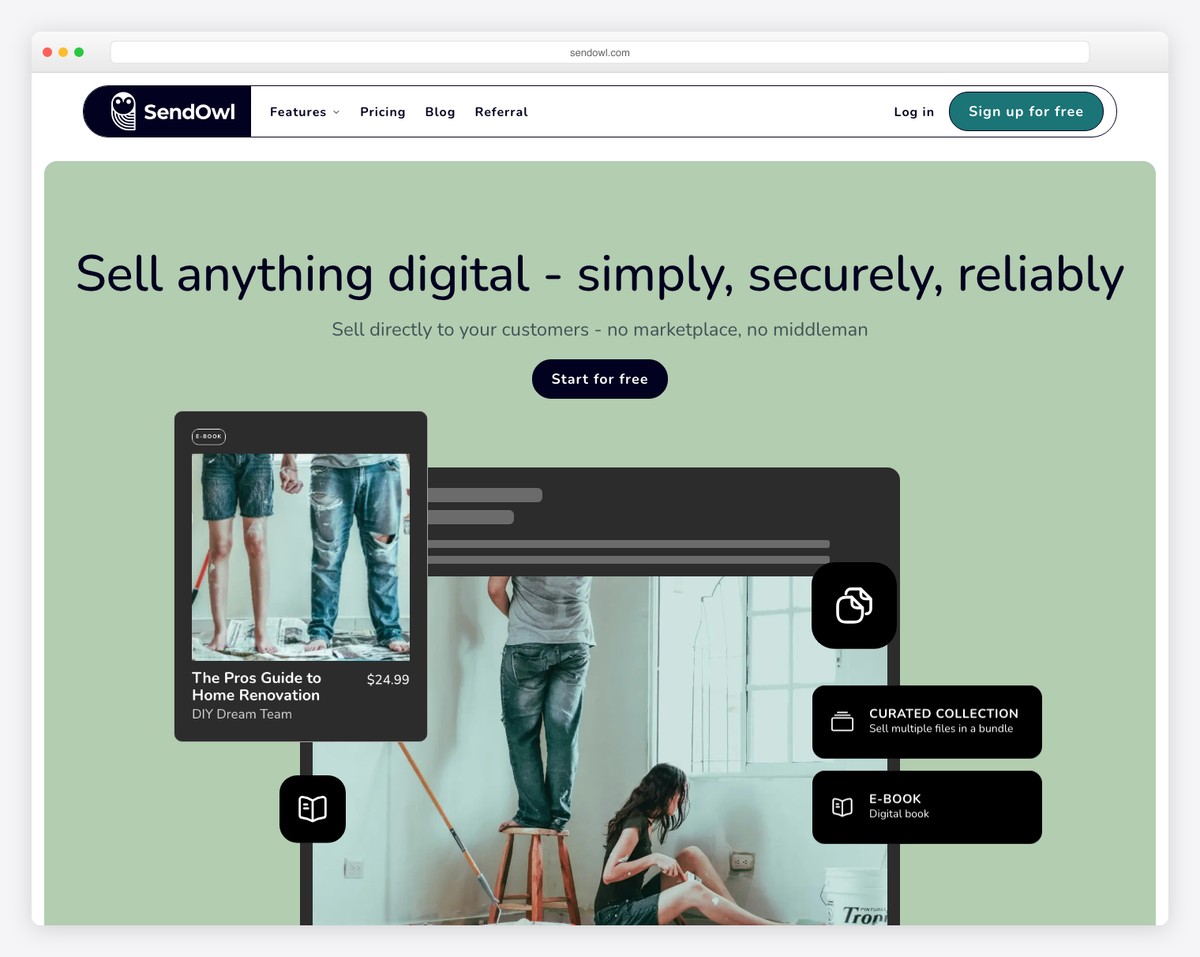
SendOwl focuses on one thing — delivering digital products reliably — and does it exceptionally well. Starting at $9/month with zero transaction fees, SendOwl handles secure file hosting, time-limited download links, PDF stamping (to discourage piracy), software license key generation, and drip delivery for multi-file products. It is not a storefront or marketplace; it is a delivery and checkout engine.
SendOwl integrates with your existing website — embed a buy button on any page, and SendOwl handles the rest. It supports subscriptions, upsells, discount codes, and affiliate tracking. The checkout is fast and conversion-optimized. SendOwl also supports pay-what-you-want pricing and product bundles, making it flexible for different selling strategies.
The limitation is that SendOwl provides no discovery or marketing tools. There is no storefront, no SEO, no email marketing, and no course builder. You need your own website, your own traffic, and your own marketing stack. SendOwl is best for sellers who already have an audience and a website and need robust, affordable delivery infrastructure without switching to a full ecommerce platform.
14. Whop

Whop has emerged as the leading platform for selling communities, memberships, and access-based digital products. Launched in 2021 and growing rapidly, Whop charges just 3% per transaction with no monthly fees. The platform supports Discord and Telegram community access, software tools, courses, digital downloads, and SaaS-style subscriptions — all through a unified dashboard.
What sets Whop apart is its built-in marketplace. Buyers can discover and purchase products directly on Whop’s platform, which provides organic traffic that most alternatives lack. The platform has processed over $500 million in sales and hosts thousands of active sellers. Whop also offers affiliate tools, analytics, and a review system that builds trust with potential buyers.
Whop is most popular in the crypto, trading, and tech communities, though it is expanding into broader niches. The platform is less suited for traditional digital products like ebooks or printables — it is built for access and community. If you sell Discord memberships, software access, trading signals, or any subscription-based digital product, Whop’s low fees and built-in audience make it a strong contender.
15. Kajabi

Kajabi is the premium all-in-one platform for course creators and knowledge entrepreneurs. Starting at $149/month, it is the most expensive option on this list — but it replaces your website builder, course platform, email marketing tool, community platform, and sales funnel builder in a single integrated system. For serious course businesses generating consistent revenue, the consolidation can justify the cost.
The platform includes a drag-and-drop website builder, advanced course builder with multiple content types, email marketing with automation sequences, community features, podcast hosting, and detailed analytics. Kajabi charges zero transaction fees on all plans, and its checkout pages are among the highest-converting in the industry. The platform reports that its creators have collectively earned over $8 billion in sales.
Kajabi’s price is its main barrier. At $149/month ($1,788/year), you need to be earning consistently before it makes financial sense. The platform also has a learning curve — the sheer number of features means setup takes longer than simpler tools like Gumroad or Podia. For established course creators and coaches building a six-figure knowledge business, Kajabi provides everything in one place. For beginners or sellers testing their first product, start with a lower-cost option and graduate to Kajabi when revenue supports it.
How to Choose the Right Platform
The best platform depends on what you sell, your budget, and your technical comfort level. Here is a quick decision framework:
| If You Sell… | Start With | Why |
|---|---|---|
| Ebooks, templates, printables | Payhip or Gumroad | Low fees, instant setup |
| Online courses | Teachable or Podia | Purpose-built course tools |
| Software or SaaS | Lemon Squeezy | Merchant of record, tax handled |
| Design assets | Creative Market + own site | Built-in buyer audience |
| Physical + digital mix | Shopify or Sellfy | Handles both product types |
| Memberships & communities | Whop | Low fees, built-in discovery |
| Premium courses + coaching | Kajabi | All-in-one, highest converting |
| Any digital product on WordPress | WooCommerce | Free, full control, no platform fees |
FAQ
What is the best free platform to sell digital products?
Ko-fi is the best truly free option with 0% transaction fees on all sales. You only pay the payment processor (Stripe or PayPal). Gumroad and Payhip also have free plans, but they charge 10% and 5% per transaction respectively. If you are comfortable with WordPress, WooCommerce is free to install and charges no platform fees — though you need to pay for web hosting.
Which platform has the lowest fees for selling digital products?
Ko-fi charges 0% even on its free plan. Among paid platforms, Stan Store ($29/mo), Podia ($39/mo), Teachable ($39/mo), and Sellfy ($29/mo) all charge 0% transaction fees on their paid plans. The cheapest paid option with zero transaction fees is Ko-fi Gold at just $6/month. For self-hosted solutions, WooCommerce charges nothing beyond your hosting costs.
What is the best platform for beginners selling digital products?
Gumroad is the easiest platform for beginners. You can create a product page, upload your files, set a price, and start selling within 10 minutes — no technical knowledge required. There are no monthly fees, so you only pay when you make a sale. Payhip is a close second with lower fees (5% vs. 10%) and a similarly simple setup process.
What is the best platform for selling online courses?
For dedicated course creation, Teachable offers the most robust course-building tools at its price point ($39/mo). Podia is better if you want courses plus community features in one platform. Kajabi ($149/mo) is the premium choice for established course creators who want an all-in-one system with email marketing, website builder, and advanced analytics included.
Key Takeaways
- Ko-fi offers the lowest fees at 0% on all sales, making it the best choice for creators who want to keep every dollar after payment processing.
- Lemon Squeezy is the clear winner for software and SaaS sellers thanks to its merchant-of-record model that handles global tax compliance automatically.
- Marketplace platforms like Etsy and Creative Market charge higher fees but provide built-in audiences that can drive sales without your own marketing.
- WooCommerce gives you the most control and lowest long-term costs for sellers comfortable with WordPress and self-hosting.
- Most successful digital product sellers use multiple platforms — a marketplace for discovery and their own storefront for direct, higher-margin sales.

Related Posts





Thank you for the List.
I have Tons of Digital products to sell and was really looking around for a place that didnt have Monthly Charges.
hi Michael,
tons of digital products???
like what?
thanks
I sell some of my digital e-books and GFX work through rocketr.net. They don’t take any paypal fees and also offer stripe and other payment options. Also, they have the same features as Gumroad or sellfy: rocketr.net/features.
Michael you should look at SendOwl. They have a very low monthly charge, but they don’t charge you anything per transaction. No percentage of sale fee. No cost per transaction fee. It’s really straightforward and you can sell as much as you want, which I think would be important for someone who is selling tons of digital products.
All the best.
Hey, soon we are starting market place where in user can buy and sell their PRODUCTS for Crypto Currencies, in which no monthly fee will be there.
Michael,
I have lots of Digital products as well. I do like selling free of fees. Let me know what kind of list you come across.
I would like learn more for the product, I Have a ecommerce store and need of products to sell
I have several “IM” software’s and training products. I would like to sell on several platforms. Which would you recommend?
Thank you for your time and consideration.
Gil
Gil,
Any of above listed ones will get the job done for you.
We would like to sell our daily rafting videos online. Since there will be a continuous job uploading the videos, we are looking for something that will make this process run smoothly and fast. And it should be easy for the customer to download as well. Any recommendation?
I available, and interested to that
I would like to apply for the role
I use Adobe Muse and there is a widget for Sellfy-its very easy to use and have my client sing up for -however, they can only sell one product at a time since they have no cart feature–so client cant sign in and have cart or buying history–any suggestions?
I have reviewed the 17 sites. Have no experience with websites, so most of this information is Greek to me. I have developed a small business financial modeling system written in Microsoft Excel. The Model has 3 files independent of each other approximately 2.1 MB each. Would like a website to sell this Model. Would like customers to be able to see some of the Worksheets as examples Want customers to be able to download Excel Files from the website and pay by credit card. Microsoft Excel is not included. Would appreciate any suggestions.
Thanks,
David
David,
My suggestions would be to create a website using WordPress like described here. You can list and describe your items there and use Easy Digital Downloads plugin for purchases. If you don’t like Easy Digital Downloads which might be slightly more complex, you can use Sellfy or Gumroad and sell items via their platform.
I also want to sell my excel files. What is the best way to go about it.
Hey,
There isn’t a major difference in how to go about selling ebooks, PDFs, Word Documents, Excel files or any other files. It all comes down to how many items you have and where you want them to be sold, either on your website or via social media and you just need a payment processor. If you just want to sell one or few Excel files I would suggest Podia, or Sellfy. Both has a similar functionality and will get the job down for you.
If you need a full website and dozens and dozens of files then Shopify, EDD or WooCommerce are the right bets for you. Shopify is going to be the easiest one to setup and maintain. WooCommerce and EDD are the most flexible options but also the most complex and I would recommend those only for WordPress veterans that have already used WordPres in the past and want to take their skills to the next level. Otherwise, just go with Shopify and avoid all the headache.
I’m looking to sell a pdf ebook and would like an online service to manage the download. Are there any that stamp the purchasers’ details and or unique purchaser code onto their downloaded pdf ebook?
Unfortunately, I’m not aware of any this kind of service. I’m almost certain that it doesn’t exist.
Al,
What you are describing is Amazon. I have published 10 books on Amazon and they all start out as a Word Doc then saved as a .PDF. The .Pdf is uploaded as an ebook for the Kindle and then Amazon manages the entire thing from there. All FREE to publish. Let me know if you want more details.
Hey, so I uploaded a ebook on there also, but no buys or anything. What do u mean Amazon takes it from there once you publish
I believe that getdpd does that.
I have just come across this page and then started to look at Sellfy.
On their feature list they say, PDF stamping – Automatically add buyer’s email address to every page of your pdf, so each customer gets a uniquely marked file.
Hope this helps.
I have accounts with a bunch of the above sites, the only one I saw that has something like that is Gumroad. There is a setting to generate a unique product key for every sale. https://help.gumroad.com/article/76-license-keys
Hi there,
Thanks for sharing this amazing informative article. I already use sellfy.com
I have lots of video lectures I would like to sell online but I want a mobile App that can allow students to view video offline without being able to copy or transfer video. In other words I want a platform with a good security measure against piracy. Which would you suggest?
You need to look for a 3rd party video hosting solutions that have a strict security measures against piracy. None of the themes or plugins will help you with that. All paid video sites such as RedBull, GoPro and others uses 3rd party services for hosting their videos that makes it very hard to download them. That’s your only option to be sure that your videos remain safe. In most cases you can combine any of these services with themes listed above.
Really nice article. Easy digital download was best for me. I will recommend this article for anyone who wants to start online digital business. Thanks a lot!
Hello,
I have an online site that customers can design their digital business card. I receive many requests from prospective customers to assist them in the design, where they would provide all the information and our team would create the profile – then send the customer back login credentials. I see that most of these digital commerce sites are geared to have the customer download a digital product. Is there a site, or a way that I can use these sites to deliver a designed digital business card profile / account?
Hi thanks for your review and amazing information about sites that sell digital products.
I would like to sell photos of car shows (vintage, hot rods etc) and be able to upload about 300-400 photos that customers can search and place multiple orders (hopefully) then email them the images once they have paid. Which of these websites would you recommend as the most suitable for this type of activity.
I also make and sell laser cut products such as coasters, name tags etc, would the same site be suitable for the order taking – delivery process.
Thanks for your advice
Les
With this amount of products the best option is going to be Shopify. This platform will take care of all the payment processing and can be configured to for shipping cost calculations and order tracking.
I’ve never heard of FetchApp however that looks like just what we need. Thanks for writing such an informative article.
Thank you very much for providing us with the site, actually, I am a book writer and recently I published a book related to YouTube shorts, and now I want to publish on a better platform.
Thank you for this. And thanks to all the input from comments. I have several hundred digital files to sell, graphics, vectors, motion loops and presentations with more being worked on. That said i have been looking for a site/script that supports individual downloads, membership options as well as a multi vendor. Anything out there other then wordpress?
LB,
The only options in your case are Shopify and WordPress. Both doesn’t have your required functionality by default and you will have to use plugins for WordPress (WooCommerce, WCFM Marketplace, MultiVendorX or some other plugins) and apps for Shopify (Multi Vendor Marketplace, Multi Vendor Marketplace Pro+ or other).
Outside these two it is way too complex to customize to this degree or feature set is just too limited.
Great breakdown of platforms! Sellfy appears to be the perfect option for beginners clear and actionable.