
26 Best Motion Design & Animation Portfolio Examples 2026
The best motion design portfolios open with a short reel, then show how each piece was made: the styleframes and boards, the tools, and exactly which part of a team project was theirs. These 26 come from 2D motion designers and animators, 3D motion designers, motion directors, title designers, in-house product motion designers and students. For websites that use animation in their own design, see our animation website examples.
We tested 158 web addresses from the articles that rank for this topic, school showcases, award results and our own searches, then opened 158 project, about and reel pages and identified each platform from the site’s code. Every entry is the person’s or a small studio’s own website, not a Behance, Vimeo or Instagram profile. Of the 39 personal sites linked from two of those ranking articles, three no longer load and four have shown no new work in several years.
Best Motion Design and Animation Portfolio Examples
1. Oliver Latta (Extraweg)
Built with: WordPress (Semplice)
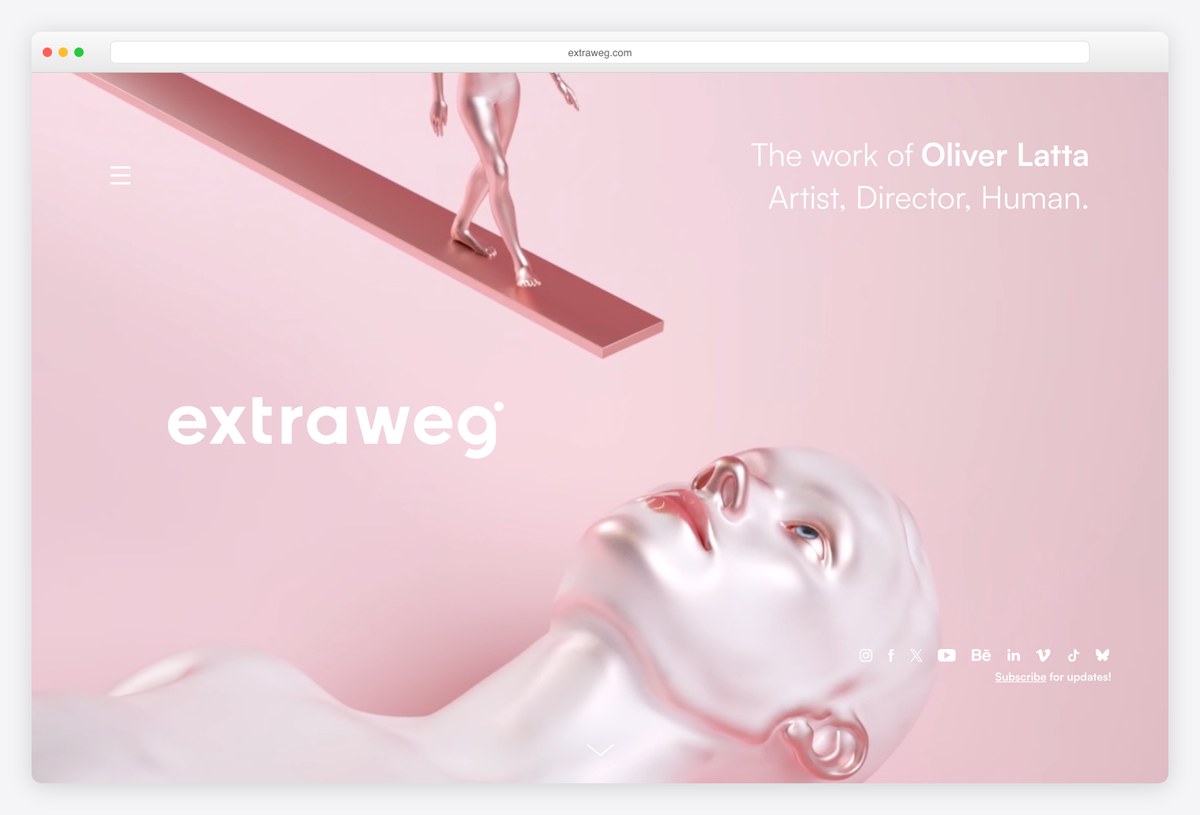
Oliver Latta designed the Emmy-winning title sequences for both seasons of Severance, and his site treats each one as a case study rather than a clip. The Severance pages split into film, stills and credits, and explain the idea: the second season’s intro “goes deeper into Mark’s subconscious”.
The credits spell out his part, from design and concept to art direction, animation and execution, and name collaborators such as typographer Teddy Blanks. On the home page the titles run as looping tiles next to CGI work for Valentino, CUPRA, MTV and Bring Me The Horizon.
What stands out: Title credits that say exactly what he did.
2. Mike Labrow
Built with: Squarespace
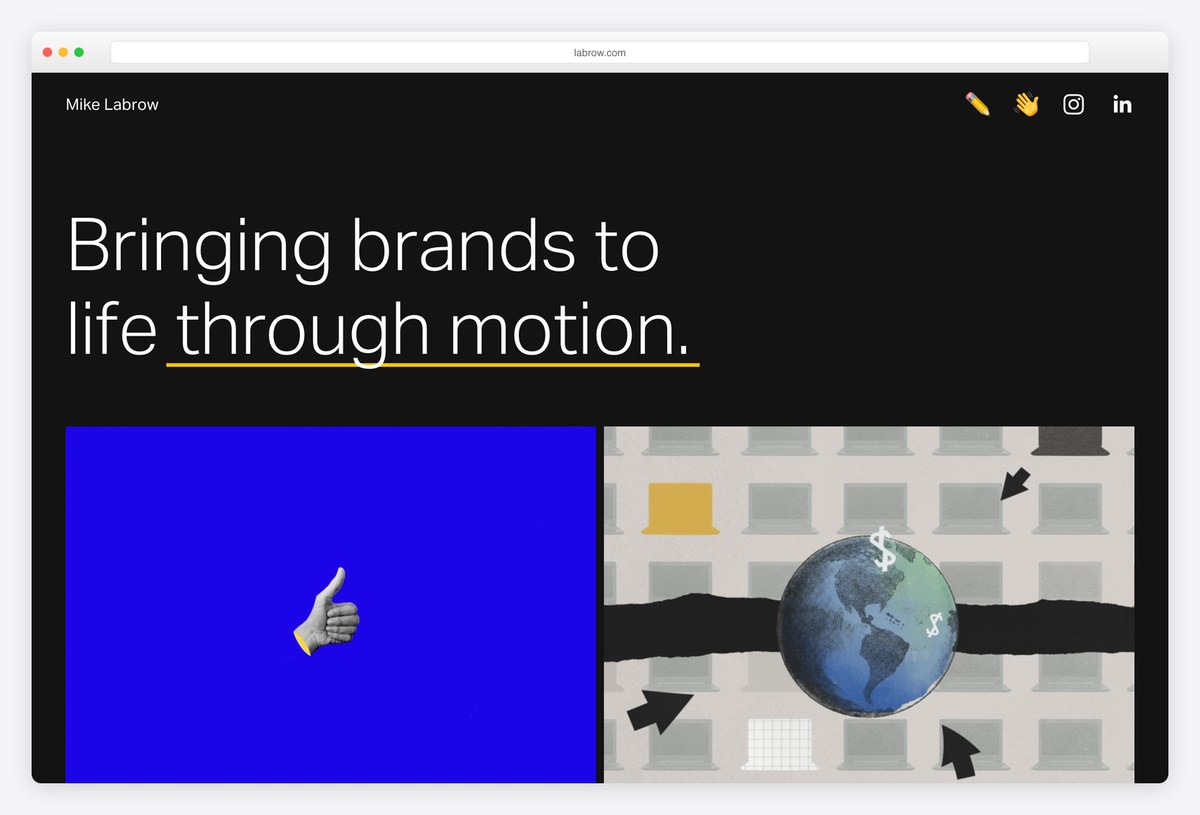
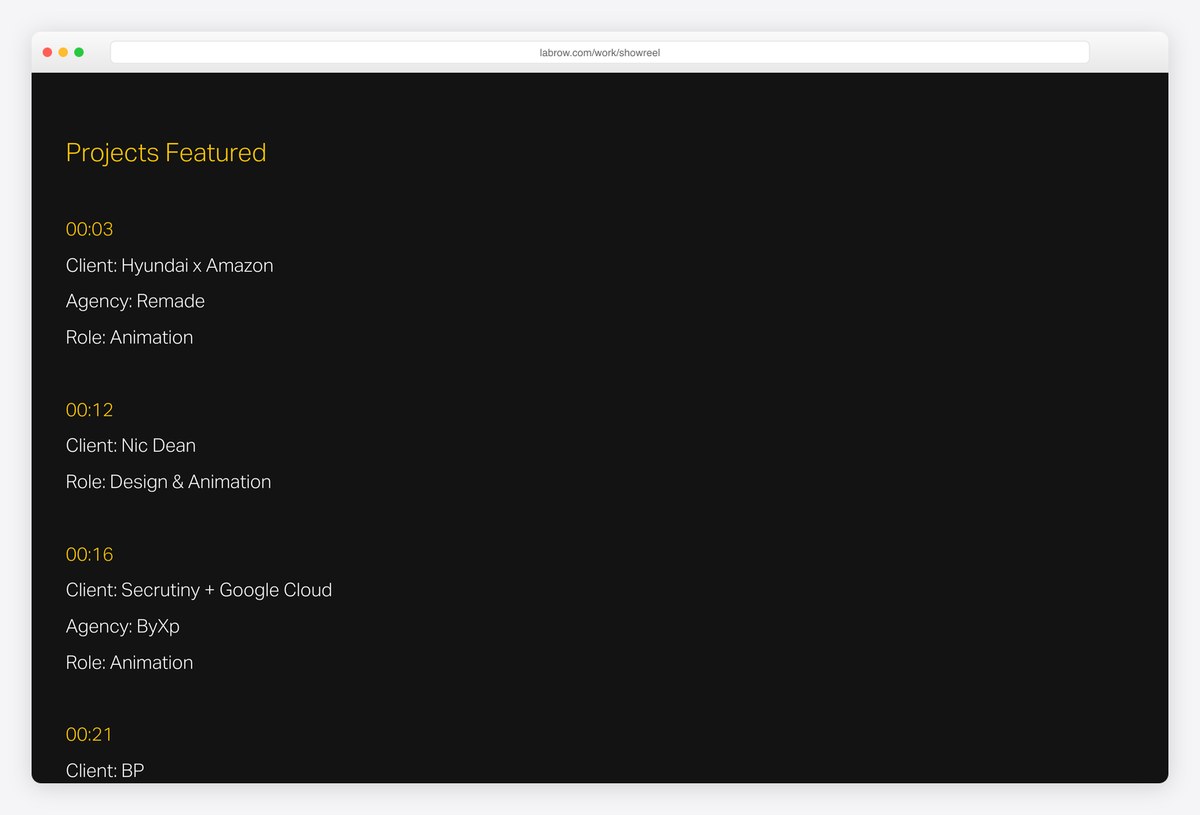
Mike Labrow, a freelance 2D motion designer in Manchester, puts a breakdown under his 60-second showreel. Each timestamp names the client, the agency and his role, from Hyundai x Amazon through Remade to S4C through Storm & Shelter, so a producer can see which shots he designed and which he animated.
Project pages keep the same credit block. The Google x WSJ series lists the agency, producer, designer and all four animators, and says he helped animate a few scenes. A scrolling “Available for Freelance” ticker runs across every page.
What stands out: A reel breakdown that credits client, agency and role.
3. Nidia Dias
Built with: Framer
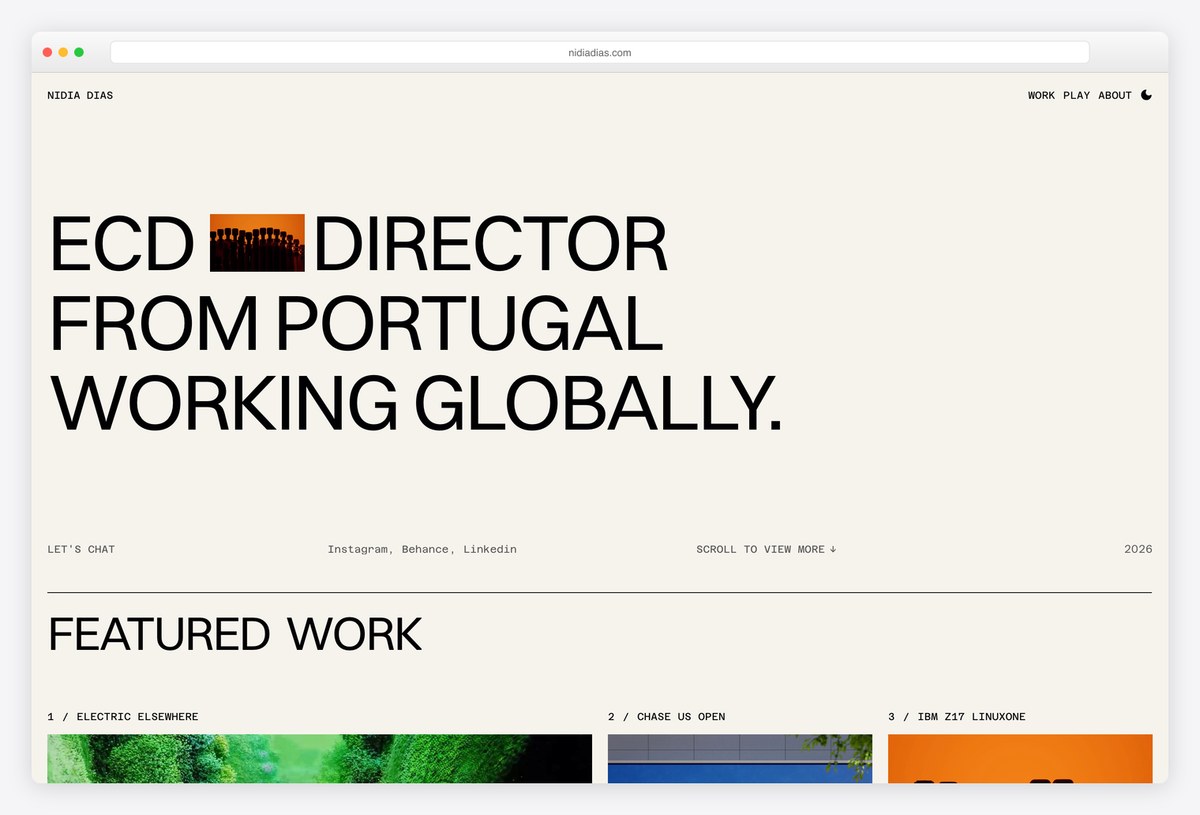
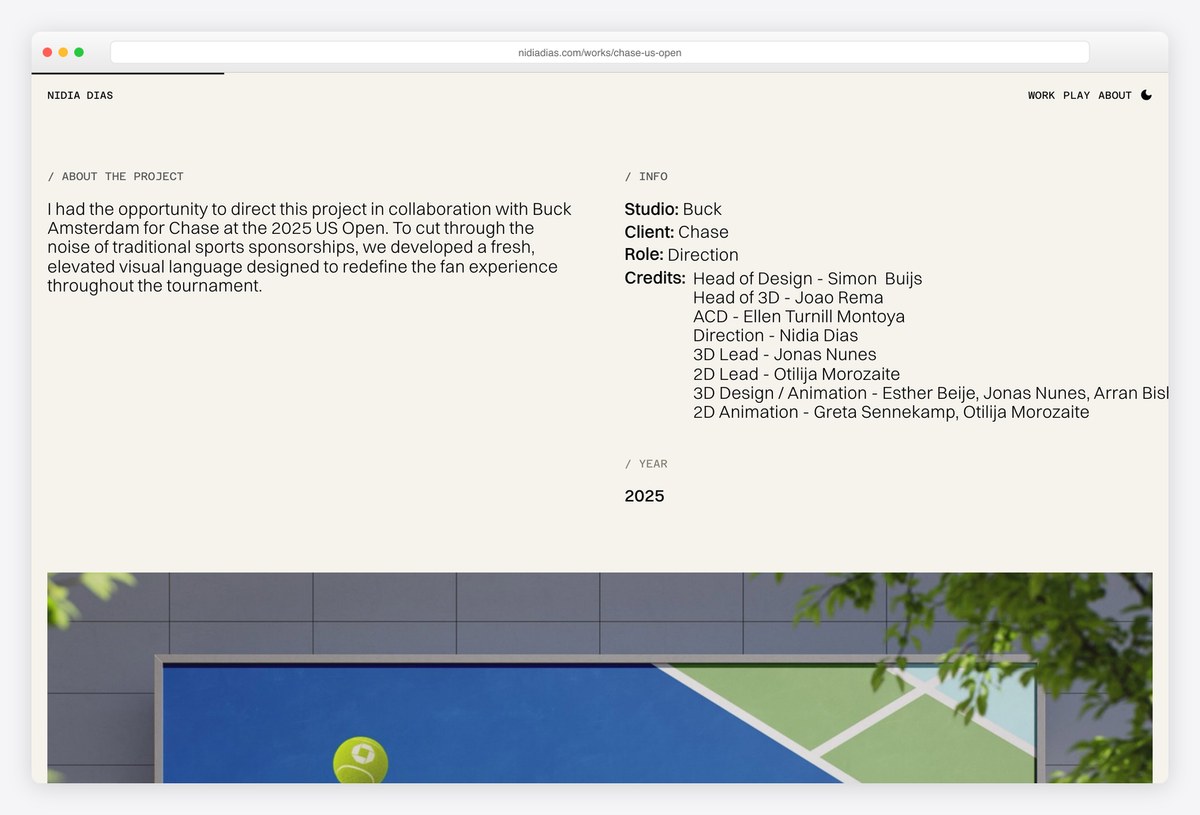
Nidia Dias, a Porto-based executive creative director and 3D designer, opens with one line: ECD, director, from Portugal, working globally. Each project then gives the studio, client, her role and the year, followed by full team credits, so her direction of Chase’s US Open graphics with Buck Amsterdam is kept apart from the 3D and 2D leads.
Her work centres on styleframes for pitches and commercials. Looping video tiles with poster images keep the home page light, and the About page adds a dated career history and a long list of talks.
What stands out: Role, studio and year on every project.
4. Jonas Naimark
Built with: Custom HTML
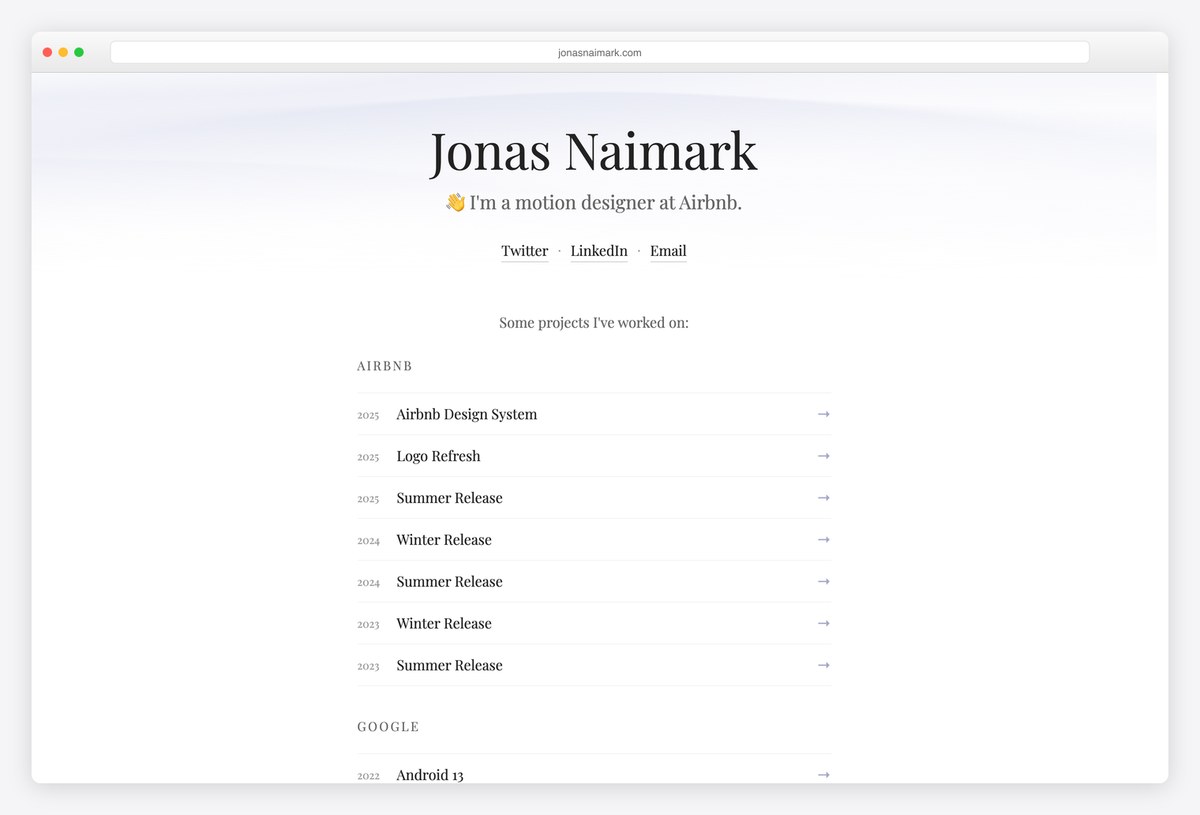
Jonas Naimark, a motion designer at Airbnb who previously worked on Material Design at Google, has the plainest site on this list: one page and no images. Each line is a year, a release and an arrow to the place where the work shipped.
Those arrows open Airbnb’s Summer and Winter Release pages, Google’s Android 12 and 13 announcements and the Material Design 1, 2 and 3 sites. For in-house product motion, where the work lives inside someone else’s app, pointing to the shipped product is a credible alternative to a reel.
What stands out: Every project links to the shipped release.
5. John Likens
Built with: WordPress
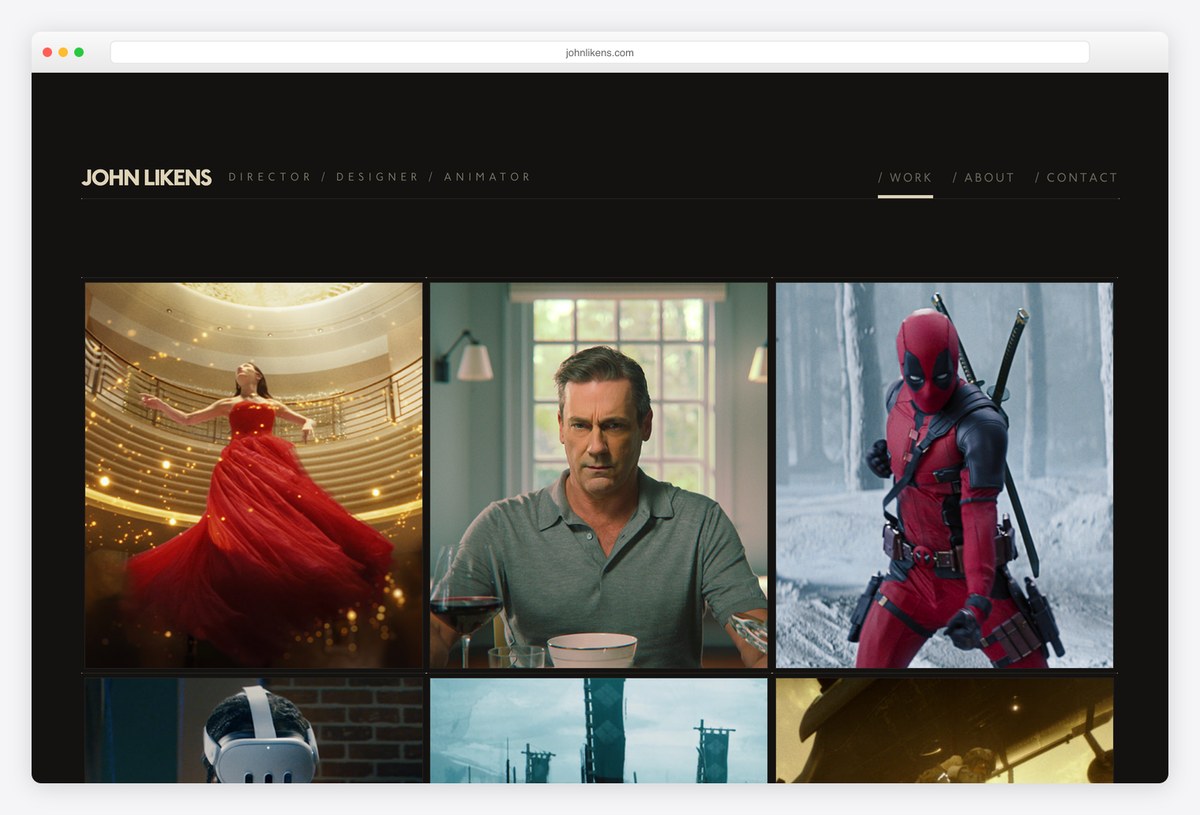
John Likens, an Emmy-winning director, designer and animator in New York, designed the title sequences for Deadpool & Wolverine, Deadpool 2, Eternals and Iron Man 3. His project pages tell how each job was won, not only what the finished sequence looks like.
For Deadpool & Wolverine he learned the Bye Bye Bye choreography from YouTube videos, recorded it in a motion capture suit and retargeted it to a previs rig to pitch Ryan Reynolds and Shawn Levy. World of Shōgun, a six-minute animated film made in Unreal Engine, lists every credit down to the riggers.
What stands out: Pitch stories that show how the ideas were sold.
6. Hannah Churn
Built with: Squarespace
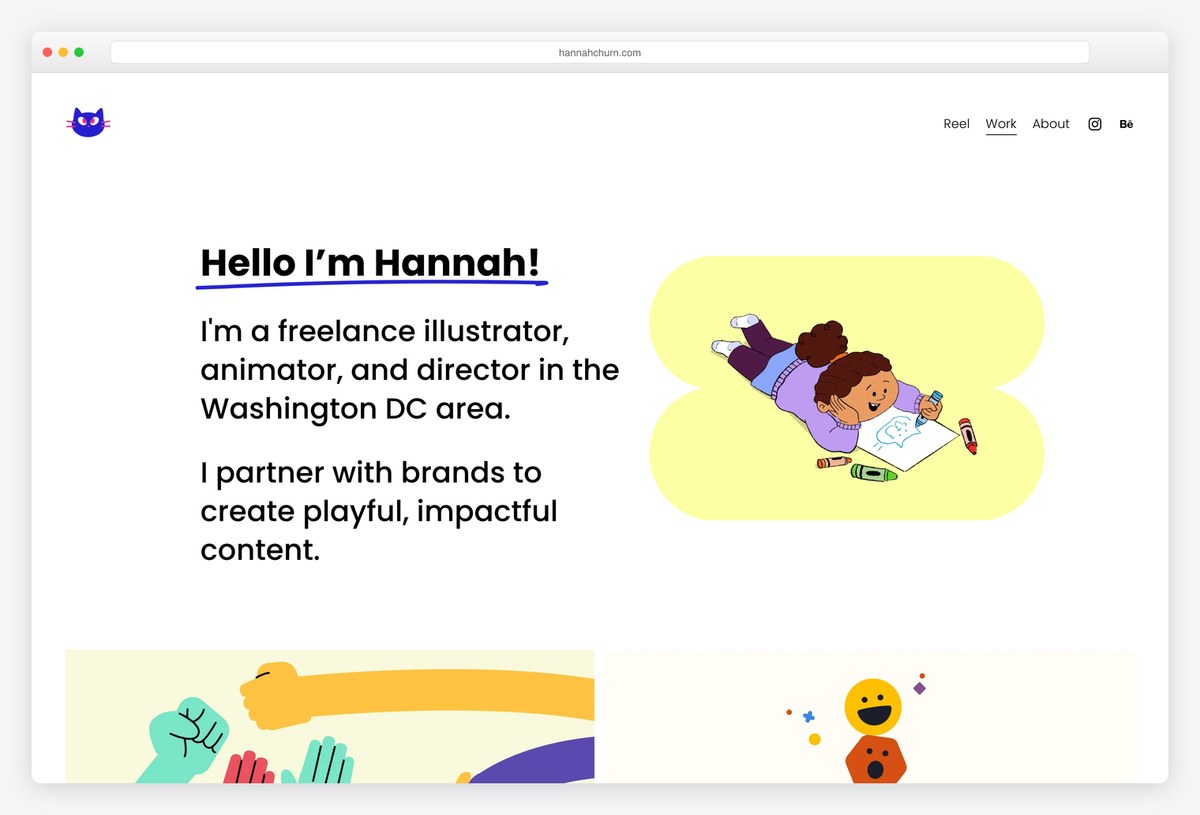
Hannah Churn, a freelance illustrator, animator and director in the Washington DC area, labels her reel shot by shot. The breakdown under her latest reel says whether she did design and animation, art direction or rough key animation on each clip, which matters when much of a reel comes from studio teams.
Her case pages go further. The TED-Ed piece credits Homework Studio and her fellow animators, then explains how she used real thread to study a braid, drew the roughs in Rough Animator and finished the animation in After Effects.
What stands out: Her role is labelled on every shot of the reel.
7. Andreas Wannerstedt
Built with: Adobe Portfolio
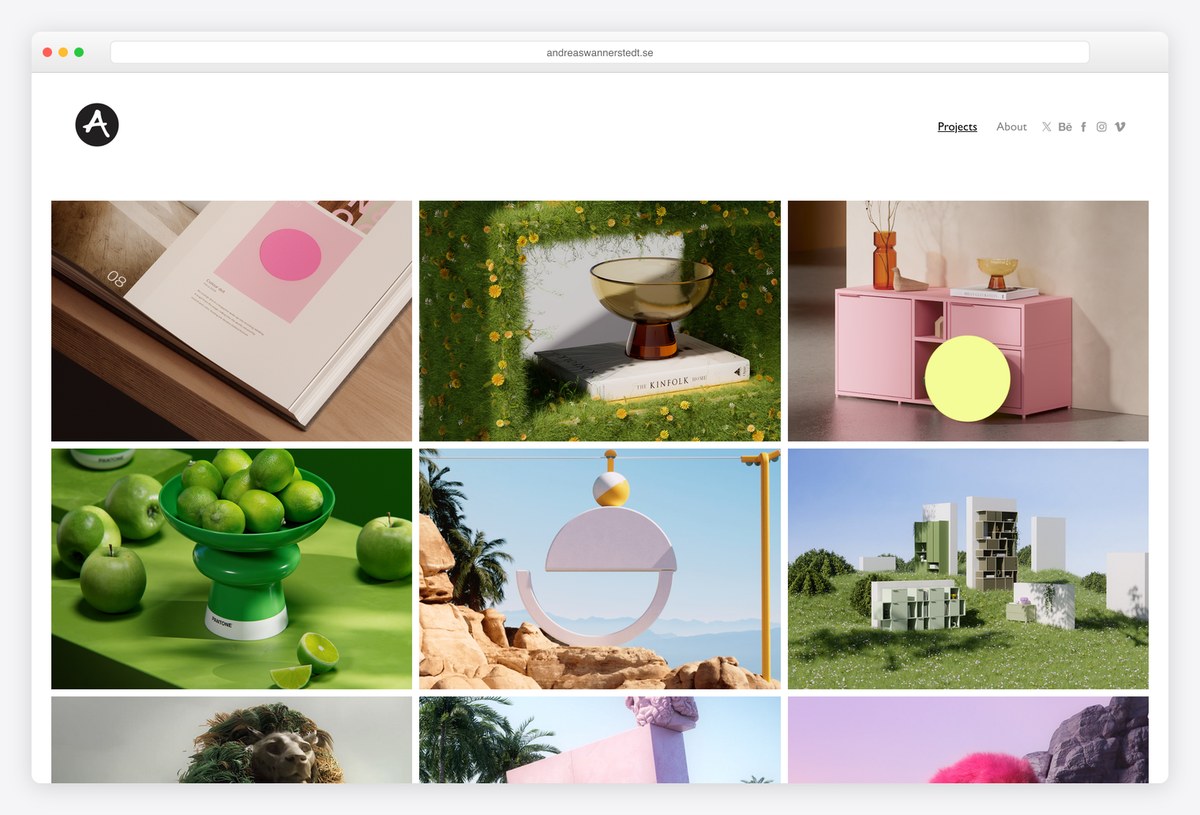
Andreas Wannerstedt, a Stockholm-based 3D artist and art director, is known for synchronised looping animations often described as “oddly satisfying”, and his home page is simply a grid of them. There is no headline and no reel, because the loops are the pitch.
Project pages stay short: a title, the year, one paragraph and the sound credit. Personal films such as Soft Logic sit beside commissions for TYLKO and H&M Home, and each page embeds the main film plus short detail clips of three to nine seconds.
What stands out: Loops that sell the style without a single word.
8. Andrew Vucko (VUCKO)
Built with: Custom code, SvelteKit (Vercel)
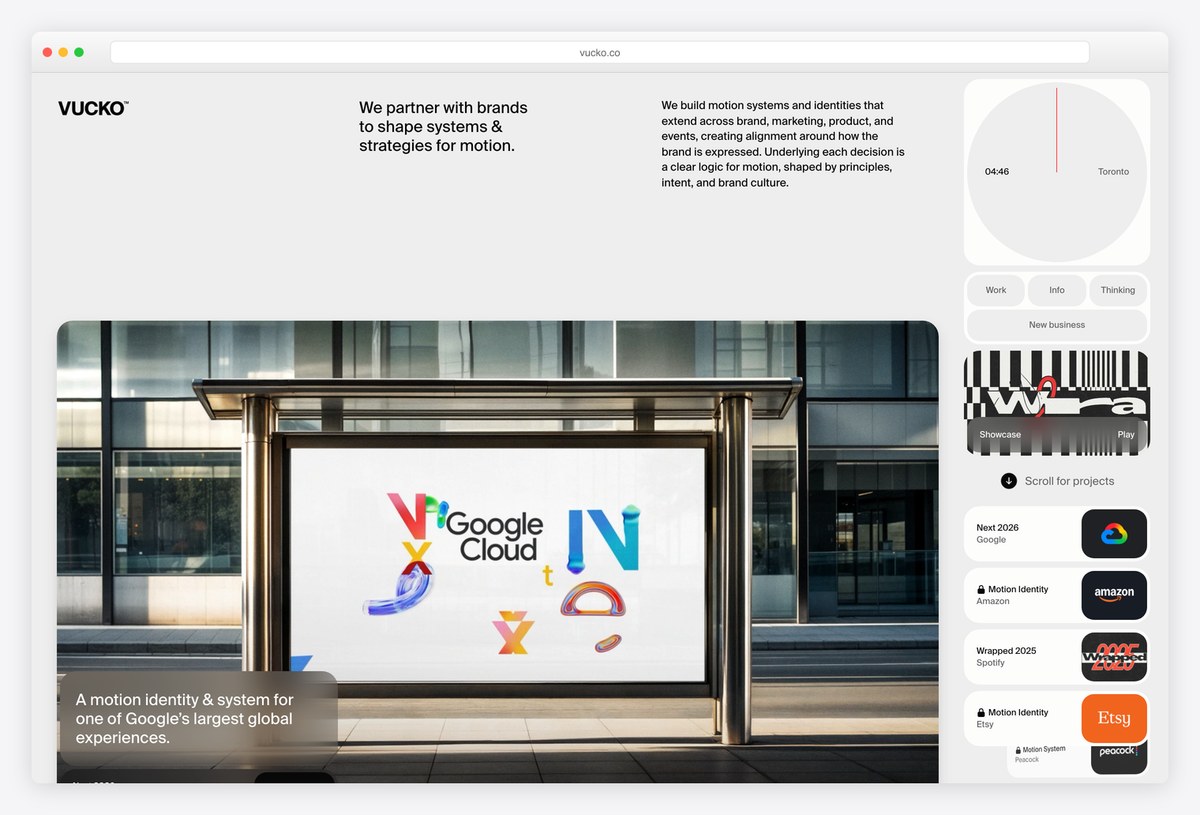
VUCKO, the Toronto studio led by motion director Andrew Vucko, builds motion identities and systems rather than one-off films, and its case studies read that way. Each is split into context and outcome: for Google Cloud Next it has developed the motion identity for the fifth consecutive year, with guidelines and production tools.
The Spotify Wrapped case explains how the studio worked with Spotify’s in-house creative team to define how motion behaves across product and marketing. Several identities, including Amazon, Etsy and Peacock, sit behind a password, a simple way to acknowledge confidential work.
What stands out: Case studies about motion systems, not single films.
9. Diane Lee
Built with: Wix
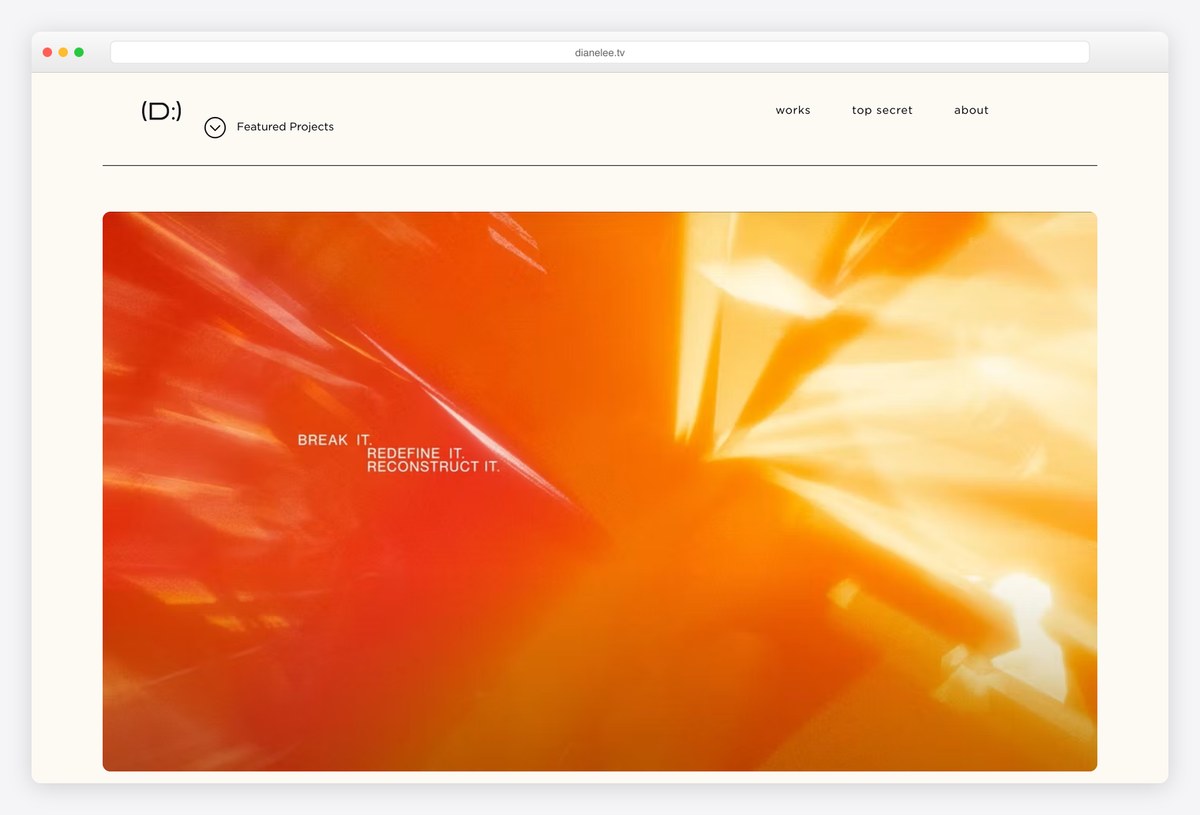
Diane Lee, a recent Ringling graduate who is now a junior motion designer at Hornet, puts her demo reel on the first screen and offers a separate reel about her process. The About page lists her student awards and the software she uses, from Cinema 4D and Redshift to Nuke and Dragon Frame.
Her student projects are written up properly. The FutureProof conference opener explains the concept and shows the shoot: dollar-store vases, teapots and plates smashed with a hammer and filmed at 60fps to time-remap in post.
What stands out: A student site with the reel first and the process behind every project.
10. Simon Tibbs
Built with: Squarespace
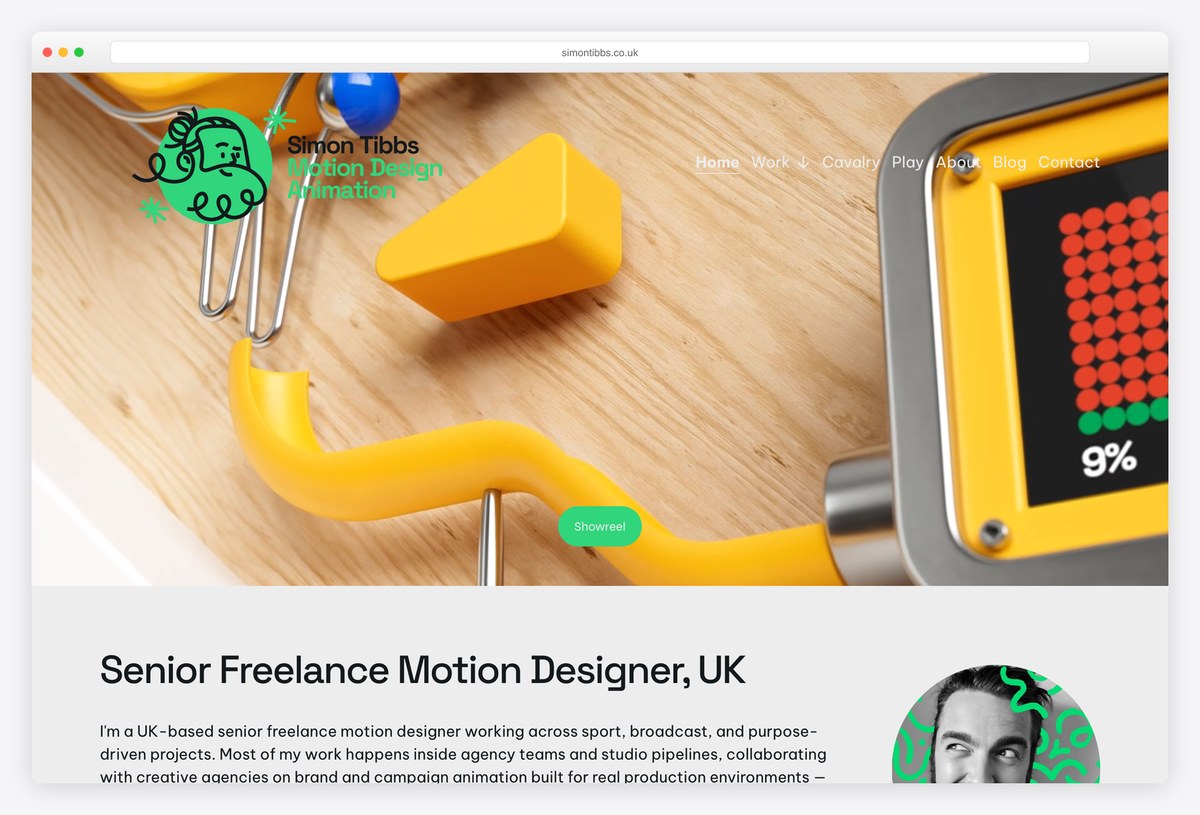
Simon Tibbs, a senior freelance motion designer in the UK and former Head of Animation at Cub Studio, puts a 59-second showreel behind the first button on his site. He names his tools up front: After Effects and Cinema 4D, with Cavalry increasingly part of the kit.
Two pages set him apart. A process page walks agencies through numbered stages from briefing and script to storyboard, styleframes and animation, and a Cavalry log shows experiments and dead ends as he learns the tool, including why corner pins are easier there than in After Effects.
What stands out: A written process that tells agencies what to expect.
11. Nadia Tzuo
Built with: Readymag
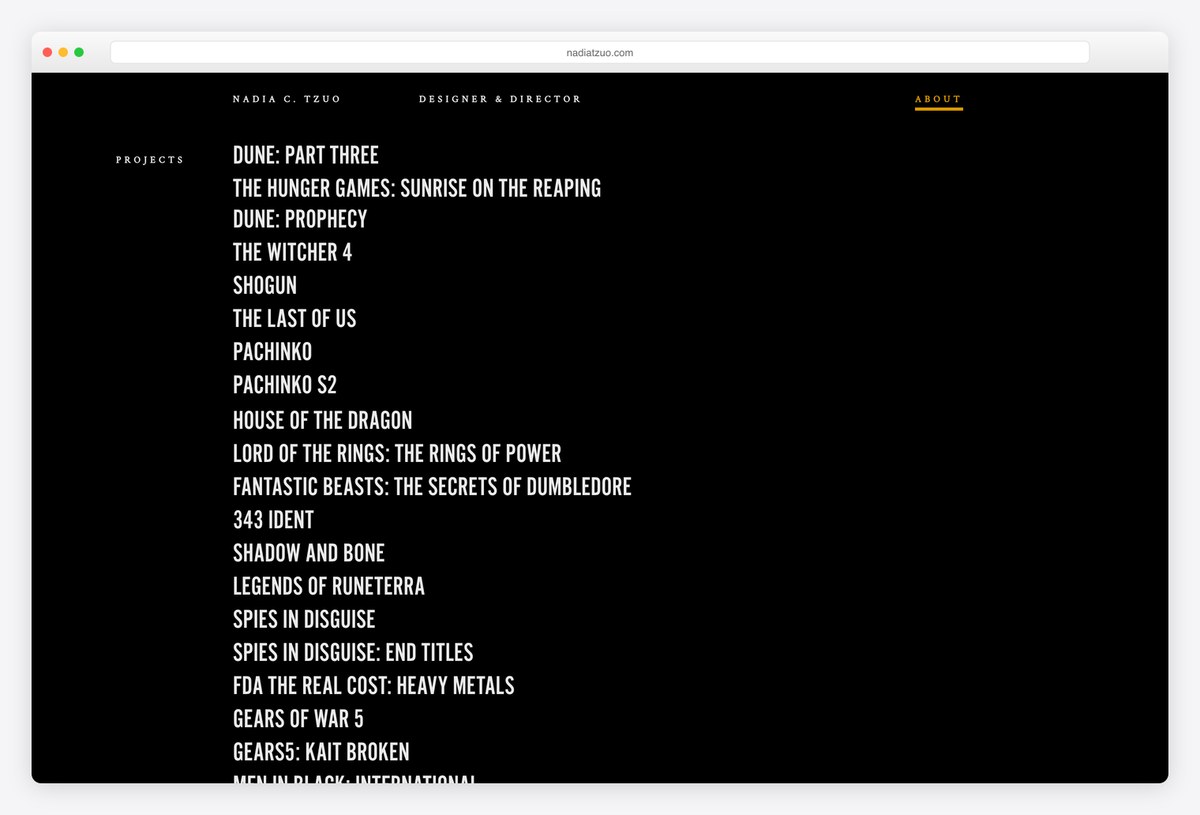
Nadia Tzuo, a designer and director in Los Angeles, has worked on title sequences for Shōgun, The Last of Us, Pachinko and Dune: Part Three. Her home page is just a list of titles, newest first, and reads like a credit roll.
Each entry gives the format, the production company and her exact role, such as creative direction and design on Shōgun at Elastic or UI design on Iron Man 3 at Prologue Films. Full credits follow, naming every designer, animator, modeler, editor and storyboard artist on the team.
What stands out: Her exact role is stated on every title.
12. Zachary Corzine
Built with: Squarespace
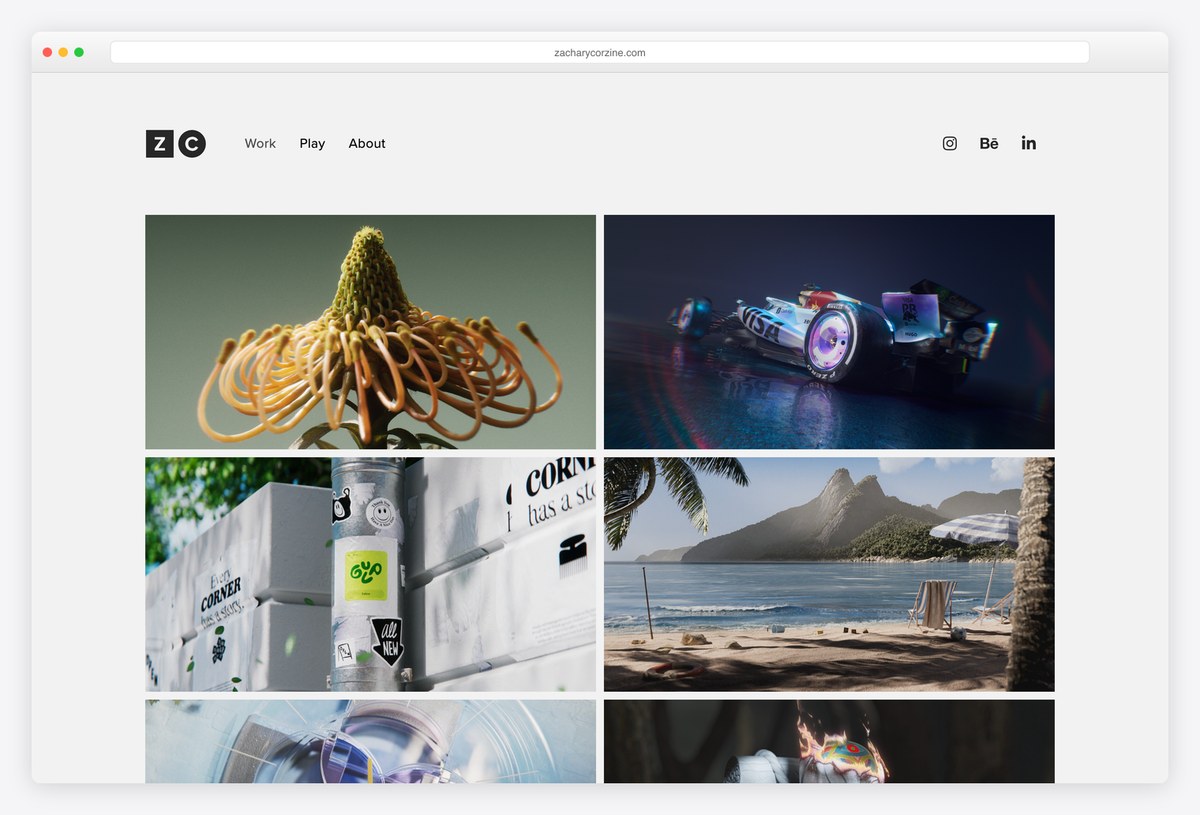
Zachary Corzine, a 3D designer and director in Portland who works procedurally, names his tools on the About page: Cinema 4D, Houdini, Substance, Octane, Redshift and After Effects. Every project page then lists his roles and credits everyone else.
On the VCARB livery reveal for Cash App he handled art direction, design, animation and simulation, with extra animation and audio credited separately. On Microsoft’s Windows Cloud PC launch film, made at Tendril, he was design lead, and a design development gallery shows the frames behind it.
What stands out: Roles and tools spelled out on every project.
13. Daniel Cardozo
Built with: Adobe Portfolio
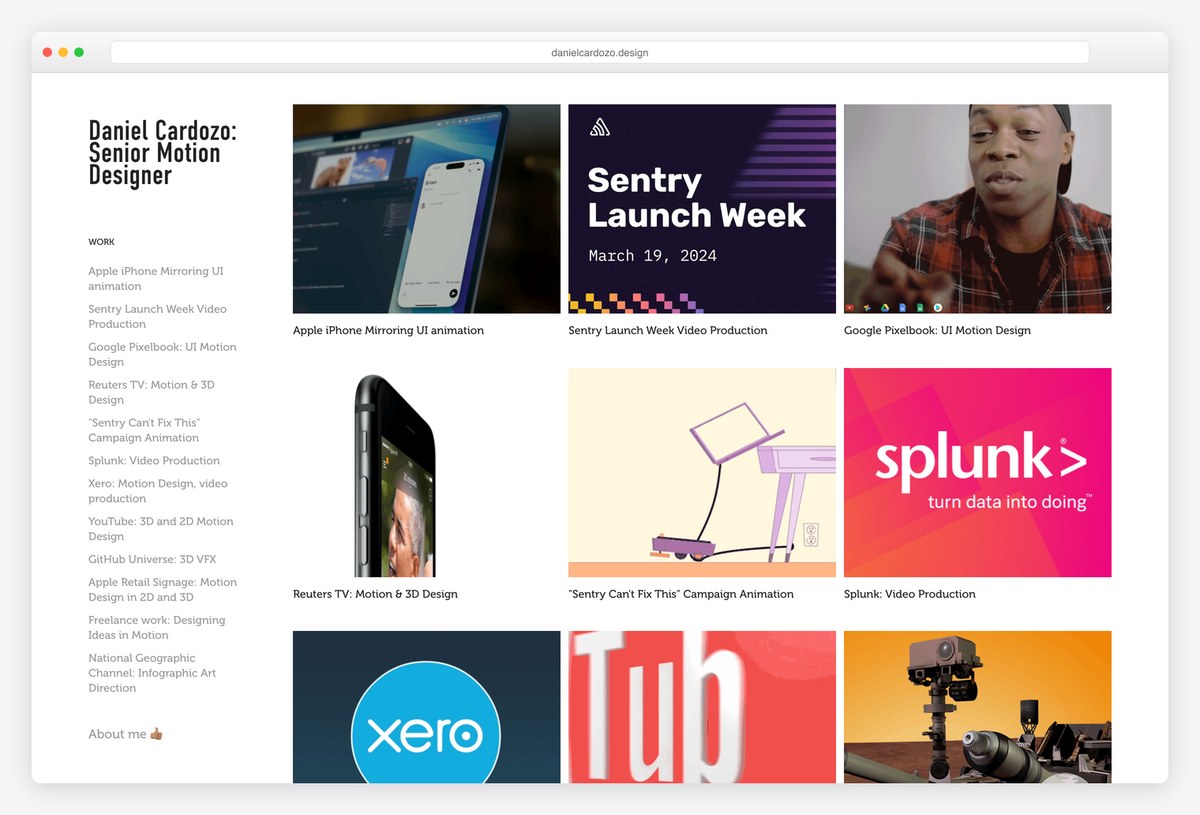
Daniel Cardozo, a senior motion designer, animates product interfaces for launch films, and his case studies explain why that is a craft. For an Apple TV ad about iPhone Mirroring he rebuilt the interface and its animations from Photoshop reproductions, because Apple’s marketing is localised into many languages and screen recordings will not do.
Each case study is split into challenge, role and process. The Google Pixelbook page describes recreating Material Design’s animations in After Effects and adding shadows and highlights so the presenter appears to touch a real screen.
What stands out: UI animation case studies that explain the constraints.
14. GMUNK (Bradley G. Munkowitz)
Built with: Cargo
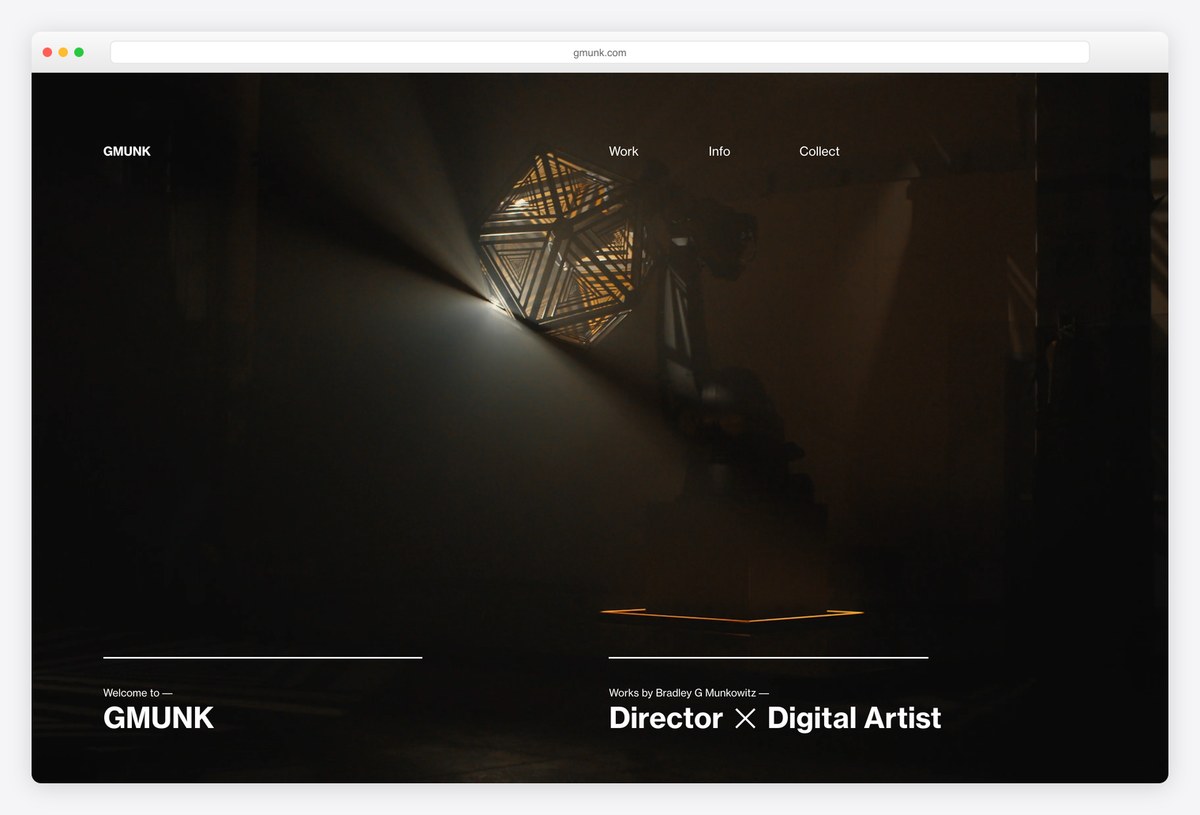
GMUNK, the director and digital artist Bradley G. Munkowitz, designed the holographic content for Tron: Legacy and Oblivion, and his studio’s newest feature work is the computer vision graphics for Tron: Ares. The home page lists recent projects with their format and month, so it never looks stale.
The Tron: Ares page is a long process essay rather than a gallery. It says a team of twenty artists designed and animated more than sixty shots, sets out the question behind the look and embeds a 104-second computer vision reel.
What stands out: Process essays that explain the thinking behind the frames.
15. Marko Mrvić
Built with: Squarespace
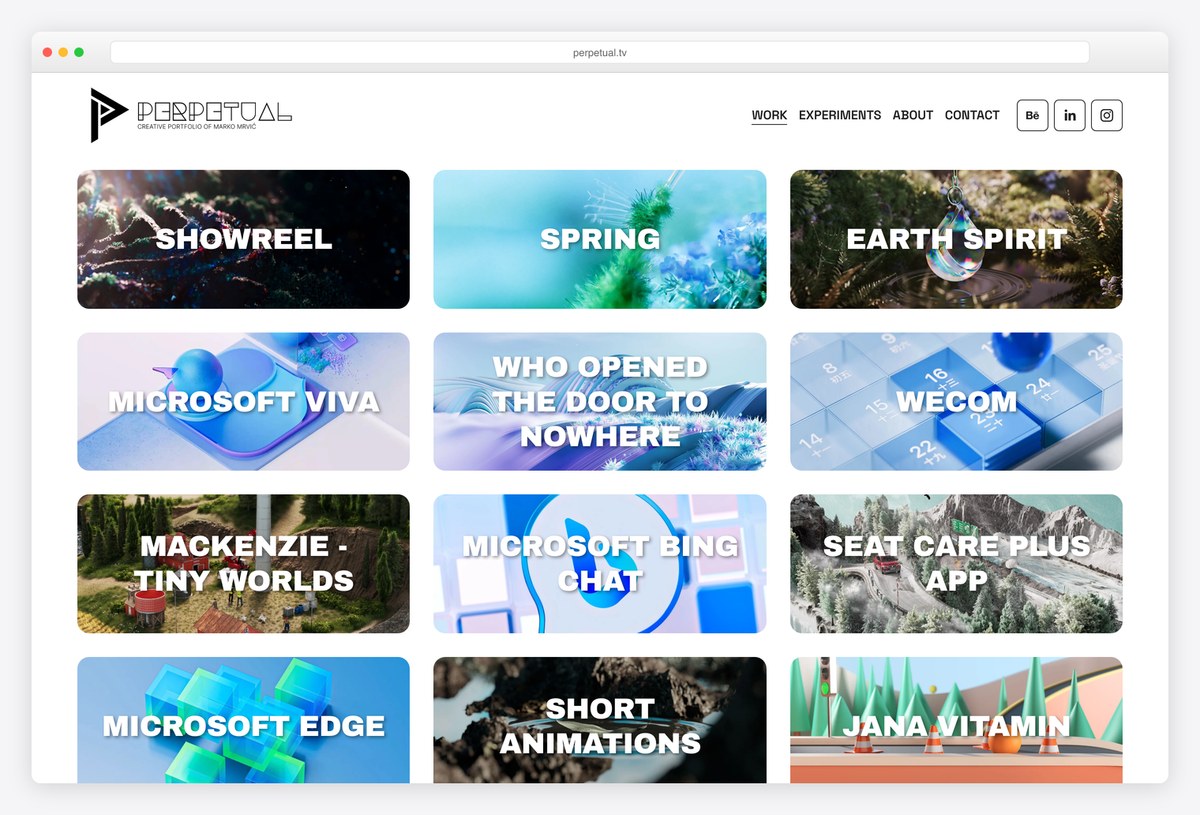
Marko Mrvić, a freelance 3D artist and motion designer in Kraljevo, Serbia, publishes a timecoded breakdown of his showreel. Every clip is tagged as a personal project or a studio job, with the studio named and his role stated, so it is clear where he did everything and where he animated someone else’s design.
The Microsoft Viva page, made through Cream3D under Wes Cockx’s direction, says plainly that his job was animating four loops. His tools, Cinema 4D with X-Particles and Redshift plus After Effects, are named on the About page.
What stands out: Honest credits on every clip of the reel.
16. Riley McMath Walker
Built with: Squarespace
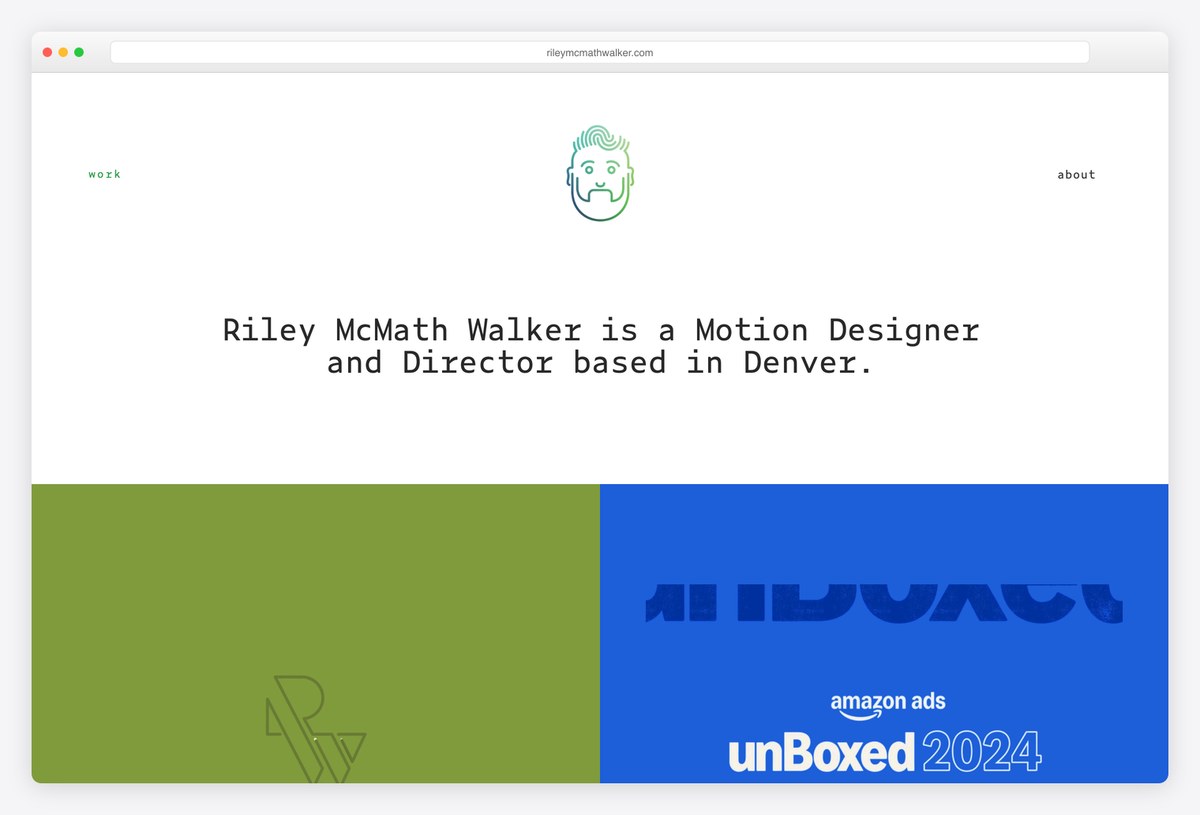
Riley McMath Walker, a motion designer and director in Denver, is a Staff Motion Designer at Shopify and puts his 62-second reel as the first tile on his home page, with his freelance direction alongside it.
The Amazon unBoxed case is a good model for event work: a motion identity and graphics package for Amazon Ads’ biggest event of the year, a credit line naming him as director and motion lead plus five additional animators, and a 90-second case study video. He notes the team interviewed over two dozen product teams first.
What stands out: In-house and freelance work presented side by side.
17. Virak Path
Built with: Framer
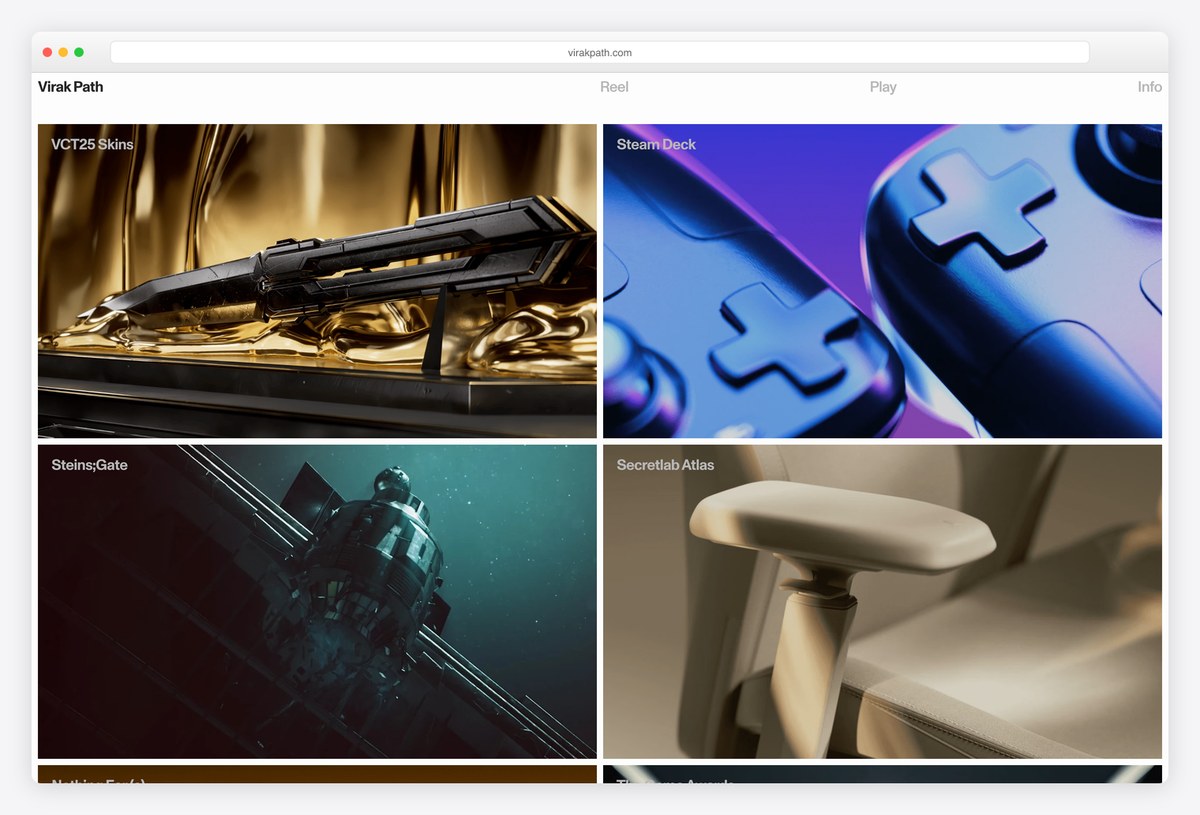
Virak Path, a motion designer freelancing from Cambodia, finished his diploma at 3dsense Media School as valedictorian and took first place for motion graphics at The Rookies. His home page is a full-bleed loop of CG work with a project index across the top.
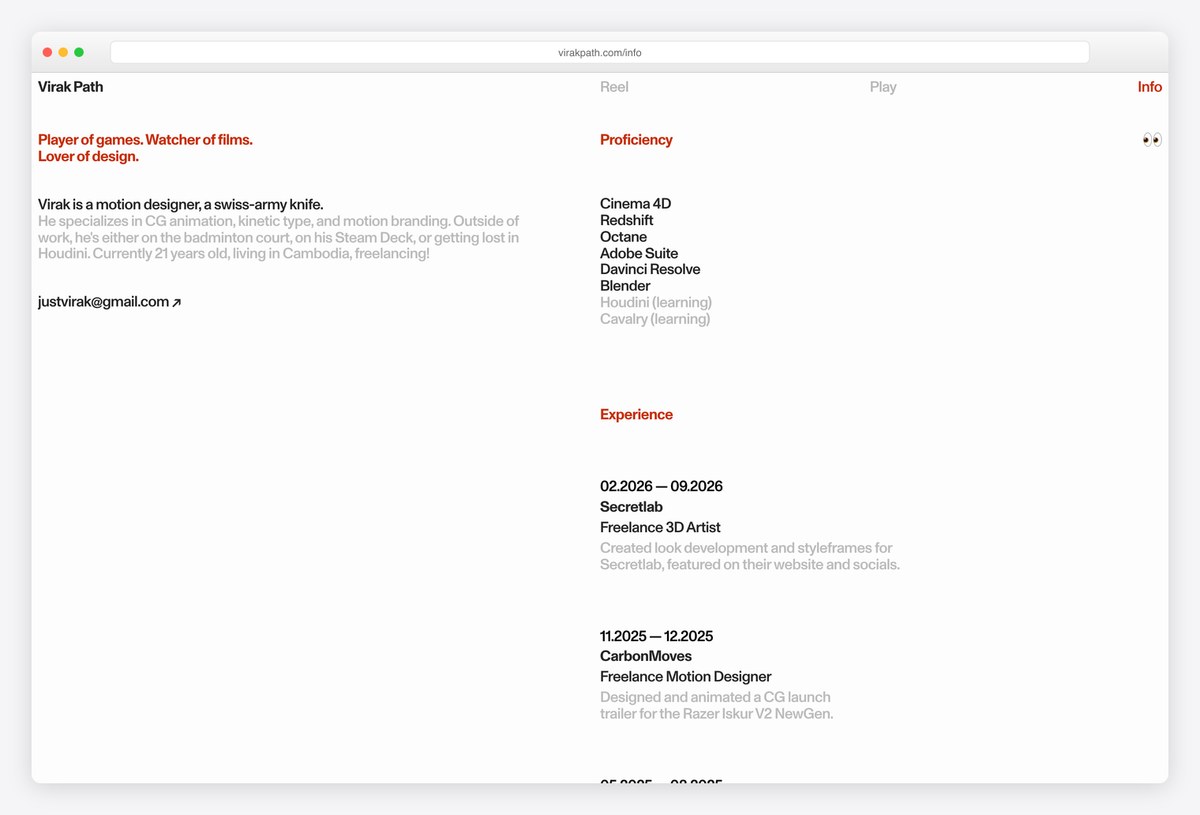
The Info page reads like a résumé, with month-and-year dates for each freelance job and a tools list that marks Houdini and Cavalry as still being learned. The Valorant Champions Tour skin reveal page credits Massive Assembly, lists the whole team and thanks the 3D director for teaching him about lighting.
What stands out: Honest about what he is still learning.
18. Saskia Marka
Built with: Cargo
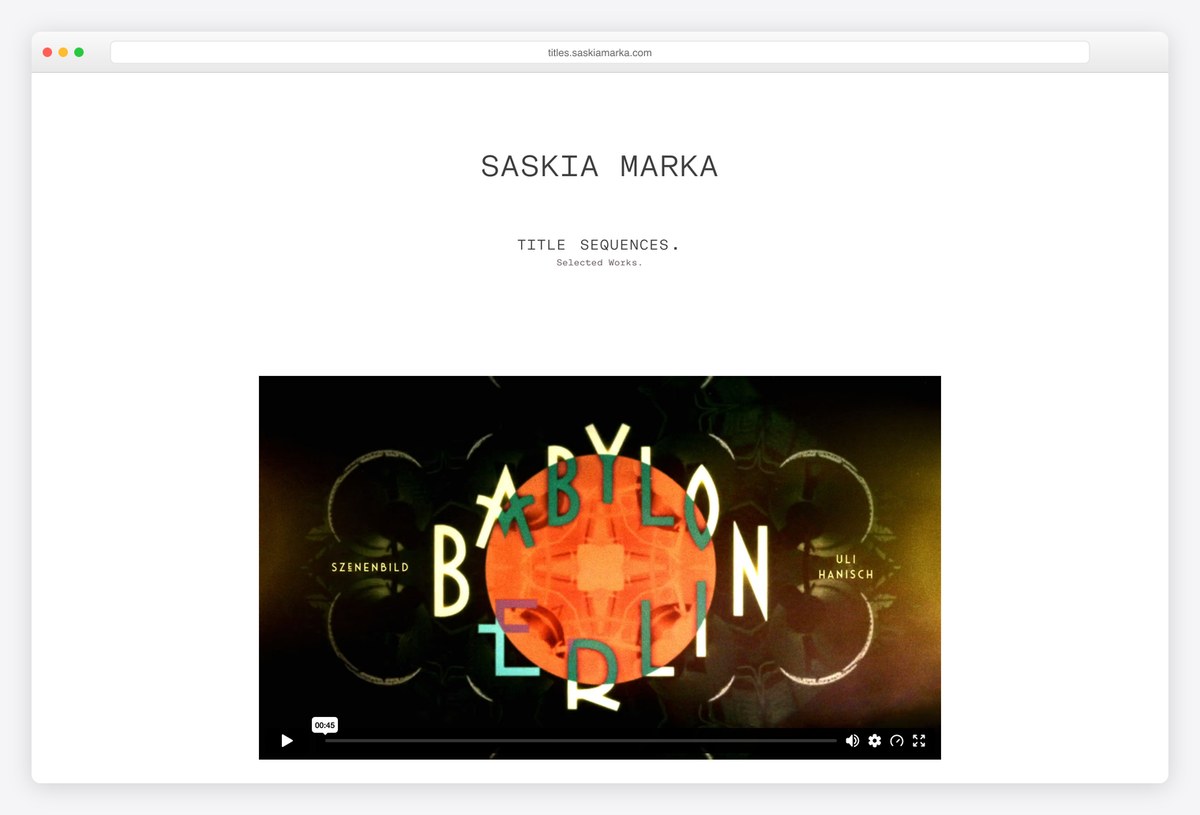
Saskia Marka’s title site is a single scrolling page of her main titles, each playing in place with still frames below it. It opens on Babylon Berlin, which she has titled for every season so far, followed by Dept. Q and The Queen’s Gambit.
Every caption credits the people who shaped the sequence: composers, directors, the cinematographer or editor, and the artist who processed the animation for The Queen’s Gambit. The Emmy nomination for that sequence sits in a single line under it rather than in a banner.
What stands out: Title captions that credit the whole team.
19. Marta Azaña
Built with: Squarespace
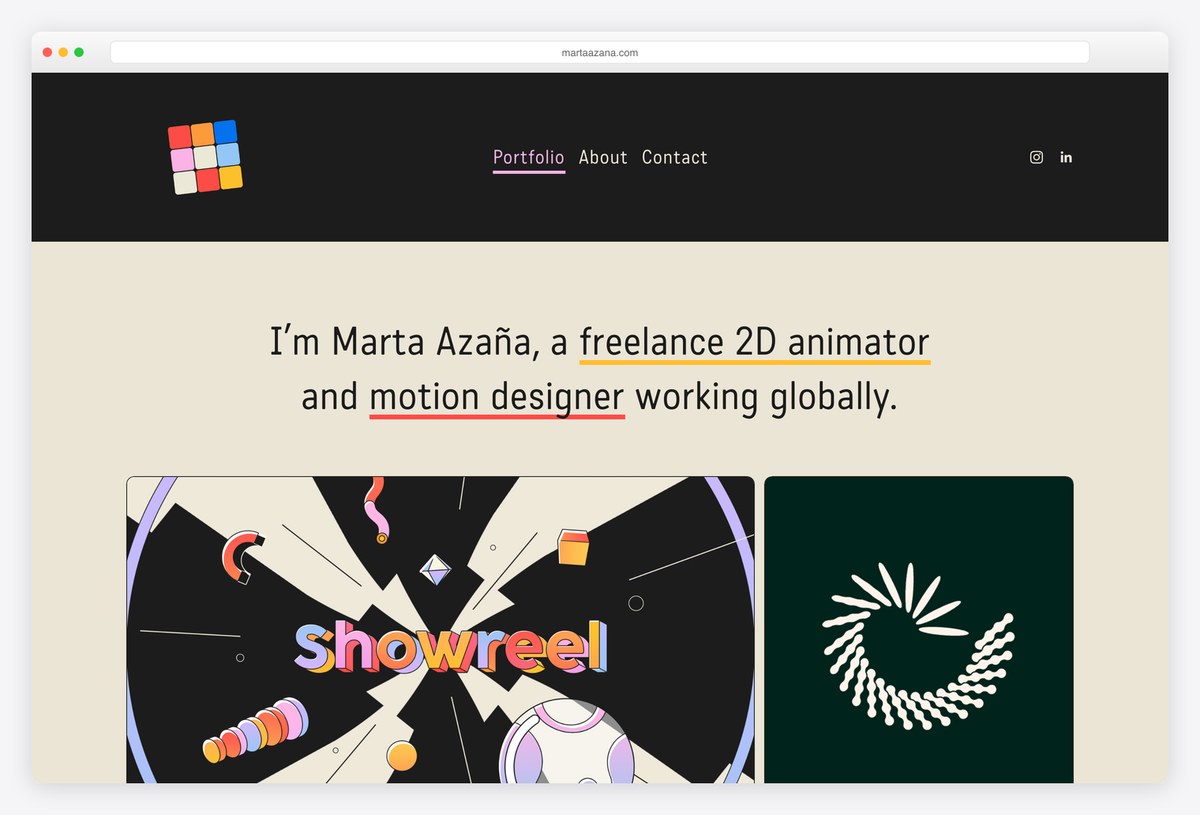
Marta Azaña, a freelance 2D animator and motion designer from Madrid, leads with the Microsoft Copilot+PC identity she animated with Koto. The case page lists every party, from Koto’s creative direction to Buck’s 3D renders, and says her main role was helping build the motion design system and brand guidelines.
Her About page reads like a services menu, including Lottie animation, motion guidelines and styleframes, with separate lists of clients and studios. A 61-second showreel sits on the first screen, and she says plainly that she is available for freelance work.
What stands out: Credits that separate her work from the agency’s.
20. Hashmukh Kerai
Built with: Squarespace
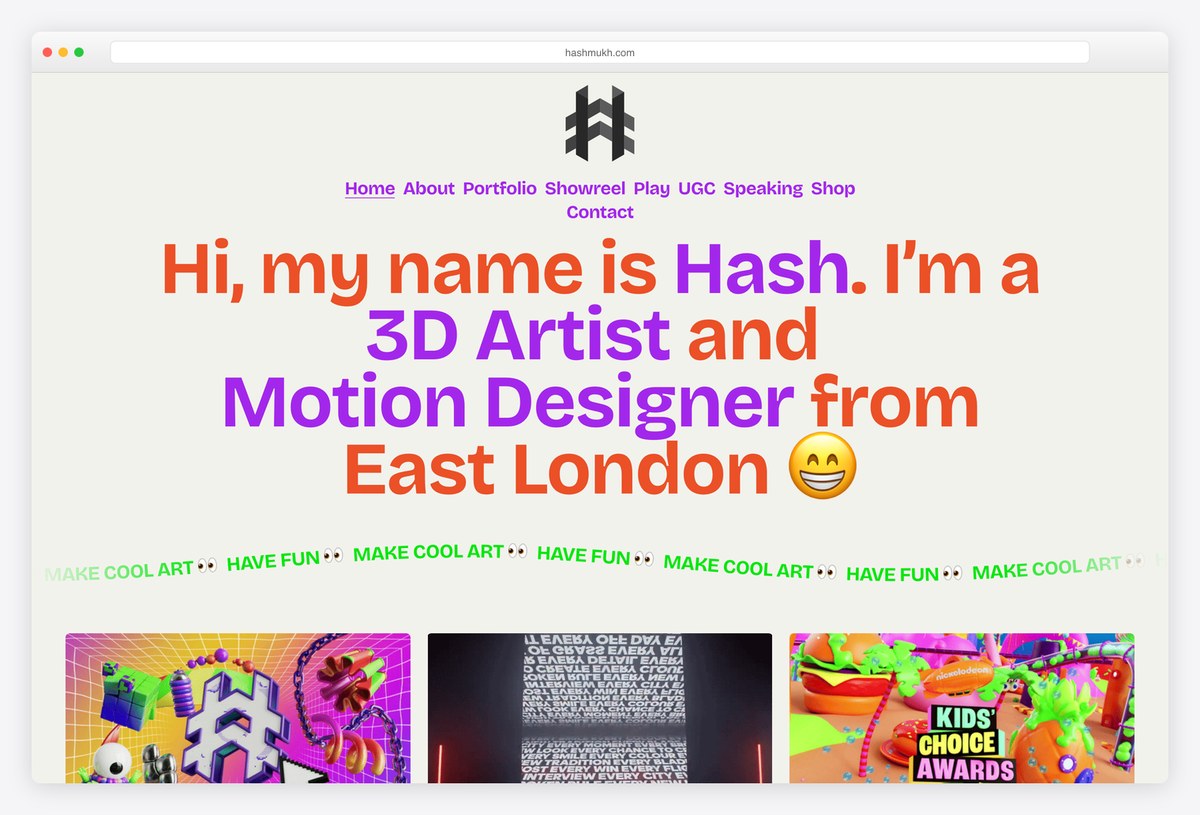
Hashmukh Kerai, a 3D artist and motion designer from East London, opens with a loud, multicoloured introduction that matches his playful 3D work. Project pages give the client, the studio and the tasks involved, such as the 15-second show intro and transitions he made in 3D for Nickelodeon’s Kids’ Choice Awards through Studio Moross.
The site also answers what clients ask before booking: an FAQ covers the software he uses, his process and whether he works on a day rate or a project fee. Further pages cover speaking, user-generated content and a shop.
What stands out: It answers the booking questions before anyone asks.
21. Zac Shirk
Built with: Squarespace
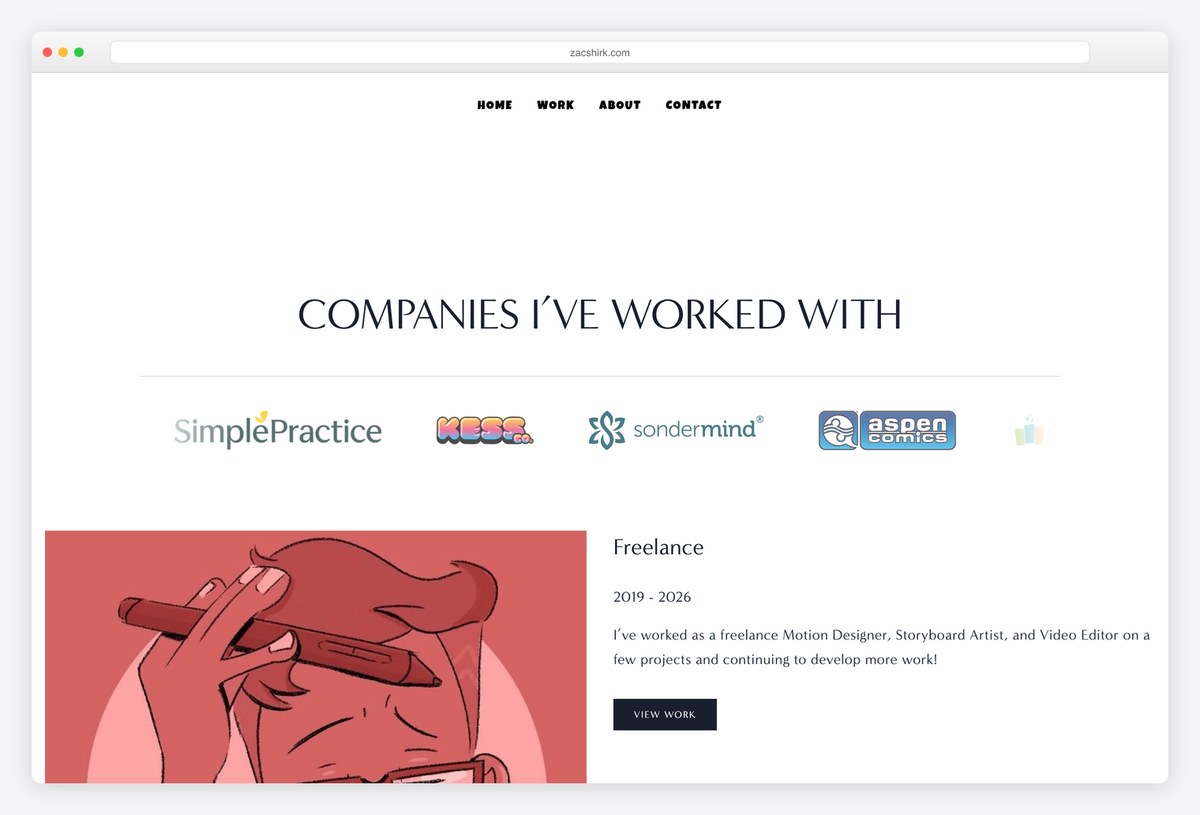
Zac Shirk, a motion designer and story artist in Los Angeles, is the in-house Senior Motion Designer & Animator at SimplePractice, in charge of everything motion there, including the motion system. His site groups work by employer, with dates, rather than by style.
Each SimplePractice video says exactly what he did. On one promo he wrote, storyboarded, illustrated and animated the ad after talking to speech-language pathologists; on another he drew the storyboards, a colleague illustrated them and he animated her illustrations. His résumé is linked from the About page.
What stands out: In-house work credited video by video.
22. Frédéric Colin
Built with: Adobe Portfolio
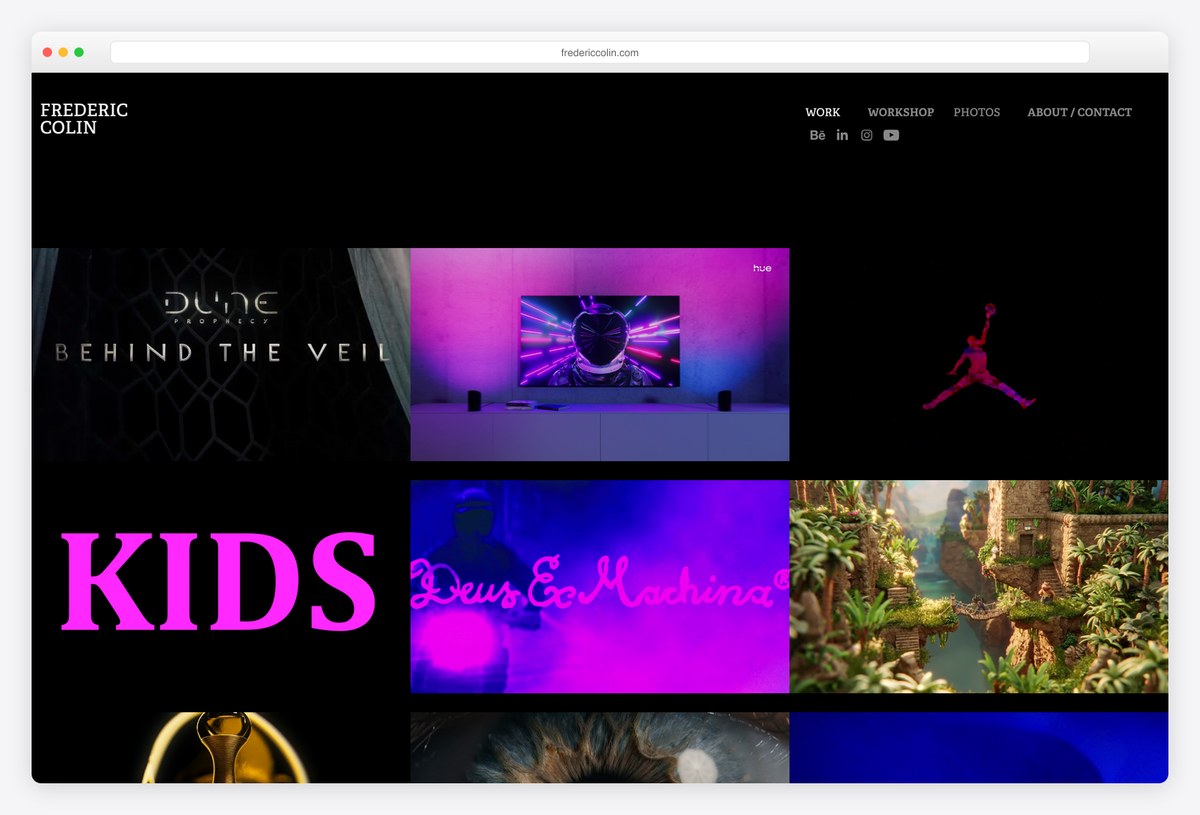
Frédéric Colin, a 3D artist and director, captions every thumbnail with the project, the format and the studio he worked through, so The Wheel of Time main title reads as Imaginary Forces work and Truth Be Told as Elastic. Clients such as Apple TV+, Netflix and Louis Vuitton follow on the About page.
Project pages state his role, such as design and animation on a Dune: Prophecy behind-the-scenes piece for Kill 2 Birds, and The Wheel of Time page reproduces the full title credits, with him among the designers under creative director Karin Fong.
What stands out: Studio credits on the thumbnails themselves.
23. Ole Bornitz (Vieleck)
Built with: Custom HTML
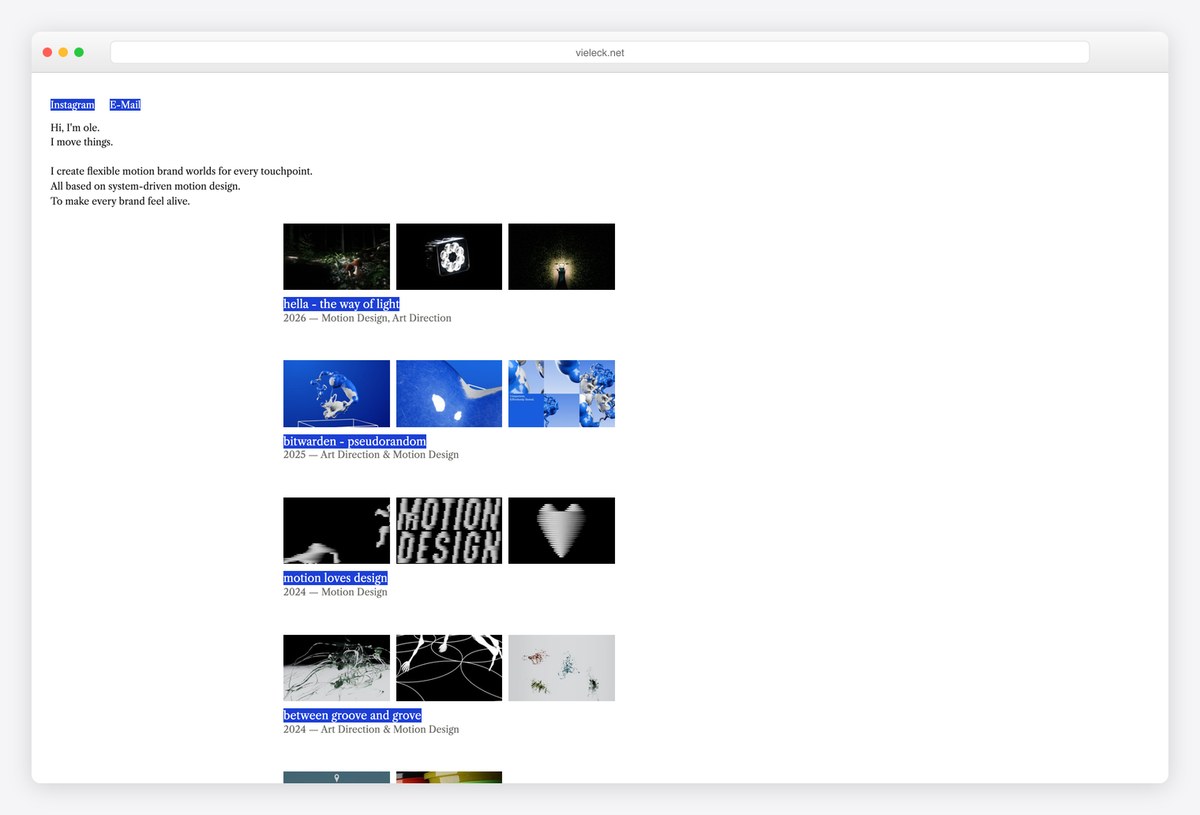
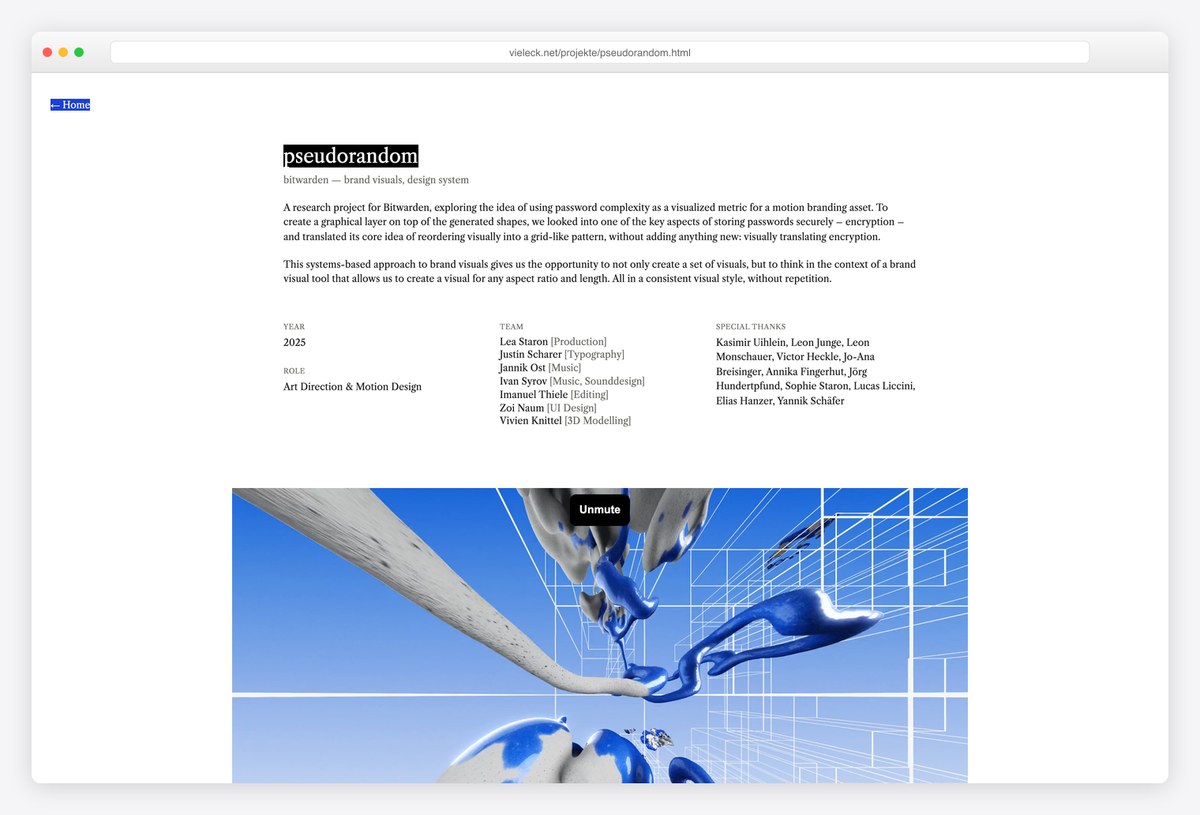
Ole Bornitz, listed as a motion design alumnus of Filmakademie Baden-Württemberg, builds brand motion as systems. His hand-built site lists every project with its year and his role, from animation on the Filmakademie film Dancing in Norms to art direction and motion design for Bitwarden.
The Bitwarden project turns password complexity into a brand visual tool that can create a visual for any aspect ratio and length. Each page ends with year, role and team credits and a set of styleframes, and his conference talks, including one at FMX, are listed on the home page.
What stands out: A graduate site that explains systems, not only shots.
24. Scott Collopy
Built with: Squarespace
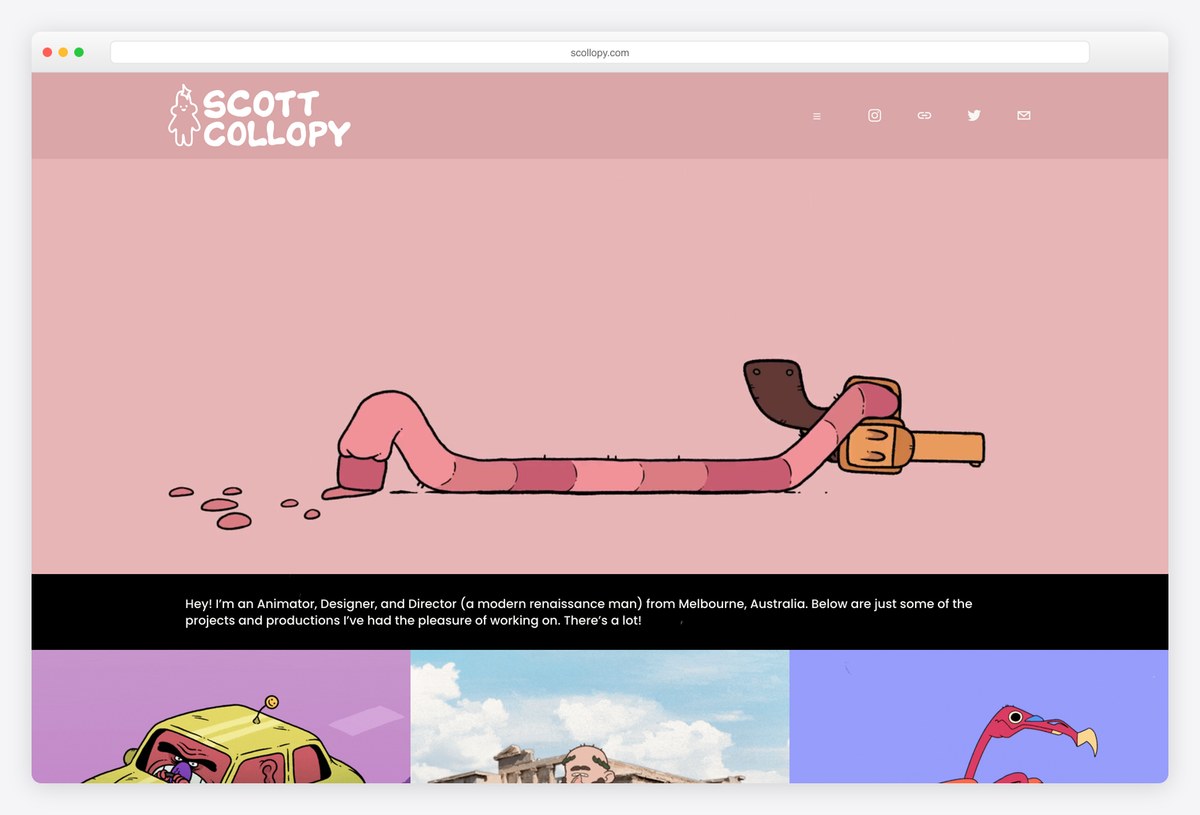
Scott Collopy, an animator, designer and director from Melbourne, keeps everything on one long page that starts with a 1:23 animation reel. Below it, clips from the TV series, music videos and ads he has animated on play as loops, next to trailers for Hazbin Hotel and Smiling Friends.
He lists the software he works in, from Toon Boom Harmony and Moho to Storyboard Pro and Spine, which is what animation studios screen for. The page ends with a contact form and a joke sign-off asking you to hire him.
What stands out: A one-page site that gets straight to the reel.
25. Guilherme Vasconcellos (Guivasca)
Built with: Adobe Portfolio
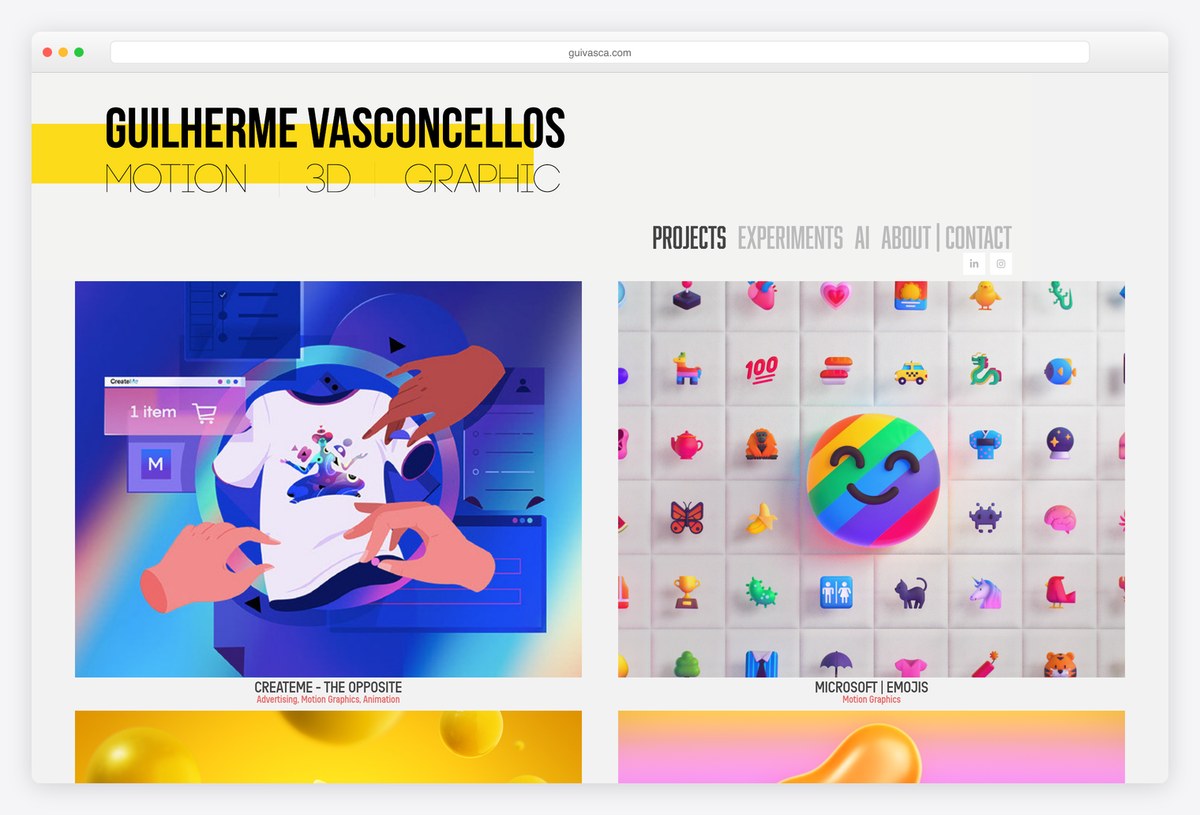
Guilherme Vasconcellos, who works as Guivasca, is a motion designer and 3D artist with more than 13 years of experience and clients such as Microsoft, Meta and Netflix. His project grid labels each piece with the client and the discipline, from advertising to 3D characters.
The Will Bank ident for Beeld Studio shows how to present a commissioned piece honestly: he received the storyboard and developed the animation and final look, and the page adds three colour versions and a selection of frames. His About page names Cinema 4D and Redshift as his main tools.
What stands out: Clear about which part of the brief was his.
26. Cristian Sandoval (CRIOFF)
Built with: Adobe Portfolio
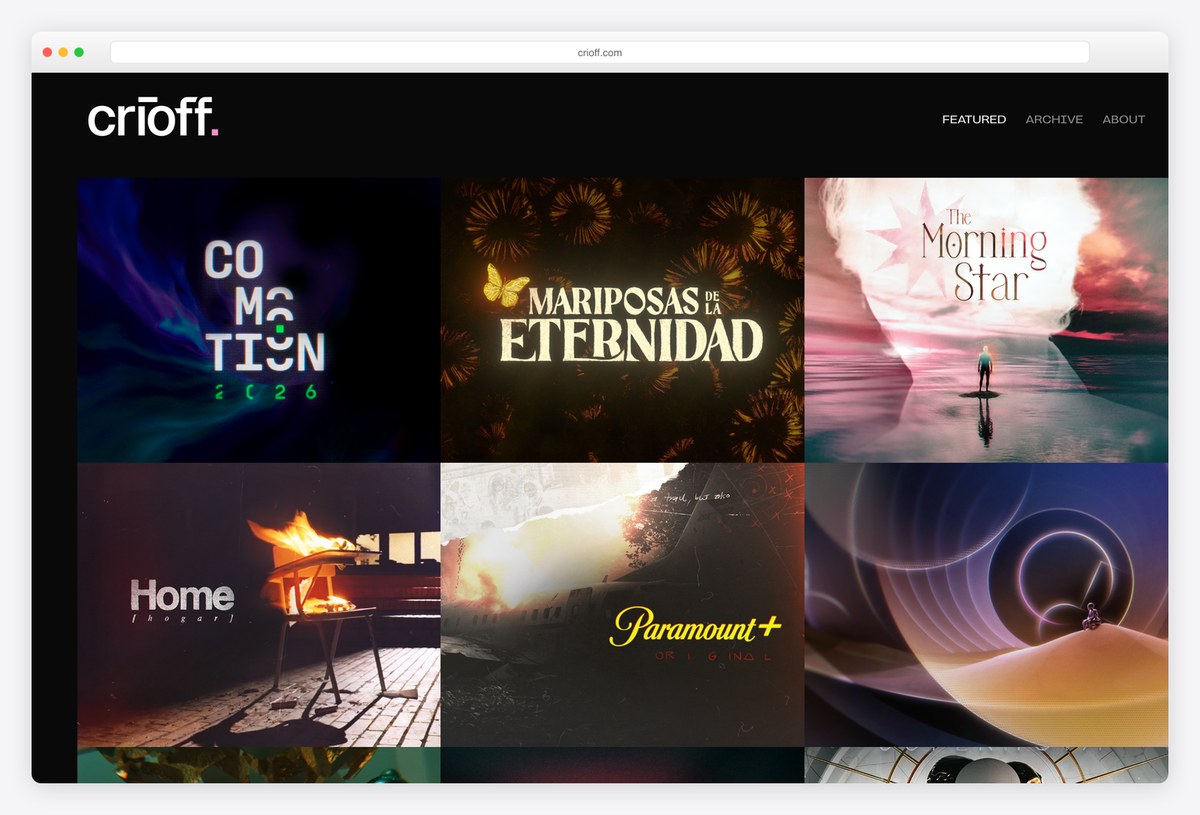
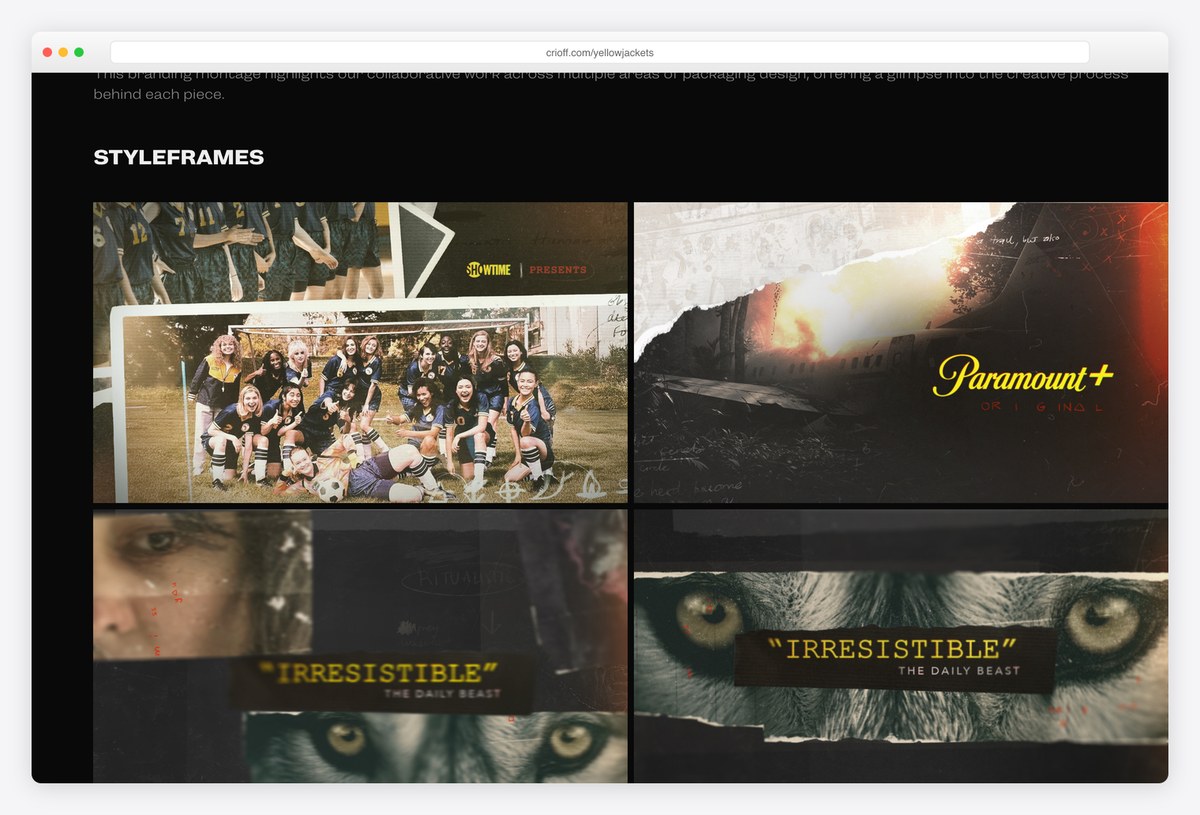
Cristian Sandoval, who works as CRIOFF, is a SCAD motion media student focused on entertainment branding and title sequences. His Yellowjackets branding package shows the whole kit: a branding montage, four labelled styleframes, design quilts of modular elements and a pre-production section on the concept.
For the CoMotion student conference he was co-creative director of the branding, co-leading over 40 creatives across 8 teams on more than 50 deliverables, with the opening title sequence as the main piece. A résumé and a press list sit on the About page.
What stands out: Styleframes and design quilts, not only finished frames.
What Makes a Great Motion Design Portfolio?
Put a short reel first, and keep it to about a minute. The general reels on this list run close to a minute: Mike Labrow’s is 60 seconds, Simon Tibbs’s 59, Marta Azaña’s 61 and Riley McMath Walker’s 62, while Scott Collopy’s character-animation reel runs 1:23. Put it on the first screen or one click away, and cut it to your strongest work rather than everything you have made.
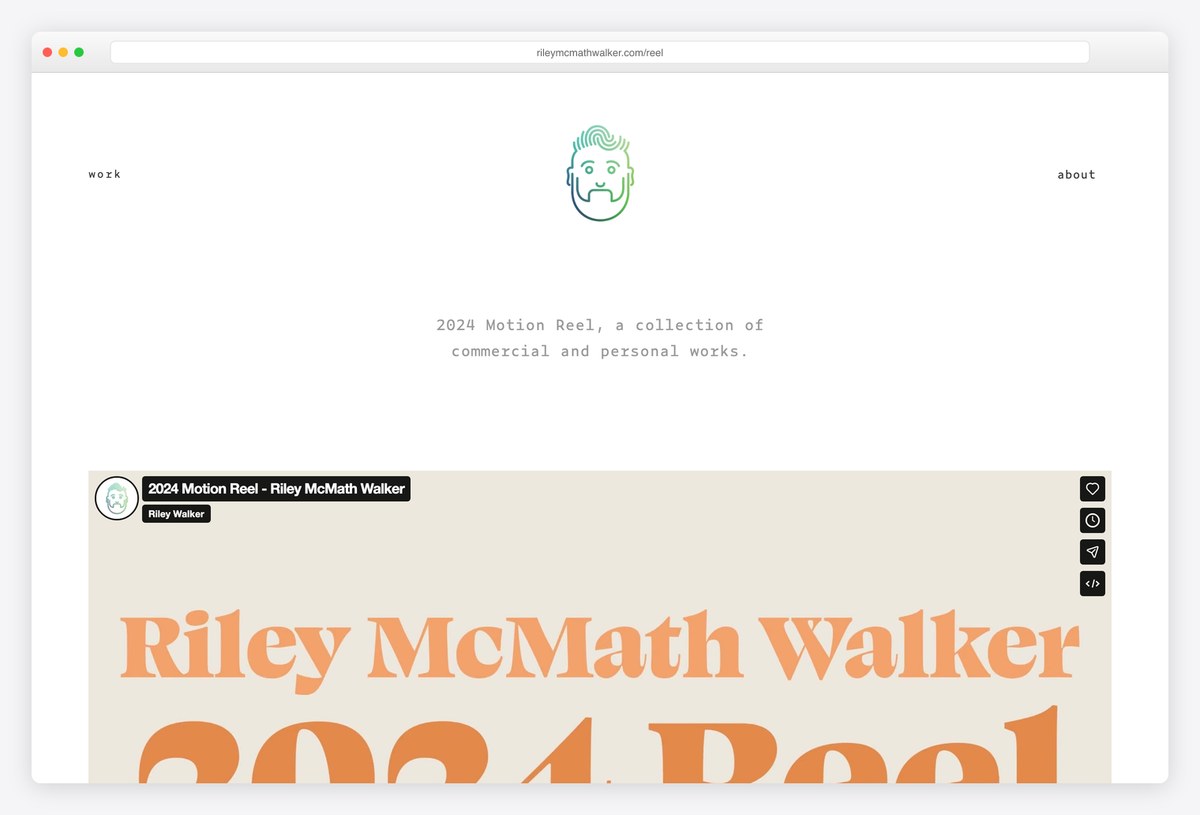
Let loops play inline instead of behind a play button. Work that moves should move without a click. Andreas Wannerstedt’s home page is a grid of loops, Nidia Dias and Virak Path run looping video tiles with poster images, and Mike Labrow and Oliver Latta fill their grids with short looping previews. Keep the full-length film on the project page.
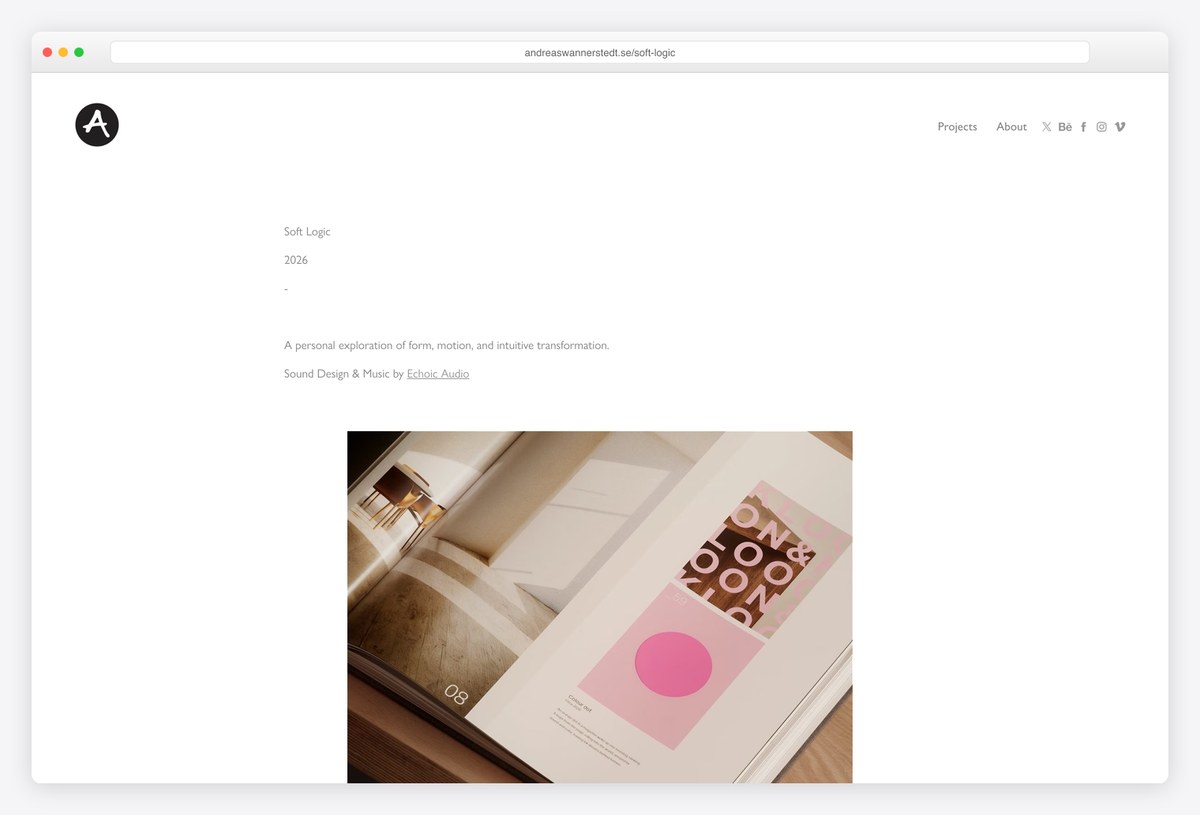
Show styleframes, boards and process. Clients hire you for how you think as much as for the final render. CRIOFF lays out labelled styleframes and design quilts for his Yellowjackets package, Simon Tibbs publishes his stages from storyboard to styleframes to animation, Diane Lee shows the shoot behind her conference opener, and GMUNK writes a process essay for Tron: Ares.
Name your role on every team project. Most motion work is made by teams, so say which part was yours. Hannah Churn labels every shot of her reel with her role, Mike Labrow lists client, agency and role against timestamps, Marko Mrvić tags each clip as personal or studio work, and Zac Shirk explains who storyboarded, illustrated and animated each video.
Credit clients, agencies and studios. Naming the agency tells a reader how the job reached you and who else worked on it. Frédéric Colin captions each thumbnail with the studio, Nidia Dias gives studio, client, role and year on every project, Marta Azaña separates Koto’s creative direction from her animation, and Nadia Tzuo and Saskia Marka print full title credits.
Name your tools. Studios hire for their pipeline, so list what you use. Zachary Corzine names Cinema 4D, Houdini, Substance, Octane, Redshift and After Effects, Simon Tibbs names After Effects, Cinema 4D and Cavalry, Scott Collopy lists Toon Boom Harmony and Moho for character work, and Virak Path marks Houdini and Cavalry as tools he is still learning.
Keep pages fast despite the video. Heavy autoplay can leave a visitor staring at a black box while files load. Use short, muted loops with poster images, as Nidia Dias and Virak Path do, lazy-load thumbnails further down the page, and host full-length films on Vimeo or YouTube behind a click. Andreas Wannerstedt keeps each project page to one film and a few short detail clips.
Students: a short, focused reel beats everything you have made. Diane Lee leads with one demo reel and a separate reel about her process, Virak Path shows a handful of CG projects with a dated experience list, and CRIOFF and Ole Bornitz write up a few projects in depth. Pick five or six pieces, finish them, and explain your role on each.
Frequently Asked Questions
What should a motion design portfolio include?
A short reel, a small selection of projects with your role, the client or studio and the tools you used, a few styleframes or boards that show your process, an About page with clients, and a clear way to get in touch. Hannah Churn and Mike Labrow cover all of this, including a shot-by-shot breakdown of the reel.
How long should a motion design reel be?
Around a minute is typical. The general reels on this list run from 59 to 62 seconds, and the longest, Scott Collopy’s character-animation reel, runs 1:23. Open with your strongest shot, cut anything you would not want to be hired for again, and add a breakdown that says what you did on each clip.
What is the difference between a motion designer and an animator portfolio?
An animator’s portfolio, like Scott Collopy’s, centres on character acting, timing and the software studios use, such as Toon Boom Harmony and Moho. A motion designer’s portfolio also shows design thinking: styleframes, typography, brand systems and how the piece fits a campaign, as Simon Tibbs and the VUCKO studio do. Many people show both.
What is the best platform for a motion design portfolio?
There is no single winner. Of the 26 portfolios above, ten use Squarespace, five use Adobe Portfolio and three are custom-coded; Framer, Cargo and WordPress have two each, and Readymag and Wix appear once each. Choose a builder that handles video embeds, looping clips and fast page loads well.
Should I use Behance or Vimeo, or my own website?
Use both. Vimeo or YouTube is the easiest place to host full-length films, and Behance helps people find you, but your own site is where you control the order, explain your role and add a breakdown or process notes. Most portfolios above embed their Vimeo films on their own project pages rather than sending visitors away.
How do I make a motion design portfolio with no client work?
Treat personal and student projects as real briefs. Write a short concept, show styleframes and boards, finish the piece and label it as personal or student work. Marko Mrvić mixes clearly marked personal pieces into his reel, and Diane Lee and CRIOFF present conference branding and school projects with the same depth as client work.
Wrapping Up
For more inspiration, see our animation website examples, graphic design portfolio examples, illustrator portfolio examples and best portfolio website examples. Ready to build your own? Browse our portfolio website templates.

Related Posts



Comments (0)